
Why GM's Silao Expansion Changed the Wastewater Strategy
GM should treat wastewater from a Mexican assembly-plant expansion as a water-reuse and compliance challenge, not simply an end-of-pipe discharge problem. At Silao, declining groundwater levels drove GM to design a dedicated recycle-and-reuse system. Arcadis reports that the system reuses 85% of wastewater, saves 900,000 liters per day, and cuts daily groundwater extraction in half. The expansion therefore links production capacity, aquifer sustainability, wastewater treatment, manufacturing-water demand, and permitting rather than separating them into independent projects. The governing lesson is that lawful discharge remains available, but reuse is the operating objective when water stress and manufacturing demand make it technically and economically supportable.
Arcadis identifies declining area-well levels as the constraint affecting GM's planned expansion at the GM Silao manufacturing complex in Guanajuato. The company needed additional operating capacity without placing more demand on the local water supply. Its solution was a dedicated system designed to treat wastewater and make it suitable for manufacturing processes, informed by—but not automatically transferable from—the San Luis Potosí reuse facility.
The measured Silao result is concrete: 85% of wastewater is recycled and reused in manufacturing, saving 900,000 liters each day while reducing daily groundwater extraction by half, according to Arcadis, “Preserving Groundwater in a Water-Stressed Region,” published on its project site with no date shown in the supplied research. For an expansion, that precedent changes the design question from “Can the plant discharge compliantly?” to “How much water can be returned to manufacturing, and what treatment and authorization are needed to do so safely?”
That distinction matters because manufacturing reuse and final discharge impose different water-quality targets. A treatment train selected only around the discharge permit may be technically compliant yet fail the conductivity, turbidity, temperature, or process-quality needs of a reuse destination. The wastewater and cooling-blowdown treatment reference provides a separate technical comparison, but Silao remains the relevant operating precedent for this decision.
Start With the Wastewater Sources and Intended Water Reuse
Equipment selection should begin with a stream-by-stream mass balance and a named reuse destination, not with a generic package of “automotive wastewater treatment.” The HydropureWater guide identifies four principal industrial streams: body-in-white wastewater containing nickel, cobalt, drawing compounds, and lubricant emulsions; paint-shop wastewater containing phosphate, E-coat, and detackifier COD; lower-contamination assembly rinse and cooling-tower blowdown; and potential EV or battery-related streams containing NMP, graphite slurries, or electrolyte salt flushes. Each stream has different contaminants, production peaks, reuse constraints, and disposal outcomes.
Define the required water quality before selecting final effluent limits. Manufacturing reuse may require lower conductivity than lawful surface-water discharge, while process-specific constraints may also govern suspended solids, organics, pH, temperature, or residual treatment chemicals. The HydropureWater guide gives an industrial RO system for manufacturing-water reuse at 70–85% recovery with permeate conductivity below 50 µS/cm. Those are reference points for the stated reuse application, not universal performance guarantees.
Keep sanitary and industrial streams segregated under the framework described in the HydropureWater guide. Mixing sanitary load into industrial wastewater changes the biological design envelope and can increase treatment requirements. For each stream, request flow and shift peaks, constituent and contaminant loads, temperature, pH, continuity or batch origin, intended reuse destination, and maximum acceptable variation. The basis for sizing must be documented; nameplate throughput alone is not enough.
| Wastewater stream | Principal constituents identified in the HydropureWater guide | Design input to establish |
|---|---|---|
| Body-in-white | Nickel, cobalt, drawing compounds, lubricant emulsions | Flow, shift peaks, metal loads, emulsified-oil range, pH, sludge generation |
| Paint shop | Phosphate, E-coat, detackifier COD | COD, phosphate, metals, flow pattern, reuse or discharge destination |
| Assembly and utilities | Low-contamination rinse water and cooling-tower blowdown | Temperature, conductivity, blowdown chemistry, reuse temperature and quality |
| EV or battery overlay | NMP, graphite slurries, electrolyte salt flushes | Batch generation, NMP concentration, salt load, in-house production decision |
The guide also reports MBR effluent turbidity below 1 NTU at MLSS of 8,000–12,000 mg/L. An integrated MBR wastewater treatment system may be appropriate where biological treatment and membrane filtration are required, but the final selection should follow from the characterized streams and reuse specifications.
Secure the CONAGUA and SEMARNAT Permissions Before Finalizing the Design
Authorization work must be completed before the treatment train is frozen. Under the terminology in the HydropureWater guide, the CONAGUA Título de Concesión authorizes wastewater discharge and groundwater extraction at an industrial site, but it does not transfer automatically as a freestanding right after a transaction. The buyer must submit the Formato de Cambio de Titularidad to CONAGUA so the title is reissued in the successor operator's legal name with the operating conditions carried forward.
Separately, the HydropureWater guide states that LGEEPA Article 29-bis requires a change-of-operator notice to SEMARNAT within 90 days of closing. The notice identifies the successor and reattaches the operating conditions. Permit-transfer diligence should also examine open PROFEPA expedientes, inspection findings, partial or total closure orders, unpaid fines, previous COTER findings, dormant waste ponds, and unpaid CONAGUA derechos. These are asset-transition risks that should be resolved contractually before closing, not treated as routine administrative transfers.
| Authorization or liability | Buyer action identified in the HydropureWater guide | Engineering implication |
|---|---|---|
| CONAGUA Título de Concesión | File the Formato de Cambio de Titularidad | Confirm discharge and extraction conditions before sizing |
| SEMARNAT environmental authorization | Submit the Article 29-bis change-of-operator notice within 90 days of closing with operating conditions | Verify current authorization and any satellite-operation coverage |
| PROFEPA and COTER records | Collect inspection records, findings, closure orders, unpaid multas, and prior COTER findings | Correct enforcement exposure and physical deficiencies |
| Environmental calendar | Maintain sampling, monitoring, reporting, and permit or license renewal dates under GM EPC S4 §4.1.2 | Assign dates, owners, records, and escalation procedures |
The guide's LP-GMX-XXX description should not be treated as a universal authorization. Its applicability and the coverage of satellite operations must be verified for the specific legal entity and site. A related permit-compliance reference illustrates why site-specific authorization matters, but it does not replace Mexico-specific legal review.
Ownership boundaries also need to be explicit. Define which entity owns the treatment plant, which entity owns sampling and reporting, which entity provides power and utilities, and how permit deviations are escalated. The environmental calendar should contain not only expiry dates but also sampling events, reporting deliverables, renewal lead times, calibration requirements, and the evidence needed for GM's EMS register.
Design to the Effluent Limits That Actually Apply
NOM-001-SEMARNAT-2021 is the binding federal effluent-quality standard identified in the HydropureWater guide, but the current site authorization and receiving-water classification determine the enforceable design envelope. The guide reports the following annual-average values for the metal-finishing subcategory: total Ni 1.0 mg/L, total Co 1.0 mg/L, total Cr(VI) 0.1 mg/L, total Pb 0.5 mg/L, total Cu 1.0 mg/L, total Zn 2.0 mg/L, and total CN 1.0 mg/L. It also reports annual-average surface-water values of BOD 30 mg/L, COD 120 mg/L, TSS 40 mg/L, FOG 15 mg/L, total N 25 mg/L, and total P 10 mg/L.
Receiving water can impose a tighter parameter limit. The HydropureWater guide cites NOM-001 Table 2 for a reservoir or lake discharge, where total phosphorus is 5 mg/L. Local CEA conditions, COTER requirements, and basin restrictions can further constrain the authorized discharge. For the Silao, San Luis Potosí, and Ramos Arizpe planning context, the guide identifies November–May as the dry-season period and reports that dry-season basin conditions can tighten limits by 20–30%.
| Parameter | Guide-reported annual-average value | Scope stated by the HydropureWater guide |
|---|---|---|
| Total Ni / Total Co / Total Cu | 1.0 mg/L each | Metal-finishing subcategory |
| Total Cr(VI) | 0.1 mg/L | Metal-finishing subcategory |
| Total Pb | 0.5 mg/L | Metal-finishing subcategory |
| Total Zn / Total CN | 2.0 mg/L / 1.0 mg/L | Metal-finishing subcategory |
| BOD / COD / TSS | 30 / 120 / 40 mg/L | Annual average, surface water |
| FOG / Total N / Total P | 15 / 25 / 10 mg/L | Annual average, surface water |
| Total P | 5 mg/L | Reservoir or lake use-type under NOM-001 Table 2, as cited in the guide |
These figures are planning references, not a substitute for the current authorization. The design should use the more stringent of applicable federal, state, basin, and site conditions, then test whether dry-season restrictions affect reuse reliability or outfall capacity. Automatic chemical dosing may be required to maintain pH and metal-removal conditions, as discussed in the guide for an automatic chemical dosing system. Chemical storage, feed confirmation, fail-safe response, and operator verification should be included in the operating philosophy.
Monitor at the legally relevant final outfall and verify how any in-plant recycle point affects the mass balance. A treatment system can meet a reuse specification while leaving the remaining discharge out of compliance. Final design therefore needs one reconciled water balance covering extraction, process use, recycle, loss, evaporation, sludge-associated water, and authorized discharge.
Build a Treatment Train That Supports Reuse
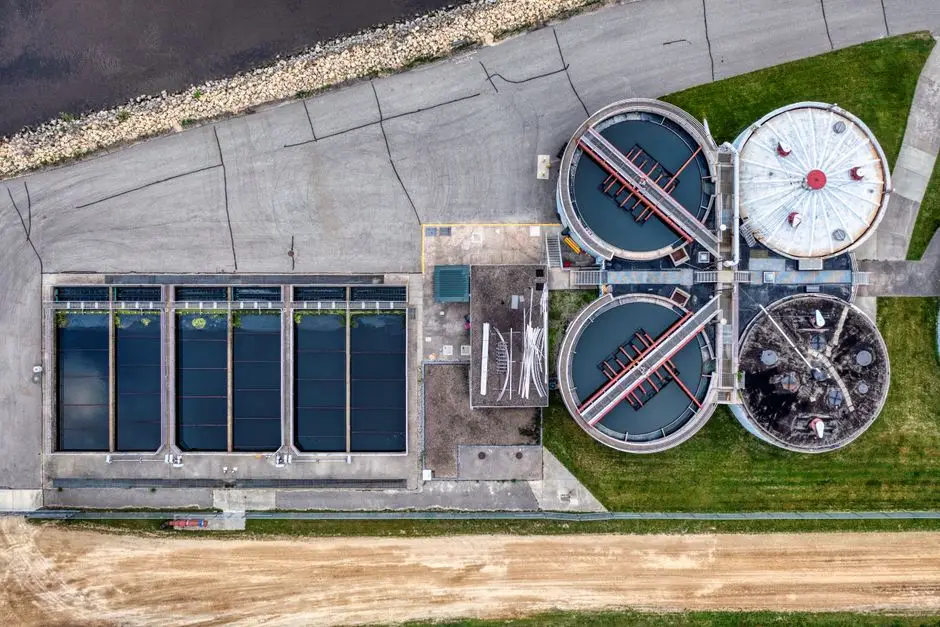
The HydropureWater guide's reference sequence combines equalization with PLC-controlled pH adjustment, DAF, coagulation and lamella clarification, MBR, two-pass industrial RO, and final disinfection. This is a reference architecture, not a mandatory package for every GM site. Each stage should solve a defined contaminant or reuse problem, and residual streams must have a verified disposition.
| Reference stage | Function | Guide-reported reference point |
|---|---|---|
| Equalization | Controls hydraulic and pH variation | PLC-controlled pH adjustment |
| DAF | Removes floatables, FOG, and TSS | 4–300 m³/h; 80–95% FOG removal; downstream TSS below 100 mg/L |
| Coagulation and lamella clarification | Precipitates and separates metals | 20–40 m/h surface loading for nickel, cobalt, and lithium precipitation |
| MBR | Provides biological treatment and membrane filtration | Turbidity below 1 NTU at MLSS 8,000–12,000 mg/L |
| Two-pass industrial RO | Produces lower-conductivity reuse water | 70–85% recovery; permeate conductivity below 50 µS/cm |
| Disinfection | Controls microbiological risk at reuse or discharge point | Chlorine dioxide from 50 g/h to 20,000 g/h, or UV |
Equalization protects downstream biology and chemical dosing; DAF addresses emulsified oil and floatable solids; coagulation and clarification recover metals as precipitates; MBR removes biodegradable organics and filters solids; and RO can supply lower-conductivity water for manufacturing reuse. Equipment alternatives must be evaluated against actual stream chemistry rather than copied from the reference sequence. The guide identifies a DAF system for automotive wastewater and separately identifies lamella clarification for the precipitation application.
NMP vacuum distillation is conditional. The guide states that plants outsourcing cathode production to a Tier-1 cell supplier can omit that stage. It should therefore be included only where GM performs the relevant cathode coating and an NMP recovery assessment confirms the operating and economic case.
Disinfection can use a chlorine dioxide generator or a UV bank at the final reuse or discharge point. The selected system must match flow, residual requirements, water chemistry, operator controls, and storage risks.
Budget sludge separately from the liquid-treatment train. The guide identifies filter presses and polymer dosing for metal-rich sludge and notes that NOM-052-SEMARNAT-2005 affects the disposal route. A filter press for metal-rich sludge should be evaluated against sludge generation, cake handling, wash-water return, hazardous-waste classification, and final disposal capacity.
Compare Reuse, Discharge, and Zero Liquid Discharge Options
Manufacturing reuse should be the preferred operating objective where water quality, process demand, and authorization support it; Silao's 85% reuse result is a benchmark for a specific project, not a guaranteed outcome for another assembly plant. Compliant discharge remains the residual route for streams that cannot meet reuse specifications or where the authorization requires an outfall. The engineering decision should compare whole-system consequences rather than treating ZLD as the automatic environmental answer.
The HydropureWater guide reports a base retrofit CAPEX range of $1.5 million–$6 million for a 1,500 m³/day Mexico system using DAF, MBR, and RO without NMP distillation or an evaporator. That is equivalent to roughly $1,000–$4,000 per m³/day of design capacity in the same guide. These are planning ranges, not quotations; they exclude site-specific items that must be confirmed, including demolition, electrical work, piping, buildings, permits, taxes, escalation, sludge disposal, commissioning, and integration with expansion ramps.
| Pathway | Guide-reported capital basis | Decision test |
|---|---|---|
| Reuse and compliant discharge | $1.5M–$6M for the defined 1,500 m³/day DAF-MBR-RO retrofit | Does the water balance support reuse without compromising manufacturing quality or permit compliance? |
| ZLD-ready configuration | Adds 1.5x–2.5x to the base-train capital figure | Do energy demand, brine and solids handling, disposal access, and expansion needs justify the increment? |
The guide's brine example also requires careful interpretation. At 300 m³/day of reject and a $0.60 per 1,000-gallon avoided-disposal credit, the stated value is roughly $48 per day, or about $17,500 per year. That is an operating credit for avoided disposal, not an evaporator payback calculation. Brine minimization remains meaningful, but it cannot establish capital viability by itself.
Before selecting ZLD, complete a site-specific water balance, permit review, energy analysis, sludge-disposal assessment, and expansion scenario. The industrial water-reclaim and ZLD blueprint provides a decision reference, while sludge dewatering options for Mexican industrial plants addresses the residual-solids interface that cannot be omitted from the capital plan.
Turn the Wastewater Plan into a Phased Expansion Program
The implementation sequence should move from legal and operating diligence to authorization, design, construction, commissioning, and verified reuse. It should be tied to the plant expansion schedule rather than isolated from it.
- Days 0–30: File the CONAGUA change-of-operator form, submit the SEMARNAT Article 29-bis notice with operating conditions, and collect open PROFEPA records for the EMS register, according to the HydropureWater guide.
- Days 30–60: Verify the NOM-001 monitoring plan, receiving-water classification, COTER conditions, and eight quarters of CONAGUA-reported monitoring data from the seller's file.
- Days 60–90: Confirm applicable coverage for satellite operations, basin-level water-stress reporting, and the environmental calendar under GM EPC S4 §4.1.2.
- Days 90–180: Inspect the equalization-basin influent channels. The HydropureWater guide states that one channel may indicate inadequate segregation and can roughly double retrofit CAPEX, while five or more indicate stronger segregation discipline. Confirm that interpretation through the site survey rather than relying on the visual criterion alone.
- Days 0–720: Track ISO 14001 conformance within 24 months, maintain the environmental calendar, and implement measurement and monitoring of 100% of regulated discharges from major facilities, as required by the guide's GM EPC discussion.
During design, require stream characterization, an updated water balance, equipment sizing tied to peak shift flows, a permit-compliance matrix, a control philosophy, and a sludge and reject balance. Use automatic dosing for pH and coagulant control to examine chemical-feed reliability, calibration, interlocks, and operator response rather than simply adding a dosing skid.
Commission the installation around expansion ramps and operating shifts. Performance tests should represent peak manufacturing and wastewater conditions, verify reuse-water quality at each destination, reconcile measured flows, demonstrate alarm response, and establish a baseline for energy, chemicals, sludge generation, groundwater extraction, and authorized discharge. That baseline becomes the operating evidence for the next expansion decision.
Frequently Asked Questions
What does GM's Silao wastewater reuse precedent show about handling wastewater during a Mexican assembly-plant expansion?
Arcadis reports that GM's Silao system recycles and reuses 85% of wastewater, saves 900,000 liters per day, and cuts daily groundwater extraction in half. The transferable lesson is to design manufacturing water supply, wastewater treatment, groundwater extraction, and expansion capacity as one system. The 85% result should not be copied into another site's feasibility study without its own water balance, stream characterization, reuse specifications, and permit analysis.
How much should a GM Mexico assembly-plant wastewater treatment and reuse system cost?
The HydropureWater guide reports $1.5 million–$6 million for a 1,500 m³/day Mexico retrofit using DAF, MBR, and RO, equivalent in that guide to roughly $1,000–$4,000 per m³/day of design capacity. These are planning ranges, not quotations. Request a site-specific estimate based on measured flows, contaminant loads, reuse quality, current infrastructure, demolition, electrical and civil work, sludge disposal, commissioning, permits, and expansion phasing. The guide also reports a 1.5x–2.5x capital increment when an evaporator and crystallizer are added, but that should not be included unless the site-specific ZLD case is justified.
Which treatment train should be selected for automotive wastewater at a Mexican assembly plant?
Select the train from the stream-by-stream water balance. The HydropureWater guide supports equalization and pH control for hydraulic and chemical variation, DAF for FOG and TSS, coagulation and lamella clarification for metal precipitation, MBR for biological treatment and filtration, and two-pass industrial RO where lower-conductivity reuse is required. Not every site needs every stage. NMP vacuum distillation applies only where the relevant cathode process is performed in-house. Require the supplier to demonstrate sizing against peak shift flows and contaminant loads, as well as sludge, reject, controls, and commissioning evidence.
What should be checked when selecting a wastewater-treatment supplier or approving permit transfer for a GM plant in Mexico?
Ask each supplier for stream characterization, verified sizing calculations, permit-specific design, sludge and reject handling, controls and fail-safe response, commissioning records, and local technical support. On the authorization side, request the CONAGUA Formato de Cambio de Titularidad, the SEMARNAT Article 29-bis notice package, current discharge and extraction conditions, open PROFEPA and COTER records, receiving-water classification, monitoring history, and site-specific operating evidence. Do not compare bids on nameplate throughput alone. The purchasing decision should be based on demonstrated compliance, operability, residual-management capability, and support for GM's environmental-management obligations.
Related Equipment
- DAF system for automotive wastewater — specifications, capacity range, and technical data