Display Panel Wastewater Water Reclaim: 2025 Engineering Blueprint with 99.9% Recovery & Zero Liquid Discharge Costs
Display panel manufacturing wastewater—laden with TMAH, heavy metals (Cu, Ni), fluoride, and COD levels exceeding 1,500 mg/L—requires a multi-stage reclaim system to achieve 99.9% water recovery. Hybrid MBR-RO systems with advanced oxidation (e.g., ozone or UV/H₂O₂) deliver effluent meeting China GB 31573-2015 (<50 mg/L COD, <0.5 mg/L fluoride) while reducing freshwater intake by 80-90%, with CAPEX ranging from $1.2M–$4.5M for 50–200 m³/h systems.
Why Display Panel Wastewater Reclaim is a 2025 Manufacturing Imperative
Global display panel production consumes 200–300 m³ of water per 1,000 m² of TFT-LCD substrate, with approximately 80% of that volume exiting the facility as complex wastewater (per 2024 SEMI report). As the industry shifts toward G10.5 and G11 fabrication lines, the sheer volume of water required places immense pressure on local aquifers and municipal infrastructure. In regions like East Asia, where production is concentrated, water scarcity has transitioned from an environmental concern to a primary operational risk.
Regulatory frameworks are tightening in response to these industrial demands. China’s ‘Water Ten Plan’ (2021–2025) mandates a 30% reduction in industrial water intensity for high-water-consumption sectors. Facilities that fail to implement robust display panel wastewater water reclaim strategies face escalating discharge levies and potential fines reaching up to $150,000 per year. many industrial parks now enforce "water quotas," where expansion permits for new production lines are only granted if the manufacturer can demonstrate a significant reduction in freshwater intake through internal recycling.
The financial incentives for high-recovery systems are equally compelling. A case study of a 50,000 m²/month TFT-LCD fab in Suzhou demonstrates the potential for rapid ROI. By integrating a multi-stage reclaim system, the facility reduced its freshwater intake by 85% (approximately 120,000 m³/year). This resulted in annual savings of $2.1 million, factoring in both reduced water procurement costs and the avoidance of heavy discharge penalties.
Beyond direct cost savings, the ‘water-energy nexus’ in display manufacturing reveals that modern reclaim systems can reduce total facility energy use by 20–30% compared to traditional freshwater treatment and heating cycles (per IEA 2023 data). By reclaiming high-purity process water at ambient or slightly elevated temperatures, fabs reduce the energy required for ultrapure water (UPW) production and thermal stabilization, directly contributing to Scope 2 carbon reduction targets.
Display Panel Wastewater Composition: The Hidden Challenges of TMAH, Heavy Metals, and Fluoride
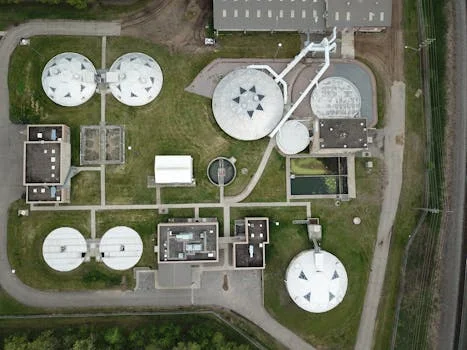
TMAH (tetramethylammonium hydroxide), a common developer and etchant in TFT-LCD manufacturing, contributes 60–70% of the total Chemical Oxygen Demand (COD), with concentrations often ranging from 1,200 to 2,000 mg/L. Unlike simple organic compounds, TMAH is highly stable and toxic to conventional biological treatment. Effective removal requires specialized fluoride removal technologies for microelectronics wastewater and advanced oxidation processes, often necessitating a pH adjustment to >11 to facilitate the breakdown of the quaternary ammonium cation (per 2024 IEEE study).
Fluoride levels in hydrofluoric (HF) acid etching wastewater represent another significant engineering hurdle. Concentrations often reach 500–1,500 mg/L, which is more than 1,000 times the limit permitted by China GB 31573-2015. Treating this requires a two-stage chemical precipitation process, often involving calcium chloride dosing and specialized high-efficiency sedimentation tanks to reduce fluoride to levels manageable by downstream membrane systems.
Heavy metals such as Copper (Cu), Nickel (Ni), and Chromium (Cr), largely originating from Chemical-Mechanical Planarization (CMP) and electrode plating, require 99.9% removal to meet EPA 2023 benchmarks. These metals often exist in complexed forms with EDTA or other chelating agents, making standard precipitation ineffective. Selective ion exchange or electrocoagulation is typically required to break these bonds and ensure compliance. engineers must manage the ‘salinity paradox’: while the Total Dissolved Solids (TDS) may be relatively low (<1,000 mg/L), the high concentration of silica (100–300 mg/L) and calcium (50–150 mg/L) creates an extreme scaling potential for reverse osmosis membranes.
| Parameter | Influent Concentration (Typical) | Target Effluent (GB 31573-2015) | Treatment Challenge |
|---|---|---|---|
| COD (primarily TMAH) | 1,200 – 2,000 mg/L | < 50 mg/L | High biological stability; membrane fouling |
| Fluoride (F-) | 500 – 1,500 mg/L | < 0.5 mg/L | Requires multi-stage precipitation |
| Copper (Cu) | 10 – 50 mg/L | < 0.5 mg/L | Chelated forms require advanced removal |
| Silica (SiO2) | 100 – 300 mg/L | < 20 mg/L (for RO feed) | Severe scaling on RO membranes |
| TDS | 800 – 1,500 mg/L | N/A (Process Dependent) | Increases osmotic pressure in ZLD |
Hybrid Water Reclaim Systems: MBR vs. RO vs. Advanced Oxidation for 99.9% Recovery
MBR systems utilizing 0.1 μm pore size membranes are the frontline defense in display panel wastewater treatment, capable of removing 99% of suspended solids and up to 90% of COD. However, in the context of TFT-LCD wastewater, MBR systems for high-COD industrial wastewater face significant challenges from TMAH-induced fouling. To maintain flux, these systems require rigorous maintenance cycles, including chemically enhanced backwashes (CEB) every 3–6 months and strict control of the Food-to-Microorganism (F/M) ratio to prevent the buildup of extracellular polymeric substances (EPS).
For high-purity reclaim, RO systems for 95–98% water recovery are essential. These systems are typically configured in a multi-stage array to maximize yield, but they are highly sensitive to the silica and calcium levels mentioned previously. Pre-treatment is non-negotiable; this usually involves a DAF system for TSS and oil removal followed by 5 μm cartridge filtration and precision chemical dosing for pH adjustment and antiscalant addition. Without these safeguards, RO membranes can suffer irreversible scaling within weeks of operation (per ASTM D4194-03 standards).
Advanced Oxidation Processes (AOP), such as UV/H₂O₂ or ozone injection, are integrated to target recalcitrant COD that biological systems cannot degrade. While AOP can break down TMAH by 90–95%, it represents a significant operational cost, adding $0.50–$1.20/m³ to the OPEX (per 2024 Water Research Foundation study). The engineering "recovery trade-off" becomes apparent here: pushing for recovery rates beyond 95% exponentially increases OPEX due to the higher chemical dosages and energy intensity (3–5 kWh/m³ for RO) required to manage concentrated brine. A hybrid system in Taiwan recently demonstrated that by balancing MBR, RO, and AOP, a fab could achieve 99.9% recovery with effluent COD below 50 mg/L and fluoride below 0.1 mg/L, successfully meeting stringent EPA discharge limits.
| Technology | Primary Target | Recovery Potential | OPEX Impact |
|---|---|---|---|
| MBR (Membrane Bioreactor) | BOD, SS, Organic COD | 90% (as pre-treatment) | Low-Medium ($0.30 - $0.60/m³) |
| Reverse Osmosis (RO) | TDS, Dissolved Salts | 75% - 98% | Medium ($0.50 - $1.10/m³) |
| Advanced Oxidation (AOP) | TMAH, Refractory COD | N/A (Quality focused) | High ($0.80 - $1.50/m³) |
| Ion Exchange (IX) | Trace Heavy Metals | >99% | Medium (Resin regeneration costs) |
Zero Liquid Discharge (ZLD) for Display Panel Wastewater: Costs, Technologies, and ROI
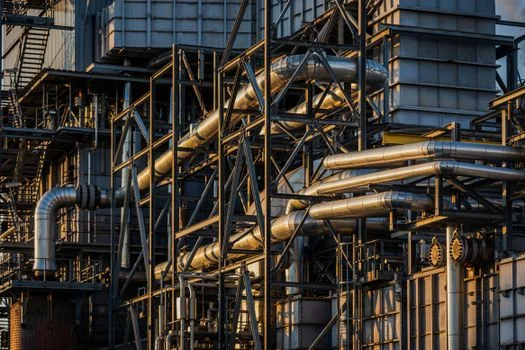
Implementing zero liquid discharge (ZLD) systems for TFT-LCD wastewater represents the pinnacle of water sustainability, but it requires significant capital investment. ZLD systems for this sector typically range from $1.5M to $5M in CAPEX for 50–200 m³/h capacities. The inclusion of crystallizers and brine concentrators adds 30–40% to the initial equipment cost compared to standard reclaim systems (per 2024 Global Water Intelligence report).
Thermal technologies, such as Mechanical Vapor Recompression (MVR) or Multi-Effect Evaporators, are the traditional backbone of ZLD, recovering 90–95% of water from RO brine. However, their energy consumption is substantial, often requiring 20–30 kWh/m³—significantly higher than the 3–5 kWh/m³ required for RO. To mitigate these costs, emerging technologies like Electrodialysis (ED) and Forward Osmosis (FO) are being deployed as "brine concentrators" to reduce the volume of water that must be thermally evaporated, potentially lowering OPEX to as little as $5/m³ (per 2023 Journal of Membrane Science).
The ROI for a ZLD system is driven by the avoidance of discharge costs and the "byproduct opportunity." A 100 m³/h ZLD system can save a manufacturer approximately $1.2M per year in water procurement and discharge penalties. the salts recovered during the crystallization process—such as Sodium Sulfate (Na₂SO₄) and Calcium Fluoride (CaF₂)—can occasionally be sold to chemical manufacturers, offsetting 10–20% of the system's OPEX. While the payback period for ZLD is typically 3–5 years, the long-term benefit lies in total regulatory immunity and water security.
| ZLD Component | Function | Estimated CAPEX (100 m³/h) | Energy Demand |
|---|---|---|---|
| Brine Concentrator (RO/ED) | Pre-concentration of brine | $800,000 - $1.2M | 5 - 8 kWh/m³ |
| MVR Evaporator | Thermal water recovery | $1.5M - $2.5M | 20 - 30 kWh/m³ |
| Crystallizer | Solid salt production | $1.0M - $1.5M | 50 - 70 kWh/m³ |
| Chemical Softening | Silica/Hardness removal | $200,000 - $400,000 | Low (Chemical intensive) |
Compliance Checklist: Meeting China GB, EPA, and EU Discharge Standards for Display Panel Wastewater
EHS managers must navigate a complex web of global discharge standards for display panel wastewater to ensure long-term permit security. China’s GB 31573-2015 is currently among the strictest, requiring COD levels below 50 mg/L and fluoride below 0.5 mg/L. In contrast, the US EPA 40 CFR Part 469 focuses heavily on heavy metals, setting categorical pretreatment standards for Copper at <0.1 mg/L and Nickel at <0.2 mg/L, while allowing slightly higher fluoride limits of <4 mg/L.
The EU Industrial Emissions Directive (2010/75/EU) provides a broader framework where specific limits vary by member state, but generally targets COD at <125 mg/L and heavy metals at <0.5 mg/L. A critical nuance for engineers is the ‘permit paradox’: while ZLD systems eliminate liquid discharge permits, they may trigger the need for air emissions permits. This is due to the potential for volatile organic compounds (VOCs) from TMAH or other solvents to be released during the thermal evaporation process. A Korean manufacturer recently avoided $250,000 in annual fines by proactively upgrading its reclaim system to meet EPA limits for Cu and Ni, demonstrating that compliance is a moving target that requires forward-thinking engineering.
| Standard | COD (mg/L) | Fluoride (mg/L) | Copper (mg/L) | Nickel (mg/L) |
|---|---|---|---|---|
| China GB 31573-2015 | < 50 | < 0.5 | < 0.5 | < 1.0 |
| EPA 40 CFR Part 469 | N/A* | < 4.0 | < 0.1 | < 0.2 |
| EU Directive 2010/75/EU | < 125 | < 15.0 | < 0.5 | < 0.5 |
*EPA limits often depend on local POTW (Publicly Owned Treatment Works) requirements for COD.
Frequently Asked Questions
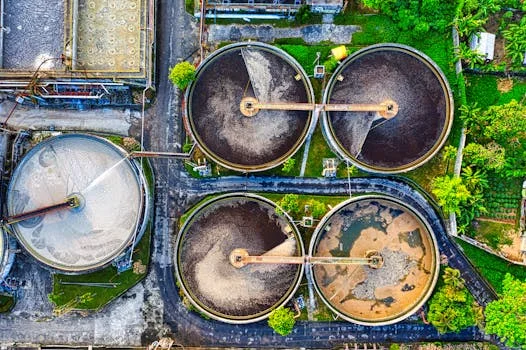
What is the biggest challenge in treating TFT-LCD wastewater?
The primary challenge is the synergistic effect of TMAH fouling and silica scaling. TMAH acts as a potent organic foulant for membranes, while high silica levels (100–300 mg/L) cause rapid, irreversible scaling on RO systems. Managing both requires a precise combination of advanced oxidation and high-efficiency chemical softening (cite 2024 IEEE study).
How much does a display panel water reclaim system cost?
For a standard system (80-90% recovery), CAPEX ranges from $1.2M to $4.5M for capacities of 50–200 m³/h. OPEX typically falls between $3 and $8/m³, depending on the concentration of TMAH and the required level of advanced oxidation.
Can RO systems handle high fluoride levels?
RO systems can remove fluoride, but they should not be the primary removal mechanism. High fluoride influent will lead to calcium fluoride scaling. Pre-treatment using DAF and chemical precipitation is required to bring fluoride levels below 10-20 mg/L before entering the RO stage to ensure membrane longevity (per ASTM D4194-03).
What are the alternatives to ZLD for display panel wastewater?
Partial reclaim (80–90% recovery) is the most common alternative. It has lower CAPEX and OPEX but requires a permit for the remaining 10-20% brine discharge. Offsite disposal is another option but is usually cost-prohibitive for large-scale fabs due to high transportation and hazardous waste treatment fees.
How do I select a water reclaim system for my display panel fab?
Follow this 5-step framework: 1. Audit influent quality (specifically TMAH, Silica, and Fluoride). 2. Define recovery targets (90% vs. 99.9% ZLD). 3. Evaluate the budget (CAPEX vs. long-term OPEX). 4. Cross-reference with local compliance standards (GB vs. EPA). 5. Assess the physical footprint available for equipment installation.