Printed circuit board (PCB) wastewater water reuse systems achieve 99.8% recovery using hybrid zero liquid discharge (ZLD) designs, combining dissolved air flotation (DAF), membrane bioreactors (MBR), and reverse osmosis (RO). Typical effluent meets copper <0.5 mg/L and nickel <0.1 mg/L, complying with EPA 40 CFR Part 469 and EU Industrial Emissions Directive 2010/75/EU. CAPEX ranges from $1.2M–$4.5M for 50–200 m³/h systems, with OPEX of $0.80–$1.50/m³ treated, yielding 2–4 year payback periods for high-volume PCB manufacturers.
Why PCB Manufacturers Must Recycle Wastewater: Water Scarcity, Costs, and Compliance Risks
PCB fabrication consumes 50–150 m³ of water per 1,000 m² of board produced, with approximately 80% of this volume discharged as complex industrial wastewater. For a medium-sized facility processing 50,000 m² of boards monthly, this translates to a daily water demand exceeding 2,500 m³. In water-stressed regions like Shenzhen, China, or Penang, Malaysia, the rising cost of industrial intake water combined with escalating discharge fees has made the "linear" water model economically unsustainable. As of 2025, discharge fees for heavy-metal-laden wastewater exceed $2.50/m³ in major Chinese industrial hubs and $4.00/m³ in the European Union, creating a direct hit to gross margins.
Regulatory pressure adds a layer of operational risk that transcends simple utility costs. Under the EPA 40 CFR Part 469 and the EU Industrial Emissions Directive 2010/75/EU, PCB manufacturers face stringent limits on copper, nickel, and cyanide. Non-compliance fines range from $10,000 to $100,000 per violation, and repeat offenders in regions like the Pearl River Delta face immediate permit revocations. Beyond fines, the physical scarcity of water has forced several plants in Southeast Asia to operate at 70% capacity during dry seasons. Transitioning to printed circuit board wastewater water reuse is no longer just a sustainability goal; it is a prerequisite for operational continuity and regulatory survival.
| Metric | Traditional Discharge Model | High-Recovery Reuse Model |
|---|---|---|
| Water Consumption (per 1k m²) | 120 m³ | 5 m³ (95%+ recovery) |
| Discharge Cost (Avg.) | $3.25/m³ | $0.00 (ZLD) |
| Compliance Risk | High (Heavy metal spikes) | Zero (Closed loop) |
| Annual Utility Savings (100 m³/h) | $0 | $1.8M - $2.4M |
PCB Wastewater Contaminant Profile: Heavy Metals, Organics, and Treatment Challenges
PCB wastewater contains heavy metal concentrations including copper (50–500 mg/L) and nickel (20–200 mg/L) alongside high organic loads from photoresist stripping. The primary engineering challenge lies in the chemical state of these metals. Unlike simple metal salts, copper and nickel in PCB manufacturing often exist as stable complexes with organic ligands such as EDTA, tartrates, or ammonia. These complexes resist standard hydroxide precipitation, requiring advanced oxidation or specialized ion exchange resins to break the molecular bonds before the metals can be removed. High-efficiency copper removal strategies for electronics manufacturing wastewater often involve Fenton oxidation to degrade the chelating agents, followed by pH adjustment to precipitate the free ions.
Fluoride and organic pollutants present additional hurdles for membrane-based reuse systems. Fluoride, originating from hydrofluoric acid (HF) etching, requires precipitation with calcium salts to form CaF₂, though its inherent solubility (16 mg/L at pH 7) often necessitates secondary adsorption on activated alumina to meet strict reuse standards. Organics such as black oil, dry film, and wet film residues are notorious for causing irreversible membrane fouling. Implementing a DAF system for PCB wastewater pretreatment is essential to remove these emulsified oils and suspended solids, extending the operational life of downstream RO membranes by 25–35%.
| Contaminant | Concentration (Raw) | Treatment Requirement | Reuse Target |
|---|---|---|---|
| Copper (Cu²⁺) | 50–500 mg/L | Chelate breaking + Precipitation | <0.2 mg/L |
| Nickel (Ni²⁺) | 20–200 mg/L | Ion Exchange / Adsorption | <0.05 mg/L |
| Fluoride (F⁻) | 10–100 mg/L | Calcium Precipitation | <2.0 mg/L |
| COD | 300–1,500 mg/L | MBR / Advanced Oxidation | <30 mg/L |
Engineering Blueprint: 3 System Designs for PCB Wastewater Water Reuse
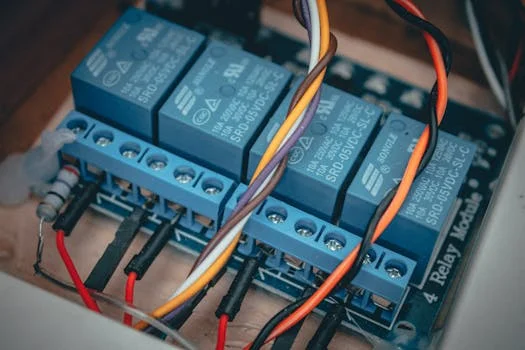
Hybrid Zero Liquid Discharge (ZLD) systems for PCB manufacturing integrate physical-chemical pretreatment with advanced membrane separation to achieve up to 99.8% water recovery. The selection of a system design depends on the specific effluent quality requirements of the facility and the available CAPEX budget. Below are three engineering blueprints currently deployed in 2025-standard facilities.
Design 1: Hybrid ZLD System (99.8% Recovery)
This configuration is the gold standard for facilities in zero-discharge zones. It utilizes a DAF system for PCB wastewater pretreatment to remove FOG and TSS, followed by DF series PVDF flat sheet MBR modules for PCB wastewater treatment to stabilize COD. The permeate is then processed through a JY series RO systems for PCB wastewater polishing and reuse, with the RO concentrate sent to a mechanical vapor recompression (MVR) evaporator. This ensures total water recovery and solid waste crystallization. CAPEX for a 100 m³/h system is approximately $3.2M.
Design 2: MBR + RO (95% Recovery)
Designed for plants that can discharge a small brine stream, this system skips the evaporator. It focuses on high-flux membrane separation. The MBR stage handles the biological load, while a two-stage RO system pushes recovery to 95%. The resulting effluent is suitable for high-purity rinsing and cooling tower makeup. This design balances high recovery with a lower CAPEX of $1.8M for 100 m³/h. Engineers should refer to a detailed MBR engineering guide for industrial wastewater reuse to optimize flux rates between 15–25 LMH.
Design 3: Chemical Precipitation + DAF (80% Recovery)
This is a cost-effective pretreatment-heavy design for facilities prioritizing heavy metal removal over total water recycling. It utilizes PLC-controlled chemical dosing for PCB wastewater pH adjustment and coagulation to precipitate metals, which are then floated out via DAF. This design is ideal for preparing water for low-grade reuse applications like floor cleaning or initial rinsing stages, with a CAPEX of only $800K for 100 m³/h.
| System Design | Recovery Rate | Key Components | Best Use Case |
|---|---|---|---|
| Hybrid ZLD | 99.8% | DAF + MBR + RO + MVR | Water-scarce / Zero-discharge zones |
| Membrane-Centric | 95% | MBR + High-Recovery RO | General manufacturing reuse |
| Phys-Chem Plus | 80% | DAF + Media Filtration | Low-grade reuse / Pre-discharge |
Contaminant Removal Benchmarks: How Each Technology Performs
DAF units provide 92–97% total suspended solids (TSS) removal, serving as a critical protection stage for downstream membrane modules. In PCB wastewater, DAF is particularly effective at removing emulsified oils from the "black hole" process and dry film residues that would otherwise coat RO membranes. By maintaining a pH between 6.5 and 7.5 and dosing 50–100 mg/L of PAC, engineers can achieve up to 70% copper removal within the DAF unit alone, significantly reducing the load on secondary treatment stages.
MBR and RO technologies provide the final barrier for dissolved contaminants. The DF series PVDF flat sheet MBR modules for PCB wastewater treatment achieve 99% TSS removal and 90–95% COD reduction, operating at a membrane flux of 15–25 LMH. For fluoride, fluoride removal techniques for PCB and semiconductor wastewater involving RO polishing are necessary to reach concentrations below 2.0 mg/L. RO systems typically achieve a 99% rejection rate for divalent ions like copper and nickel, provided the feed water Silt Density Index (SDI) is maintained below 3.0 through effective MBR filtration.
| Technology | Copper Removal | Nickel Removal | COD Removal | TSS Removal |
|---|---|---|---|---|
| DAF | 60–70% | 50–60% | 30–40% | 92–97% |
| MBR (DF Series) | 95% | 95% | 90–95% | 99% |
| RO (JY Series) | 99%+ | 99%+ | 98% | 100% |
CAPEX vs. OPEX: Cost Breakdown for PCB Wastewater Reuse Systems
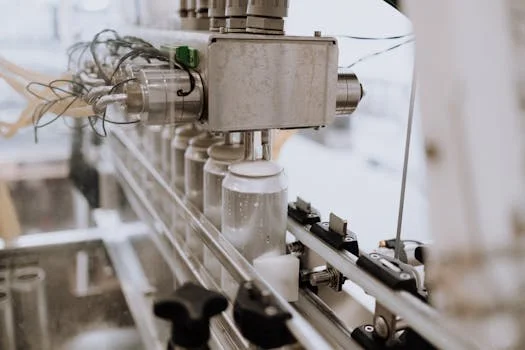
A 100 m³/h PCB wastewater reuse system requires a total CAPEX of approximately $3.2M for a hybrid ZLD configuration. This investment is distributed across several key subsystems: the DAF unit ($250K), the MBR module ($800K), the JY RO system ($500K), and the MVR evaporator ($1.2M). The remaining $450K covers automated controls, piping, and installation. While the initial investment is significant, the removal of discharge fees and the reduction in raw water procurement costs often result in a payback period of 2.5 to 4 years for high-volume manufacturers.
Operating expenses (OPEX) for these systems average $0.80 to $1.10 per cubic meter of treated water. Chemical costs, primarily for pH adjustment and coagulation, account for $0.20/m³. Energy consumption, dominated by the MBR aeration and RO high-pressure pumps, typically ranges from 0.8 to 1.5 kWh/m³, costing roughly $0.30/m³. To minimize these costs, plants are increasingly adopting PLC-controlled chemical dosing for PCB wastewater pH adjustment and coagulation, which optimizes chemical consumption by responding in real-time to influent sensor data. Regular membrane replacement and labor constitute the remaining $0.30/m³.
| OPEX Category | Cost per m³ (USD) | % of Total OPEX |
|---|---|---|
| Chemical Dosing | $0.20 | 25% |
| Energy (Electricity) | $0.30 | 38% |
| Membrane Replacement | $0.15 | 19% |
| Labor & Maintenance | $0.15 | 18% |
| Total OPEX | $0.80/m³ | 100% |
Compliance Checklist: Meeting EPA, EU, and China GB Standards for PCB Wastewater
EPA 40 CFR Part 469 establishes daily maximum copper limits of 3.4 mg/L and nickel limits of 2.6 mg/L for electronic crystal manufacturing, which includes many PCB processes. However, local municipal codes in the U.S. often impose much stricter limits, sometimes requiring copper levels below 0.5 mg/L to protect local POTWs (Publicly Owned Treatment Works). In the European Union, the Industrial Emissions Directive (IED) 2010/75/EU sets the benchmark for Best Available Techniques (BAT), pushing copper limits to <0.5 mg/L and nickel to <0.1 mg/L for any direct discharge or reuse application.
China updated its GB 8978-1996 standards in 2023 to include more stringent fluoride limits (<10 mg/L) and lower COD thresholds (<100 mg/L) for the electronics industry. To ensure continuous compliance, engineers must implement a monitoring regime that includes continuous pH and ORP (Oxidation-Reduction Potential) sensors at the pretreatment stage, alongside weekly heavy metal testing using ICP-OES (Inductively Coupled Plasma Optical Emission Spectroscopy). Automated reporting systems are now a standard requirement for Tier 1 PCB suppliers to demonstrate environmental stewardship to global electronics brands.
| Standard | Copper (mg/L) | Nickel (mg/L) | Fluoride (mg/L) | COD (mg/L) |
|---|---|---|---|---|
| EPA 40 CFR 469 | <3.4 | <2.6 | N/A | N/A |
| EU IED (BAT) | <0.5 | <0.1 | <15.0 | <50.0 |
| China GB 8978 | <0.5 | <1.0 | <10.0 | <100.0 |
Case Study: 99.8% Water Recovery in a Shenzhen PCB Plant
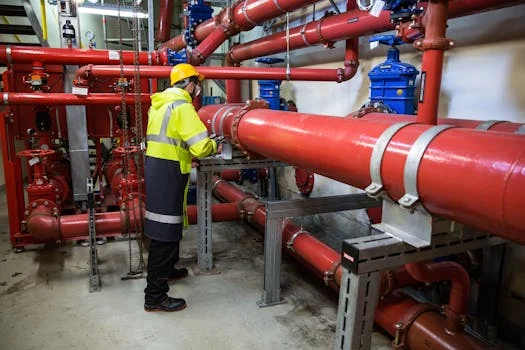
A 200 m³/h PCB manufacturing facility in Shenzhen successfully implemented a hybrid ZLD system to achieve 99.8% water recovery and a 3.2-year payback. The plant previously struggled with fluctuating copper and nickel concentrations that frequently exceeded local discharge limits of 0.5 mg/L. The raw wastewater profile showed copper levels as high as 300 mg/L and nickel at 150 mg/L, primarily from the electroless plating and etching lines. The high organic content from the dry film process was also causing rapid fouling of their existing sand filters.
The solution involved a comprehensive redesign using a DAF for primary solids and oil removal, followed by a DF series MBR for biological stabilization. The polished water was then fed into a JY series RO system. The RO concentrate, which contained the bulk of the dissolved salts and remaining metals, was processed through an MVR evaporator to produce clean distillate and a small volume of dry metal crystals for off-site recycling. The results were immediate: effluent copper levels dropped to <0.1 mg/L and nickel to <0.05 mg/L. By recycling 99.8% of their water, the plant reduced its monthly water procurement costs by $140,000 and completely eliminated discharge-related fines. The integration of DAF pretreatment extended the MBR membrane cleaning cycle from 2 weeks to 3 months, significantly reducing maintenance labor.
Frequently Asked Questions
How do you remove chelated copper from PCB wastewater?
Chelated copper, often bound with EDTA or ammonia, cannot be removed by simple pH adjustment. The most effective engineering approach is Advanced Oxidation Processes (AOP), such as Fenton’s reagent (Fe²⁺/H₂O₂), which breaks the organic bonds. Once the chelate is destroyed, the free copper ions can be precipitated as copper hydroxide at pH 8.5–9.2 or removed via specialized ion exchange resins.
What is the typical lifespan of an MBR membrane in PCB applications?
In a well-maintained PCB reuse system with proper DAF pretreatment, DF series PVDF flat sheet membranes typically last 3 to 5 years. Lifespan is heavily dependent on the effectiveness of the pretreatment in removing oils and dry film residues. Automated CIP (Cleaning-in-Place) cycles using citric acid and sodium hypochlorite are essential to maintain flux rates between 15–25 LMH.
Can RO permeate be reused directly in the PCB etching process?
Yes, RO permeate from a JY series system typically features a Conductivity <50 µS/cm and TDS <50 mg/L, making it suitable for most rinsing stages. However, for critical inner-layer etching or final finish rinses, the RO permeate may require a final "polishing" step using a mixed-bed ion exchanger to achieve ultra-pure water (UPW) standards (>18 MΩ·cm).
What are the primary drivers of OPEX in a ZLD system?
Energy and chemicals are the primary OPEX drivers. Energy consumption for a full ZLD system (including evaporation) can reach 10–15 kWh/m³, though the MBR/RO portion alone is only 1.0–1.5 kWh/m³. Chemical costs are driven by the need for pH adjustment, coagulants for DAF, and cleaning agents for membranes. Automation significantly reduces these costs by preventing chemical over-dosing.
Is Zero Liquid Discharge (ZLD) mandatory for all PCB plants?
While not globally mandatory, ZLD is increasingly required by local regulations in industrial zones across China, India, and parts of the EU. Even where not mandated, the rising cost of water and the risk of production halts during droughts make the 99.8% recovery rate of ZLD systems a strategic financial investment for large-scale PCB manufacturers.