Which Rules Govern a Wallins Creek Sewer Discharge?
Mining and metals plants near Wallins Creek meet sewer limits by treating each wastewater stream for the pollutants that reach the sewer, then demonstrating compliance with the receiving POTW’s sewer-use ordinance and applicable Clean Water Act requirements. Sewer discharges are governed under Clean Water Act §307(b) and 40 CFR Part 403; 40 CFR Part 437 may apply to ore mining and dressing, while 40 CFR Part 433 may apply to metal finishing. A defensible train starts with equalization, automated pH adjustment and precipitation, then uses DAF or lamella clarification, filtration, and controlled sludge dewatering. The Wallins Creek-area permit, influent characterization, and receiving-authority limits—not generic numbers—define final equipment sizing.
The receiving POTW’s requirements control the sewer-discharge pathway through its sewer-use ordinance, industrial-user permit, and applicable state requirements. A sewer discharge is not the same as a direct surface-water discharge: an operation may need an NPDES permit for a separate outfall while the POTW controls wastewater entering its collection system. For covered metal-finishing operations, the supplied HydropureWater article identifies copper limits of 3.38 mg/L daily maximum and 2.07 mg/L monthly average, and total chromium limits of 2.77 mg/L daily maximum and 1.71 mg/L monthly average under 40 CFR Part 433.15. Verify those values against current rules and the POTW order before design.
Do not infer the applicable category from the word “mining.” Identify the production process, discharge stream, categorical subcategory, and whether the operation is an ore mining and dressing facility or covered metal-finishing operation. Obtain the current POTW sewer-use ordinance, industrial-user permit, discharge monitoring report, sampling point, flow-monitoring method, and any consent or slug-discharge conditions. The USGS Wallins Creek geologic map, Froelich’s 1972 Geologic Quadrangle 1016, is useful site context, but it does not establish the composition of any wastewater stream.
| Document or requirement | What it controls | Design action |
|---|---|---|
| POTW sewer-use ordinance | Local discharge limits, prohibitions, monitoring and enforcement | Use as the governing design basis for the sewer pathway. |
| Industrial-user permit | Authorized discharge, sampling, reporting, fees and operating conditions | Confirm all preliminary design assumptions before purchasing equipment. |
| 40 CFR Part 403 | Federal pretreatment framework | Determine local limits and categorical-standard applicability. |
| 40 CFR Parts 437 or 433 | Applicable categorical requirements | Identify the correct subcategory and production process. |
| State requirements | Additional permitting or monitoring obligations | Obtain the current state requirements for the facility and discharge point. |
Related local references include mining sewer pretreatment guidance for Rockholds and mining and metals pretreatment guidance for Easton.
Build the Wastewater Profile Before Sizing Equipment?
Representative and worst-case characterization—not a generic mining-water recipe—must establish the design flow, contaminant load, and required removal performance before equipment is sized. The supplied HydropureWater article reports a raw-stream profile of pH 2–4, suspended solids in the hundreds to several thousand mg/L, and potential lead, copper, zinc, cadmium, nickel, arsenic, sulfate, and TDS. Those values are investigation prompts, not a Wallins Creek baseline.
Segregate contact water, pit or dewatering water, runoff, process water, washdown, floor drainage, cooling or boiler blowdown, and contaminated stormwater before combining them. Characterize each stream for pH, total suspended solids, oil and grease, metals, sulfate, total dissolved solids, temperature, and flow during normal production, peak discharge, shutdown, washdown, and rainfall events. Establish which parameters must be reduced before sewer entry.
The 2024 review Improving acid mine drainage treatment by combining treatment technologies reports that acid mine drainage can contain high concentrations of aluminum, manganese, and iron, while mining wastewater may also contain arsenic, cadmium, chromium, mercury, sulfates, and oil and grease. These findings define contaminants to investigate; they do not establish concentrations at a particular mine.
| Characterization element | Required information | Why it affects the design |
|---|---|---|
| Source inventory | Origin, routing, normal flow, peak flow and contamination potential for each stream | Prevents dilution and uncontrolled batch discharges. |
| Flow record | Production, washdown, clean-out and rainfall response | Sets equalization and peak hydraulic capacity. |
| Water chemistry | pH, TSS, oil and grease, metals, sulfate, TDS and temperature | Identifies treatment targets and competing reactions. |
| Sampling method | Automatic composite, flow- or time-proportional composite, or grab as directed | Produces defensible data for limits and treatment trials. |
| Event log | Rainfall, production, reagent changes and clean-outs | Explains excursions and supports mass balances. |
Use automatic composite sampling where required, flow- or time-proportional composites as directed, and grab samples for slug or batch releases. Pair laboratory results with batch logs and operating records. The supplied research establishes no numeric Wallins Creek POTW limits; replace generic values with verified permit conditions. For related process context, compare MBR versus activated sludge for mining wastewater and the copper-mine wastewater treatment process guide.
Match Each Waste Stream to a Treatment Step?
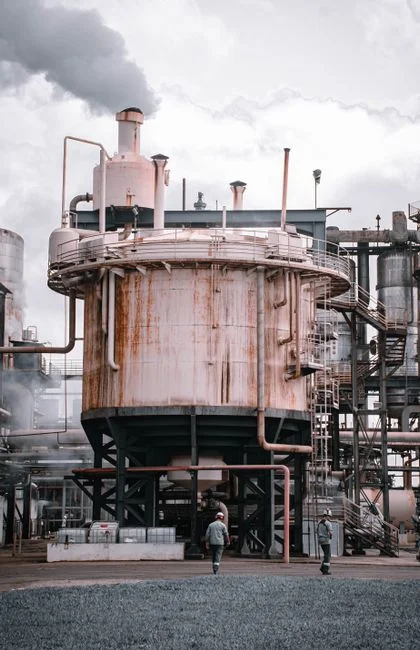
The auditable sequence is source segregation, equalization, pH control and chemical reaction, solids separation, polishing filtration, optional disinfection, and final monitoring, with diversion whenever a stream exceeds the permitted profile. Equalization buffers batch and washdown releases; pH adjustment establishes conditions for precipitation; clarification removes the resulting flocs; filtration protects the downstream limit; and monitoring verifies the complete train.
PLC-controlled chemical feed provides the repeatable dosing needed for acid mine drainage pH adjustment, metal hydroxide flocculation, and coagulant or flocculant addition. The supplied HydropureWater source identifies automatic dosing as a way to maintain tight process control and reduce operator-attention burden. A PLC-controlled chemical dosing system should therefore be specified around verified control ranges, interlocks, probe redundancy, chemical inventory limits, and fail-safe responses.
Hydroxide precipitation is the common default for dissolved metals. Sulfide-based polishing may be justified when the verified limit requires lower residual concentrations. The supplied article reports sulfide residuals of 0.01–0.05 mg/L for copper, zinc, cadmium, and nickel compared with 0.5–2.0 mg/L for hydroxide, but also reports sulfide reagent cost at 2–4 times hydroxide cost and requires sealed reactors with hydrogen sulfide scrubbing. Those figures support a technology-screening comparison; jar testing and the verified permit still determine the process.
| Treatment function | Principal equipment | Selection basis |
|---|---|---|
| Equalization and diversion | Equalization basin, pumping and approved off-spec route | Verified peak, batch and rainfall flows. |
| pH control and metal precipitation | Reactor, mixer and automatic dosing skid | Influent chemistry, target metals and jar-test results. |
| Floc separation | DAF or lamella clarifier | Oil and colloid content versus metal-hydroxide floc load and footprint. |
| Polishing | Filtration with defined backwash handling | Residual solids and filterable metals relative to the verified limit. |
| Optional disinfection | Chlorine dioxide where specifically required | POTW ordinance, collection-system conditions and permit conditions. |
Use DAF where oil, grease, free oil, or fine colloidal material is present. The supplied DAF source states 90–98% TSS removal and 85–95% oil and grease removal. Use lamella clarification where metal-hydroxide flocs dominate, flow is comparatively high, and floor area is constrained; the supplied lamella source states 20–40 m/h surface loading. The supplied article states that chlorine dioxide is used at 1–5 mg/L where a residual is required and avoids the regulated trihalomethanes associated with chlorine. Include it only where the POTW or permit requires disinfection.
The 2024 review Mining wastewater treatment technologies and resource recovery techniques identifies SAVMIN, SPARRO, biogenic sulfide, and DESALX as technologies used for mining wastewater treatment and recovery. Applicability depends on stream chemistry, reuse objectives, and secondary-waste management. Further equipment context is available in lamella clarifier engineering specifications and application data and the DAF-versus-clarifier decision guide.
Choose DAF or Lamella Clarification from the Waste Profile?
DAF is the stronger starting candidate for oily or finely emulsified wastewater, while lamella clarification is the stronger candidate for a high-flow metal-hydroxide floc stream with a constrained footprint. The supplied HydropureWater article identifies DAF as covering 4–300 m³/h across 13 models and operating at 5–25 m/h hydraulic loading. It reports 90–98% TSS removal and 85–95% oil and grease removal in mining and metal-finishing service.
The supplied lamella catalog states 20–40 m/h surface loading and combines sludge recirculation, flocculation, and inclined-plate separation. Those values describe the catalog basis, not a plant guarantee. Neither system should be selected from average flow alone: the supplied HydropureWater article recommends designing for the peak two-hour flow with 20–30% turndown capacity.
| Decision point | Prefer DAF | Prefer lamella clarification |
|---|---|---|
| Dominant contamination | Oil, grease, free oil or fine colloids | Metal-hydroxide flocs |
| Hydraulic driver | Flow with a flotation and oil-removal duty | High flow requiring compact separation |
| Supply basis | 4–300 m³/h catalog range; 5–25 m/h hydraulic loading | 20–40 m/h catalog surface loading |
| Bid requirement | Guarantee TSS, oil, colloid and sludge-interface performance | Guarantee flow, surface loading, solids loading and carryover |
Require each supplier to state guaranteed flow, hydraulic loading, solids loading, floc condition, polymer demand, oil-removal performance, sludge-interface control, maintenance access, controls, and auxiliary-power requirements. The commercial Ecologix example includes a 200 GPM incline plate clarifier, chemical mixing, equalization, a clearwell, and a filter press. It demonstrates that equipment boundaries should cover the treatment train, not isolate one vessel.
For additional selection context, review the cavitation air flotation process-flow guide and belt-filter-press process-flow guide.
Treat and Dispose of the Metal-Bearing Sludge?
Metal removal transfers contamination into a concentrated residue, so sludge characterization and destination approval must be part of the treatment design. The precipitation method determines whether the residue is managed as industrial sludge, a characteristic waste, or a material evaluated for metals recovery; the applicable determination must be documented with supporting characterization.
A plate and frame filter press for metal-bearing sludge is appropriate where batch operation, high solids capture, and a filterable cake are preferred. HydropureWater’s catalog lists filtration areas from 1 m² to 500 m² and manual, hydraulic, or fully automatic PLC-controlled operation. These are equipment-selection ranges, not proof of the required area; calculate area from representative solids, solids concentration, batch volume, and desired cycle performance.
Evaluate belt presses or other dewatering options only after reviewing sludge characterization, disposal acceptance, operating labor, filtrate quality, and lifecycle costs. Dewatering does not determine waste classification. Design filtrate return carefully because it can recycle dissolved contaminants to the treatment headworks; include a contaminant mass balance and a controlled return point.
The 2024 review Mining wastewater treatment technologies and resource recovery techniques warns that some technologies can generate highly toxic sludge and other waste products. This supports explicit evaluation of secondary waste rather than focusing only on clarified water. The supplied research establishes no Wallins Creek disposal code, acceptance criterion, or receiving facility. Require site-specific waste characterization and written destination approval before finalizing the sludge system.
Verify Compliance with Monitoring and Contingency Controls?
Compliance depends on continuously reconciling flow, chemistry, operating conditions, and laboratory results against the verified permit. Install continuously recorded total flow measurement at the point required by the POTW and reconcile meter readings with batch logs, production records, rainfall events, and laboratory results.
Set alarm and diversion points for high flow, pH excursions, excessive suspended solids, and upset conditions. Route nonconforming water to equalization or another approved management route rather than bypassing treatment. Tie automatic pH and chemical controls to the verified permit range, and define operator responses for chemical depletion, probe failure, mixer failure, and power loss.
Use the POTW’s specified sampling and analytical methods. Preserve split samples, chain-of-custody records, calibration records, laboratory qualifiers, and corrective-action documentation. The supplied HydropureWater article cites commonly cited 2026 ranges of zinc at 0.3–1.0 mg/L monthly average and copper at 0.3–0.5 mg/L monthly average, but labels them only as examples; the article does not verify them for Wallins Creek. Installed alarm setpoints must come from the receiving authority’s actual requirements.
Commission the system by challenging representative batches, chemical-dose steps, off-spec flow, and equipment-failure scenarios before routine discharge authorization. The wastewater and cooling-blowdown treatment guide provides related operating context, but the Wallins Creek permit remains controlling.
Questions to Ask Before Ordering Equipment?
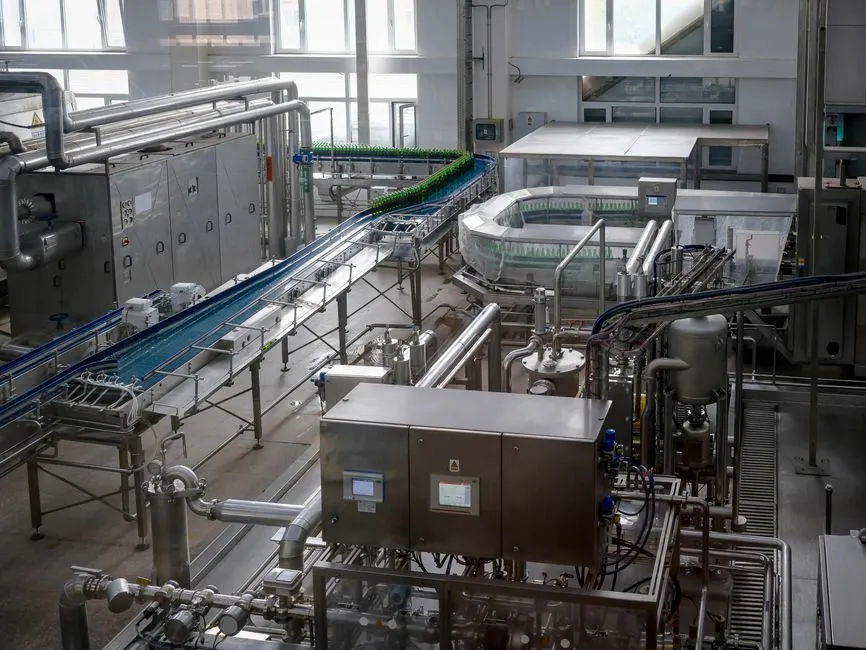
A bid should be evaluated against the verified permit, measured wastewater, and an auditable design calculation—not a generic mining-industry compliance statement. Require bidders to identify the governing POTW requirements and categorical standard, then submit a guaranteed effluent basis, process flow diagram, equipment sizing calculation, chemical-consumption estimate, solids balance, control narrative, utility requirements, and operating and maintenance cost estimate.
| Bid item | Required evidence | Reason for review |
|---|---|---|
| Regulatory basis | POTW permit conditions, sewer-use ordinance and applicable categorical provisions | Confirms the correct compliance envelope. |
| Performance guarantee | Guaranteed flow, pollutant performance, sampling method and test conditions | Converts design claims into an enforceable acceptance basis. |
| Sizing calculation | Peak-flow, hydraulic-loading and solids-loading calculations | Tests equipment capacity against the actual wastewater profile. |
| Chemical and solids balance | Reagent consumption, precipitate yield, sludge volume and filtrate return | Exposes operating and secondary-waste costs. |
| Scope and delivery | Installation, commissioning, training, spares, controls integration and performance protocol | Clarifies responsibility before award. |
Demand evidence that the proposed DAF or lamella unit handles the verified oil, colloid, TSS, and metal-hydroxide properties at peak flow. Compare whole-system costs, including chemicals, sludge handling and disposal, operator labor, energy, maintenance, instrumentation, controls, and permit-excursion risk—not purchase price alone. No project-specific lead time was supplied by the research, so request a committed delivery and commissioning schedule. Make acceptance conditional on verified wastewater data, a performance test, and correction of deviations before POTW authorization to discharge.
For related comparisons, see MBR versus activated sludge for mining wastewater and the lamella clarifier engineering guide.
Frequently Asked Questions
Which regulatory limits govern mining and metals wastewater discharged to a Wallins Creek sewer?
The POTW’s current sewer-use ordinance and industrial-user permit govern the sewer pathway, together with applicable Clean Water Act pretreatment requirements. Determine whether the facility falls under 40 CFR Part 437 ore mining and dressing or 40 CFR Part 433 metal finishing by identifying the production process and subcategory. Obtain the permit, monitoring requirements, state rules, and current categorical text before setting equipment targets.
Should the treatment train use DAF or lamella clarification?
Choose DAF when oil, grease, free oil, or fine colloids are material contaminants; choose lamella clarification when the principal solids are metal-hydroxide flocs and footprint is a constraint. Confirm the decision with representative wastewater testing and the bidder’s guaranteed performance basis. The comparison must cover peak flow, solids loading, chemical demand, sludge handling, and auxiliary power.
What equipment size should a buyer request for the Wallins Creek pretreatment system?
Request sizing based on verified peak flow, peak two-hour flow, turndown, contaminant loads, and sludge-generation calculations. The supplied catalog ranges are 4–300 m³/h for DAF and 1–500 m² of filtration area for plate-and-frame presses; neither range establishes the plant requirement. The supplied HydropureWater article also recommends designing for peak two-hour flow with 20–30% turndown capacity.
What drives the cost of mining wastewater pretreatment equipment?
Request separate quotation lines for DAF versus lamella equipment, chemical use, equalization, sludge dewatering, disposal, utilities, controls, installation, commissioning, performance testing, and ongoing operation. The equipment choice changes these drivers because DAF addresses oil and colloids, while lamella clarification addresses floc separation; chemical intensity and sludge volume can materially affect total cost. No Wallins Creek project price was supplied, so no defensible local cost can be stated without project-specific wastewater and disposal information.
How should a supplier be qualified before equipment selection?
Require identification of the governing POTW and categorical requirements, a process flow diagram, sizing calculations, guaranteed effluent basis, solids balance, control narrative, utility requirements, and a performance-test protocol. Check whether the proposed equipment has been justified against the verified oil, colloid, TSS, and metal-hydroxide properties rather than generic mining marketing. Also confirm delivery, installation, commissioning, training, spares, controls integration, and deviation correction in the contract.
What site-specific information is needed before designing treatment equipment near Wallins Creek?
Obtain the POTW identity, sewer-use ordinance, industrial-user permit, discharge monitoring report, sampling point, flow method, and consent or slug-discharge conditions. Characterize representative and worst-case streams for flow, pH, TSS, oil and grease, metals, sulfate, TDS, and temperature, and document production, washdown, rainfall, reagent-change, and clean-out events. The Wallins Creek geologic map provides context but cannot substitute for these site data.
Related Equipment
- industrial DAF system for mining wastewater — specifications, capacity range, and technical data
- lamella clarifier for metal-hydroxide sludge — specifications, capacity range, and technical data