
What Houston's Trade Waste Rules Mean for Treatment Design
The City of Houston Industrial Wastewater Service regulates industrial waste discharged into the City’s sanitary sewer to protect the collection system, treatment plants, workers, and bayou water quality. It administers and enforces the Clean Water Act with state and federal regulations and City of Houston Ordinance, Chapter 47, Section V. A treatment design should therefore begin with the facility’s authorization, local pretreatment requirements, receiving-sewer conditions, and any applicable NPDES conditions—not with a generic COD target.
Industrial pretreatment is not synonymous with direct surface-water permitting. An indirect discharger discharging process wastewater to the sanitary sewer must satisfy the applicable City authorization and pretreatment controls. A direct discharger must instead evaluate its NPDES permit and associated discharge conditions. Both routes require the project team to identify the authorized sampling point, applicable flow and loading limits, monitoring frequency, reporting requirements, and renewal owner.
Before selecting a pump, reactor, flotation unit, or filter, compile a permit and routing dossier covering process wastewater, sanitary wastewater, and any stormwater that can enter the sewer; the physical sewer route; metering and sampling locations; production and cleaning schedules; analytical methods; discharge frequency; and responsible permit personnel. The facility’s actual authorization must supply the applicable COD condition; no universal Houston COD limit should be assumed.
Regional examples of how manufacturers translate discharge constraints into equipment decisions are available in the mining and metals sewer-limit discussion and the plastics and rubber wastewater treatment example. Their process logic applies in Houston, but local authorization and receiving conditions remain controlling.
Characterize the Waste Before Choosing Equipment
Chemical oxygen demand measures the oxygen equivalent of oxidizable material under dichromate oxidation under U.S. EPA Method 410.4, with results reported in mg/L. COD therefore quantifies oxidation demand rather than complete wastewater treatability; soluble refractory compounds, suspended material, oil, toxicity, pH, and flow variability can each change the viable treatment path. U.S. EPA Method 410.4 establishes the analytical basis, while the commercial Bristola guide, Chemical Oxygen Demand in Wastewater Treatment, describes APHA Standard Methods 5220 D closed-reflux colorimetric analysis.
The Bristola guide describes a 2–3-hour total analysis process and identifies mercury sulfate, silver sulfate, hexavalent chromium, and concentrated sulfuric acid as hazardous materials requiring authorized chemical-waste disposal. Laboratory coordination and waste handling are therefore part of COD characterization, not details to defer until sampling is underway.
Characterize COD, BOD, TSS, oil and grease, pH, flow, temperature, conductivity or salinity, and toxicity where relevant. Use time-based sampling rather than one grab sample, with particular attention to batch dumps, cleaning cycles, and production peaks. Whole-stream mass balances should connect each discharge source to the metered sewer flow. Equalization may be necessary when those streams create short-duration hydraulic or organic loading peaks.
Paired COD and BOD results provide the first biodegradability screen. The Bristola guide states that a BOD/COD ratio below 0.25 indicates significant non-biodegradable content; a ratio above 3:1 suggests that biological treatment alone may leave a significant residual COD load. These are screening relationships, not substitutes for process-specific testing.
| Input | Decision supported | Evidence required |
|---|---|---|
| COD and paired BOD | Biological feasibility and likely residual COD | Method-qualified results across representative production cycles |
| TSS and particle size | Screening, equalization, clarification, and filtration needs | Whole-stream mass balance and time-based samples |
| Oil and grease | DAF, segregation, and recovered-floatable handling | Source-specific concentrations and recovered-material volume |
| pH, temperature, conductivity or salinity, and toxicity | Chemical compatibility and biological operating envelope | Samples covering normal and upset conditions |
| Flow and load timing | Equalization, pumping, reactor, and solids-handling capacity | Continuous metering supported by synchronized composite sampling |
Build a Treatment Train from Source to Effluent
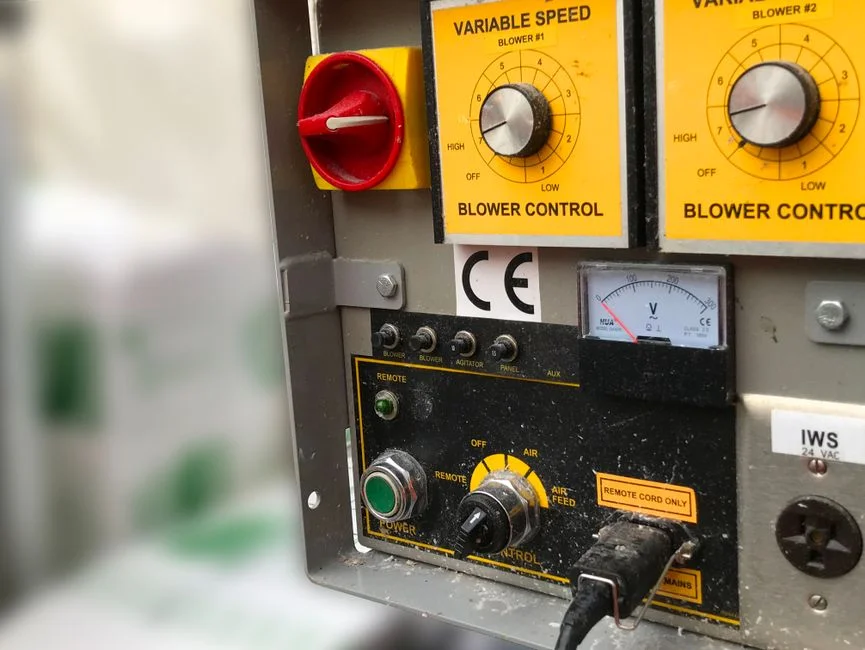
Source control determines how much treatment capacity the rest of the train must handle. Segregate incompatible streams where practical, exclude concentrated cleaning chemicals where feasible, and prevent slug discharges from passing directly into biological or chemical equipment. Mechanical screening or coarse solids removal then protects downstream pumps, valves, and biological systems. The GX rotary mechanical bar screen is designed for continuous-duty removal of suspended solids, rags, plastics, and fibrous debris.
Equalization and mixing should precede any unit whose performance depends on consistent hydraulic and organic loading. Where floatable oil, suspended solids, or colloidal material would impair biological treatment, dissolved air flotation provides a physical-removal barrier. The industrial DAF wastewater treatment system offered by HydropureWater spans 4–300 m³/h across 13 models with automatic skimming.
Multiple barriers may be necessary. The Robert Gordon University dissertation Sustainable development of an integrated solid waste and wastewater treatment (2012) found that a filtration-based mechanical separation system reduced TSS, BOD, and TOC in oily wastewater. In the same study, electro-coagulation removed 99.9% of TPH from interceptor effluent, and chemical-enhanced filtration reduced sewage-sludge volume by 52.6%. These are study-specific results for the tested waste streams and units—not universal DAF, electro-coagulation, or chemical-filtration performance guarantees.
Route separated oil, FOG, DAF float, and sludge to controlled recovery or dewatering. The HydropureWater plate-and-frame filter press spans filtration areas from 1–500 m² and offers manual, hydraulic, and fully automatic PLC-controlled operation. Advanced oxidation should be reserved for waste characteristics or residual-COD objectives that justify it: the Robert Gordon University study demonstrated TPH reduction in contaminated groundwater through an advanced oxidation process, not a universal high-COD municipal treatment outcome.
| Process position | Primary role | Design hand-off |
|---|---|---|
| Source control and segregation | Exclude incompatible or concentrated slug streams | Documented stream inventory and production sequence |
| Screening | Remove rags, plastics, fibers, and coarse solids | Extracted-material handling and downstream screen capacity |
| Equalization | Level hydraulic and organic loading | Approved operating volume, mixing method, and pump control |
| DAF | Remove recoverable floatables, suspended solids, and colloids | Feed condition, recovered-float volume, and sludge route |
| Biological treatment | Remove biodegradable dissolved organics | Biodegradability, loading, temperature, pH, and sludge controls |
| Chemical or advanced treatment | Address selected residual pollutants | Waste-specific test data and residual-COD objective |
| Solids handling | Recover and dewater separated residues | Filtration area, pressure, cake properties, and disposal route |
Choose Biological Treatment for the COD Profile
Biological selection should follow wastewater strength and biodegradability, not a COD threshold alone. The Bristola guide identifies aerobic treatment as suitable below approximately 3,000 mg/L COD and anaerobic treatment as preferred above approximately 2,000 mg/L COD. The overlap matters: approximately 2,000–3,000 mg/L COD requires comparison of biodegradability, loading rate, temperature, treatment objectives, recoverability, and operating complexity. These figures are process-selection guidance from a commercial source, not regulatory cutoffs.
For lower-strength biodegradable streams, aerobic treatment can offer the more straightforward COD-reduction route. Bristola reports 94% COD removal for an MBBR treating slaughterhouse wastewater. For high-strength biodegradable streams, anaerobic treatment can recover energy; the same source reports 90% COD removal for UASB reactors at appropriate loading rates and methane yield around 0.38 L CH₄ per gram of COD removed. Neither result can be transferred directly to an untested Houston manufacturing stream.
Accumulated solids can hydrolyze and release dissolved organics back into the liquid phase. Equalization, mixing, and managed sludge removal are therefore part of biological performance rather than optional maintenance. The project should identify where solids accumulate, how they are removed, and how that removal affects reactor volume and COD release.
Consider an MBR when compact biological treatment and membrane solids separation are required. The HydropureWater integrated MBR wastewater treatment system combines activated sludge with submerged PVDF filtration and provides filtration below 1 μm. For process selection, the MBR versus conventional activated-sludge comparison is useful, but final selection still needs Houston-specific wastewater testing.
| Selection condition | Preferred biological route | Key confirmation |
|---|---|---|
| Lower-strength, readily biodegradable stream | Aerobic treatment, including MBBR where appropriate | Paired COD/BOD response and loading trial |
| High-strength, biodegradable stream with energy-recovery potential | Anaerobic UASB | Loading rate, temperature, mixing, and methane-management requirements |
| Refractory fraction remains after biology | Chemical or advanced treatment after biological treatment | Residual COD characterization and pilot removal data |
| Compact installation with membrane solids separation required | MBR | Membrane cleaning, solids handling, and validated flux envelope |
Size the System by Load, Not by Average COD
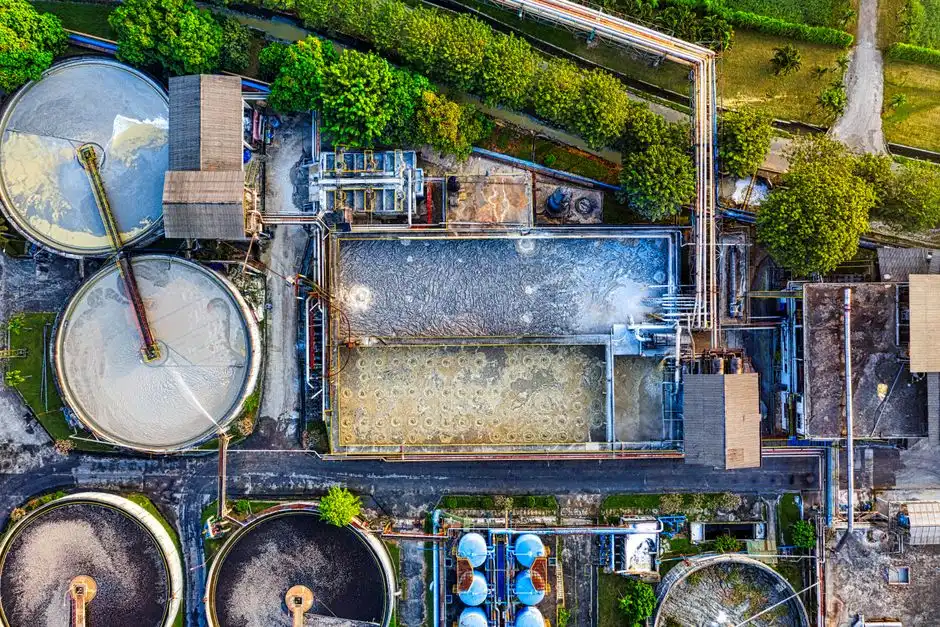
Equipment capacity should be based on applicable peak hydraulic and pollutant loads, not a single concentration or daily average. The load equation in the Bristola guide is:
COD load (lb/day) = flow (MGD) × COD concentration (mg/L) × 8.34
The source’s stated example is a facility discharging 2 MGD at 600 mg/L COD, which carries 10,008 lb/day. This calculation converts concentration and flow into the mass basis needed to compare biological loading, chemical demand, and permit surcharges. It does not size equalization volume or establish peak reactor capacity by itself.
Build separate peak cases for equalization, pumping, biological treatment, chemical dosing, flotation, filtration, and solids handling. Use continuous or production-synchronized flow data and composite COD samples that capture actual operating cycles. If batch or slug discharges are credible, verify that equalization can absorb the approved operating volume and mixing strategy; determine that volume from the engineered process calculation rather than adopting an unsourced generic percentage.
Metering and sampling must reconcile the permit calculation with operations. Install or verify the authorized flow-meter location, establish representative sampling points, align laboratory results with production and cleaning records, and preserve the calculation basis used for permit reporting. Bristola notes that permit surcharges are typically calculated on excess loading above a threshold rather than concentration alone, so averaging errors can affect both compliance and cost.
Polish, Dewater, and Verify Performance
Final treatment should target the pollutants that remain after the primary process—not automatically add a polishing step. If coagulation or flocculation is required, PLC-controlled dosing lets the selected chemical dose respond to changing wastewater characteristics. The PLC-controlled chemical dosing system supports controlled application of coagulants, flocculants, pH adjusters, and specialty chemicals, subject to the approved chemical and control strategy.
Use filtration or membrane polishing when the required effluent quality is tighter than biological treatment or clarification can reliably provide. The HydropureWater ultrafiltration system can remove bacteria, colloids, and suspended solids without chemicals. For solids removal, match dewatering capacity to residues generated by DAF, clarification, and biological treatment. Tie the plate-and-frame press selection to filtration area, hydraulic pressure, cake characteristics, and required PLC operating mode; the available plate-and-frame filtration options span 1–500 m² and several operating modes.
Perform an integrated pilot or side-stream trial before final equipment selection. Track COD reduction, BOD reduction, TSS removal, oil and grease removal, sludge generation, chemical consumption, and process stability across representative production cycles. Include normal production, cleaning, startup, upset, and maximum-loading conditions. This is the point to test the interaction among equalization, pretreatment, biology, chemical dosing, and dewatering.
Acceptance testing should use the permit-specific sampling protocol and establish a traceable chain from laboratory results to operating controls. The Bristola guide provides general COD treatment guidance; it does not convert that guidance into a Houston discharge guarantee. Compliance must be demonstrated at the authorized point, under the applicable discharge and monitoring conditions.
A Practical Decision Framework for Houston Buyers
A defensible Houston procurement starts with the discharge route: sanitary sewer, permitted direct discharge, reuse, or off-site disposal. That decision establishes the governing criteria. Then map each contaminant to a treatment barrier and each barrier to a measurable objective. DAF addresses recoverable floatables and suspended solids; aerobic or anaerobic biology addresses biodegradable organics; chemical treatment addresses selected suspended contaminants; advanced oxidation addresses resistant compounds; and dewatering manages separated solids.
- Establish the discharge route, authorization, sampling point, flow basis, and renewal responsibility.
- Develop a time-resolved wastewater characterization and source mass balance.
- Select source control, equalization, physical pretreatment, biological treatment, polishing, and solids handling as an integrated train.
- Calculate average and peak loads, then verify the sizing basis for each unit.
- Run wastewater-specific pilot or side-stream validation across representative operating cycles.
- Compare bids on process performance, controls, operating envelope, service, validation, and lifecycle responsibilities.
Ask each supplier for a process narrative, equipment-sizing calculation, control philosophy, FAT or SAT plan, operating envelope, startup support, and the data used to predict COD and sludge performance. Require evidence from the actual wastewater where possible; headline removal percentages from unrelated streams are not enough. The Robert Gordon University dissertation is design precedent for combining complementary barriers, not proof that one packaged system will meet a Houston permit.
The regional high-COD treatment comparison for Dallas manufacturers provides a useful reference point, while the comparison of wastewater suspended-solids removal methods helps structure physical-treatment decisions.
| Buyer decision | Required supplier response | Reject when |
|---|---|---|
| Process fit | Contaminant-to-unit mapping and wastewater-specific basis | Equipment is selected from COD alone |
| Capacity | Peak flow, peak load, operating envelope, and sizing calculation | Only average COD is documented |
| Validation | Pilot or side-stream results, FAT/SAT plan, and performance criteria | Unrelated project removal percentages are offered as guarantees |
| Operations | Controls, maintenance access, spare parts, startup support, and sludge plan | Chemical, solids, or service responsibilities are undefined |
| Compliance | Permit-specific sampling and acceptance protocol | A general COD guideline is presented as local approval |
Frequently Asked Questions
What COD concentration requires anaerobic treatment?
The Bristola commercial guide prefers anaerobic treatment above approximately 2,000 mg/L COD, but that is a process-selection guide rather than a Houston requirement. Confirm biodegradability, flow, loading, pH, temperature, treatment objectives, and the required pilot performance before choosing an anaerobic UASB reactor.
Is a DAF system enough for high-COD wastewater?
No. DAF primarily removes suspended solids, oil and grease, FOG, and colloidal matter that can interfere with downstream biological treatment. It does not by itself demonstrate that soluble biodegradable COD will meet the permit; paired COD/BOD testing and representative treatment trials are needed.
How should a manufacturer select an industrial wastewater treatment supplier?
Require wastewater-specific performance evidence, a transparent sizing calculation, an operating envelope, controls and service scope, FAT or SAT provisions, and defined responsibilities for chemicals, maintenance, and sludge management. Also request the pilot or side-stream data used to predict COD reduction and sludge production.
How much does a Houston high-COD treatment system cost?
The supplied research provides no defensible Houston equipment or installation price. Request a project-specific quote based on flow, peak and average load, treatment objectives, civil work, chemicals, sludge disposal, monitoring, controls, and site constraints. Compare the complete operating and disposal assumptions rather than accepting a headline equipment price.
Can COD alone prove permit compliance?
No. COD load is calculated as flow in MGD multiplied by COD in mg/L and 8.34, but compliance also depends on the applicable authorization, pollutant limits, authorized sampling point, monitoring frequency, and discharge conditions. COD alone cannot establish whether the permitted wastewater characterization has been met.