Which Wastewater Streams Must a Riyadh Hotel Account For?
A Riyadh hotel or resort treatment design must account for more than guestroom sewage because kitchens, laundry, pools, spas and irrigation can produce separate flow and pollutant profiles. The wastewater system for a hotel or resort in Riyadh, Saudi Arabia, should therefore be based on a measured stream inventory, with commercial wastewater pretreatment defined separately from biological treatment. A general sanitary plant should not be assumed to accept every discharge at full strength.
Begin with sanitary sewage from guestrooms, staff accommodation, public toilets and housekeeping areas. Then identify kitchen and restaurant wastewater, laundry effluent, pool backwash and drainage, spa and fitness-area discharges, and utility or process water. The commercial Riyadh property examples reviewed in 2026 include indoor pools, hot tubs, Jacuzzis, saunas, aquaparks, heated pools and seasonal outdoor pools. Those amenities make pool and spa wastewater part of the treatment design basis rather than occasional exceptions.
Do not combine streams without checking their effects on pumps, membranes and biological processes. Kitchen flows can carry grease and food solids; laundry flows can contain surfactants and residual chemicals; pool and spa discharges can contain disinfectants and variable solids. The objective of hotel wastewater treatment system comparison is therefore to match each stream to its required pretreatment and final route.
| Wastewater stream | Design issue to resolve | Information required before equipment selection |
|---|---|---|
| Guestrooms, staff areas and public toilets | Base sanitary sewage flow and peak loading | Metered water use, occupancy and operating schedule |
| Kitchens and restaurants | Grease, food solids and variable discharge timing | Fats, oils and grease analysis plus flow records |
| Laundry and housekeeping | Surfactants, solids and chemical residuals | Laundry volume, chemicals used and effluent analysis |
| Pools, spas and fitness areas | Disinfectant residual, water chemistry and seasonal operation | Backwash, drainage, make-up water and residual testing |
| Landscape irrigation and reuse | Quality, public-health and seasonal demand | Receiving authority criteria and intended reuse route |
Record which flows are metered and which are seasonal, including pool make-up, outdoor-pool operation, occupancy changes and events. A 2019 RIT Scholar Works dissertation on a Saudi tourism project proposed water-management systems relying on both groundwater and gray water, demonstrating the reuse context without establishing a Riyadh hotel wastewater design standard (Alshammaa, 2019).
Build the Design Basis Before Sizing the Plant
A defensible Riyadh wastewater quotation requires verified flow, wastewater-quality, receiving-route and site information before a treatment capacity can be selected. The supplied research provides no Riyadh hotel flow values, so room count or occupancy cannot be converted into a defensible plant size here.
- Establish flow. Request at least 12 months of utility or wastewater-metering data where available, supplemented by a design-period estimate. The estimate must identify daily average flow, peak hourly flow and seasonal factors. Reconcile metered water use with leakage, irrigation, cooling and pool make-up rather than assuming every litre becomes wastewater.
- Characterize the wastewater. Obtain COD, BOD, TSS, fats, oils and grease, and pH data. Add surfactants and chlorine-residual testing where laundry, spas or pool systems discharge into the collection system.
- Define the receiving route. Identify whether the treated flow will enter a sanitary sewer, follow an approved on-site disposal route, or support a reuse application. Confirm current requirements with the relevant Riyadh authority and sewer utility before final process selection.
- Survey site constraints. Collect soil, groundwater, flood-level, utility-route and available-footprint information. A below-grade package system may preserve planting, but excavation access, lifting clearances, odor control, ventilation and maintenance access still need review.
- Define operation and residuals. Establish how sludge will be removed, dewatered and disposed of, together with monitoring, laboratory sampling, alarms, spare parts and local or remote operation requirements. The manufacturer specifications, costs and ROI discussion can help structure commercial questions, but it does not replace project-specific flow and compliance data.
| Design-basis category | Minimum information to request | Decision it supports |
|---|---|---|
| Hydraulic | Daily average, peak hourly and seasonal flows; separate stream flows | Plant capacity, equalization and pumping |
| Quality | COD, BOD, TSS, FOG, pH and stream-specific contaminants | Pretreatment and biological loading |
| Compliance and reuse | Current discharge or reuse conditions from the authority | Final treatment and polishing |
| Site | Soil, groundwater, flood level, utilities, footprint and access | Installation method and civil works |
| Operations | Sludge route, monitoring, training, maintenance and spares | Completeness of supplier scope |
If historical data is unavailable, mark the estimate as provisional and require the supplier to state its assumptions. A capacity selected from occupancy alone can hide a peak-flow or grease-loading problem that only appears during full occupancy or events.
Screen and Treat Wastewater Before Biological Treatment
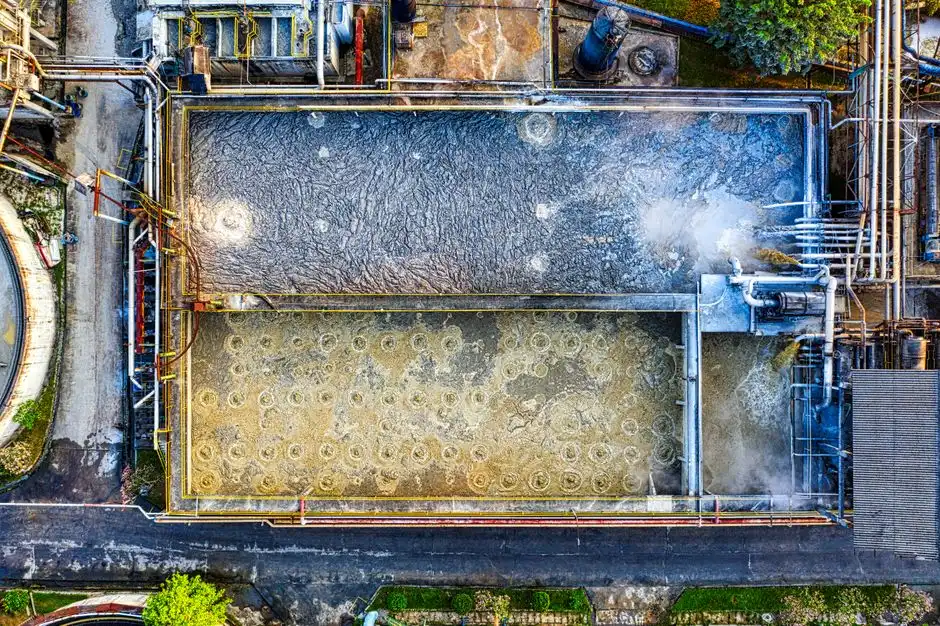
Hotel-specific solids, grease and chemicals should be controlled before they reach biological equipment or membranes. Fine screening protects transfer pumps and downstream process units from rags, plastics, fibrous material and other debris that can cause blockage or overload.
The GX Series continuous-duty fine wastewater screen is specified for municipal and industrial wastewater and for removing suspended solids, rags, plastics and fibrous debris. Its duty must be matched to the hotel’s measured flow, debris loading and operating hours.
Kitchen, food-preparation and other grease-generating flows need an appropriate grease and solids-control route. Whether dissolved air flotation is warranted should be decided from measured fats, oils and grease and flow data, rather than selected automatically. Equalization can protect downstream biological and membrane processes when discharge timing produces peaks, but its aeration and solids-control arrangement must prevent septic conditions.
Where chemical conditioning is required, specify a controlled dosing skid. The PLC-controlled chemical dosing skid provides automatic injection of coagulants, flocculants, pH adjusters and specialty chemicals in skid-mounted, pre-wired, factory-tested construction. The tender should still identify the chemical, dose-control basis, containment requirement, duty and operator interface.
The practical sequence is collection, fine screening, stream-specific grease or solids removal where justified, equalization where justified, and controlled biological treatment. Dosing is a response to a characterized treatment problem; it should not be used to conceal inadequate pretreatment. Further checks are available in integrated wastewater plant troubleshooting material.
Choose Between a Buried A/O Plant and MBR
The choice between a buried A/O package plant and an integrated membrane bioreactor should follow from the receiving and reuse specification, available footprint and owner’s operating obligations. Neither architecture replaces source characterization or pretreatment.
The WSZ Series buried A/O package sewage treatment plant combines anoxic and aerobic A/O biological contact oxidation, sedimentation and disinfection in one underground unit. Its catalog states that it is fully automated, requires no operator and handles flows from 1–80 m³/h. It can be installed below grade with landscaping above or mounted on a trailer for mobile deployment. This makes it a candidate for decentralized hotel sewage treatment where surface space is valuable.
The integrated MBR wastewater treatment system combines activated-sludge treatment with submerged PVDF membrane filtration. Its catalog specifications state filtration below 1 μm, a 60% smaller footprint than conventional systems and a capacity range of 10–2,000 m³/day.
| Decision point | Buried A/O package plant | Integrated MBR |
|---|---|---|
| Core treatment | Anoxic/aerobic contact oxidation, sedimentation and disinfection in a buried package | Activated sludge with submerged PVDF membrane filtration |
| Catalog capacity | 1–80 m³/h | 10–2,000 m³/day |
| Installation | Below grade with landscaping above, or trailer-mounted | Equipment installation must be assessed against the smaller-footprint claim |
| Primary attraction | Compact decentralized treatment and automatic operation | High-quality separation, footprint reduction and potential reuse pathway |
| Operating consideration | Avoids membrane-specific cleaning and replacement duties | Requires membrane cleaning, replacement, monitoring and specialist maintenance |
Choose A/O package treatment for straightforward decentralized sanitary treatment, compact deployment and automatic operation without membrane-specific maintenance. Evaluate MBR where the project requires high-quality separation, a smaller installation footprint or a credible reuse pathway—and where the owner accepts membrane cleaning, replacement and monitoring obligations.
Do not choose from a generic preference for membrane technology. Require the supplier to demonstrate how the proposed process meets the specified final discharge or reuse conditions. The packaged MBR selection for a Saudi hotel provides a useful adjacent framework, but the governing criteria must come from the Riyadh project.
Confirm Disinfection, Sludge Handling and Reuse Readiness
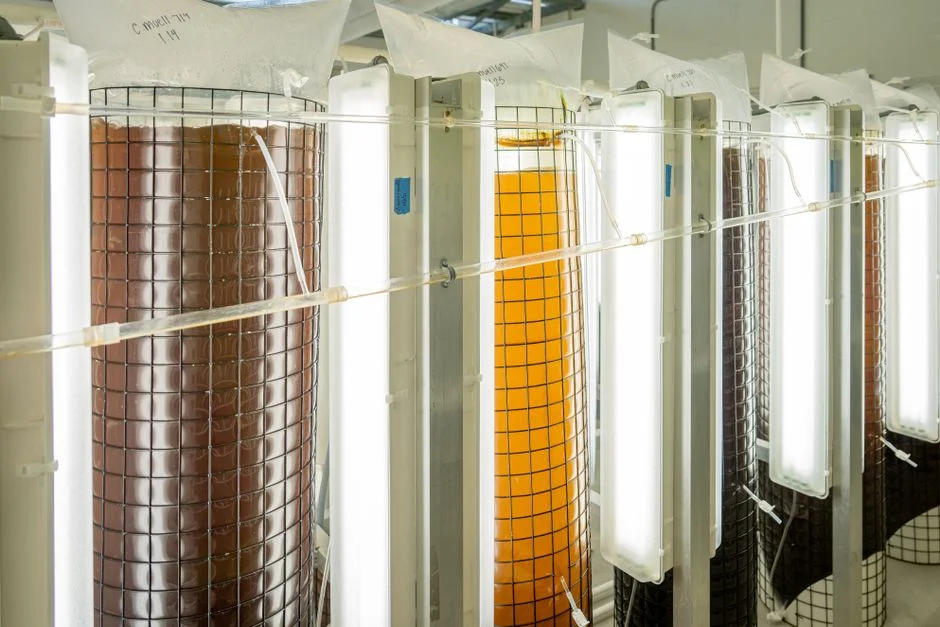
Disinfection, residual management and sludge handling complete the treatment train and must be included in the supplier’s scope. A biological reactor or membrane system cannot compensate for an undefined effluent route or an unresolved residual-disposal plan.
Specify disinfection after confirming the receiving route and intended reuse application. UV-C provides chemical-free disinfection without by-products or taste change, while chlorine dioxide provides an on-site-generated disinfectant for wastewater applications. Selection should depend on the required residual, hydraulics, site safety, operator competence, maintenance and downstream process compatibility—not on a generic equipment description.
Plan stabilization, thickening and dewatering as part of the treatment system. The plate and frame filter press covers filtration areas from 1 m² to 500 m² in manual, hydraulic and fully automatic PLC-controlled formats. The selected configuration should reflect the estimated sludge production, dewatering objective, operating hours, cake-disposal route and operator availability.
For wastewater reuse, test treated effluent against the parameters required by the intended application and confirm compatibility with irrigation, pool make-up or another non-potable use. The MBR’s filtration claim is not proof that every reuse or discharge requirement is met. Hydraulic design, disinfection, public-health approval and water-quality validation remain separate decisions.
Also allocate responsibility for odor control, safe access, critical spares, maintenance intervals, laboratory testing and routine operation. The chlorine dioxide versus UV disinfection comparison can inform the disinfection review, while the final selection must fit the hotel’s receiving and reuse requirements.
Fit the System to Riyadh Site and Climate Conditions
Riyadh site installation requires project-specific review of heat, dust, groundwater, excavation and maintenance access; equipment selection alone does not establish constructability. Passive cooling and water-efficient design may be appropriate where they do not compromise biological performance, membrane operation or worker safety.
A 2019 RIT Scholar Works dissertation on a Saudi tourism village identified passive ventilation through cooling towers, adobe-climate-responsive architecture and Mashrabiya as sustainability measures (Alshammaa, 2019). These are design-context references, not substitutes for wastewater-process analysis. Heat loads, equipment ingress protection and ventilation requirements must be engineered for the selected equipment and installed arrangement.
For a below-grade installation, confirm excavation depth, buoyancy protection, groundwater conditions, excavation stability, access routes and connection to the hotel collection network. Check whether heavy equipment can reach the installation area, and whether components can be removed for maintenance without disrupting guest operations or landscaping.
Protect exposed equipment and controls from heat and dust while providing safe access for membrane maintenance, sludge handling and instrument calibration. Local conditions can affect cabinet temperature, sensor reliability, worker access and the practicality of routine inspections; those points belong in the supplier’s design review and commissioning plan.
Finally, define commissioning water, temporary treatment, performance testing, operator training and handover. Require operating data, maintenance records, as-built documentation, test results and compliance records to be transferred at completion. These provisions should be included in the tender before equipment manufacture, not left to site commissioning.
Issue a Quote-Ready Procurement Package
A comparable Riyadh tender requires every supplier to quote against the same verified design basis, site information and receiving conditions. Package price alone is not a meaningful comparison when flow duties, civil works, testing and long-term obligations differ.
Include verified average and peak flows, a stream diagram, wastewater analyses, receiving and reuse criteria, site drawings, soil and groundwater information, available footprint and utility requirements. State clearly which information remains provisional and identify the assumptions used. This prevents one supplier from sizing for sanitary sewage while another prices grease, sludge, odor control or reuse compliance as exclusions.
Ask each supplier to state the proposed process, design basis, equipment duty, treatment stages, effluent guarantees, controls, installation method, commissioning tests, operator training, warranty and maintenance scope. Require an equipment schedule showing flow, process role, materials, dimensions, power demand, installed capacity and confirmation of pretreatment compatibility.
Require transparent separation of supplied equipment, civil works, electrical work, external laboratory testing, authority fees, sludge disposal, commissioning consumables and long-term spares. The integrated plant manufacturer specifications and cost framework and industrial wastewater solution comparison can support tender review, but quotations must still state the same scope and design basis.
| Tender document | Information it must contain | Commercial check |
|---|---|---|
| Design-basis report | Flow, quality, loading, compliance, reuse and site data | Capacity and process assumptions are traceable |
| Process and equipment schedule | Stages, duty, materials, dimensions, power and controls | Equipment scope matches pretreatment and final treatment |
| Performance and commissioning schedule | Effluent guarantees, tests, training, documents and warranty | Acceptance criteria are objective and enforceable |
| Cost breakdown | Equipment, civil, electrical, testing, fees, sludge, consumables and spares | Exclusions are visible before price comparison |
| Operations and maintenance plan | Routine tasks, intervals, spares and laboratory responsibilities | Lifecycle support is assigned and priced |
Ask bidders to identify exclusions separately and to state the duration, cost and responsibility for each excluded item. This is more useful than accepting a low package figure whose scope leaves the owner responsible for civil works, compliance testing, sludge disposal or maintenance.
Frequently Asked Questions
How much does a wastewater treatment system cost for a Riyadh hotel?
No defensible price can be assigned from the supplied research because it contains no Riyadh hotel flow, treatment target or tender scope. Request an itemized quotation after confirming average and peak flows, wastewater characteristics, pretreatment requirements, receiving or reuse conditions, installation scope and sludge handling. Compare each quotation on the same documented basis rather than accepting a package price alone.
Should a Riyadh hotel choose a package sewage plant or an MBR?
Choose a package A/O plant for conventional decentralized treatment, compact underground deployment and automatic operation without membrane-specific maintenance. Evaluate MBR when high-quality separation, footprint reduction or reuse potential justifies membrane cleaning, replacement and monitoring. The final choice should follow the discharge or reuse specification.
How do I size a wastewater treatment plant for a hotel?
Establish daily average and peak flows from verified consumption and wastewater records, then separate kitchen, laundry, pool, spa and seasonal streams. Apply the selected process’s verified hydraulic and organic-loading criteria to the characterized flow and quality. If those records are unavailable, label any estimate provisional and state its assumptions in the tender.
Can one system treat a hotel’s kitchen, laundry and pool wastewater together?
Possibly, but characterize each stream first and route it through proven pretreatment where grease, solids, surfactants or disinfectants could impair the biological or membrane process. Do not assume that a general hotel sewage plant can accept all flows at full strength. Include any separate equalization or chemical-conditioning requirements in the design basis.
What compliance risk should be checked before ordering equipment in Riyadh?
Obtain the current receiving-sewer or reuse conditions from the relevant authority and sewer utility before ordering. Put the accepted parameters into the tender and require the supplier’s process, guarantees and testing protocol to address them explicitly. Treat reuse approval, public-health requirements and laboratory validation as separate decisions from equipment selection.