What makes a Jeddah hotel STP selection different
To choose a packaged MBR STP for a Jeddah hotel in 2026, size the plant at 250–400 L per guest-night (3–4-star), apply a 2.0–2.5 peak factor for occupancy swings, integrate a DAF for kitchen FOG, and target Saudi PME effluent limits of BOD <30 mg/L, COD <250 mg/L, TSS <100 mg/L. A containerized MBR with submerged PVDF membranes (0.04–0.1 μm) delivers permeate with TSS <5 mg/L, suitable for landscape irrigation under Saudi recycled-water standards. This guide applies a five-step framework to a Jeddah hotel context where constraints are sharper than generic Gulf specifications.
Jeddah's ambient temperature range of 25–48°C accelerates MBR membrane fouling and forces aeration systems to be oversized compared to temperate-climate designs (per Spans Gulf operating data, 2025-08). The municipal water supply is high-salinity; sewage TDS is typically 1,500–2,500 mg/L, which suppresses biological kinetics and reduces MLSS settleability inside the MBR tank. Saudi Vision 2030 and NEOM-adjacent tourism projects are driving a 30–40% YoY increase in new hotel builds across the Makkah Region, raising the bar for compact, fast-to-commission packaged plants that a contractor can install in 12–16 weeks.
Hotel wastewater comprises multiple streams including blackwater, kitchen FOG, and high-pH, high-temperature laundry discharge. A Jeddah specification must treat pretreatment selection and membrane geometry as coupled decisions rather than separate procurement items. For background on parallel design choices in other Gulf hospitality projects, see the Saudi hospital wastewater treatment guide, which uses a comparable PME-anchored compliance flow.
Step 1 — Size the plant from guests, not from rooms
Hotel sizing relies on guest-night demand and a defensible peak factor rather than room count alone. Use 250 L/guest-night for 3-star, 300 L for 4-star, and 350–400 L for 5-star and resort hotels (industry convention, 2026). Apply a peak factor of 2.0–2.5× the average daily flow; hotel occupancy routinely hits 95–100% on weekends and during Hajj/Umrah seasons, and the biological stage must process that surge without bulking.
Worked example: a 200-key 4-star hotel at 75% average occupancy generates roughly 45 m³/day on average and 90–110 m³/day at peak — landing directly in the 100 m³/day containerized MBR capacity range (per RekPro KSA packaged STP spec, 2025-09). Add a 10–15% design margin for kitchen prep water and laundry discharge that guest-night figures do not capture to create a defensible number for a contractor submittal. For a broader view across hospitality typologies, the packaged MBR STP sizing for hotels article applies the same logic to a European climate baseline.
| Hotel category | L per guest-night | Avg occupancy used | Peak factor | Example: 200 keys (m³/day avg / peak) |
|---|---|---|---|---|
| 3-star | 250 | 70% | 2.0–2.5× | 35 / 70–88 |
| 4-star | 300 | 75% | 2.0–2.5× | 45 / 90–110 |
| 5-star / resort | 350–400 | 80% | 2.0–2.5× | 56–64 / 112–160 |
| Serviced apartments | 200–250 | 85% | 1.5–2.0× | 34–42 / 50–84 |
Step 2 — Match the effluent to Saudi PME discharge or reuse
Plant design requires deciding between municipal sewer discharge or on-site reuse, as target limits drive both membrane cut-off and tertiary stage requirements. For sewer discharge, target Saudi PME / municipal limits of BOD <30 mg/L, COD <250 mg/L, TSS <100 mg/L, oil & grease <10 mg/L, pH 6–9 — the same numeric envelope that UAE.S 885 imposes on Gulf commercial STPs (per Spans UAE compliance data, 2025-08). For irrigation reuse, target the Saudi recycled-water Class A standard (BOD <10 mg/L, TSS <10 mg/L, E. coli <2.2 MPN/100 mL) and add UV disinfection polish as the final barrier.
MBR permeate from submerged 0.04–0.1 μm membranes typically delivers TSS <1–5 mg/L, comfortably below all three reuse classes. Confirm with Jeddah Municipality / Balady that a licensed wastewater collection contractor and a pre-discharge sampling access chamber are required; these two items are the most common cause of a stalled commissioning. Containerized MBR suppliers routinely bundle them with the integrated MBR membrane bioreactor system so the contractor can hand the access chamber over to the regulator at handover.
Step 3 — Pretreat the kitchen and laundry streams first
Under-specified headworks cause most packaged MBR failures in hotel duty. Route kitchen and restaurant drains through a grease trap followed by a DAF unit for kitchen FOG removal (4–300 m³/h capacity range) to drop FOG to <30 mg/L before the biological stage. Without DAF, free oil coats PVDF fibers and triggers irreversible fouling within weeks.
Laundry discharge should be cooled and pH-equalized in the buffer tank; high-temperature (60–80°C) effluent entering an MBR tank shifts MLSS activity and reduces oxygen-transfer efficiency by 15–25% per 10°C rise above 35°C. Install a rotary mechanical bar screen with 1–3 mm perforations ahead of the MBR cassettes to strip fibrous debris from linens and towels. Equalization should hold at least 8 hours of average flow to dampen occupancy-driven peaks before the MBR tank.
Step 4 — Choose flat-sheet vs hollow-fiber membrane geometry
Membrane geometry represents a defendable engineering trade-off. Hollow-fiber membranes at 0.04 μm nominal filtration achieve finer particulate cutoff and higher packing density, which suits a space-constrained 100 m³/day containerized design (per RekPro spec, 2025-09). Flat-sheet modules at 0.1 μm are mechanically easier to clean in situ, tolerate higher TSS spikes, and consume 10–20× less energy than external cross-flow designs because the airflow that scoures the membrane also supplies oxygen to the biology.
For Jeddah's temperature swings, flat-sheet PVDF handles thermal stress and air-scour cleaning more robustly; hollow-fiber is preferred when maximum permeate clarity drives the design. Modular sizing simplifies containerized scale-up: a single DF series cassette produces 32–135 m³/day at 80–225 m² active area. Specify DF series flat-sheet MBR cassettes when the hotel has variable occupancy or kitchen loading, or use hollow-fiber when the reuse target is cooling-tower makeup. For projects that already have civil tanks, the MBR retrofit and upgrade guide walks through cassette replacement on existing basins.
| Parameter | Flat-sheet (DF series) | Hollow-fiber |
|---|---|---|
| Nominal pore size | 0.1 μm | 0.04 μm |
| Active area per cassette | 80–225 m² | 25–40 m² typical |
| Permeate flow per cassette | 32–135 m³/day | 15–30 m³/day |
| Cleaning energy (air-scour) | Low (10–20× less than cross-flow) | Low–moderate |
| TSS tolerance | High (suits FOG-prone hotels) | Moderate |
| Permeate TSS | <5 mg/L | <1–2 mg/L |
| Footprint at 100 m³/day | ~8 m × 3 m container | ~6 m × 2.5 m container |
| Best-fit Jeddah hotel case | Variable occupancy, FOG loading | Cooling-tower makeup reuse |
Step 5 — Specify the package: containerized build, automation, footprint
Convert the technical spec into a procurement-ready package description anchored to documented build quality. Reference the benchmark: 5–6 mm MS steel with internal chemical-resistant epoxy coating, designed for a 15–20 year service life in Gulf conditions (per RekPro containerized MBR spec, 2025-09). Containerized 100 m³/day MBR units fit on an 8 m × 3 m footprint, which is practical for hotel basement plant rooms or surface-mounted service yards.
Specify a PLC panel with remote monitoring (Modbus/4G), fine-bubble diffusers, and twin roots blowers for redundancy on the aeration duty. Include UV disinfection polish as the final step if the discharge path is irrigation or a cooling-tower makeup line; UV is preferred over chlorination for hotel landscapes where staff handle irrigation equipment. Sludge handling typically utilizes a plate-frame filter press to drop cake solids to 22–28% DS for off-site disposal. For projects where burial is preferred, an underground option such as the WSZ underground packaged STP can be considered, though MBR cassettes are usually housed above grade for maintenance access.
Cost, ROI, and the reuse payback
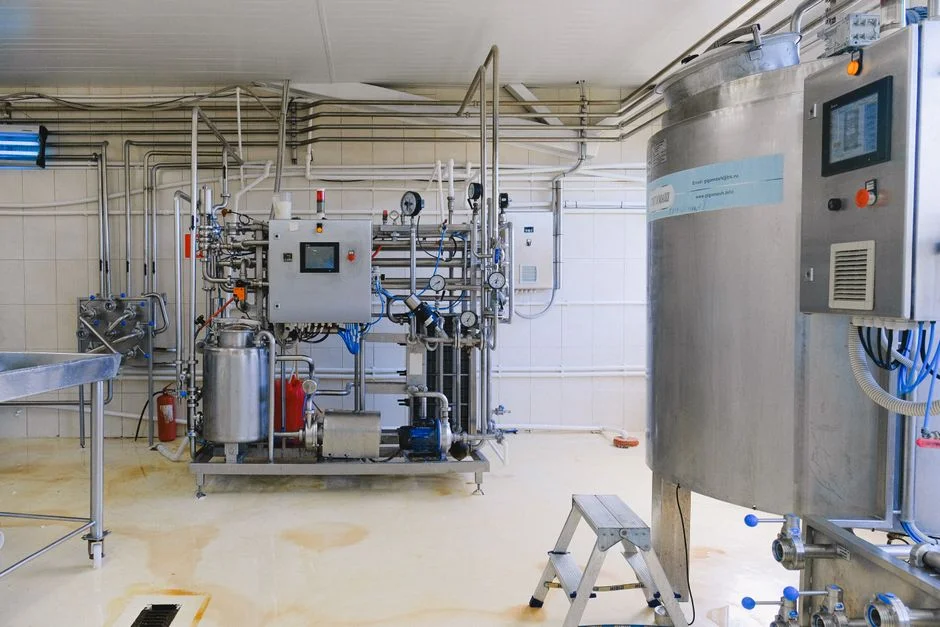
Directional CapEx for a 100 m³/day packaged MBR (equipment only, FOB) falls in the mid-five-figure USD range; EPC with civil works is typically 2.0–2.5× the equipment cost (HydropureWater field data, 2026). Reuse for landscape irrigation at a hotel with more than 2,000 m² of grounds offsets 30–50% of municipal water cost; typical payback is 3–4 years on the reuse-enabling incremental capex, which serves as a developer benchmark.
OPEX is dominated by aeration energy (60–70% of electrical draw) and membrane replacement every 5–7 years. Discharging to the municipal sewer saves 30–50 SAR/m³ in tipping fees that tanker discharge would otherwise incur. Detailed commissioning-day cost lines are covered in the MBR installation and commissioning guide.
Frequently Asked Questions
What effluent limits must a packaged MBR STP meet for a Jeddah hotel?
For sewer discharge, the Saudi PME envelope is BOD <30 mg/L, COD <250 mg/L, TSS <100 mg/L, oil & grease <10 mg/L, pH 6–9. For
Frequently Asked Questions
What size packaged MBR STP do I need for a 200-key hotel in Jeddah?
For a 200-key hotel in Jeddah, the system should be sized based on an average generation rate of 200 to 250 liters per guest per day. Consequently, you should plan for a total daily capacity ranging from 40 m³ to 50 m³, assuming standard occupancy and typical water usage patterns for a luxury or business hotel.
It is critical to include a safety factor of 15% to 20% to account for peak seasonal loads and laundry operations. Therefore, a packaged MBR plant with a nominal capacity of 60 m³/day is recommended to ensure consistent effluent quality and prevent hydraulic overloading.
What are the Saudi PME discharge limits for hotel wastewater?
The Presidency of Meteorology and Environment (PME), now under the National Center for Environmental Compliance (NCEC), mandates strict standards for treated sewage effluent. For irrigation use, the Biological Oxygen Demand (BOD) must be below 10 mg/L, and Total Suspended Solids (TSS) must be below 10 mg/L.
Additionally, the treated water must meet specific criteria for fecal coliforms, which must be non-detectable (0 CFU/100ml) to ensure safety. Nitrogen and phosphorus limits are also enforced, typically requiring total nitrogen levels to remain below 10 mg/L to prevent eutrophication in landscape irrigation applications.
Is flat-sheet or hollow-fiber MBR better for hot climates like Jeddah?
In the high-temperature environment of Jeddah, where wastewater temperatures can exceed 35°C, flat-sheet membranes are generally preferred for their superior mechanical robustness and resistance to fouling. Flat-sheet modules are less prone to sludge entrapment and offer a more straightforward cleaning process compared to the more delicate hollow-fiber structures.
While hollow-fiber membranes provide a higher surface area-to-volume ratio, they are more susceptible to clogging from hair and debris common in hotel greywater. The durability of flat-sheet membranes under high-temperature biological activity makes them a more reliable choice for long-term operational stability in the Saudi climate.
Can a packaged MBR STP produce reuse water for hotel landscape irrigation in Saudi Arabia?
Yes, a packaged MBR system is specifically designed to produce high-quality effluent that complies with Saudi Arabian Standards Organization (SASO) requirements for non-potable reuse. MBR technology effectively removes pathogens and bacteria, making the treated water suitable for subsurface or surface landscape irrigation.
To ensure compliance, the system must include a final tertiary disinfection stage—typically ultraviolet (UV) sterilization or chlorine dosing—to maintain a residual disinfectant level in the irrigation piping. This ensures the water is safe for contact and prevents biological growth in the hotel's irrigation distribution network.
How much does a 100 m³/day packaged MBR STP cost in Saudi Arabia?
The capital expenditure for a high-quality, containerized 100 m³/day MBR plant in Saudi Arabia typically ranges from 350,000 to 550,000 SAR. This price variance depends on the brand of membranes used, the level of automation (PLC/SCADA systems), and whether the unit includes an integrated equalization and sludge dewatering module.
Operating costs, including electricity, membrane cleaning chemicals, and periodic membrane replacement, should be budgeted at approximately 1.50 to 2.50 SAR per cubic meter of treated water. It is advisable to factor in additional costs for local logistics, site civil works, and commissioning services provided by a certified local contractor.