What Is Confirmed About CATL’s Mexico Project—and What Is Not
A CATL battery gigafactory in Mexico should segregate wastewater at the source and treat it as several processes, not one blended flow. Coating wash water requires NMP recovery; electrolyte and formation water require fluoride, ammonia and lithium control; and oil-bearing CIP water needs solids and oil removal before biological treatment. A practical train combines chemical dosing and clarification, fluoride precipitation, MBR biological treatment, RO polishing, reuse, and controlled handling of metal-rich sludge and salt residues. CATL’s Mexican site and final regulatory permit were not identified in the supplied research, so the process design must remain subject to site characterization and Mexican authority review.
Energy-Storage.news reported on 2022-10-04 that CATL had announced plans for a Mexican facility and was still assessing locations. The same report identified substantial gaps in Latin American regulatory frameworks and government support, together with high operational risk for investments of billions of U.S. dollars, as barriers to gigafactory development. That is market context—not a description of CATL’s final wastewater design.
The supplied research does not identify the final site, production scale, commissioning date, discharge route, wastewater flow or CATL-selected treatment train. The treatment architecture discussed below is therefore an engineering basis for due diligence, not a claim that CATL has disclosed or approved it.
For a Mexican site, that distinction is critical. A Mexico gigafactory wastewater compliance guide can support market-level diligence, while industrial effluent treatment options in Querétaro can support regional planning. Neither substitutes for the site’s water balance, discharge authorization and confirmed waste-management route.
Separate the Wastewater at the Source
Four production streams should remain physically separate until their treatment objectives have been defined. Combining coating condensate, electrolyte water, formation rinse and CIP wastewater would dilute valuable NMP, increase the fluoride load and expose downstream biological and membrane systems to oil and COD shocks.
HydropureWater’s battery-cell manufacturing guide identifies coating condensate, electrolyte fluoride water, formation rinse and CIP wastewater as distinct streams. It reports that coating condensate typically represents 60–70% of plant wastewater volume, while electrolyte and formation streams account for only 15–25% but dominate fluoride and ammonia loads. The same guide reports coating-condensate NMP at 5,000–50,000 mg/L. That concentration makes dilution or biological treatment inappropriate before dedicated solvent recovery.
Fluoride is the critical design constraint on electrolyte and formation streams. HydropureWater reports that fluoride attacks reverse-osmosis membranes and inhibits biological biomass above about 50 mg/L. Source segregation therefore limits both chemical dose and the volume requiring high-intensity treatment.
| Source stream | Dominant contaminants | Required collection strategy |
|---|---|---|
| Coating condensate | NMP, PVDF, CMC, carbon black | Dedicated solvent-protected sump; flow metering; screening before recovery |
| Electrolyte water | LiPF₆ hydrolysis products, including fluoride and phosphate | Segregated acid-controlled collection with fluoride monitoring |
| Formation rinse | Ammonia, dissolved lithium and residual electrolyte | Separate equalization and ammonia monitoring |
| CIP wastewater | Oils, metals and surfactants | Oil-tolerant collection, local control and DAF assessment |
Each major stream needs its own sump, screens, flow metering and appropriate online monitoring. A rotary mechanical bar screen can protect downstream solids-handling equipment, while a PLC-controlled automatic chemical dosing system can maintain reagent response to measured pH and fluoride. Sanitary wastewater should remain outside the process-water balance and enter a separate package treatment train where appropriate; underground integrated sewage treatment is a relevant option for remote utility buildings or low-strength domestic flows.
Recover NMP Before Sending Coating Water Downstream
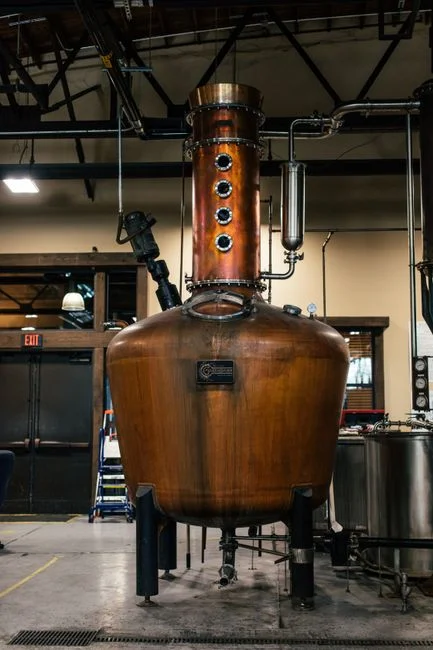
NMP recovery is the first material-recovery step for coating condensate because biological treatment is not an appropriate first destination for a concentrated solvent stream. HydropureWater reports that vacuum distillation or steam stripping can recover 90–98% of NMP, and that coating-condensate NMP typically enters at 5,000–50,000 mg/L.
The recovery skid requires pretreatment for PVDF, carbon black and other coating residues. A lamella or high-efficiency clarifier can remove suspended solids; activated-carbon polishing may be needed where binder residues or dissolved organics would foul the reboiler. The ultrafiltration treatment guide for detergent wastewater provides a related solids-removal reference, while the DAF equipment page describes an alternative for suitable light floc or oily loads.
Recovered NMP should return to slurry preparation only after tests confirm the purity, residual contaminants and process quality required by the coating operation. Otherwise, it must remain a controlled solvent stream with a documented disposition. The final process decision depends on the distillation method, contaminant carryover, utility requirements and the coating line’s solvent-quality specification.
HydropureWater reports a typical 2–4 year payback for an NMP recovery skid at current industrial NMP pricing and recovery above 90%, before reuse credits are counted. That is a screening value, not a Mexico project quotation. A bid evaluation should request the solvent-recovery calculation, measured NMP feed envelope, utility consumption, residual-solvent handling and sensitivity to solvent price.
Chemical storage, vapor control and explosion-protected equipment require project-specific review against the selected site’s building, fire and process-safety codes. These controls must be included in the P&ID and hazardous-area design rather than added after skid selection.
Remove Fluoride, Metals, Ammonia and Oil in Controlled Stages
Fluoride must be removed before biology and RO because precipitation protects both process units from sustained chemical loading. HydropureWater reports that calcium chloride or lime dosed at pH 8.5–9.5 precipitates fluoride as calcium fluoride, with a residual target below 10 mg/L; downstream RO can polish fluoride below 1 mg/L.
Metal removal is a separate pH-controlled stage. HydropureWater identifies nickel, cobalt and manganese among the metals that can be precipitated, while lithium remains primarily dissolved and is subsequently concentrated. The chemical dose must be established through jar or pilot testing because hydraulic conditions, competing ions and the presence of fluoride all affect precipitation performance.
| Unit operation | Selection condition | Design issue to verify |
|---|---|---|
| Fluoride precipitation | Electrolyte and formation streams require residual fluoride control | CaCl₂ or lime demand, pH response, CaF₂ sludge composition |
| Metal precipitation | Dissolved Ni, Co, Mn and other metals require removal | Hydroxide carryover, lithium behavior and sludge classification |
| DAF | Emulsified oil or load swings above ±30% per shift | Oil recovery, recycle-saturated performance and sludge handling |
| Lamella clarification | More stable, low-oil flows | Hydraulic capacity and performance during batch production |
| Plate-and-frame filtration | Chemical sludge requires dewatering before licensed management | Cake moisture, transportability and receiver acceptance |
HydropureWater’s selection logic favors DAF for emulsified oil and load variation because its flotation mechanism captures light floc and oil; lamella clarification is more appropriate for steady, low-oil flows. The DAF machine should be evaluated where the sedimentation tank is being used for stable flows. Chemical precipitation and membrane or DAF pretreatment must be positioned so no untreated chemical slug reaches the membranes.
HydropureWater specifies dewatering fluoride and metal sludges with a plate-and-frame filter press to 25–35% dry solids before licensed disposal. That is a technical target, not proof that the cake qualifies as hazardous waste in Mexico. Before chemical dose and equipment selection are frozen, the owner must obtain a site-specific waste-characterization protocol and written route for each residue stream. The supplied research does not establish the hazardous-waste code that would apply to the CATL site.
Use MBR and RO to Protect Reuse Water
MBR is appropriate after upstream chemical and solids controls because cell production is batch-driven and produces variable organic and solids loads. HydropureWater reports MBR effluent below 5 mg/L TSS and a footprint roughly 60% smaller than conventional activated sludge. It identifies membrane cleaning and replacement as lifecycle costs that must be included in the comparison.
RO requires a controlled feed. HydropureWater’s broader CATL guide specifies SDI below 3, free chlorine below 0.1 mg/L and iron below 0.05 mg/L as protective thresholds. A submerged PVDF MBR wastewater treatment system can provide the solids barrier before cartridge filtration, antiscalant dosing and, where needed, a multi-media filter.
| Decision | Required basis | Acceptance evidence |
|---|---|---|
| MBR versus activated sludge | Batch variability, footprint, shock loading and CIP access | Worst-case influent envelope and guaranteed effluent quality |
| RO versus direct discharge | Discharge route, reuse demand and brine destination | Pilot data, membrane projection and complete water balance |
| RO permeate reuse | Receiving-process conductivity, silica and contamination limits | End-use qualification and monitoring protocol |
| ZLD feasibility | No acceptable brine route, available utilities and residue acceptance | Mass balance, energy demand and contracted salt-disposal route |
HydropureWater reports an overall battery-plant water-recovery target of 85–95%. Reuse applications must still be separated: cooling-tower makeup, non-process cleaning, toilet flushing, irrigation and tightly specified process water have different acceptance criteria. A permeate that is suitable for irrigation may not be acceptable for coating or electrolyte preparation.
Before assigning RO permeate to any user, obtain the required conductivity, silica level, residual contaminants, microbial criteria and contamination tolerance. The industrial RO purification system should therefore be selected against end-use specifications rather than a generic purity claim. If there is no secure discharge route or viable ZLD system, the brine and salt-residue balance must be resolved during design—not after commissioning.
Build the Mexico Permit and Commissioning Roadmap Early
The wastewater P&ID should not be frozen until the final site and water balance define the applicable permit and residue routes. The owner should provide production phases, stream flows, analytical envelopes, discharge point, sewer or receiving-water requirements, freshwater constraints and hazardous-residue destinations. Industrial effluent treatment options in Querétaro may support regional context, but the selected site determines the governing requirements.
No supplied source establishes the governing federal, state and municipal classification for a CATL facility in Mexico. The owner’s Mexican environmental adviser should confirm the competent authority, permit conditions, discharge standards, monitoring requirements and waste-management obligations. Technical sources from the United States, China and Europe are references, not substitutes for Mexican authorization.
| Stage | Decision or deliverable | Release criterion |
|---|---|---|
| Project definition | Final site, production phases and signed water balance | Flows and contaminant envelopes assigned to each stream |
| Permitting basis | Authority determination and draft discharge conditions | Permit pathway, sampling points and residue routes identified |
| Pilot and design | Jar tests, precipitation trials, membrane projections | Dose, yield and fouling assumptions supported by test data |
| Commissioning | Baseline sampling and source-stream verification | Each source stream demonstrated within its design envelope |
| Acceptance | Fluoride removal, MBR startup, RO startup and reuse qualification | Performance tests completed under agreed influent conditions |
| Residuals | Sludge, brine, salt and spent-media classification | Transport and treatment contracts accepted by qualified receivers |
Commissioning should proceed through baseline sampling, source-stream verification, chemical-dosing trials, fluoride-removal acceptance, membrane startup, reuse qualification and final residual classification. Utility and industrial-sewer discharge options, ZLD feasibility, brine management, sludge transport and emergency containment should be reviewed as design gates.
Sanitary flows require separate due diligence. Domestic sewage treatment options in Querétaro can support that review, but domestic treatment must not obscure the process-wastewater balance or the industrial permit.
Compare the Main Treatment and Reuse Options
Equipment selection should follow the stream, destination and recovery objective rather than a generic treatment line. HydropureWater’s technical guidance supports the comparisons below, but the final choice must be verified through site testing and Mexican permit limits.
| Decision | Preferred condition | Trade-off to verify |
|---|---|---|
| Vacuum distillation versus steam stripping for NMP | Select by required solvent concentration, fouling risk, utility demand and recovered-solvent quality | Recovery performance, operating safety and whether recovered NMP meets coating specifications |
| DAF versus lamella clarification | DAF for emulsified oil or batch shocks; lamella for stable, low-oil flow | Oil removal, hydraulic variability, sludge characteristics and operating effort |
| MBR versus conventional activated sludge | MBR where batch variability and footprint dominate | Membrane CIP, replacement, aeration demand and operator attention |
| RO reuse versus direct discharge | RO where reuse specifications justify treatment and brine can be managed | Pretreatment, energy, concentrate volume and end-use acceptance |
| ZLD versus conventional discharge | ZLD where no acceptable brine or salt-residue route exists | Energy demand, crystallizer performance and contracted residue disposal |
HydropureWater reports NMP recovery of 90–98%, MBR TSS below 5 mg/L, RO fluoride below 1 mg/L and an overall water-recovery target of 85–95%. These figures provide technical screening points. They do not establish equipment capacity or compliance for an unidentified Mexican plant.
A comparison of MBR and conventional activated sludge and a guide to ETP and DAF selection support early technology screening. Procurement should require guarantees tied to representative influent envelopes, Mexican discharge or reuse limits, availability, membrane cleaning intervals and chemical consumption.
Questions to Resolve Before Ordering Equipment
A wastewater proposal should be reviewed for unresolved assumptions, not just equipment completeness. The minimum information package should include a signed water balance covering coating, electrolyte, formation, CIP, domestic, cooling and stormwater sources. Each production stream needs measured flow and representative analytical data across normal production, startup, shutdown and cleaning cycles.
The analytical program should address pH, COD, TOC, oil and grease, TSS, fluoride, ammonia, nitrogen species, lithium, nickel, cobalt, manganese, conductivity, hardness and chlorine. Samples must be obtained from segregated sources; blended samples cannot establish treatment doses for individual units.
Vendor guarantees should be tied to defined influent envelopes, final discharge or reuse limits, equipment availability, membrane cleaning intervals and chemical consumption. Bidders must identify every reagent, sludge, spent carbon, membrane element and concentrated brine placed on the owner’s disposal obligations. The gigafactory wastewater procurement reference provides a related diligence structure.
Permit assumptions and waste classifications must be explicit. The selected site’s Mexican environmental adviser or competent authority should confirm them, while equipment vendors should state which design values depend on those confirmations. A battery-plant wastewater compliance guide can support issue identification, but it does not establish Mexican law.
Frequently Asked Questions
What will the wastewater treatment system cost for a CATL gigafactory in Mexico?
No defensible capital-cost or operating-cost figure can be given because the supplied sources do not identify CATL’s final site, wastewater flow or analytical envelopes. Request a cost breakdown covering collection and equalization, NMP recovery, chemical dosing and precipitation, DAF or clarification, MBR, RO, sludge dewatering, brine or ZLD, electrical demand, chemicals, equipment replacement and contracted residue disposal. Also request the basis of the NMP-recovery credit; HydropureWater’s reported 2–4 year payback applies only when recovery exceeds 90% at the applicable industrial NMP price.
How should the treatment equipment be sized before the final site and production plan are confirmed?
Sizing should wait until the four production-stream flows and their operating envelopes are established. The owner should provide peak and average flows, batch schedules, runoff conditions and analytical data for coating, electrolyte, formation and CIP streams, plus domestic and cooling-water demands. No flow or capacity should be inferred from CATL’s announced Mexican facility because the supplied research does not disclose those inputs.
Which qualifications should buyers require from a wastewater-equipment supplier?
Require demonstrated experience with the proposed wastewater chemistry and relevant Mexican permitting conditions. The bid should include influent-envelope performance guarantees, membrane and chemical compatibility data, commissioning support, CIP procedures, replacement assumptions and a transparent list of owner-held operating and disposal obligations. Local authority confirmation remains necessary because the governing permit cannot be inferred from the public project announcement.
What compliance documents must be closed before treatment equipment is ordered?
The project needs an identified discharge point and permit pathway, applicable discharge and reuse limits, a sampling and compliance plan, and written destinations for fluoride sludge, metal-bearing sludge, spent carbon, membrane elements, brine and salts. The supplied sources do not identify the final CATL site or governing Mexican permit. U.S., Chinese and European standards may inform technical benchmarks, but they do not replace confirmation from the competent Mexican authority.