
Start with the factory’s wastewater and discharge route
A Boston factory generally needs a DAF system when its wastewater contains recoverable oil, grease, emulsions or suspended solids that must be removed before biological treatment; it needs a full industrial effluent treatment plant (ETP) when the wastewater also requires equalization, biological treatment, polishing, disinfection or reuse. DAF is often only one stage within that ETP. Selection should begin with representative wastewater testing, peak and average flow, discharge route, permit conditions and reuse goals—not with a predetermined equipment choice.
Boston’s location identifies the applicable regulatory framework, but it does not determine the equipment. Map every separate wastewater source first: washwater, floor drainage, process condensate, cooling blowdown and cleaning-chemical discharge can have very different pollutant profiles. Combining them into one sampling point can conceal the load that controls treatment design.
Request representative testing for peak and average flow, oil and grease, TSS, pH, temperature, BOD₅ and COD, plus contaminants specific to the operation. Use composites or event-based samples where discharge is intermittent. For batch operations, include production changes and clean-in-place cycles because Hixson’s food-processing guidance notes that these can change flow, organic load, pH and temperature hourly.
The legal route changes the treatment question. Hixson states that direct dischargers to surface water require an NPDES permit, while indirect dischargers to a municipal treatment plant must comply with pretreatment standards under 40 CFR Part 403. Obtain the applicable local limits from the sewer authority or permitting authority; do not transfer limits from another Boston facility or industry.
| Decision input | Information to obtain | Why it controls selection |
|---|---|---|
| Wastewater source | Separate stream map and representative analyses | Determines whether streams require segregation, equalization or dedicated treatment |
| Hydraulic load | Average flow, peak flow, batch and cleaning events | Sets equalization and equipment capacity; no generic flow rate should be assumed |
| Pollutant load | Oil and grease, TSS, BOD₅, COD, pH, temperature and relevant contaminants | Shows whether flotation, biological treatment or advanced polishing is necessary |
| Discharge route | Direct discharge, municipal sewer or reuse | Determines the permit pathway and receiving-water or pretreatment constraints |
| Operating conditions | Operating hours, utilities, footprint and future production changes | Establishes practical operating and expansion constraints |
Include chemical-feed requirements in this initial scope. If emulsion breaking or pH control is likely, the PLC-controlled chemical dosing system should be evaluated as part of the treatment process rather than added later as an accessory.
Choose the treatment objective before the equipment
The required treatment objective determines whether DAF alone is credible or whether the purchase is actually an industrial ETP project. Define the objective as solids and FOG removal, biological treatment, effluent polishing, pathogen control, water reuse or a combination of functions. “Comply with the discharge route” is not yet a design basis; the permit, sewer authority or reuse specification must be translated into measurable performance requirements.
DAF is primarily a solids- and oil-removal stage when the objective is to protect downstream biological treatment. OpenBlueprint’s refinery example explains that emulsified oil can interfere with oxygen transfer and microbial populations in biological reactors. The same source places DAF after an API separator, where it removes remaining emulsified oil and fine solids before biological treatment. That sequence is more informative than treating DAF as a complete refinery ETP.
Use a complete ETP when equalization, chemical conditioning, biological treatment, clarification, polishing or disinfection must work as an integrated train. Hixson identifies activated sludge and sequencing batch reactors as aerobic processes that use microorganisms to consume dissolved organic matter. Physical flotation cannot perform that biological function.
Consider tertiary membranes, disinfection and advanced filtration only when the discharge route or reuse objective requires them. Hixson identifies membrane bioreactors, ultrafiltration, reverse osmosis and ultraviolet disinfection as advanced or reuse-oriented options, not automatic additions to every ETP.
Scope sludge generation at the same time as liquid treatment. Flotation produces sludge that requires collection, withdrawal, conditioning, dewatering and a disposal route. A treatment train that meets the water objective but leaves an unmanageable residual is incomplete.
For a preliminary equipment inquiry, the industrial dissolved air flotation system can be evaluated against the characterized oil, FOG and suspended-solids load, but performance guarantees should wait until the waste data and destination are defined.
How DAF fits into an industrial ETP
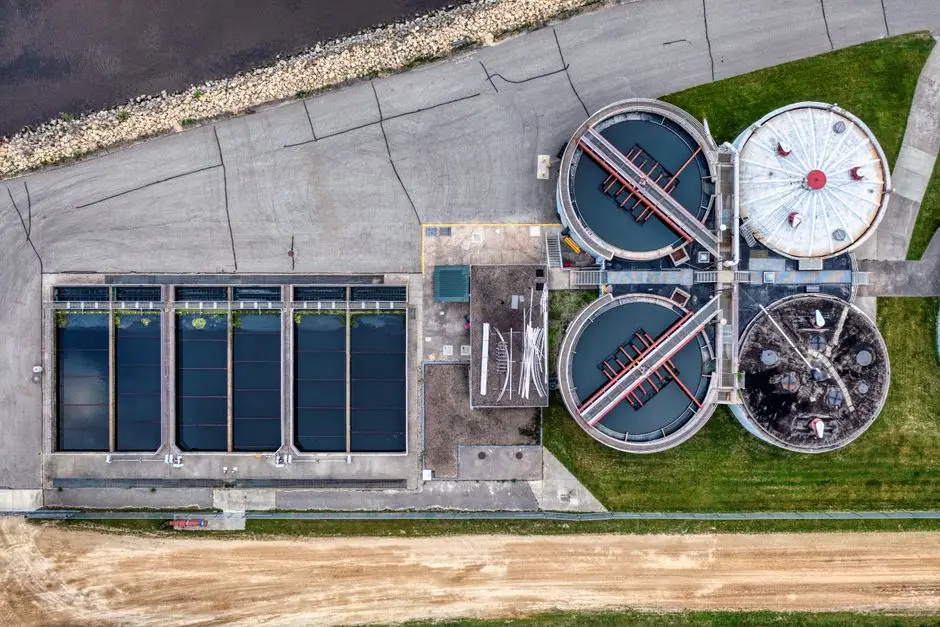
DAF separates floatable material by attaching microbubbles to suspended particles and oil droplets. In OpenBlueprint’s process description, clarified effluent is pressurized and saturated with air in a drum, then returned to the flotation tank. The pressure drop releases microbubbles measuring 10–100 microns, which attach to suspended solids and tiny oil droplets, lower their effective specific gravity and carry them to the surface for mechanical skimming; clarified water leaves below an overflow weir.
Its position in the treatment train matters more than the presence of a flotation tank. In the refinery sequence described by OpenBlueprint, an API separator first removes free oil and heavy sediment. DAF then captures remaining emulsified oil and fine solids, while biological reactors provide downstream organic treatment. A Boston factory may need the same functional separation, but its equipment order must follow its own stream map rather than the refinery example.
Chemical coagulation or flocculation may be necessary to destabilize emulsions before flotation. OpenBlueprint specifically identifies coagulant use in the refinery application. Chemical selection should therefore be tied to the actual wastewater and jar or pilot testing rather than included as a generic dosing package.
Hixson reports that field studies at poultry slaughterhouses achieved 74% suspended-solids removal and 99% oil-and-grease removal under optimized DAF conditions. More recent poultry data cited by Hixson reports up to 99% TSS removal, 85% BOD₅ reduction and 98% phosphate removal with proper coagulant selection and operating parameters. These are poultry application results, not universal performance guarantees for a Boston factory. Wastewater composition, coagulant selection and operating conditions determine actual performance.
- Remove rags, debris and heavy grit before they obstruct pumps or the flotation system.
- Equalize flow and load where batch production or cleaning cycles create surges.
- Use an API separator, DAF or another physico-chemical stage for recoverable oil, FOG and suspended solids.
- Add biological treatment where dissolved biodegradable organics remain.
- Add polishing, nutrient control or disinfection only where the destination requires it.
- Withdraw and dewater flotation sludge continuously enough to prevent carryover and storage problems.
Include the downstream solids route in any DAF supplier comparison. The PLC-controlled chemical dosing system and associated sludge-dewatering equipment need defined operating duties, maintenance access and controls; they should not be treated as incidental items in the mechanical schedule.
Build a complete ETP when one DAF unit is not enough
A complete ETP is required when removal of floatable material will not satisfy the discharge or reuse objective. Begin with screening and solids exclusion where the stream contains rags, debris or grit, and add equalization where hydraulic and pollutant loads vary materially. Hixson identifies equalization as a way to buffer batch and cleaning-cycle surges and protect downstream biological processes.
Use primary physical or physico-chemical treatment for recoverable oil, suspended solids and FOG. Hixson identifies DAF as a widely used primary treatment technology in food processing, but that finding does not make it universal across Boston manufacturing. The relevant comparison is the factory’s oil, solids and loading characteristics.
Add biological treatment for dissolved biodegradable organics. Hixson states that aerobic processes such as activated sludge and sequencing batch reactors use microorganisms to consume dissolved organic matter, with primary BOD₅ and COD reduction occurring during biological treatment. This is the functional boundary DAF cannot cross by itself.
Evaluate anaerobic digestion for high-strength organic streams when energy recovery is attractive. Hixson reports COD removal of 89.8–96.5% in food-processing applications, methane yields of 0.27–0.33 liters CH₄ per gram of COD removed, and documented cases in which biogas offsets up to 57.6% of a treatment plant’s energy demand. Those figures are specific to the cited applications and should not be transferred to a Boston project without comparable waste characterization and an energy assessment.
Add tertiary filtration, nutrient removal, disinfection or reuse equipment only when objectives require it. Size the solids-handling train into the project: Hixson notes that sedimentation and flotation create sludge, while tertiary treatment adds concentrated residuals that require management. Filtration without a residual-disposal plan only relocates the problem.
| ETP function | Indicative process stage | Required design basis |
|---|---|---|
| Protect downstream equipment | Screening, grit exclusion and equalization | Peak flow, debris characteristics, batch and cleaning-cycle data |
| Remove oil, FOG and suspended solids | API separator, DAF, coagulation or clarification | Oil and grease, TSS, emulsions, contaminant loads and skimming rate |
| Remove dissolved biodegradable organics | Activated sludge, SBR or anaerobic process | BOD₅, COD, nutrients, biodegradability, load variation and oxygen demand |
| Meet reuse or advanced effluent requirements | MBR, filtration, nutrient removal, UV or disinfection | Reuse quality specification and receiving permit conditions |
| Manage treatment residuals | Sludge holding, conditioning and dewatering | Solids yield, residual analyses, storage and disposal route |
For reuse or space-constrained applications, evaluate an MBR-integrated wastewater treatment train as a defined biological and polishing scope, not as an automatic replacement for DAF. Hixson notes that MBR capital and energy costs are higher than conventional systems.
Compare DAF and full-ETP options by factory scenario
The defensible choice follows the factory’s waste, destination and reuse objective. DAF alone is a preliminary candidate where recoverable oil, grease, emulsions or suspended solids are the target contaminants and the clarified water has a verified compliant or reusable destination. That conclusion should remain conditional until representative testing and the discharge-route review are complete.
DAF belongs within an ETP when biological treatment follows. OpenBlueprint identifies DAF as a protective barrier for downstream biological reactors, while Hixson describes DAF as pretreatment for biological processes. An equalization and physico-chemical ETP becomes more likely when flow and load fluctuate substantially, because equalization buffers batch and cleaning-cycle surges.
Biological or anaerobic treatment is needed for high-strength dissolved organic loads that a physical flotation unit cannot remove. MBR or advanced filtration should be selected for reuse objectives or stricter effluent-quality requirements, with the higher capital and energy costs identified by Hixson considered during option selection.
| Factory condition | Defensible treatment scope | Selection caution |
|---|---|---|
| Recoverable oil, FOG, emulsions and TSS with a verified downstream destination | DAF as a candidate pretreatment or physical treatment stage | Confirm emulsions, loading, skimming and residual handling |
| DAF followed by biological treatment | DAF plus biological ETP | Protect microorganisms from oil and solids carryover |
| Large batch, production or CIP-driven variability | Equalization plus physico-chemical and biological stages as required | Size around actual peak flow and pollutant loads |
| High-strength dissolved organic wastewater | Biological or anaerobic treatment, potentially preceded by equalization and physical separation | Do not expect DAF to provide biological treatment |
| Water reuse or advanced effluent quality | MBR and advanced filtration or disinfection as justified | Define reuse quality and residual-disposal requirements |
| Inclined-plate solids separation is preferred | Lamella clarification compared with DAF | Compare oil, solids, loading and performance data—not footprint alone |
Compare the flotation option against a high-efficiency sedimentation tank using the actual wastewater. A lamella clarifier may be appropriate where inclined-plate solids separation is favored, but the decision should follow oil and suspended-solids behavior, hydraulic loading and required effluent quality.
For equipment-level screening, the 2026 DAF unit engineering specifications and selection framework provides a useful structure for comparing flotation bids. The comparison should remain subordinate to the factory’s wastewater-specific basis.
Specify, verify and commission the selected system
A procurement-ready specification converts the selected treatment scope into enforceable vendor obligations. Issue a written request covering design flow, the method used to establish peak flow, wastewater characteristics, removal objectives, operating hours, available footprint and utility constraints. State whether the supplier is quoting a DAF unit, a treatment train or a complete ETP; those scopes must not be conflated.
Require a mass-balance calculation showing how hydraulic loading and contaminant loading relate to each item of equipment. No fixed hydraulic loading value should be accepted without project-specific data. The calculation should identify the selected flow basis, recycle rate, air saturation assumptions, solids capture rate, chemical demand and downstream sludge yield.
Ask each bidder to identify recycle-pump duty, compressed-air demand, chemical consumption, skimming arrangement, sludge withdrawal, controls, redundancy and maintenance access. Define utility requirements explicitly: electrical service, compressed air, service water, chemical storage and drainage. Include any needed PLC-controlled chemical dosing system with its controls, calibration requirements and chemical storage interfaces rather than leaving it as an unspecified extra.
Require factory and site acceptance testing tied to objective acceptance criteria. Include instrument calibration, operator training, maintenance procedures, spare-parts schedules, as-built drawings, electrical schematics, PLC documentation and utility consumption estimates. If sludge dewatering is required, state its performance and operating criteria in the same acceptance package.
For a Boston project, make regulatory confirmation and permit-support deliverables contractual. The applicable direct-discharge permit or indirect-sewer pretreatment requirements must be confirmed with the relevant authority. A generic ETP design cannot guarantee discharge compliance.
Use the industrial dissolved air flotation system scope as the starting point only when DAF has been selected by the wastewater data. Final sizing and performance commitments should follow the completed design basis and acceptance tests, not the supplier’s nominal equipment capacity.
Frequently Asked Questions
Can a Boston factory buy a DAF unit before completing wastewater testing?
Yes, but only as a preliminary selection or budgetary inquiry. Final sizing and performance guarantees require representative wastewater data, flow records, the discharge route and the applicable permit or sewer constraints. Without those inputs, the supplier cannot establish the required oil, FOG or solids removal reliably.
How should a buyer compare DAF and full-ETP suppliers?
Compare wastewater-specific engineering, justified pilot evidence, complete equipment scope, controls, maintenance access, utility demands, service responsibilities and acceptance criteria—not headline capacity alone. For a DAF offer, examine recycle-pump and air-system design, chemical consumption, skimming and sludge withdrawal. For an ETP offer, verify whether biological treatment, polishing, disinfection and residual handling are included.
Does the discharge route determine whether a full ETP is legally required?
Yes, but it is not the only input. Hixson states that direct dischargers to surface water require an NPDES permit and indirect dischargers to municipal systems are subject to pretreatment standards under 40 CFR Part 403. The pollutants, applicable local limits and reuse goals then determine the required treatment scope. No supplied evidence establishes one universally mandated ETP configuration for every Boston factory.
Can DAF replace biological treatment?
No. DAF removes floatable material and suspended solids, and it can protect downstream biological processes from oil and solids carryover. Microorganisms remain necessary when the discharge route requires removal of dissolved biodegradable organics measured through BOD₅ and COD.
What information should a supplier receive before pricing a Boston factory wastewater system?
Provide average and peak flow data, wastewater analyses, a stream map, the proposed discharge route, applicable permit or sewer constraints, utilities, available footprint, operating schedule and reuse objectives. Also provide production and cleaning schedules and the proposed method for handling treatment residuals. Without these inputs, request a qualification statement and excluded items rather than accepting a fixed equipment price as a complete solution.