What an RO System for Fertilizer Wastewater Is Designed to Do
An RO system for fertilizer wastewater uses membrane separation to divert nutrient-rich wastewater into a concentrated fertilizer stream while producing low-solids permeate for reuse or further treatment. The appropriate train normally includes pretreatment for organics, solids, colloids, and contaminants that foul membranes, followed by UF where the feed requires strong membrane protection and RO for concentration. Recovery potential depends on feed salinity, nutrients, organics, fouling tendency, and the required concentrate purity. Research supports the concept but does not establish universal performance: a 2026 PLOS One study found an RO-derived aquaculture fertilizer concentrate stable for at least 6 months in light-proof containers at room temperature.
In an industrial reverse osmosis system, pressurized water passes through a semi-permeable membrane. Permeate exits with lower dissolved-solids content; the reverse osmosis concentrate retains most rejected salts and nutrients. That separation mechanism does not, by itself, create a standardized fertilizer or satisfy a discharge permit. Pretreatment, operating control, product qualification, and concentrate management determine what the system actually delivers.
The design must serve two distinct objectives. A water-reuse-led train prioritizes usable permeate and a controlled route for the remaining concentrate. A fertilizer-recovery-led train prioritizes nutrient concentration, consistency, blending, storage, and market or process acceptance. Trying to optimize both without defining priorities is a common design error because recovery, flux, concentrate composition, and capital requirements pull in different directions.
The strongest direct evidence comes from recirculating aquaculture system effluent. The 2026 PLOS One study found that its RO concentrate maintained chemical and microbiological stability for at least 6 months in light-proof containers at room temperature, both pasteurized and untreated. That supports fertilizer product development for that tested feed; it does not establish shelf life for manure, fertilizer-manufacturing, or aquaculture-wastewater streams with different chemistry.
A 2025 ScienceDirect study evaluated textile wastewater for greenhouse irrigation of basil and beans. Its nutrient-bearing RO concentrate supports the broader resource-recovery concept, but textile dyes, salts, trace metals, and surfactants differ materially from fertilizer wastewater. It is supporting evidence, not direct validation of a fertilizer-production plant.
Choose the Treatment Objective Before Selecting the RO Skid
A reuse-first and fertilizer-recovery-first design produce different acceptance criteria and expose the plant to different risks. A commercial supplier reports that skid-mounted RO systems can recycle over 80% to 90% of internal water loops; that is a supplier-reported claim for industrial water recycling, not a fertilizer-wastewater performance guarantee. For fertilizer recovery, the concentrate needs a nutrient specification and controlled blending because raw RO concentrate may not have uniform nitrogen, phosphorus, potassium, micronutrient, salt, organic, or pathogen characteristics.
| Primary objective | Required permeate result | Required concentrate result | Main decision risk |
|---|---|---|---|
| Water reuse | Meets the receiving process, cooling, washing, irrigation, or discharge specification. | Controlled volume and composition with an approved disposal, recovery, or reuse route. | Reject volume, salinity, and fouling constrain recovery. |
| Fertilizer recovery | Meets the intended reuse specification without creating a downstream salt burden. | Defined nutrient content, impurities, consistency, stability, and handling requirements. | Product quality varies with feed chemistry and concentrate composition. |
The textile study provides a controlled-use example rather than a fertilizer specification. Compared with tap water, RO concentrate increased phosphorus and potassium by 8.5% and 72% in basil. In beans, nitrogen, phosphorus, and potassium increased by 45%, 109%, and 559%, respectively. These results were tied to the tested textile concentrate, dilution treatments, crops, and greenhouse conditions.
The same study also shows why raw concentrate cannot be sold on nutrient content alone. Bean calcium decreased by 29%, while several microelements changed in magnitude; some increased, while others decreased. Dilution and application optimization were still necessary. The design team should therefore evaluate concentrate routes and recovery assumptions separately, using lessons from DAF versus clarifier for industrial pretreatment and industrial wastewater recycling system design, rather than assuming the RO skid owns the entire performance outcome.
Characterize the Feed Before Fixing the RO Recovery Target
Feed analysis determines membrane area, pretreatment, concentrate composition, and the recovery target; nominal flow alone is not a design basis. Representative production data should cover normal batches, seasonal changes, cleaning cycles, dilution practices, and worst credible feed conditions. A single clean-water laboratory sample will not expose the variable organics, suspended material, and salt loads that control membrane fouling and scaling.
| Data category | Required information | Design decision affected |
|---|---|---|
| Bulk water chemistry | pH, conductivity, total dissolved solids, hardness, chloride, sulfate, silica, calcium, and magnesium. | RO recovery, scaling risk, antiscalant selection, and materials review. |
| Organic and solids load | Suspended solids, turbidity, COD or TOC, oil and grease where relevant, color, and odor. | DAF, filtration, UF, biological pretreatment, and fouling control. |
| Nutrient profile | Total nitrogen, ammonia, phosphate, potassium, and relevant micronutrients. | Concentrate value, fertilizer blending, and product-quality limits. |
| Microbiological and product quality | Viable counts, pathogen indicators where applicable, organic carryover, storage-stability requirements, and acceptance route. | Disinfection, pasteurization decision, storage design, and marketability. |
Recovery references must retain their original scope. A commercial supplier describes closed-circuit RO configurations reaching up to 92–96% recovery. The 2025 ScienceDirect study cites earlier desalination-brine work reporting 94% recovery for crop irrigation and 98% for livestock watering, with salinity the main obstacle and boron the second most important limiting factor.
Those figures do not transfer automatically to fertilizer wastewater. Salinity and scaling potential differ, nutrient loading may encourage biological or chemical fouling, concentrate use changes the acceptable rejection rate, and feed variability can dominate operating reliability. Any recovery proposal should identify the feed basis, temperature, permeate quality, concentrate quality, and operating envelope behind its calculation. Equipment selection can then be checked against pretreatment duty, including industrial water-softening requirements and the solids barrier provided by multi-media filtration.
Build a Pretreatment Train That Protects the RO Membranes
Each pretreatment stage should remove a defined wastewater constituent and meet an acceptance condition that can be measured before RO. A generic filtration train will not control variable organics or colloidal material, while chemical dosing cannot compensate for gross suspended solids. The preliminary sequence is therefore feed-specific: remove floatable material, control solids and colloids, protect the membranes, and condition the water only where analysis demonstrates a need.
| Problem or control function | Potential stage | Evidence and procurement check |
|---|---|---|
| Floatable organics, oil and grease, colloidal material | DAF where the feed contains floatable material. | Compare DAF versus clarifier for the actual feed. The supplied DAF range is 4–300 m³/h across 13 standard models with automatic skimming. |
| Suspended solids, turbidity, colloids | Multi-media filtration, with DAF first where floatable material is present. | Specify turbidity and solids acceptance at the filter outlet, not only at the final skid inlet. |
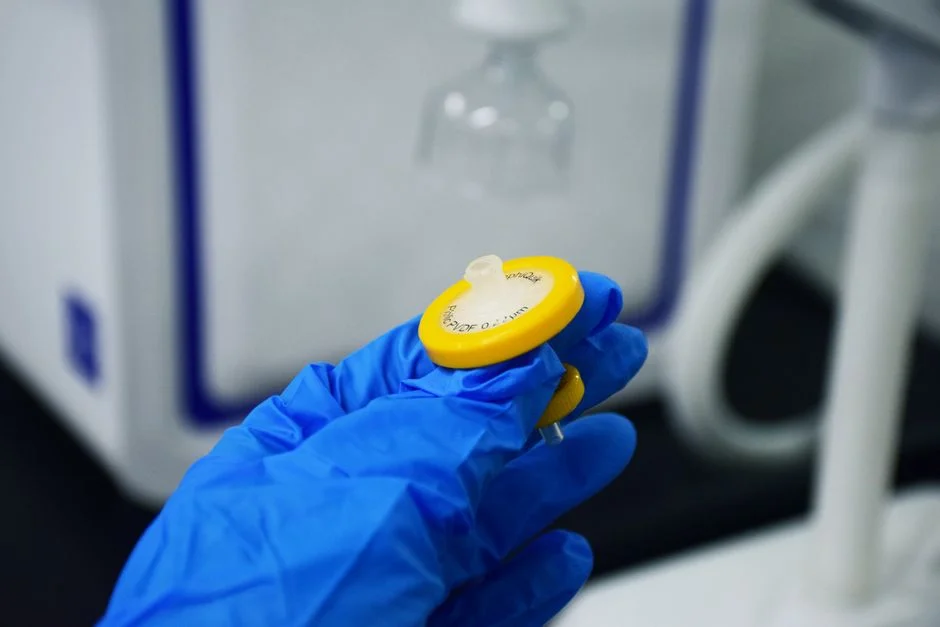
| Fine solids, colloids, bacteria | UF before RO where strong membrane protection is justified. | The cataloged UF pretreatment for fertilizer wastewater uses 0.03 μm PVDF membranes, handles 2,000–40,000 L/h, accepts feed turbidity up to 300 ppm, and includes automatic backwash and air scour. |
| pH, coagulation, scaling, or biological control | Targeted chemical dosing or biological-process control. | Use automatic chemical dosing only after the required chemical, dose range, and interlocks are established. |
DAF should be selected for DAF equipment suited to floatable wastewater contamination, while multi-media filtration addresses residual solids and turbidity. Chemical addition may control pH, coagulation, antiscalant demand, or biological conditions, but it should not be used as a substitute for solids removal.
Instrument the train around the RO membranes. Record differential pressure, normalized permeate flow, feed and permeate conductivity, turbidity, feed pressure, and cleaning triggers. Define the cleaning initiation criterion and chemical-cleaning-in-place conditions before procurement. An acceptance test should therefore cover stage performance under representative feed—not only clean-water membrane ratings.
Separate Permeate Reuse from Fertilizer Concentrate Management
Permeate and concentrate require separate specifications because they serve different destinations. Process-water reuse, cooling, washing, irrigation, and discharge impose different requirements. The supplied research does not establish a universal fertilizer-wastewater permeate limit, so the receiving standard or customer specification must define conductivity, hardness, pH, residual organics, microbiology, corrosion, and any application-specific limits.
Concentrate should remain a product in development until composition, consistency, impurities, pathogen risk, odor, color, corrosion, storage stability, and regulatory acceptability have been established. Nutrient totals alone do not define a saleable liquid fertilizer concentration. A blending strategy may be needed to correct nutrient ratios or salt content, and receiving tanks or sedimentation equipment may affect storage and solids behavior.
The 2026 PLOS One finding is narrow but useful: the tested RO concentrate remained chemically and microbiologically stable for at least 6 months at room temperature in light-proof containers, with stability observed both with and without pasteurization. Storage method was part of the result. It does not cover every fertilizer wastewater or storage configuration.
Concentrate handling can dominate the project economics. A 2025 industry article from Water and Wastewater notes that some wastewater RO systems can produce up to 10 gallons of reject per gallon of treated water. That is a broad industry observation, not a fertilizer-system guarantee, but it explains why rejection volume cannot be hidden in the water-reuse calculation.
Evaluate discharge, blending into a fertilizer product, further concentration, salt or nutrient recovery, and controlled irrigation as separate routes. Each needs its own mass balance and approval pathway. A plate-and-frame filter press may reduce concentrate solids before handling, but it does not establish the concentrate’s fertilizer or regulatory status.
Validate Performance with Pilot Testing and Operating Controls
A commercial RO purchase should be based on representative-feed performance rather than membrane rejection percentages alone. Pilot the actual process stream across seasonal, batch, cleaning-cycle, and dilution variability. Measure normalized permeate flow, salt passage, nutrient passage, operating pressure, energy consumption, cleaning frequency, concentrate composition, and changes in product quality. These results should define the commercial membrane area, pretreatment duty, recovery limit, and concentrate route.
| Validation stage | Required evidence | Procurement consequence |
|---|---|---|
| Feed representativeness | Samples and operating records covering normal production and credible worst cases. | Reject clean-water-only guarantees; require a defined feed envelope. |
| Architecture comparison | Direct RO versus UF–RO where solids, colloids, bacteria, or variable organics could compromise membrane stability. | Use pilot results to price and specify pretreatment, not a preferred equipment list. |
| Operating controls | Feed pressure, interstage and differential pressure, conductivity, pH, temperature, permeate flow, concentrate flow, antiscalant or biocide status, and CIP conditions. | Confirm that the control narrative, interlocks, data logging, and operator access match the plant. |
| Contract acceptance | Agreed feed basis, permeate and concentrate specifications, recovery, cleaning regime, and enforceable guarantees. | Define how performance is normalized and how off-specification operation is corrected or compensated. |
A commercial supplier reports energy-recovery devices that can recover up to 60% of hydraulic energy in its integrated industrial RO architectures. Treat that as an equipment opportunity to evaluate, not an energy guarantee for fertilizer wastewater. Actual consumption depends on feed, pressure, temperature, recovery, controls, and pretreatment losses.
Compare membrane and filtration materials against the demonstrated feed chemistry, then require service support, spare-parts strategy, membrane compatibility, and training. A defensible commercial test should use the real feed and agreed output specifications rather than generic rejection claims. Documenting the RO and UF membrane elements and critical valves and filter media available for the project closes the gap between pilot performance and long-term operability.
Frequently Asked Questions
What does an RO system for fertilizer wastewater cost?
No reliable universal price can be calculated without the feed flow, complete analysis, recovery target, permeate specification, concentrate route, pretreatment duty, storage requirements, and site utilities. A supplier should provide an itemized quotation separating pretreatment, RO, controls, piping, tanks, chemical supply, commissioning, and concentrate management. Require the quotation to state which feed basis and performance guarantees it uses; a price based only on nominal flow is not comparable.
How should the system be sized for peak feed and variable fertilizer-wastewater chemistry?
Size UF pretreatment and RO membrane area from representative production data, including seasonal and batch variation, not nominal average flow alone. The UF duty must be reconciled with the actual hydraulic flow, turbidity, solids, backwash demand, and feed variability. Recovery should be set only after the concentrate salinity, scaling tendency, nutrient composition, and disposal or product route are defined, because these determine whether added membrane area improves recovery or simply increases cleaning exposure.
What evidence should a supplier provide when selecting an RO skid?
Ask for pilot evidence on representative fertilizer wastewater, a defined feed envelope, membrane compatibility, control narratives, cleaning procedures, service capability, and enforceable acceptance criteria. The test should state feed, permeate, and concentrate specifications, recovery, normalization method, and consequences of off-specification operation. Review the industrial reverse osmosis system configuration only after verifying that its membrane material, pretreatment, instruments, and guarantees fit the actual wastewater.
Which compliance requirements apply to permeate reuse and fertilizer concentrate?
There is no single universal requirement covering both outputs. Permeate reuse must meet the receiving process, discharge, irrigation, or other applicable specification. Concentrate sold or returned to a fertilizer process requires separate product-quality, impurity, stability, labeling, and handling assessment; discharge or agricultural use may require additional local approval. Require the supplier to identify the proposed route and supporting compliance basis rather than treating permeate approval as concentrate approval.
How long can the recovered liquid fertilizer remain stable in storage?
The 2026 PLOS One study supports a shelf life of at least 6 months for its tested RO concentrate from recirculating aquaculture system effluent. The result applied to room-temperature storage in light-proof containers, and both pasteurized and untreated concentrate remained chemically and microbiologically stable. A different feed, container, temperature, light exposure, or formulation requires new stability evidence; the study does not establish universal storage life for fertilizer wastewater.