Which Rules Control a Roxana Sewer Discharge?
A mining or metals plant near Roxana should treat the sewer-use ordinance and POTW pretreatment authorization as the controlling acceptance criteria, not a generic NPDES permit. Clean Water Act §307(b) and 40 CFR Part 403 govern indirect discharges to POTW collection systems; NPDES under §402 governs direct discharges to surface waters. EPA explains that local limits are site-specific requirements applied at the industrial user’s point of connection and protect the POTW, its sludge, and receiving waters. Obtain the current Roxana-area ordinance, permit and local-limit worksheets before selecting equipment, then verify the facility’s actual federal categorical subcategory. This mining wastewater pretreatment compliance guide provides a useful comparison framework.
| Document or pathway | What it controls | Procurement implication |
|---|---|---|
| Clean Water Act §307(b) and 40 CFR Part 403 | Indirect discharge to a POTW collection system | Establish the pretreatment framework and industrial-user duties. |
| NPDES under Clean Water Act §402 | Direct discharge to surface water | Do not substitute surface-water limits for sewer limits. |
| POTW sewer-use ordinance and pretreatment permit | Site-specific local limits at the point of connection | Use these numerical limits and monitoring conditions to size and accept equipment. |
| Federal categorical standard | Minimum applicable federal requirements | Verify the facility’s SIC, process circuits and current subcategory. |
The research is internally inconsistent about the mining category. One source associates ore mining and dressing with 40 CFR Part 437 and metal finishing with Part 433; another refers to Part 440 for metal mining. Do not select a code by geography or sector label. Check the plant’s current permit and the applicable EPA subcategory. A plating, pickling or anodizing operation may implicate Part 433, while an ore-mining and dressing operation may fall under Part 437, as identified by HydropureWater’s 2026 pretreatment guide. Where applicable, Part 433 §433.15 limits copper to 3.38 mg/L daily maximum and 2.07 mg/L monthly average, and total chromium to 2.77 mg/L daily maximum and 1.71 mg/L monthly average (HydropureWater, 2026).
Federal categorical standards are a floor, not a substitute for the controlling local limit. HydropureWater reports that the Part 437 zinc benchmark of 1.0 mg/L daily maximum and 0.5 mg/L monthly average may be tighter than a POTW’s sewer limit. That comparison is not a Roxana limit: request the actual ordinance and worksheets. The equipment proposal should state which parameter, averaging period, monitoring frequency and point of connection it guarantees to meet.
Build the Roxana Compliance Envelope Before Ordering Equipment
The controlling design envelope should be assembled from five records: the current NPDES permit, the receiving POTW’s sewer-use ordinance and pretreatment limits, the applicable federal categorical standard, 2025–2026 discharge-monitoring data, and a 12-month influent characterization. That package prevents a supplier from treating a permit exception as a normal operating condition or sizing around an average that masks batch releases. HydropureWater’s 2026 Price-area guidance recommends the same five-document package for a mining or metals facility, although the receiving authority and local limits must be changed for Roxana.
Characterize streams separately. Acid mine drainage, spent process solutions, leach-pad runoff, brine and wash water can have different acidity, metal load, sulfate and dissolved-solids concentrations. HydropureWater’s 2026 mining treatment source reports pH of 2–4 in raw acid mine drainage and spent process solutions, suspended solids in the hundreds to several thousand mg/L, dissolved Pb, Cu, Zn, Cd, Ni and As, and elevated sulfate and TDS in leach-pad runoff and brine streams. These are source-profile observations, not Roxana discharge limits.
Ask the POTW for more than a table of maximum concentrations. Request the sampling location, analytical method, averaging period, monitoring frequency, slug-load limits, surcharge provisions, discharge authorization conditions, and any adopted PFAS or metals requirements. The agency’s response should also identify whether contact water, truck-wash water, washdown and laboratory drains enter the same industrial user system.
EPA states that local limits address the specific needs of the POTW, its sludge and receiving waters; they can be numeric or narrative and are imposed at the point of connection to the collection system (U.S. EPA, Pretreatment Standards and Requirements—Local Limits, accessed 2026). A proposal based only on federal numbers is therefore incomplete. This adjacent-sector pretreatment compliance blueprint shows how regulatory records and characterization should precede equipment selection.
Characterize Batch Loads and Equalization Requirements
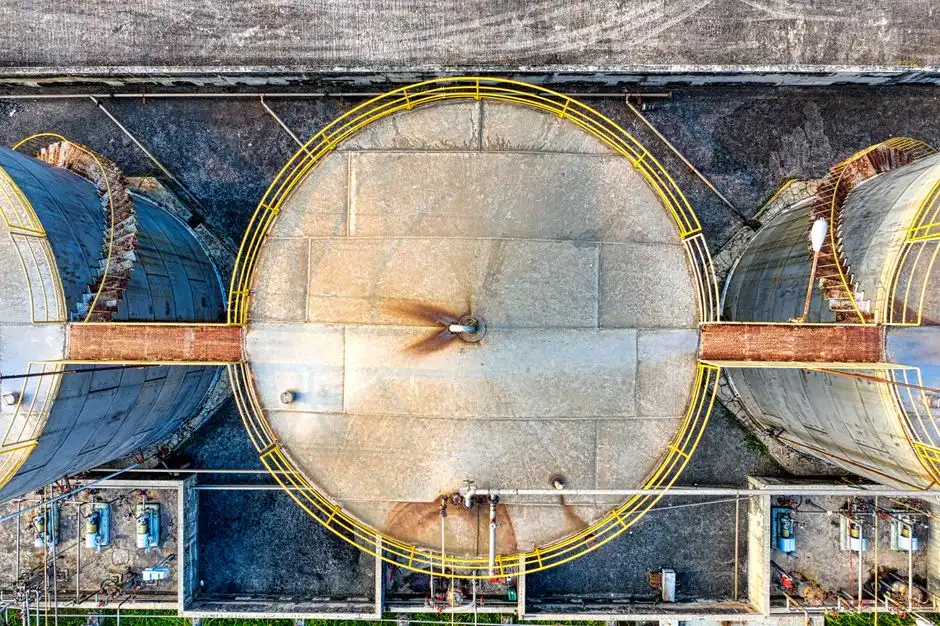
Equalization should absorb variable mining and metals discharges before pH correction and solids removal; it should not function as a tank that merely passes the next batch downstream. HydropureWater’s 2026 pretreatment source recommends 8–24 hours of average daily flow to damp batch discharges associated with shift changes, dump-leach cycles and mill clean-outs. It also warns that a 4-hour basin can pass upstream spikes directly into the clarifier and overload it. Those are design recommendations from a commercial source, not Roxana permit conditions.
Use the measured production and discharge calendar to construct the hydraulic model. At minimum, identify average daily flow, maximum daily volume, the peak 2-hour flow, dump-leach-cycle volumes, clean-out volumes and the minimum operating flow. HydropureWater, 2026, directs the complete system to be designed for the peak 2-hour flow with 20–30% turndown capacity. That turndown requirement matters because it tests the operating envelope: treatment must remain stable when the plant is running below its design average, not merely during a campaign maximum.
- Segregate acid drainage, process solution, wash water and runoff where practical.
- Route each stream into equalization sized from measured batch and peak-flow data.
- Apply staged pH correction and metal precipitation.
- Coagulate and flocculate the precipitated solids.
- Clarify, filter and sample at the permitted connection.
Jar testing and pilot work should test the ranges of flow, pH, metals, TSS, sulfate and TDS observed during production, wet-weather runoff and clean-outs. A nominal average flow is not enough because the relevant failure mode is often a short, concentrated batch. Use the DAF and clarifier selection framework to align peak hydraulic conditions with the intended solids-removal equipment, but calculate basin volume from the site’s own discharge records.
Check the equalization basin early in the civil scope. HydropureWater’s 2026 source identifies it as one of the most frequently undersized and most expensive elements to retrofit. Include liner selection, odor control, mixing, sludge removal, level instrumentation and bypass isolation in the same review as pumps and treatment skids.
Set the Chemistry Before Solids Removal
For acidic, metal-bearing wastewater, hydroxide precipitation is normally the starting chemistry because it converts dissolved metals into solids that can be removed by clarification and filtration. HydropureWater reports 85–95% total metals removal in properly controlled mining and metals systems (Fluence, 2024-11). That range is not a performance guarantee; the required dose and pH must be established separately for each metal because precipitation behavior is parameter-specific.
Lime and sodium hydroxide both adjust pH and precipitate metals, but they create different operating and sludge burdens. HydropureWater’s 2026 source states that lime is cheaper per ton while generating 3–5 times more sludge; it identifies NaOH as potentially more suitable for high-TDS streams. The comparison does not include complete project pricing, so evaluate reagent delivery, mixing, handling, sludge dewatering and disposal together. A PLC-controlled pH and precipitation chemical dosing skid should provide staged control, alarms and operating trends rather than rely on a fixed chemical-to-flow ratio.
| Decision | Hydroxide precipitation | Sulfide precipitation or polishing |
|---|---|---|
| Typical residual reported by HydropureWater, 2026 | 0.5–2.0 mg/L for Cu, Zn, Cd and Ni | 0.01–0.05 mg/L for Cu, Zn, Cd and Ni |
| Operating implication | Established starting chemistry; solids and sludge volume require management | Higher reagent cost; sealed reactors and scrubbed H₂S vents required |
| Relative reagent cost reported by HydropureWater, 2026 | Baseline | 2–4 times hydroxide cost |
| Best procurement position | Main treatment train when local limits can be met with verified precipitation | Slipstream polishing when the controlling limit requires lower residual metals |
HydropureWater identifies a common target pH of 6.5–9.0 and recommends two-stage dosing when influent pH changes by more than 2 units (2026). Do not convert that range into an operating setpoint. Jar-test each target parameter, including the target metal, because the optimum pH for one metal can impair another’s removal or increase residual dissolved solids. A single nominal pH value is not a defensible design basis.
Use hydroxide precipitation as the default and evaluate sulfide polishing on a slipstream when the controlling local limit is below 0.3 mg/L, following HydropureWater’s 2026 cost comparison. Before selecting sulfide, confirm the off-gas hazard review, sealed-reactor arrangement, scrubber performance and reagent supply. The supplier should provide parameter-specific pilot or jar-test results and a compliance guarantee tied to the POTW’s stated averaging period.
Choose DAF or Lamella for Metal-Hydroxide Solids
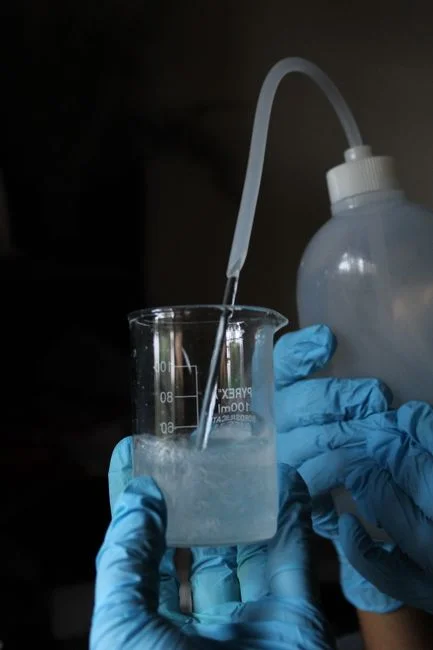
DAF is the stronger starting choice for oily or finely colloidal metal streams; lamella is the stronger starting choice when the solids are primarily dense metal-hydroxide flocs, flow is high and the available footprint is constrained. HydropureWater’s 2026 comparison reports DAF hydraulic loading of 5–25 m/h, TSS removal of 90–98% and oil-and-grease removal of 85–95% in mining and metal-finishing service. For lamella, it reports surface loading of 20–40 m/h, a compact footprint, lower chemical consumption and strong performance with metal-hydroxide flocs. These are commercial-source performance ranges, not guarantees for an untested Roxana stream.
| Criterion | DAF | Lamella |
|---|---|---|
| Reported hydraulic or surface loading | 5–25 m/h | 20–40 m/h |
| Reported TSS removal | 90–98% | Not supplied in research |
| Reported oil-and-grease removal | 85–95% | Less effective than DAF for free oil |
| Preferred application | Oil, grease, fine colloids or difficult floatable solids | Primarily metal-hydroxide sludge at high flow and constrained space |
| Key trade-off | More equipment and compressed-air demand | Not automatically cheaper for mixed waste containing oil or colloidal fines |
HydropureWater lists a product range of 4–300 m³/h across 13 DAF models (2026). This breadth does not select the final machine: actual peak 2-hour flow, turndown, oil content, solids settleability, flake loading and required redundancy determine the configuration. Evaluate the manufacturer’s DAF system for mining wastewater clarification against the actual envelope, not against the maximum catalog flow.
For a primarily metal-hydroxide stream, compare a lamella installation as well. The available high-efficiency sedimentation tank and the DAF versus clarifier equipment comparison provide useful selection questions. Require suppliers to state solids capture, hydraulic loading, polymer demand, sludge withdrawal, maximum and minimum flow, and how an upset or polymer failure affects compliance.
Polish the Effluent and Control Sludge Risk
Filtration protects the sewer connection from residual solids and provides visible process margin when clarification underperforms. HydropureWater’s 2026 source specifies an anthracite-over-sand-over-garnet multimedia filter, a filtration rate of 1–2 m/h and residual TSS below 10 mg/L. It also requires the filter to be sized for its backwash cycle rather than average flow, with backwash triggered by differential pressure. A multimedia filtration package should therefore include backwash storage, air scour or wash-water design, media depth and a control narrative, not merely a vessel diameter.
| Acceptance area | Required basis |
|---|---|
| Filtration | Measured flow, selected filtration rate, backwash cycle, differential-pressure trigger and verified TSS performance |
| Disinfection | Only if required by the POTW ordinance or collection-system conditions |
| Sludge dewatering | Sludge characterization, selected dry-solids endpoint, cycle duration and cake-disposal route |
| Filtrate | Return to treatment-plant headworks after compatibility review |
Disinfection is conditional, not a default mining-treatment unit. HydropureWater identifies UV and chlorine dioxide as options where the POTW requires disinfection because of collection-system conditions or pathogen risk; it reports chlorine dioxide dosing of 1–5 mg/L where residual is required (2026). Confirm the need, residual target, contact condition and analytical method with the receiving POTW.
Clarifier and DAF sludge is a regulated waste, not a disposable by-product. HydropureWater reports that plate-and-frame presses can dewater metal sludge to 25–35% dry solids (2026). Evaluate a plate-and-frame mining sludge dewatering system against actual cake yield, plate area, cycle time and campaign frequency. Require a disposal pathway, waste profiling, transport assumptions and a contingency if the sludge contains a regulated metal fraction.
Return filtrate to the headworks only after checking its pH, salt load and residual chemicals. Include metals recovery as an engineering evaluation item, not an assumed revenue stream. If recovery cannot be demonstrated, the proposal should price stabilization and disposal conservatively.
Monitor, Commission and Select the Right Supplier
A defensible proposal starts with written confirmation of the controlling POTW limits, sampling requirements, applicable federal category, startup tests and compliance guarantees. Ask each supplier to state exactly which endpoint it guarantees: instantaneous maximum, daily maximum or monthly average; discharge flow; sampling point; and treatment train configuration. A generic promise to “meet pretreatment limits” is not sufficient.
Use this staged acceptance path:
- Complete source characterization and obtain the five-record compliance package.
- Conduct parameter-specific jar tests, including peak-pH excursions and sulfide slipstream trials where relevant.
- Review equipment submittals against the verified hydraulic and chemical envelope.
- Inspect installation, controls, equalization capacity and piping.
- Shakedown each unit and run an integrated test across normal and peak conditions.
- Collect final compliance samples at the POTW-required location and method.
Evaluate suppliers on documented metal-hydroxide precipitation competence, verifiable mining or metal-finishing references, commissioning support and continued chemical or media availability. HydropureWater’s 2026 Price-area guidance specifically calls for written chemistry competence, relevant POTW or NPDES project evidence, on-site commissioning and a guaranteed media-and-resin supply chain. Ask for project references that include the actual chemistry and acceptance method, not only equipment references.
Bring civil equipment into the first vendor review. HydropureWater’s 2026 pretreatment source identifies civil work—particularly an undersized equalization basin—as one of the most expensive retrofit items. A treatment skid cannot compensate for insufficient buffering, and a basin added after award can change chemical demand, pump selection and land requirements.
Compliance risk belongs in the lifecycle calculation. HydropureWater reports that civil penalties under Clean Water Act §309 can reach $25,000 per day per violation (2026). Use the nearby-market compliance framework and the mining and metals POTW pretreatment guide to build the same documentation and commissioning discipline, but use Roxana’s actual authority, limits and permit.
Frequently Asked Questions
Does an NPDES permit control a mining plant’s sewer discharge?
No. NPDES under Clean Water Act §402 governs direct surface-water discharge. Sewer discharge is governed through Clean Water Act §307(b), 40 CFR Part 403 and the receiving POTW’s sewer-use and pretreatment requirements. For the Roxana-area project, confirm the current POTW ordinance and pretreatment permit, then use its site-specific limits at the point of connection as the equipment acceptance basis (U.S. EPA, Pretreatment Standards and Requirements—Local Limits, accessed 2026).
How much equalization should a mining wastewater plant provide?
HydropureWater recommends 8–24 hours of average daily flow and warns that 4 hours may not buffer a batch discharge adequately (2026). The same source calls for design around the peak 2-hour flow with 20–30% turndown. Check those recommendations against measured flow logs and batch-calendar data. Request the basin-volume calculation, maximum and minimum operating inventory, mixing time, sludge-removal method and pump-control sequence in the proposal; do not accept “hours of retention” without the underlying flow basis.
Which clarifier should be selected for metal-hydroxide sludge?
Use DAF when testing shows oil, grease or fine colloidal metals because HydropureWater reports DAF TSS removal of 90–98% and oil-and-grease removal of 85–95% (2026). Use lamella when the stream is mainly metal-hydroxide sludge, flow is high and the footprint is constrained; its reported surface-loading range is 20–40 m/h. Require the selected unit to demonstrate capture at the peak 2-hour flow and acceptable operation at the stated turndown condition.
How do cost and supplier-selection checks change the treatment decision?
Request a reagent-and-sludge comparison rather than an unsupported project price. HydropureWater reports that lime creates 3–5 times more sludge than NaOH and that sulfide reagent costs 2–4 times more than hydroxide; it also reports sulfide residuals of 0.01–0.05 mg/L versus 0.5–2.0 mg/L for hydroxide for Cu, Zn, Cd and Ni (2026). For supplier selection, require written parameter-specific chemistry results, relevant mining or metal-finishing references, commissioning support and consumables availability. Ask for delivered chemical costs, sludge-disposal quantities and lifecycle assumptions, but have the supplier calculate them from the characterized stream.
Related Equipment
- DAF system for mining wastewater clarification — specifications, capacity range, and technical data