Why Valdez Local Limits — Not the 40 CFR Part 440 Ceiling — Design the Train
Mining and metals plants near Valdez, Alaska that discharge to the City of Valdez POTW must meet the Valdez Chapter 13.16 local limits — for example, copper 3.38 mg/L, lead 0.69 mg/L, mercury 0.0107 mg/L, and zinc 2.61 mg/L daily maximum at the end of the pipe — which are typically tighter than the 40 CFR Part 440 federal floor. A defensible 2026 train pairs pH-staged hydroxide or sulfide precipitation (Cu at pH 9–10, Pb 9.5–10.5, Cd 10–11) with DAF or lamella clarification, multimedia filtration, and brackish-water RO at 50–70% recovery, sized to the local cap rather than the ELG ceiling.
40 CFR Part 440 (Ore Mining and Dressing), promulgated in 1975 and last amended in 1988, applies to NAICS 2122 (metal-ore mining) and is incorporated into every NPDES permit issued for those operations, but it sets national BAT/AEL ceilings rather than local caps (per EPA effluent guidelines, 2026). The receiving POTW's industrial pretreatment program, set under 40 CFR Part 403, is almost always stricter than the Part 440 floor for copper, lead, zinc, mercury, arsenic, cyanide, and sulfate, because the POTW must protect its collection system, its biomass, and the receiving water (per EPA effluent guidelines, 2026). For Valdez, that means the numbers in the city ordinance are what the engineer designs against, not the federal floor.
The City of Valdez Chapter 13.16 ecode360 posting lists the following proposed daily-maximum local limits, applied at the point of discharge to the POTW (end of pipe): BOD 5,400; TSS 300; Ammonia 50; FOG 100; Arsenic 1.96; Cadmium 0.69; Chromium 2.77; Copper 3.38; Cyanide 1.2; Lead 0.69; Mercury 0.0107; Nickel 3.98; Silver 0.43; Zinc 2.61; TTO 2.17; BTEX 0.2 mg/L (per City of Valdez, Chapter 13.16 ecode360). The same chapter also enforces prohibited-discharge floors: pH less than 5.0 or greater than 11.0, closed-cup flash point below 140 °F (60 °C), a 104 °F (40 °C) temperature cap at the treatment-plant introduction, and an explicit ban on dilution as a substitute for treatment. Two cautions before specification: the ecode360 source is undated and reads as "proposed" language, so the engineer must confirm the in-force numbers with the City of Valdez pretreatment coordinator and with the Alaska Department of Environmental Conservation under 18 AAC 72 before locking equipment selection, and Alaska DEC may impose state-only metal or sulfate caps that sit on top of the local limits.
Sub-Stream Breakdown for a Valdez-Area Mine or Transshipment Site
A Valdez-area operation is typically not a large hard-rock mill. The practical readers are concentrate-transshipment yards, ore-handling pads, ship-loading facilities in Port Valdez, and small placer or remote mines whose runoff or process water is sewered to the city system. Each of these generates a different sub-stream, and the right train depends on which one dominates the site (per NREL/OSTI mine water study, 2021).
AMD from waste rock or tailings is the highest-priority compliance stream when present. Oxidation of pyrite and pyrrhotite in exposed rock produces sulfuric acid that leaches Fe, Mn, Cu, Zn, As, and Cd — low pH, high TDS, metal-loaded, and the primary driver of the hydroxide- or sulfide-precipitation stage. Concentrate-dust and ship-loading stormwater is the more typical Valdez driver: episodic, high in suspended ore fines and trace metals, and the most common cause of copper, lead, and zinc excursions at the end of pipe. Dewatering discharge is volume-driven (often more than 1,000 gpm at active operations) and chemistry-dependent, and at cold-climate sites the design driver shifts from chemistry to freeze protection and flow equalization (per NREL/OSTI mine water study, 2021). The cold-climate overlay is not optional in Valdez: near-freezing annual air temperatures, sea-salt aerosol carryover at coastal load-out points, and seasonal flow swings from spring snowmelt and autumn ship-loading peaks mean equalization tank sizing, heat-traced and insulated pipe runs, and enclosed process buildings are part of the spec, not afterthoughts.
Local Limit vs Federal Ceiling vs Stage-by-Stage Design Target
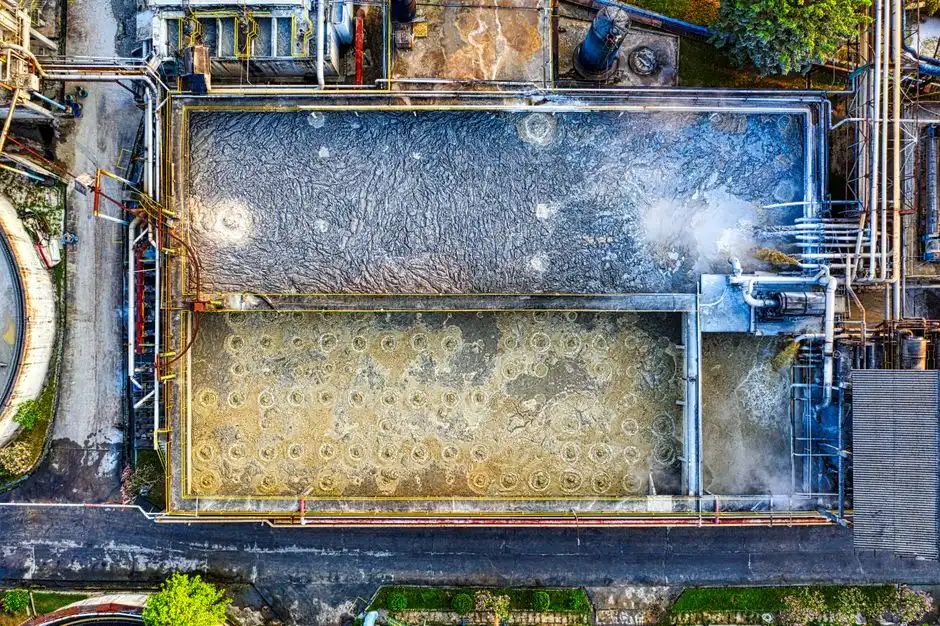
The most useful single artifact in this article is the numeric map from regulation to treatment stage. The table below pairs each Valdez-relevant pollutant with a typical 40 CFR Part 440 daily-max ceiling, the City of Valdez Chapter 13.16 local limit, a defensible pre-RO target after precipitation and clarification, and a final RO permeate target. Local limits are almost always stricter than the Part 440 BAT/AEL numbers, and the local limit — not the federal floor — is what designs the train (per EPA effluent guidelines, 2026 and watertechusa metal precipitants guide, 2026).
| Pollutant | 40 CFR Part 440 ceiling (mg/L, daily max, typical) | City of Valdez local limit (mg/L, daily max) | Pre-RO target after precipitation/clarification (mg/L) | Final RO permeate target (mg/L) |
|---|---|---|---|---|
| Copper (Cu) | ~0.30 (subpart-dependent) | 3.38 | <0.5 at pH 9.5–10.5 (hydroxide) | <0.05 |
| Lead (Pb) | ~0.20 | 0.69 | <0.5 at pH 9.5–10.5 (hydroxide) | <0.05 |
| Zinc (Zn) | ~1.0 | 2.61 | <0.5 at pH 9.5–10.5 (hydroxide) | <0.05 |
| Cadmium (Cd) | ~0.10 | 0.69 | <0.1 at pH 10–11 (hydroxide) or via sulfide | <0.01 |
| Nickel (Ni) | ~0.50 | 3.98 | <0.5 at pH 9.5–10.5 (hydroxide) | <0.05 |
| Arsenic (As) | ~0.50 | 1.96 | <0.1 via co-precipitation with Fe at pH 7–8 | <0.01 |
| Mercury (Hg) | ~0.002 | 0.0107 | <0.01 via sulfide precipitation (pH 7–8) | <0.001 |
| Chromium (total) | ~0.50 | 2.77 | <0.1 (Cr VI reduction + hydroxide at pH 8–9) | <0.05 |
| Silver (Ag) | ~0.05 | 0.43 | <0.1 via sulfide precipitation | <0.01 |
| Cyanide (CN) | ~1.0 | 1.2 | <1.0 after alkaline chlorination or H₂O₂/Cu-catalyzed oxidation, before any biological stage | <0.1 |
| TSS | ~30 (subpart-dependent) | 300 | <30 (DAF or lamella at 20–40 m/h surface loading) | <1 |
Two practical notes make or break compliance on this list. First, hydroxide precipitation is most effective between pH 9 and 11, but each metal has its own optimum — copper around pH 9–10, lead 9.5–10.5, cadmium 10–11 — so a single-stage pH set point cannot hit all of them, and two-stage precipitation (pH 7–8 for Fe/Mn/As, then 9.5–10.5 for Cu/Zn) is the standard pattern on AMD and concentrate streams (per watertechusa metal precipitants guide, 2026). Second, mercury at 0.0107 mg/L and cyanide at 1.2 mg/L are the two Valdez numbers most likely to force an additional stage — sulfide precipitation for mercury, alkaline chlorination or H₂O₂/Cu-catalyzed oxidation for cyanide — rather than a single hydroxide loop, and a PLC-controlled lime and pH-adjustment dosing package is the realistic way to hold the two set points on a Valdez stream that swings with ship-loading events.
Three Realistic 2026 Trains for a Valdez Mine-Mill or Transshipment Site
There is no one-size-fits-all solution across a particular mining area; site-specific water character and discharge economics drive the selection (per NREL/OSTI mine water study, 2021). The three trains below are the realistic 2026 options for a Valdez-area operation, ordered from lowest to highest capex/opex. For a parallel pretreatment spec, see our general 2026 mining pretreatment engineering guide.
Train A — Conventional + RO: equalization → PLC-controlled lime and pH-adjustment dosing → two-stage hydroxide or sulfide precipitation (pH 7–8 then 9.5–10.5) → DAF clarifier downstream of precipitation or lamella clarifier → multimedia filtration → industrial RO polishing stage. Best fit where the Valdez POTW has hydraulic capacity and the stream is AMD-dominant or concentrate-handling-dominant. Train B — MBR-led: equalization → precipitation → DAF → submerged PVDF MBR (0.1–0.4 µm) → cartridge filtration → RO. The MBR protects RO by simultaneously removing COD and ammonia to a consistently low SDI feed water; the right call when the stream carries ammonia, residual flotation reagents, or cyanide-breakdown products (see also our MBR vs CAS comparison for mining wastewater). Train C — ZLD: Train B plus a brine concentrator and crystallization. ZLD OPEX runs 2–4× a discharge-permitted train, driven almost entirely by thermal energy (per AMPAC USA, 2026), and is generally not the economic answer for a Valdez site with willing POTW capacity — but should be evaluated for remote placer or heap-leach sites with no sewer access. For all three trains, RO recovery on AMD and high-sulfate streams is sized at 50–70% to manage sulfate scaling on standard BWRO membranes; pushing recovery above 70% on AMD is the most common cause of premature membrane replacement (per AMPAC USA, 2026). Metal-bearing sludge from the precipitation stage is typically hazardous waste, and a sludge filter press for hazardous metal sludge producing 60–70% dry solids cake is the standard downstream of any precipitation stage.
Selection Logic and 2026-Specific Design Notes for Valdez
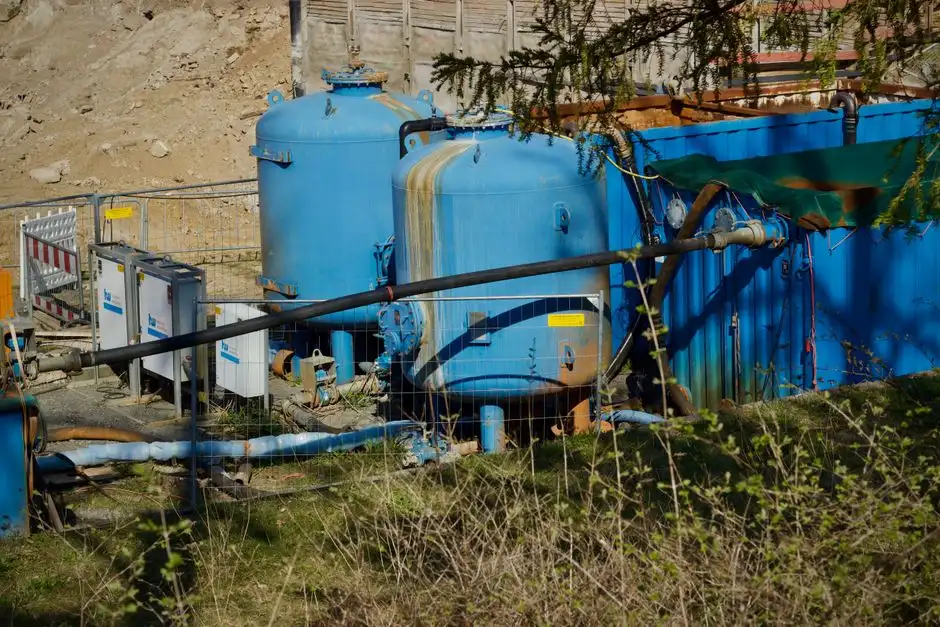
The right train is a function of three site-specific drivers: discharge vs. reuse economics, ore type, and water stress. A defensible selection logic, in order: if the Valdez POTW has hydraulic capacity and the stream is AMD- or concentrate-stormwater-dominant, Train A is typically the lowest capex and shortest schedule — validate that the Chapter 13.16 local limits in the table above are not tighter than the train can meet at design flow. If the stream carries ammonia, residual flotation reagents, or variable organics, Train B protects RO from organic fouling and removes ammonia below a 10 mg/L POTW cap in a single stage, which is the safest default for concentrate-handling and small-mill streams with reagent residue. If the site is remote, water-stressed, or facing zero-discharge requirements for closure, Train C is increasingly a 2026 design requirement rather than an option (per AMPAC USA, 2026). Always pilot the precipitation stage: competing chelants such as EDTA, citric acid, and ammonia bind metals and defeat hydroxide precipitation — the single most common cause of failed compliance at operating AMD and concentrate sites (per watertechusa metal precipitants guide, 2026). Budget the pilot at 3–6% of full-scale capex, and confirm the in-force Valdez numbers and any state-only metal or sulfate caps with Alaska DEC under 18 AAC 72 before final design.
Frequently Asked Questions
What permits and limits apply to a mine or transshipment site discharging to the City of Valdez POTW?
A discharger must meet the City of Valdez Chapter 13.16 local limits applied at the end of the pipe — for example, copper 3.38 mg/L, lead 0.69 mg/L, mercury 0.0107 mg/L, and zinc 2.61 mg/L daily maximum — and any applicable 40 CFR Part 440 (Ore Mining and Dressing) federal ceiling under NAICS 2122, plus Alaska DEC requirements under 18 AAC 72 (per City of Valdez, Chapter 13.16 ecode360 and EPA effluent guidelines, 2026).
Why design against the Valdez local limit instead of the 40 CFR Part 440 ceiling?
40 CFR Part 440, last amended in 1988, sets national BAT/AEL ceilings, not local caps. The Valdez POTW's industrial pretreatment program, issued under 40 CFR Part 403, is almost always stricter than the Part 440 floor for copper, lead, zinc, mercury, arsenic, and cyanide, because the POTW must protect its collection system, biomass, and receiving water (per EPA effluent guidelines, 2026). The local limit is what designs the train.
What RO recovery should I plan for on an AMD or concentrate-handling stream in Valdez?
Plan 50–70% recovery on standard brackish-water RO for AMD and high-sulfate streams; pushing recovery above 70% is the most common cause of premature membrane replacement (per AMPAC USA, 2026). In a ZLD configuration, RO recovery rises to 70–85% because the concentrate is sent to a thermal stage.
Which pH set points hit the Valdez copper, lead, and cadmium limits?
Operate two-stage hydroxide precipitation: pH 7–8 first to drop Fe, Mn, and As by co-precipitation, then raise to pH 9.5–10.5 to precipitate copper and zinc, and to pH 10–11 if cadmium is in the stream. Copper precipitates around pH 9–10, lead around 9.5–10.5, and cadmium around 10–11 (per watertechusa metal precipitants guide, 2026).