Busan's Industrial Wastewater Landscape: Why One Size Fits None
A Busan factory selecting wastewater treatment requires equipment matched directly to its industry contamination profile and municipal discharge route. High-FOG and TSS facilities utilize a DAF system (4–300 m³/h) operating at 3–5 bar microbubble aeration to clarify oils and suspended solids before secondary biological processing (Alantech). Factories then integrate biological treatment like WSZ underground package plants (1–80 m³/h) or MBR systems (10–2,000 m³/day) to comply with South Korea's Water Environment Conservation Act limits for BOD, COD, nitrogen, and phosphorus. Direct dischargers to the Nakdong River face stricter standards than sewer-connected plants, making 24-hour composite sampling, peak hydraulic modeling, and temperature sizing mandatory.
Industrial facilities discharging into Busan's municipal sewer networks or the Nakdong River basin must comply with South Korea's Water Environment Conservation Act (WECA), which mandates distinct discharge concentration limits based on receiving water sensitivity. Busan hosts diverse industrial clusters across five primary sectors: shipbuilding in Yeongdo, automotive component manufacturing in Noksan, seafood processing in Gamcheon, petrochemical refining along the regional coastal corridor, and textile dyeing in Sasang. Each cluster produces radically different effluent streams, ranging from heavy metal-laden rinsing solutions to high-salinity organic wastewater and synthetic dye compounds.
Busan Metropolitan City enforces localized municipal discharge ordinances that supplement national Ministry of Environment limits. Plants discharging directly into sensitive water bodies, such as the Nakdong River basin or coastal harbor zones, are held to Clean Area or Special Area limits. These standards are significantly more stringent than those applied to plants routed to public wastewater treatment plants (WWTPs) like Hadan or Gijang. Seasonal climate swings in Busan present severe operating challenges for wastewater engineers. Winter ambient temperatures dropping to −5 °C slow microbial kinetics and impair biological nitrification, while summer peaks up to 30 °C reduce oxygen solubility in aeration basins. older industrial complexes like Sasang and Jinhae feature tight spatial footprints, making expansive conventional activated sludge clarifiers physically impossible to install and favoring compact membrane biological reactors or underground modular units.
Decision Tree: ETP, DAF, or Both? Match Technology to Your Effluent
Dissolved Air Flotation (DAF) systems remove suspended solids and free or emulsified oils by introducing microbubbles generated under 3 to 5 bar pressure into the wastewater stream (Alantech). Selecting the correct equipment configuration requires a systematic four-step evaluation process based on raw wastewater composition and targeted discharge limits.
- Step 1: Effluent Characterization. Collect 24-hour flow-proportional composite samples to establish baseline and peak concentrations for Fats, Oils, and Grease (FOG), Total Suspended Solids (TSS), Biochemical Oxygen Demand (BOD₅), Chemical Oxygen Demand (COD), Total Nitrogen (T-N), Total Phosphorus (T-P), pH, and salinity. Document whether discharges occur continuously or via periodic batch dumps.
- Step 2: Primary Physical-Chemical Removal Evaluation. If influent FOG exceeds 50 mg/L or TSS exceeds 200 mg/L, install a primary DAF unit. Microbubble flotation operating at 3 to 5 bar saturator pressure achieves over 95% TSS removal and 90% FOG removal (Alantech). If raw or primary-clarified wastewater still exceeds local sewer or direct discharge thresholds for soluble BOD, COD, T-N, or T-P, a secondary biological Effluent Treatment Plant (ETP) is mandatory (Trity Enviro).
- Step 3: Biological Process Selection. For tight footprints requiring water reuse or direct discharge compliance, select a membrane biological reactor. For moderate flow rates with available footprint or underground burial requirements, select an A/O (Anoxic/Oxic) integrated package plant. For high-salinity or variable organic streams, evaluate specialized biofilm systems (see our IFAS vs MBR for high-nitrogen seafood effluent analysis).
- Step 4: Chemical Polishing and Sludge Management. Integrate PLC chemical dosing for coagulant and flocculant upstream of the DAF unit to coagulate colloidal solids. Dewater generated primary floats and biological waste sludge using filter presses (1–500 m²) for sludge dewatering to maintain cake dryness above 20-30% Total Solids (TS), ensuring compliance with South Korea's direct landfill restrictions on organic sludge. Engineers evaluating alternative port city standards can also review our regional selection framework for another industrial port city.
| Effluent Profile | Primary Primary Unit | Secondary Biological Unit | Target Discharge Application |
|---|---|---|---|
| High FOG (>50 mg/L), High TSS (>200 mg/L), Low BOD | DAF Unit (3–5 bar) | None (or pH Neutralization) | Public Sewer (Gijang/Hadan WWTP) |
| High FOG, High TSS, High BOD/COD/T-N | DAF with Chemical Dosing | MBR or A/O Biological ETP | Direct Discharge / Nakdong River Basin |
| Low FOG (<20 mg/L), Moderate BOD/COD, High Space Limit | GX rotary fine screens for headworks protection | WSZ Underground Package Plant | Public Sewer or Non-Potable Industrial Reuse |
| High Color, Salinity, Variable Toxic COD | Chemical Coagulation + DAF | Specialized Biofilm / Advanced Oxidation | Direct Discharge / Zero Liquid Discharge (ZLD) |
For detailed capital expenditure and equipment sizing logic, review our full DAF selection methodology with cost models.
Industry-Specific Treatment Trains for Busan's Top 5 Sectors
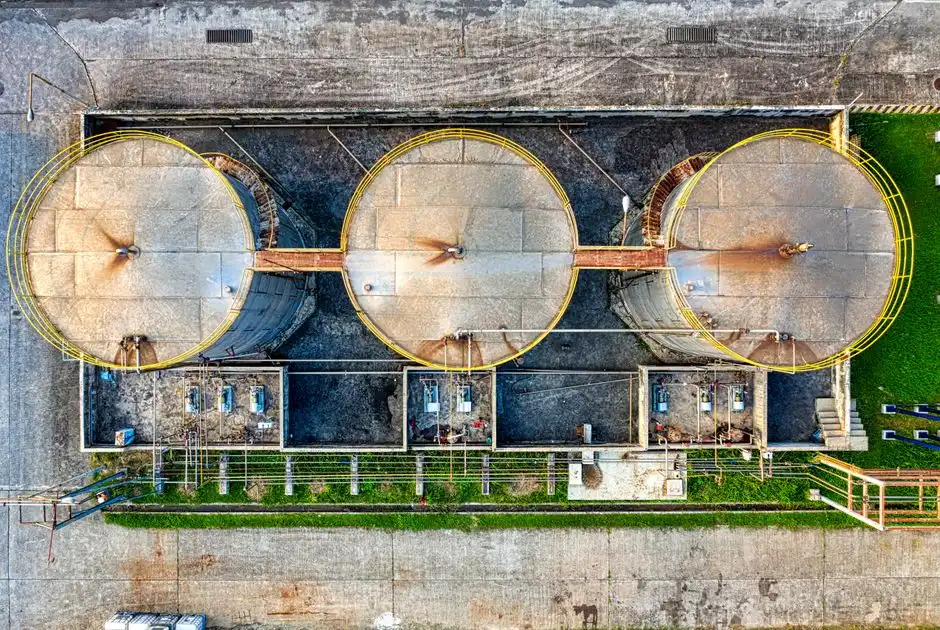
Seafood processing facilities generate wastewater with high concentrations of suspended solids, proteins, fats, and variable seasonal loads that require aggressive preliminary solids separation (Alantech). Converting raw industrial discharge into regulatory-compliant water requires matching equipment process trains directly to specific industrial contaminants.
| Busan Industrial Sector | Dominant Pollutants | Recommended Process Train Sequence | Key Performance Parameter |
|---|---|---|---|
| Seafood Processing | FOG, Proteins, Blood, High T-N, Salinity | Rotary Screen → DAF System → MBR Biological → UV Disinfection | FOG reduction 95–99%, TSS reduction 92–97% |
| Metalworking & Plating | Heavy Metals, Emulsified Oil, Extreme pH | pH Neutralization → Coagulant Dosing → DAF Flotation → MBR / IX Polish | Heavy metal precipitation & oil cracking |
| Petrochemical Processing | Free Hydrocarbons, Aromatics, High COD | API Oil Separator → Explosion-Proof DAF → Two-Stage Bio-MBR → GAC | Explosion-proof Class 1 Div 1 electrical design |
| Automotive Parts | Machining Coolants, Oils, Phosphates | Emulsion Cracking Dosing → DAF → WSZ Package ETP → RO Polish | Permeate conductivity and reuse specs |
| Textile Dyeing | Refractory COD, High Color, Salinity Swings | Fenton Oxidation → DAF Flotation → Halotolerant Biofilm → NF Membrane | Color unit reduction and COD breakdown |
Seafood processing plants in Gamcheon benefit from preliminary treatment using mechanical screens followed by microbubble flotation. According to industry application data, deploying dedicated primary flotation for food effluent achieves 95–99% FOG separation and 92–97% TSS removal, preventing downstream membrane fouling in secondary biological reactors (see our food/seafood DAF sizing and 95–99% FOG removal data guide).
Metalworking and electroplating operations must incorporate multi-stage chemical precipitation dosing tanks upstream of DAF units to drop heavy metals out of solution as hydroxide flocs. Petrochemical facilities operating near port terminals require explosion-proof motors, sealed flotation cells, and two-stage anaerobic-aerobic MBR systems. Automotive parts plants dealing with complex machining coolants rely on emulsion-breaking polymers prior to flotation, while textile plants combine pre-oxidation with membrane filtration for water recycle applications.
Sizing & Configuration: From Flow Data to Equipment Selection
Dissolved Air Flotation units designed for industrial applications typically operate at hydraulic loading rates of 10 to 20 m³/m²·h and solids loading rates of 3 to 5 kg/m²·h. Sizing process equipment accurately requires translating lab flow records into conservative engineering design envelopes.
| Unit Operation | Key Design Parameter | Standard Operating Range | Catalog Capacity Reference |
|---|---|---|---|
| DAF Flotation Cell | Hydraulic Loading Rate | 10–20 m³/m²·h | DAF systems (4–300 m³/h) for FOG and TSS removal |
| WSZ A/O Biological Tank | BOD Volumetric Loading | 0.15–0.30 kg BOD/m³·d | WSZ underground package plants (1–80 m³/h) |
| MBR Membrane System | Membrane Permeate Flux | 15–25 LMH (L/m²·h) | MBR systems (10–2,000 m³/day) for high-quality effluent |
| Chemical Dosing Skid | Coagulant / PAM Dosage | 50–200 mg/L PAC / 1–5 mg/L PAM | PLC chemical dosing for coagulant and flocculant |
| Filter Press Dewatering | Cake Total Solids Yield | 20–30% TS Cake Output | filter presses (1–500 m²) for sludge dewatering |
When selecting a primary DAF unit, standard models accommodate flows from 4 to 300 m³/h. Always apply a minimum 20% surge factor to peak hourly flows to accommodate unexpected washdown cycles or batch dumps. Biological reactors require distinct sizing approaches: size aeration basin volumes based on daily peak mass organic loads, but size blowers and diffusers based on maximum oxygen uptake demands during warm summer operation.
For chemical conditioning, automatic dosing skids utilize streaming current detectors and inline pH probes to dynamically adjust polyaluminum chloride (PAC) and polyacrylamide (PAM) feed rates. For residual solids handling, DAF floated sludge (2–5% TS) and waste biological sludge (0.8–1.2% TS) should be blended, conditioned, and dewatered through a plate filter press operating on a 2 to 4 hour press cycle to minimize off-site disposal volumes.
Compliance Roadmap: Korean Permits, Reports, and Inspections
South Korea's Water Environment Conservation Act requires facilities discharging over 50 m³ per day of industrial effluent or discharging into protected aquatic ecosystems to install Tele-Monitoring Systems (TMS) for automated regulatory reporting. Navigating the administrative framework in Busan involves four key compliance checkpoints:
- Discharge Permit Acquisition (배출시설설치허가): Before equipment procurement, submit detailed engineering calculations, process flow diagrams (PFDs), and certified lab raw water reports to the Busan Metropolitan City Environmental Protection Division or the Nakdong River Basin Environmental Office.
- Continuous Tele-Monitoring System (TMS) Installation: Facility discharges over 50 m³/day or those releasing direct into sensitive water bodies must install auto-samplers and real-time sensors measuring pH, BOD/COD, TSS, T-N, and T-P, connected directly to the Ministry of Environment control center.
- Mandatory Self-Monitoring (자가측정): Retain a licensed third-party environmental lab to perform bi-weekly or monthly self-sampling tests. Maintain logged records on-site for a minimum of three years for regulatory review.
- K-eco Inspections and Sludge Manifests: The Korea Environment Corporation (K-eco) conducts unannounced annual facility audits. Sludge removed from site must be logged in the national Allbaro (올바로) electronic waste tracking system, and dewatered cake must pass Toxicity Characteristic Leaching Procedure (TCLP) tests prior to land disposal or incineration. Non-compliance results in immediate improvement orders (개선명령) and fines up to ₩100 million.
Procurement Checklist: Data Package Suppliers Need for Accurate Quotes
A complete engineering RFP package for industrial wastewater systems must include continuous 24-hour composite lab analysis alongside peak hourly hydraulic flow profiles. Providing comprehensive facility site data upfront prevents quote revisions and project delays. For detailed operational expenditure benchmarking, consult our OPEX ranges ($0.012–0.065/m³) for budget planning framework.
Compile the following standardized data checklist when requesting equipment bids from manufacturers:
- Site & Utility Constraints: Plot plan indicating exact spatial dimensions, vertical headroom, concrete foundation load capacity, available power supply (380 V / 3-phase / 60 Hz), and required winter freeze protection measures.
- Influent Hydraulic & Water Quality Data: 24-hour composite laboratory test analytical sheet (FOG, TSS, BOD₅, COD, T-N, T-P, pH, temperature, chloride/salinity, heavy metals), average daily flow rate (m³/day), and maximum peak hourly flow rate (m³/h).
- Effluent Compliance Targets: Specific discharge destination (municipal sewer vs direct stream discharge), applicable regional ordinance limit table, and target water parameters if on-site recycling is planned.
- Scope of Supply Boundaries: Specify pure equipment supply vs turnkey delivery ( civil foundation work, interconnecting piping, electrical wiring, PLC control panels, field commissioning, operator training, and 1-year spare parts package).
- Commercial and Local Support Terms: Delivery lead times (typically 8–12 weeks ex-works for DAF units; 12–16 weeks for MBR units), warranty duration (standard 12 months mechanical / 24 months membrane warranty), and local maintenance responsiveness within the Busan/Gyeongnam region.
Frequently Asked Questions
What is the typical lead time for a DAF + MBR system delivered to Busan, and can it be installed in phases?
Standard factory lead times for skid-mounted DAF units range from 8 to 12 weeks, while modular MBR treatment systems require 12 to 16 weeks ex-works. Facilities facing urgent regulatory enforcement can implement a phased installation by procuring and commissioning the primary DAF system first to immediately capture high FOG and TSS concentrations, followed by secondary biological MBR integration.
How much does a 50 m³/h DAF and 100 m³/day MBR wastewater treatment package cost in 2026?
Equipment-only pricing for a standard 50 m³/h DAF unit combined with a 100 m³/day MBR package generally ranges between US$180,000 and US$250,000 depending on material specifications (stainless steel grade 304 vs 316) and automation level. Buyers must request vendor line-item quotes covering civil construction, field piping, electrical integration, and K-eco compliance testing, which typically add 30% to 40% to the base equipment cost in South Korea.
What Korean regulatory compliance certifications and documentation must an equipment supplier provide for Busan installations?
Suppliers must supply electrical panels featuring KC (Korea Certification) marking, Korean-language Operation & Maintenance manuals, and PLC data protocol documentation compatible with Korean Tele-Monitoring System (TMS) telemetry specifications. Buyers should explicitly request K-eco performance type test validation documents during the RFP stage to ensure smooth local discharge permitting.
Can a WSZ underground package plant treat industrial production wastewater directly?
WSZ underground package plants are designed primarily for domestic-strength wastewater with influent BOD₅ levels under 300 mg/L. To treat industrial manufacturing streams, the facility must either install effective pre-treatment (such as chemical dosing and DAF clarification) to reduce organic and oil concentrations to domestic equivalent levels, or select an MBR system designed for high organic loading.