What IFAS Means for Tea Processing Wastewater
IFAS—Integrated Fixed-film Activated Sludge—can be considered for tea-processing wastewater when the objective is biological BOD removal, nitrification, or added capacity at an existing activated-sludge plant. It is not a standalone treatment for raw tea effluent: screening, equalization, pH correction, cooling, and removal of suspended solids and colloidal tannins must come first. For the wastewater described by HydropureWater, design inputs include COD of 1,500–6,000 mg/L, BOD of 800–3,500 mg/L, TSS of 200–600 mg/L, pH of 4.0–6.5, and temperature of 35–60 °C. IFAS is most attractive where hybrid suspended and attached biomass improves resilience; MBR or MBBR may be better when compact reuse-quality treatment is the priority.
The acronym is often confused with UF/IFAS Extension, which refers to University of Florida extension information and publications concerning tea cultivation and other plants. It has no direct relationship to a wastewater treatment configuration. The wastewater meaning is described in the 2025 IJSAT overview as a hybrid biological process combining suspended biomass with fixed-film media for nitrification, BOD removal, and plant-capacity enhancement.
For a tea factory, blending plant, or RTD-tea facility, the relevant decisions are therefore whether IFAS should replace or supplement conventional activated sludge, MBBR, or MBR; whether an existing biological stage can be retrofitted; what discharge permit applies; and whether treated water is intended for reuse. These are different questions from whether the factory produces tea, and they require wastewater-specific data rather than generic biological loading assumptions. The IFAS design guide for food-processing wastewater provides a useful framework for applying hybrid media to industrial effluent.
Why Tea Factory Wastewater Is a Difficult Biological Feed
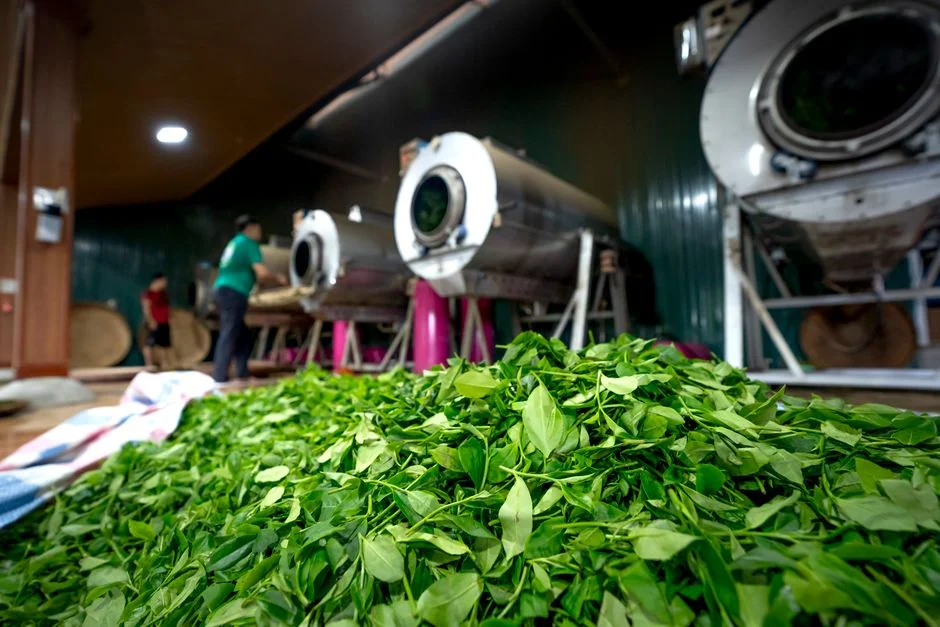
Black-tea production generates liquid wastewater mainly from cleaning equipment and factory premises, so wastewater chemistry depends on the cleaning and process streams collected rather than on a single uniform factory discharge. A 2014 tea-industry study by Otieno and colleagues described black-tea production as essentially dry, with liquid waste arising from cleaning operations. The resulting effluent is colored and must be treated before discharge. That makes stream segregation and representative sampling prerequisites for an IFAS design, not administrative details.
HydropureWater’s 2026 complete tea processing wastewater treatment train gives a CTC-line design basis of COD at 1,500–6,000 mg/L, BOD at 800–3,500 mg/L, TSS at 200–600 mg/L, pH at 4.0–6.5, and temperature at 35–60 °C. The same source reports color at 500–2,500 Pt-Co units and tannins at 50–400 mg/L. These ranges describe the biological challenge: acidic, warm, particulate-rich effluent containing color and tannin compounds that can inhibit nitrifiers and bind proteins.
| Parameter | CTC-line basis reported by HydropureWater, 2026 | Design implication |
|---|---|---|
| COD | 1,500–6,000 mg/L | Establish organic loading after equalization and DAF. |
| BOD | 800–3,500 mg/L | Check biological removability and oxygen demand. |
| TSS | 200–600 mg/L | Remove solids before the biological stage. |
| pH | 4.0–6.5 | Provide controlled dosing before biological treatment. |
| Temperature | 35–60 °C | Account for cooling and temperature-sensitive biokinetics. |
| Color | 500–2,500 Pt-Co units | Assess dedicated color removal and final polishing. |
| Tannins | 50–400 mg/L | Evaluate inhibition and the need for solids or color pretreatment. |
| Seasonal flow | 2–4× harvest-flow increase | Check equalization, peak hydraulic loading, and biomass retention. |
Sample withering and rolling wash water, fermentation effluent, drying condensate, decaffeination streams, and RTD-tea bottling rinse water separately where applicable. Their solids, temperature, pH, and contaminant profiles are different; combining them before measurement can conceal the cause of a load shock. Record daily and peak flows, production schedules, batch discharges, and reusable process-stream proportions for each operating period.
Where IFAS Fits in the Treatment Train
IFAS should receive screened, equalized, pH-adjusted, temperature-controlled wastewater with most suspended solids and colloidal material removed. A defensible sequence is source segregation and screening, equalization, pH adjustment and cooling, DAF or equivalent solids removal, IFAS, secondary clarification or solids separation, and polishing where reuse requires it.
- Segregate and screen. Separate cleaning and process streams where practical. A rotary mechanical bar screen removes leaves, stems, and fibrous debris before pumps and biological equipment. HydropureWater’s 2026 guide specifies a 5–10 mm aperture for the GX series and reports peak-flow headloss below 250 mm.
- Equalize. Use 8–24 h HRT as the HydropureWater planning range, then adjust it against harvest schedules, storage volume, and upstream batch operations. The same source specifies cooling from 35–60 °C toward 30 °C.
- Correct pH. Adjust the reported 4.0–6.5 range to 6.8–7.2 using controlled chemical dosing. An automatic pH adjustment and chemical dosing system should be specified with dose control, mixing, and monitoring rather than as an unrestricted chemical feed.
- Remove solids and colloids. Use an industrial DAF system for tea wastewater pretreatment. HydropureWater reports typical food-industry DAF performance of 60–85% TSS removal and 30–50% COD removal; these are preliminary planning ranges to confirm by jar testing and supplier guarantee.
- Apply biological treatment. IFAS combines mixed suspended biomass with fixed-film media. It still requires downstream solids separation, such as secondary clarification or an equivalent separation step.
- Polish for the required use. Add filtration, activated carbon, disinfection, membrane, or RO steps only where the discharge permit or reuse specification requires them.
| Stage | Planning basis | Evidence or verification required |
|---|---|---|
| Coarse screening | 5–10 mm aperture; peak-flow headloss below 250 mm | HydropureWater, 2026; verify with actual debris and peak flow. |
| Equalization and cooling | 8–24 h HRT; cool toward 30 °C | HydropureWater, 2026; check against harvest and batch-discharge records. |
| pH correction | 4.0–6.5 to 6.8–7.2 | HydropureWater, 2026; confirm through dosing trials. |
| DAF | 60–85% TSS removal; 30–50% COD removal | HydropureWater, 2026; require site-specific performance evidence. |
| Color removal where required | 478 to 8 Pt-Co units at pH 3 | Otieno et al., 2014; this was an adsorption and advanced-oxidation result, not IFAS performance. |
The tea-industry study by Otieno and colleagues found that combined adsorption and advanced oxidation reduced color from 478 Pt-Co units to 8 Pt-Co units at pH 3. That result demonstrates why color may need dedicated treatment when the required effluent standard demands it. It does not establish IFAS color removal or justify adding oxidation without testing the actual effluent.
IFAS, MBBR, MBR, or Conventional Activated Sludge
IFAS is most credible as a retrofit for an existing activated-sludge plant that needs more treatment capacity or better biomass retention. It is not simply another name for MBBR. The 2025 IJSAT overview describes IFAS as suspended biomass, fixed-film media, aeration tank, and settling tank operating as a hybrid for nitrification, BOD removal, and capacity enhancement. MBBR is more purely attached-growth, while MBR combines biological treatment with membrane solids separation.
| Process | Most defensible application | Principal procurement issue |
|---|---|---|
| IFAS | Existing activated-sludge site needing added capacity, nitrification, or improved biomass retention | Verify media configuration, loading criteria, aeration, solids separation, and retrofit interfaces. |
| MBBR | Discharge-only project in HydropureWater’s 5–20 m³/h range, particularly where operator skill is limited and sludge infrastructure is minimal | Compare hydraulic loading, aeration, media selection, and downstream separation on the same influent basis. |
| MBR | Plants at or above 10 m³/h pursuing reuse, or projects requiring a biomass-retention barrier under variable loading | Assess membrane fouling, pretreatment, replacement, cleaning, and energy demand. |
| Conventional activated sludge | Smaller, stable-flow sites without reuse requirements | Confirm clarifier performance and biomass retention during harvest loading changes. |
For the MBR alternative, HydropureWater’s 2026 guide reports effluent at or below 40 mg/L COD and 1 mg/L TSS in the stated MBR application, with a footprint approximately 60% smaller than conventional activated sludge. The integrated MBR treatment system is therefore more compelling when near-reuse-quality output, compact land use, or resistance to biomass washout is central to the project. An DF-series MBR module remains a membrane-based option rather than an IFAS configuration.
Choose IFAS when the site already has usable activated-sludge infrastructure and the added fixed-film inventory addresses a demonstrated capacity or nitrification constraint. Choose MBBR when a new, predominantly attached-growth stage is being developed for discharge and simpler sludge handling is more important than membrane-quality separation. Choose MBR when reuse is a project requirement or the membrane barrier provides a necessary operating advantage. Select conventional activated sludge only after demonstrating stable hydraulic and organic loading, adequate clarification, and no need for a higher-grade reuse train.
How to Size an IFAS System for Variable Tea-Effluent Loads
Sizing must start with measured flow and contaminant mass, not reactor volume alone. Prepare a worksheet for average and peak daily flow, batch discharge rates, seasonal production, COD, BOD, TSS, pH, temperature, color, tannins, and the proportion of process water that can be reused. Include separate operating cases for normal production and harvest peaks. HydropureWater reports 2–4× seasonal harvest-flow spikes, so that condition should be carried through equalization, aeration, recirculation, and solids-retention checks rather than treated as an exceptional upset.
Calculate organic loading from flow and COD or BOD for each sampled stream, then apply the DAF planning removal ranges to establish the preliminary biological load. HydropureWater’s reported DAF values are 60–85% TSS removal and 30–50% COD removal, but they should not be treated as guaranteed tea-effluent performance. Jar tests should establish removability and the resulting soluble and particulate fractions; the supplier should then demonstrate that its IFAS configuration meets the site load under the verified pretreatment conditions.
Compare calculated hydraulic and organic loads with the selected system’s published criteria. For an existing plant, record basin geometry, diffuser arrangement, blower capacity, recycle pumps, RAS or sludge-wasting controls, and secondary clarifier performance. For a new system, these interfaces have no operating history and must be designed into the package. Media quantity, specific surface area, packing arrangement, aeration distribution, and biomass inventory should be selected by the supplier rather than copied from an unrelated food-processing installation.
Use 8–24 h equalization HRT as HydropureWater’s 2026 planning range, then verify usable volume against the harvest schedule and upstream batch operations. Cooling and pH correction should operate before DAF and IFAS. Request a complete duty cycle covering equalization, aeration, recirculation, media packing, solids wasting, standby capacity, and controls; a reactor-volume quotation alone does not permit comparison of biological alternatives.
Discharge, Reuse, and Sludge Management
The final treatment target must come from the applicable discharge permit or reuse specification; IFAS should not be assumed to satisfy either by itself. For reuse, HydropureWater’s 2026 configuration uses MBR followed by RO, with reported system water recovery of 75–90% and up to 95% RO recovery in a two-pass configuration. That route provides a clearer separation of biological treatment from membrane polishing, whereas IFAS remains a biological stage requiring its own solids-separation method.
HydropureWater gives a 2026 planning estimate of $220,000–$380,000 CAPEX and $0.70–$1.40/m³ OPEX for a 20 m³/h MBR-plus-RO system. These figures are not an IFAS quotation and must not be transferred into an IFAS budget. They are useful only as a reference point for the capital and operating implications of a reuse-oriented MBR-plus-RO train. An IFAS supplier should separately price media, reactor modifications, aeration, clarification, controls, installation, commissioning, and sludge handling.
IFAS can produce mixed suspended and attached-growth solids. The waste-handling strategy should therefore identify how biomass is removed, whether media requires mechanical cleaning or replacement, and how the recovered sludge is thickened. A plate-and-frame filter press can be evaluated for dewatering after the project’s sludge characteristics and disposal route are established.
Where reuse requires desalination or controlled dissolved solids, an industrial RO system may follow the selected biological and solids-separation stages. Any reuse claim should specify the intended application—such as CIP rinse, boiler feed, or irrigation—and the quality parameters needed for that application. The permitting authority or customer specification should provide the target; the biological train and polishing steps should be selected to meet it.
Procurement Questions That Prevent an Underspecified Purchase
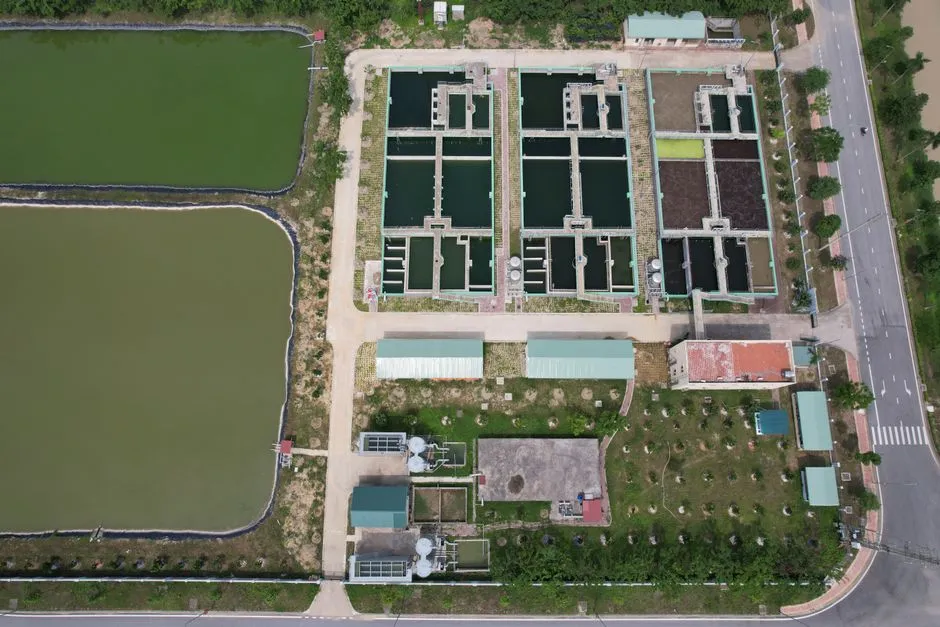
A comparable quotation must define the process boundary, loading basis, guarantees, and downstream obligations. Request the selected IFAS configuration, fixed-film media specification, reactor dimensions, hydraulic and organic loading criteria, aeration demand, media-filling arrangement, and solids-separation method. For a retrofit, identify every modification to basins, piping, blowers, recirculation, controls, and secondary separation.
Provide the supplier with the stated design basis: pH 4.0–6.5, temperature 35–60 °C, COD up to 6,000 mg/L, BOD up to 3,500 mg/L, TSS up to 600 mg/L, and seasonal flow increases of 2–4×. These values come from HydropureWater’s 2026 guide. The supplier must state which parameters it has used in sizing and demonstrate how pretreatment, equalization, and aeration address them.
| RFP item | Required submission | Acceptance check |
|---|---|---|
| Process scope | Screening, equalization, DAF, pH dosing, IFAS, secondary separation, instruments, sludge handling, and commissioning | Clarify exclusions and interface responsibilities. |
| Design basis | Flow series, COD, BOD, TSS, pH, temperature, color, tannins, and seasonal case | Match calculations to measured influent data. |
| Performance | Guarantees for COD and BOD removal, effluent TSS, nitrification where relevant, and hydraulic capacity | Define test methods, sampling points, and load conditions. |
| Operations | Energy consumption, media or membrane life, maintenance access, spare parts, and controls | Separate routine operating and replacement costs. |
| Commissioning | Startup protocol, site acceptance test, operator training, remote-monitoring options, and representative influent sampling | Link acceptance to guaranteed operating conditions. |
Require guarantees for COD and BOD removal, effluent TSS, nitrification where relevant, hydraulic capacity, media life, energy consumption, and maintenance access. The contract should state which party owns sludge treatment and final disposal. Request a site acceptance protocol using representative influent rather than a clean-water commissioning sample. The IFAS comparison for industrial food-processing effluent can support a consistent technical check across candidate suppliers.
Treat HydropureWater’s 2026 cost figures as planning estimates only. Request itemized, site-specific quotations because power tariffs, fabrication, media or membranes, sludge disposal, local permits, and installation conditions change the budget. A lower equipment price should not control selection if it excludes required pretreatment, clarification, aeration upgrades, controls, or sludge handling.
Frequently Asked Questions
Is IFAS suitable for tea-processing wastewater?
IFAS can be suitable for biological BOD removal, nitrification, or capacity enhancement after tea wastewater has been screened, equalized, cooled, pH-adjusted, and stripped of suspended solids and colloids. It is not a standalone treatment train for raw effluent with COD of 1,500–6,000 mg/L, TSS of 200–600 mg/L, pH of 4.0–6.5, and temperature of 35–60 °C, as reported in HydropureWater’s 2026 guide.
Is IFAS or MBBR the less expensive option?
There is no supported universal cost winner. Compare total installed cost and life-cycle operating cost at the same influent basis, including media or modules, aeration, secondary separation, controls, energy, operator skill, and sludge handling. An existing activated-sludge tank may favor an IFAS retrofit, while a new discharge-only project may favor MBBR; request site-specific quotations before deciding.
How should IFAS be sized for seasonal tea production?
Calculate flow, COD, and BOD loads for normal production and the harvest peak, then check hydraulic loading, organic loading, aeration, recirculation, solids separation, and biomass retention. Use HydropureWater’s reported 2–4× seasonal flow increase as a sensitivity case, and evaluate the 8–24 h equalization HRT planning range against actual harvest and batch-discharge schedules.
What should be included in an IFAS supplier request for proposals?
The RFP should include the influent dataset, selected IFAS configuration, media specification, reactor dimensions, loading criteria, aeration demand, solids separation, equipment boundaries, sludge handling, controls, commissioning, and operator training. Require defined guarantees for COD and BOD removal, effluent TSS, nitrification where relevant, hydraulic capacity, media life, energy use, and a site acceptance test under representative conditions.
Is IFAS alone sufficient for industrial wastewater reuse?
No. IFAS provides biological treatment and still requires downstream solids separation; reuse quality may also require filtration, disinfection, activated carbon, membranes, or RO. HydropureWater’s 2026 reuse configuration combines MBR and RO and reports 75–90% system water recovery, with up to 95% RO recovery using two passes.