Why Avaza and Other Resorts Need a Dedicated Wastewater Strategy
Avaza is Turkmenistan’s only beach resort, containing dozens of hotels, aquaparks and other amenities, and was built between 2007 and 2017 (RFE/RL, November 2024). Its scale turns wastewater treatment into district infrastructure, not a basement utility. The engineering decision is whether each property should own a treatment plant or several hotels should share a central installation. In the latter case, contracts must define ownership, flow metering, capacity allocation, billing, sludge handling, bypass responsibility and performance liability. RFE/RL also quoted an anonymous source claiming that some Avaza luxury hotels cost $40 million–$50 million each; that illustrates the scale of the development, but it is not a basis for estimating wastewater flow.
Occupancy forecasting also needs to reflect Avaza’s operating pattern. RFE/RL reported that state enterprises and institutions send staff to the resort for vacations, so demand may not follow ordinary urban hotel occupancy curves. Event calendars, institutional delegations, seasonal closures and aquapark operations can produce concentrated loading periods that a generic guest-night calculation will miss.
At district level, a central plant may simplify supervision and reuse infrastructure, while decentralized units can reduce excavation and conveyance risks for isolated properties. Neither arrangement is inherently superior. The correct choice depends on measured flow, building phasing, land ownership, utility corridors, reuse objectives and the operating responsibility that the owner can sustain. Current market and compliance context can be reviewed through Turkmenistan wastewater standards and cost guides, but project-specific engineering data must remain the basis of selection.
Separate Guest, Kitchen, Laundry, Pool and Landscape Wastewater
Hotel resort wastewater treatment in Turkmenistan works best when each wastewater origin has a defined collection route, pretreatment requirement and ultimate destination. Combining everything at the property sewer connection may simplify piping, but it makes the biological process responsible for contaminants that should be removed upstream. Kitchen grease can foul equipment, laundry chemicals can affect biological treatment, and pool disinfectants can create unnecessary treatment demand.
Prepare a source-by-stream matrix before selecting a package plant. It should identify flow sources, operating schedule, likely contaminants, pretreatment, flow-measurement points and whether the stream enters sewage treatment, a separate water-reuse train, stormwater collection or a disposal route. The DAF equipment range spans 4–300 m³/h across 13 models, according to the supplier’s product data, but hydraulic and contaminant testing must determine whether dissolved air flotation is appropriate for a particular kitchen stream. The dissolved air flotation machine range should be assessed against kitchen flow, grease content, solids and operating objectives rather than selected from nominal capacity alone.
Protect biological treatment from fibrous material, plastics and grit. The GX rotary mechanical bar screen is offered for municipal and industrial headworks with 6–100 mm bar spacing and a 100–10,000 m³/h capacity range, according to the supplier’s product data. Bar spacing and screening capacity must still be checked against actual peak wastewater flow and debris characteristics. The GX rotary mechanical bar screen belongs in the headworks assessment, not in the biological treatment unit itself.
| Wastewater stream | Principal design concerns | Required engineering decision |
|---|---|---|
| Guest rooms and staff facilities | Occupancy-driven hydraulic load, toilet paper, hygiene products and cleaning chemicals | Connect to sewage treatment after screening; establish peak and average flow separately |
| Kitchens and food outlets | Grease, free oil, food solids, detergents and high organic loading | Provide grease and solids control before equalization and biological treatment |
| Laundry | Detergents, fibres, bleach or other process chemicals | Assess discharge route, chemical inputs and pretreatment requirements through sampling |
| Pool and spa backwash | Residual disinfectant, filter solids, pH and seasonal backwash volume | Evaluate separate recovery or reuse treatment before adding to the sewage train |
| Storm and construction runoff | Sediment, litter, oils and variable runoff quality | Keep separate from sewage where possible; define diversion and pollution controls |
| Treatment residuals | Screenings, grease, sludge and dewatering cake | Provide storage, stabilization, dewatering and lawful disposal |
Pool and runoff should remain outside the sewage train unless the reuse design specifically requires their inclusion. For pool water, test backwash chemistry, residual disinfectant and solids before deciding how to route it. For runoff, inspect drainage patterns, soil and construction activity rather than assuming that dilution makes it harmless.
Residuals also need a separate route. Biological treatment does not eliminate the obligation to stabilize and dewater sludge. Where a filter press is considered, the plate-frame filter press should be selected from actual sludge characteristics, cycle time and disposal arrangements.
Build a Design Flow Dataset for Peak Occupancy and Seasonal Demand
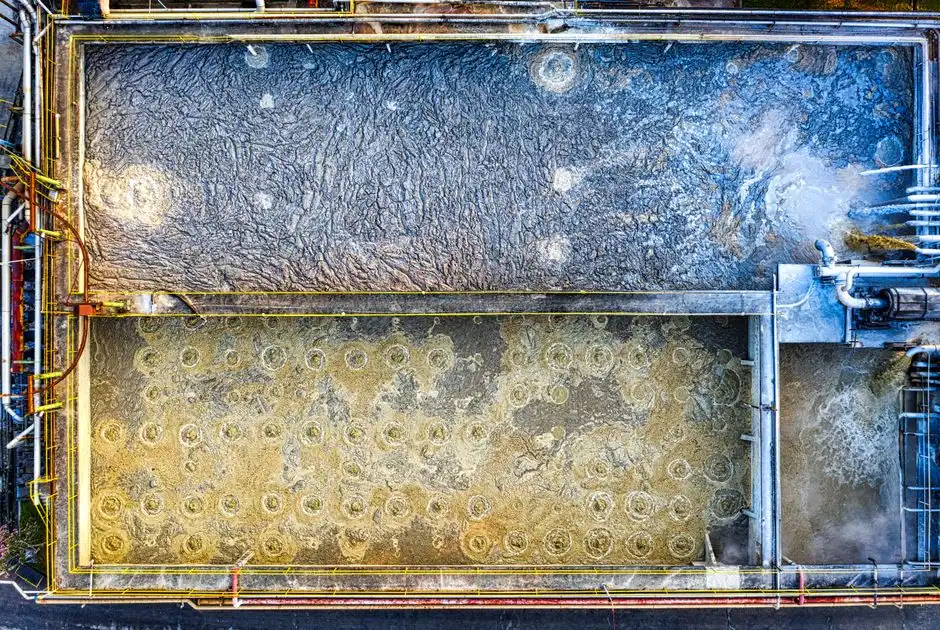
A defensible hotel sewage treatment plant design requires an operating dataset, not a single occupancy multiplier. Request accommodation by category, restaurant and pool operating hours, laundry cycles, staff headcount, event schedules, seasonal closures and known peak periods from the operator. Reconcile these inputs with water-meter data, tank records and pump logs where available.
- Define occupancy scenarios. Separate normal trading, defined peak events and seasonal closure from full-capacity assumptions.
- Allocate wastewater by source. Separate guest, staff, kitchen, laundry, pool, spa and runoff contributions rather than applying one hotel-water factor indiscriminately.
- Separate average and peak rates. Record average daily flow, sustained operating flow and peak-hour flow, then identify the collection, pumping and treatment scenario approved by the owner and engineer.
- State the capacity basis. Require every supplier to identify whether quoted capacity is daily average, hourly peak or maximum instantaneous flow.
- Record site constraints. Document water pressure, power reliability, available footprint, burial conditions, tanker access, maintenance access, odor constraints, flood exposure and groundwater conditions.
- Set the sampling programme. Sample wastewater temperature, pH, COD, BOD, TSS, oil and grease, detergents, disinfectants and salinity where relevant.
The capacity-basis issue is critical because the WSZ range is expressed as 1–80 m³/h, while the MBR range is expressed as 10–2,000 m³/day. The supplied equipment ranges cannot be compared directly until the designer converts them to a common operating basis. Technical screening should also use the Mechanical Bar Screen Specifications: 2026 Engineering Data, Standards & Selection Guide for headworks planning.
No supplied source establishes Avaza hotel wastewater values for temperature, COD, BOD, TSS, oil and grease, detergents, disinfectants or salinity. Those values must come from the property’s sampling programme. A laboratory sampling protocol should identify sampling points, flow-proportional or time-based sampling, operating conditions, laboratory methods, duplicate samples and the period covered. Peak loading requires more than a single daytime grab sample.
Select the Treatment Train from Pretreatment to Disinfection
A hotel wastewater treatment train should follow a controlled process sequence: flow measurement and screening; grit or solids control; kitchen grease and FOG management; equalization; biological treatment; clarification or membrane separation; disinfection; and reuse or compliant discharge. Each stage needs a defined duty, capacity and bypass or failure response. A package unit can simplify the biological section, but it does not remove the need for upstream source control or downstream solids and disinfection management.
The WSZ underground package sewage treatment plant combines anoxic and aerobic biological contact oxidation, sedimentation and disinfection in one buried unit, according to the supplier’s product data. Its 1–80 m³/h range and below-grade arrangement make it relevant to decentralized hotel or small-resort applications where excavation, utility connections and a compact site footprint are priorities. Confirm structural requirements, burial depth, lifting access, ventilation, odor control, hydraulic loading and local installation conditions before treating it as a complete plant.
The MBR membrane bioreactor for resort wastewater reuse combines activated sludge treatment with submerged PVDF membrane filtration. The supplier describes a 10–2,000 m³/day range, filtration below 1 μm and a 60% footprint reduction compared with conventional systems. These are product claims, not guarantees for every hotel project. They require confirmation against the selected process configuration, actual feed quality, recovery and operating conditions.
For wastewater reuse for irrigation, define the end use before selecting equipment. MBR can support a reuse-oriented design, but the project must establish acceptance limits for suspended solids, pathogens and application-specific parameters. Storage, distribution, public-health controls and irrigation management are part of the reuse system, not residual work after equipment selection.
Disinfection also needs a process basis. The chlorine dioxide generator range includes configurations from 50 g/h to 20,000 g/h and is described as suitable for hospital effluent, cooling loops and process wastewater. Use that equipment only where the final disinfection duty, chemical supply, storage, dosing and residual-control requirements support the choice. A chlorine dioxide generator should not be substituted for a complete disinfection and reuse-control design.
| Process stage | Primary design purpose | Information needed before procurement |
|---|---|---|
| Measurement and screening | Record flow and remove rags, plastics and other coarse solids | Peak flow, debris loading, selected bar spacing and discharge or handling route |
| Grease and solids control | Protect downstream biological and membrane processes | Kitchen flow, grease concentration, solids characteristics and separated-residual disposal |
| Equalization | Moderate hydraulic and organic variability | Operating strategy, residence time, aeration demand and bypass provisions |
| Biological treatment | Remove biodegradable organic matter | Influent characterization, temperature, loading and treatment objective |
| Clarification or membrane separation | Produce the required solids quality before discharge or reuse | TSS objective, recovery, cleaning method and residual route |
| Disinfection | Control pathogens for the specified route | Target water use, residual management, chemical supply and monitoring |
| Reuse or discharge | Deliver water to an approved destination | Written project criteria, receiving-water constraints and monitoring plan |
Compare WSZ Package Plants and MBR Systems for Resort Projects
WSZ and MBR should be compared by design duty, not product label. WSZ is a buried integrated treatment unit with a 1–80 m³/h capacity range; MBR combines activated sludge with submerged membrane filtration across a 10–2,000 m³/day range. These different capacity bases require a common design scenario before a technical or commercial comparison.
| Decision criterion | WSZ underground package plant | MBR membrane bioreactor |
|---|---|---|
| Published capacity range | 1–80 m³/h, stated hourly range | 10–2,000 m³/day, stated daily range |
| Treatment configuration | Anoxic/aerobic contact oxidation, sedimentation and disinfection in one buried unit | Activated sludge with submerged PVDF membrane filtration |
| Preferred project fit | Decentralized hotels or small resorts prioritizing below-grade installation and compact footprint | Centralized or larger resort schemes prioritizing reuse-oriented treatment or tight solids separation |
| Principal confirmation | Excavation, loading, access, odor and local installation requirements | Membrane cleaning, replacement cycles, spare modules, aeration and operator competency |
| Reuse implication | Disinfection is included in the package, but end-use acceptance criteria still govern reuse suitability | Can support reuse-oriented design, subject to project-specific water-quality acceptance limits |
If treatment must be decentralized, excavation is acceptable and the wastewater is predominantly domestic after appropriate kitchen pretreatment, WSZ is the stronger candidate to assess. If the project requires a centralized resort train, tighter solids separation or reuse-oriented treatment, MBR deserves greater technical attention. These are screening decisions, not automatic selections.
Cost claims require the same discipline. HydropureWater’s 2026 Turkmenistan guide reports a broad project range of $1.2 million–$15 million. It also reports MBR benchmarks of $1.2 million at 100 m³/day, more than $8 million at 20,000 m³/day, and operating expenditure of $0.25–$0.40/m³ (HydropureWater, 2026). These are broad market benchmarks, not quotations for an Avaza hotel, and they must not be presented as resort project prices.
Require quotations that separate equipment, freight, import duties, foundations and civil works, installation, commissioning, training, first-year chemicals, membrane or media replacement, and O&M support. Also ask for exclusions, validity period, payment milestones, warranty scope, spares and escalation assumptions. Comparable tenders should use the same approved design flow, reuse target, effluent criteria, site conditions and acceptance tests.
Design for Reuse, Discharge and Coastal Site Constraints
Reuse and discharge decisions must be made during site selection, before the treatment process is frozen. Identify the receiving environment, stormwater system, irrigation area, reuse network and approved discharge point. Each route has different objectives: toilet flushing may have a different quality requirement from landscape irrigation, while pool make-up water and environmental discharge require their own acceptance criteria and operating controls.
Coastal conditions add another layer. RFE/RL reported in July 2024 that Avaza hotels were building artificial beaches farther from the original shoreline because the Caspian Sea had retreated. That reporting is dated evidence, not a current site survey. The designer must verify current shoreline, drainage, groundwater, flood exposure and engineered-beach runoff because these conditions affect both reuse storage and discharge risk.
Set separate acceptance criteria for each intended use. Test for contaminants relevant to that route, including suspended solids, pathogens, nutrients, residual disinfectants and salinity where applicable. For wastewater reuse for irrigation, also assess the receiving soil and vegetation, application method, public access, seasonal storage and the possibility that accumulated salts or disinfectants will affect users or plants.
Obtain current local criteria, receiving-water requirements and project-specific reuse restrictions in writing from the relevant Turkmenistan authority before finalizing performance guarantees. The supplied research does not establish one universal hotel discharge limit for Turkmenistan, and generic international limits should not be substituted for an approved project criterion.
The reuse network needs deliberate engineering. Storage must address short-term variation and seasonal demand; distribution needs isolation points and backflow prevention; and operating procedures must control residual disinfectant and prevent untreated or off-specification water from entering public or irrigation systems. A UV sterilizer for water treatment may form part of a validated reuse train, but it cannot correct upstream contamination or remove the need for monitoring.
Qualify Suppliers and Build a Commissioning and O&M Plan
A credible supplier submission should contain enough information for an engineer to verify the design, not just a capacity statement and a performance sentence. Issue a request for information covering design flow, process description, equipment data, civil interfaces, electrical load, controls, utilities, training, warranty, spare parts and reference projects. The response should also identify the design standards, calculation assumptions and party responsible for each civil interface.
- Verify the design basis. Require peak, average and minimum flows; influent characteristics; discharge or reuse criteria; site constraints; and process calculations.
- Define the guarantee. State every performance parameter, test method, sampling point, startup sample and acceptance criterion. Do not accept a general promise that the unit “meets standards.”
- Check physical installation. For WSZ, verify excavation, burial, lifting, access hatches, ventilation, odor control, power supply and replacement of buried components.
- Check membrane operations. For MBR, verify cleaning intervals, expected replacement cycles, spare-module strategy, aeration requirements, membrane recovery and operator competency.
- Plan operational readiness. Specify critical spares, chemical availability, remote monitoring, alarm escalation, preventive maintenance, laboratory access and response procedures for bypass or power interruptions.
- Structure the tender. Separate design, supply, civil works, installation, commissioning, training and long-term O&M so that alternatives remain comparable.
Commissioning should move from static checks to water-bearing and performance testing. Confirm equipment orientation, pipework, controls, power, safety systems, valves and bypass arrangements; then prove flow metering, equalization, biological operation, solids separation, disinfection and sampling. Define who witnesses each stage and what happens if a test fails.
O&M planning should be contractual rather than aspirational. Identify routine operator tasks, laboratory support, remote response, local service availability, emergency call-out, critical spares and the expected replacement path. The engineering guides on wastewater treatment plant fault diagnosis and wastewater treatment labor-cost optimization can support development of fault-response and staffing procedures, but supplier commitments must remain specific to the proposed equipment.
Do not award on price alone. Compare offers against the same duty, acceptance criteria, civil scope, commissioning tests, warranty, local service capability and long-term consumables. The decisive question is whether the supplier can demonstrate and sustain the promised performance in the proposed site conditions.
Frequently Asked Questions
How do we size a WSZ or MBR system for a hotel resort?
First establish occupancy, operating schedules, wastewater origins, peak periods, reuse objectives and site constraints. Then define average daily, sustained and peak-hour flows and require the supplier to state the capacity basis of its offer. WSZ and MBR ranges use different time units, so compare them only after conversion to a common operating scenario.
What should a hotel wastewater treatment budget include?
Do not use the broad $1.2 million–$15 million Turkmenistan project range reported by HydropureWater in 2026 as a hotel quotation. Request itemized pricing for equipment, freight, duties, civil works, foundations, installation, commissioning, training, initial chemicals, replacement media or membranes, and O&M. The quotation should also list exclusions, warranty conditions and price validity.
How should we select a wastewater treatment supplier?
Require a site-specific design basis, a traceable process calculation, measurable performance guarantees, defined test methods, commissioning criteria and local service and spare-parts commitments. Check WSZ access and buried-component replacement separately from MBR membrane cleaning, replacement and operator-competency requirements.
What discharge standard applies to a resort in Turkmenistan?
The supplied sources do not establish a single universal hotel discharge limit. Obtain current project requirements in writing from the relevant Turkmenistan authority, including discharge-point, receiving-water, reuse and monitoring conditions. If the project will reuse water, obtain written acceptance criteria for the specific use rather than assuming that package-plant certification covers every reuse purpose.