Start with the sewer-connection decision
Most of Singapore lies within the DTSS used-water catchment, so the default for HDB and condominium projects remains a public-sewer connection. An on-site treatment plant is justified when the development is outside that catchment or when PUB’s used-water connection permit office confirms that direct gravity or pumped connection is not feasible. Obtain that confirmation before fixing the treatment concept: a feasible sewer route may reduce the scope to a pumping station rather than an underground wastewater treatment plant. Proximity on a map is not proof of connection feasibility.
This gate should come before sizing a package plant, selecting WSZ or MBR, or pricing reuse equipment. It also prevents an on-site package from being specified for a site that can be served more simply by the public sewer. The design team should submit the development location, proposed connection point and relevant site plans to PUB, then record the connection route, approval conditions and responsible party in the basis of design. HydropureWater’s housing-development packaged sewage treatment comparison illustrates the same sequence used in packaged sewage plant sizing and selection guide: establish the discharge route before comparing treatment packages.
Size the plant from population and measured flows
HydropureWater’s Singapore residential guide, Residential Wastewater Treatment in Singapore (2026), uses 150–200 L/person·day and a peak factor of 2.5–3.0 for HDB high-rise blocks. Its preliminary screening expression is Q = population × 0.18 m³/person·day × 2.5, with an additional 10% contingency for inflow and infiltration in older estates. This is a screening calculation, not a substitute for a hydraulic profile or measured flow data.
Unit count alone can conceal occupancy differences. Clearfox’s Housing Development Wastewater Treatment identifies fluctuating occupancy, weekday and weekend peaks, minimum-flow conditions and commercial cross-connections as residential design issues; it also recommends population-equivalent calculations to test occupancy assumptions. Final sizing therefore needs development-wide wastewater characterisation, flow monitoring and confirmation of any commercial inputs.
| Screening parameter | Supported basis | Design use |
|---|---|---|
| Residential flow | 150–200 L/person·day | Translate design population into average daily flow. |
| Peak factor | 2.5–3.0 for HDB high-rise blocks | Screen hydraulic capacity and equalisation duty. |
| Illustrative screening calculation | Q = population × 0.18 m³/person·day × 2.5 | Compare a preliminary envelope with shortlisted package capacity. |
| I&I contingency | 10% in estates older than 20 years | Allow for inflow and infiltration where site conditions justify it. |
| Shortcut allocations | 50–100 serviced apartments: 10–25 m³/day WSZ; 300–500-unit HDB upgrading block: 200–300 m³/day single buried MBR | Use only as early procurement screening ranges. |
ASTM E2717-18R25 should be treated as a methodology rather than a Singapore dataset. HydropureWater (2026) says its parameters reflect North American averages and would require modification elsewhere; retain the fixture-count, occupancy and chemical-load framework, but replace default influent values with local measurements. The prefabricated wastewater plant specifications provide useful procurement context, but the tender should require site-specific flow and pollutant data before final capacity is fixed.
Match the process to the wastewater and reuse duty
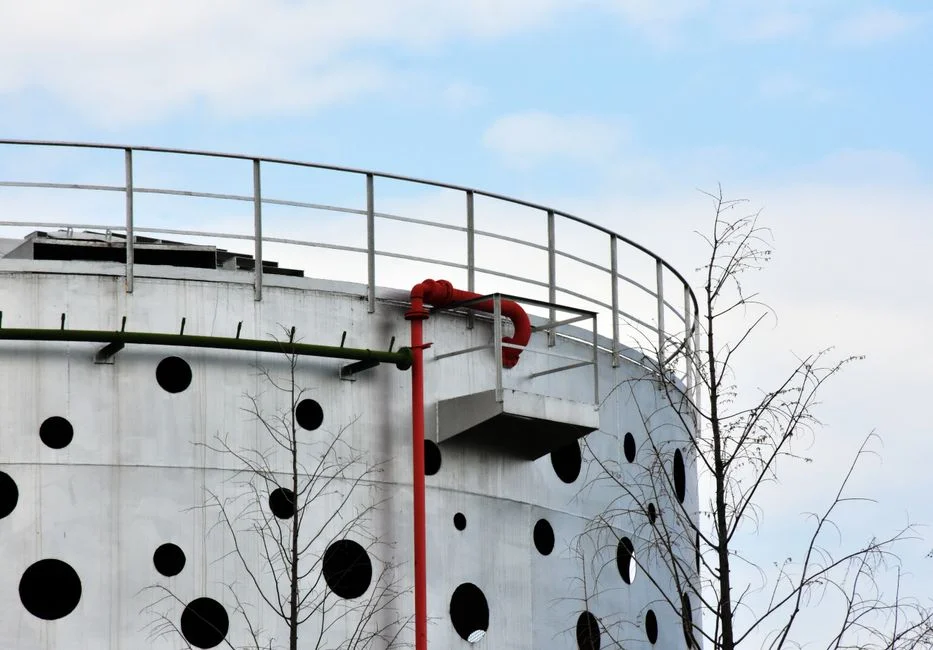
HydropureWater’s 2026 residential design influent is BOD 200–250 mg/L, COD 400–500 mg/L, TSS 200–250 mg/L, NH3-N 25–40 mg/L and total phosphorus 4–8 mg/L. These values should be tested against the proposed development rather than imposed without sampling. The same source identifies FOG as a membrane-fouling risk where food-waste disposers are installed and specifies a process train of preliminary screening and grit removal, primary equalisation and anoxic treatment, submerged PVDF MBR, then tertiary UV disinfection.
For the residential MBR design described by HydropureWater (2026), the biological targets are HRT 6–8 hours, SRT 15–25 days and MLSS 8,000–12,000 mg/L, using 0.1 µm PVDF membrane modules. The comparative package-plant guide reports indicative MBR effluent below 5 mg/L BOD and below 1 mg/L TSS, against less than 20 mg/L BOD and less than 30 mg/L TSS for WSZ A/O systems. These are equipment-performance benchmarks, not automatic permit conditions.
| Process | Supported performance or capacity | Selection relevance |
|---|---|---|
| Submerged PVDF MBR | Below 5 mg/L BOD and 1 mg/L TSS, indicative package-plant performance | Higher-quality effluent and more demanding reuse duties. |
| WSZ A/O | Below 20 mg/L BOD and 30 mg/L TSS, indicative package-plant performance | Residential treatment with a simpler, lower-CAPEX architecture. |
| DAF | Identified by Clearfox as effective for suspended solids and FOG removal | Consider where measured oil, grease or floatable solids justify pretreatment. |
| FBBR | 10–3,000 m³/day capacity reported by Clearfox | Alternative biological process requiring Singapore-specific validation and approval. |
| SBR | Process guarantees below 10 mg/L BOD and 10 mg/L TSS reported by Clearfox | Variable-load option requiring project-specific engineering review. |
Measured FOG or high solids can justify an upstream DAF duty rather than an assumed addition to the train. Clearfox identifies DAF as effective for suspended solids and FOG removal. If commercial kitchens or food-waste disposal are present, establish their contribution before deciding whether WSZ can remain the core biological process or whether the domestic sewage treatment technology comparison should include additional pretreatment.
Compare WSZ and MBR against the site brief
HydropureWater’s WSZ series combines anoxic/aerobic contact oxidation, sedimentation and disinfection in one buried unit, handles 1–80 m³/h and requires no on-site operator. Its integrated MBR combines activated-sludge treatment with submerged PVDF membrane filtration, covers 10–2,000 m³/day and is specified as having a 60% smaller footprint than conventional systems. The selection should follow the controlling requirement: lower capital cost and simpler operation for WSZ; footprint, nutrient performance or reuse quality for MBR.
| Decision factor | WSZ A/O package | Submerged PVDF MBR |
|---|---|---|
| Supported capacity | 1–80 m³/h | 10–2,000 m³/day |
| Indicative effluent | Below 20 mg/L BOD and 30 mg/L TSS | Below 5 mg/L BOD and 1 mg/L TSS |
| Capital and operation | Lowest-CAPEX option in HydropureWater’s package-plant guide; simpler operation | Higher CAPEX because of membranes and automation |
| Site footprint | Larger than MBR in the guide | Specified as 60% smaller than conventional systems |
| Best fit | Basic residential treatment where simpler operation and lower CAPEX dominate | Constrained sites, tighter effluent quality or reuse duties |
HydropureWater’s 2026 shortcut examples pair 50–100 serviced apartments with a 10–25 m³/day underground WSZ unit and no operator requirement. For a 300–500-unit HDB upgrading block, its single buried MBR example is 200–300 m³/day on a 60–80 m² concrete pad with 1.5 m cover. The relevant underground WSZ sewage treatment plant should be assessed for basic treatment, while the submerged PVDF MBR treatment system should be assessed for higher-quality output.
Neither biological unit defines the installed plant. The tender scope must also cover equalisation, screening, grit removal, disinfection, controls, power, sludge handling, odour control and maintenance access. This prevents a compact treatment-unit quotation from omitting the civil, utility and operating interfaces needed for an underground wastewater treatment plant.
Set the effluent and reuse targets correctly
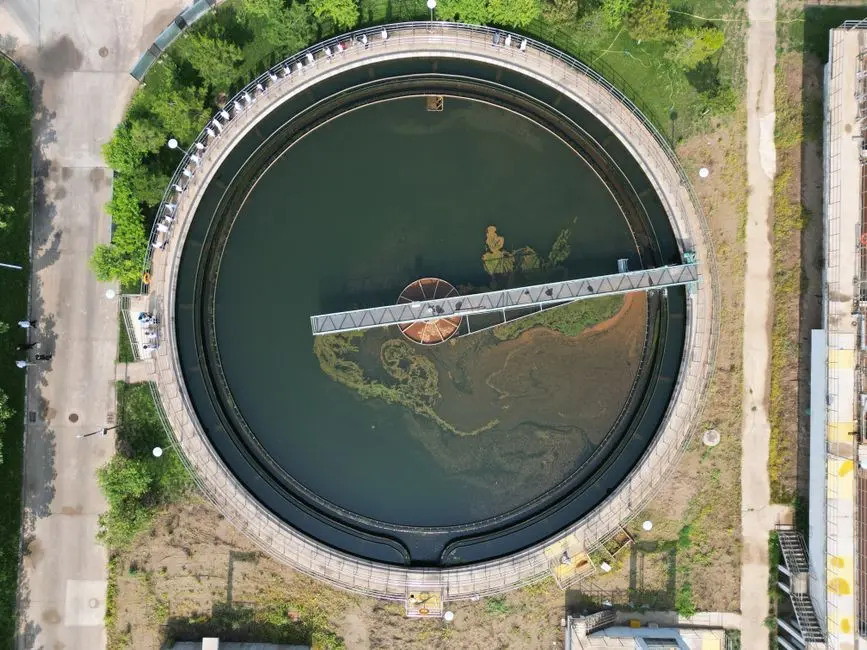
PUB sets site-specific trade-effluent limits under the Sewerage and Drainage Act (Cap. 294), while NEA’s Environmental Protection and Management Act framework protects receiving-water quality. HydropureWater’s 2026 residential guide identifies BOD ≤20 mg/L, COD ≤60 mg/L, TSS ≤10 mg/L, NH3-N ≤5 mg/L and turbidity ≤2 NTU as the target band for PUB trade-effluent clearance and an indirect NEWater-compatible reuse loop. These values must be translated into the applicable permit and discharge route rather than treated as a universal approval criterion.
| Route or reuse objective | Process requirement stated by HydropureWater (2026) | Procurement action |
|---|---|---|
| PUB trade-effluent discharge | Target band: BOD ≤20, COD ≤60, TSS ≤10 mg/L, NH3-N ≤5 mg/L and turbidity ≤2 NTU | Obtain the site-specific limits, sampling regime and discharge route. |
| Non-potable reuse | MBR plus UV; UV dose 30–40 mJ/cm² and 4-log coliform reduction | Specify the UV disinfection duty and intended irrigation, cooling-tower make-up or toilet-flushing demand. |
| Indirect potable reuse | Reverse-osmosis polishing downstream of MBR | Use RO polishing and align the combined train with PUB’s NEWater specifications and the 2022 WHO Guidelines for Drinking Water Quality. |
The reuse decision must follow the biological process decision, not precede it. An MBR without the required disinfection and polishing cannot meet a higher reuse objective, while an A/O package should not be represented as a substitute for a validated reuse train. Require bidders to state which reuse claim their proposed scope supports and provide the associated performance evidence.
Build a procurement-ready tender scope
Issue one basis-of-design document covering design population, average and peak flow, I&I contingency, measured influent, discharge route, reuse objective, available footprint and power constraints. HydropureWater’s package-plant guide gives indicative CAPEX of SGD 1.2–3.5 million for systems treating 50–500 m³/day and estimated OPEX of SGD 0.80–2.50/m³. These 2025 benchmark ranges are not quotations; the tender should obtain site-specific prices, exclusions, utility assumptions and lifecycle estimates.
Each bidder should state guaranteed flow, process stages, membrane material and pore size, disinfection duty, controls, utilities, maintenance frequency, sludge handling, odour control and commissioning deliverables. For the 50–100 serviced-apartment screening case, require pricing of the complete installed arrangement rather than a treatment-unit price alone. Civil works, underground installation, power, access and disposal connections must be visible in the commercial comparison.
HydropureWater (2026) states that PUB package-plant approval typically takes 4–8 weeks, with application fees generally SGD 500–2,000. These are guide benchmarks, not guaranteed permit durations or current fee quotations. The tender should allocate application, design submission, liaison, testing and approval responsibilities, including what happens if conditions require changes.
Require membrane-integrity checks, air-leak testing, MLSS seeding, proof-testing and witness-testing provisions. For sludge, HydropureWater describes plate-and-frame dewatering to 18–22% dry solids for off-site disposal by an NEA-licensed waste hauler. Obtain separate included and excluded prices for dewatering, haulage, disposal and consumables; the plate-and-frame dewatering arrangement and any automatic chemical dosing should remain linked to the guaranteed process.
Frequently Asked Questions
Is WSZ or MBR better for a Singapore housing development?
Use WSZ A/O where lower CAPEX, simpler operation and basic residential treatment are the controlling requirements. Choose submerged PVDF MBR where footprint, nutrient performance or higher-quality reuse is required. The final choice must follow the PUB connection assessment, measured flow and wastewater characterisation, and the specified discharge route.
How much does a packaged sewage treatment plant cost in Singapore?
HydropureWater’s 2025 guide gives an indicative CAPEX range of SGD 1.2–3.5 million for 50–500 m³/day and estimated OPEX of SGD 0.80–2.50/m³. These are benchmark ranges, not project prices. Request itemised bids covering treatment equipment, civil works, underground installation, power, controls, sludge disposal, commissioning, permits, utilities and membrane replacement assumptions.
Can a packaged sewage plant discharge to the public sewer?
It can be designed for the applicable route only after PUB identifies the permitted discharge point and site-specific requirements. A sewer-discharge design, direct environmental discharge and non-potable reuse are different scopes; do not accept a generic “PUB-compliant” statement without the proposed route, parameters, sampling method and permit responsibilities.
What flow capacity does a 100-unit serviced apartment need?
HydropureWater’s 2026 shortcut table indicates a 10–25 m³/day WSZ unit for a serviced apartment with 50–100 keys. Treat that as a preliminary range, then verify design population, occupancy, peak discharge, I&I and measured wastewater flow before selecting equipment.