What is verified—and what still requires transaction evidence
A Heineken plant acquisition in Hungary does not itself create a new wastewater regime. The buyer must inherit and verify the plant’s current environmental permit, discharge authorization, sewer or pretreatment agreement, monitoring conditions and any change-of-control provisions. HEINEKEN’s corporate experience shows the importance of treatment: Water Action Hub reported that 97% of its wastewater volume was treated before discharge at the end of 2020, while brewery wastewater can contain organic materials and cleaning agents. Those global figures do not establish the Hungarian site’s limits or capacity. Hungarian environmental counsel and the issuing authority must confirm consent, notification, amendment, assignment or reissuance requirements before closing.
The supplied research does not verify that HEINEKEN has acquired a plant in Hungary, identify the relevant Hungarian brewery or establish site-specific effluent limits. That distinction is central to wastewater requirements in a Hungarian plant acquisition: the transaction premise must be tested, not assumed.
HEINEKEN’s treatment record is nevertheless relevant as corporate context, not as a substitute for site diligence. Water Action Hub reported that 97% of wastewater volume was treated before discharge at the end of 2020, compared with 97% in 2019. It also stated that brewery processes generate wastewater containing organic materials and cleaning agents and that HEINEKEN had invested in wastewater treatment plants at most operations.
Separately, WWD Magazine reported that HEINEKEN treated 96.5% of its wastewater worldwide and committed under its 2030 Every Drop strategy to treat 100% of wastewater worldwide while increasing recovery, reuse and recycling. These figures do not determine a Hungarian plant’s permitted discharge, sewer restrictions, ETP hydraulic capacity, compliance history or transaction approval requirements. The governing evidence remains the plant’s current permit, discharge authorization, sewer or pretreatment agreement and transaction-specific consent provisions.
Determine which wastewater authorizations control the plant
The acquired plant’s permit identity must be established before any statement about compliance or transferability is made. The permit holder, plant operator, discharging entity and owner or operator of the treatment infrastructure may be different legal persons. Request the current environmental or wastewater permit, every amendment, discharge diagram, monitoring plan, reporting history, inspection findings, non-compliance notices and remediation records.
Also obtain the direct environmental authorization, sewer or pretreatment agreement, stormwater obligations and sludge-disposal records. Check whether production volume, water use, recipe changes, cleaning operations or discharge points are embedded as permit conditions. A discharge diagram should be checked against the physical site because an obsolete drawing cannot establish where contaminated runoff or process water actually goes.
The buyer should ask the issuing authority to determine whether the transaction requires notification, consent, amendment, assignment or reissuance of the operative authorization. The correct outcome cannot be inferred from acquisition law or from a generic precedent. Hungarian environmental and legal professionals should confirm permit continuity, authority requirements and transaction liability.
The Hungary 2022 UNECE Article 7 summary discussed in the supplied research is broader environmental-reporting context only. It is not the plant’s permit and cannot establish effluent limits. The beer plant acquisition wastewater due-diligence guide offers a useful document-request structure, but Hungarian documents and advice control the outcome here.
| Document or confirmation | Buyer’s verification question | Decision consequence |
|---|---|---|
| Environmental or wastewater permit and amendments | Who holds it, what does it authorize, and does the transaction trigger notification, consent, amendment, assignment or reissuance? | Confirms whether discharge continuity is legally supportable. |
| Discharge diagram and monitoring plan | Do the authorized points, sampling locations and monitoring obligations match current operations? | Exposes gaps between the permit and physical drainage. |
| Sewer or pretreatment agreement | Are local sewer limits more restrictive than the environmental permit? | May create an independent pretreatment or capacity constraint. |
| Inspection, non-compliance and remediation records | Are there unresolved exceedances, operational deficiencies or contaminated-land liabilities? | Determines whether the issue is a condition precedent, indemnity or no-go risk. |
| Authority confirmation | Has the issuing authority stated the required transaction step in writing? | Prevents reliance on an assumed transfer route. |
Reconstruct every brewery wastewater stream
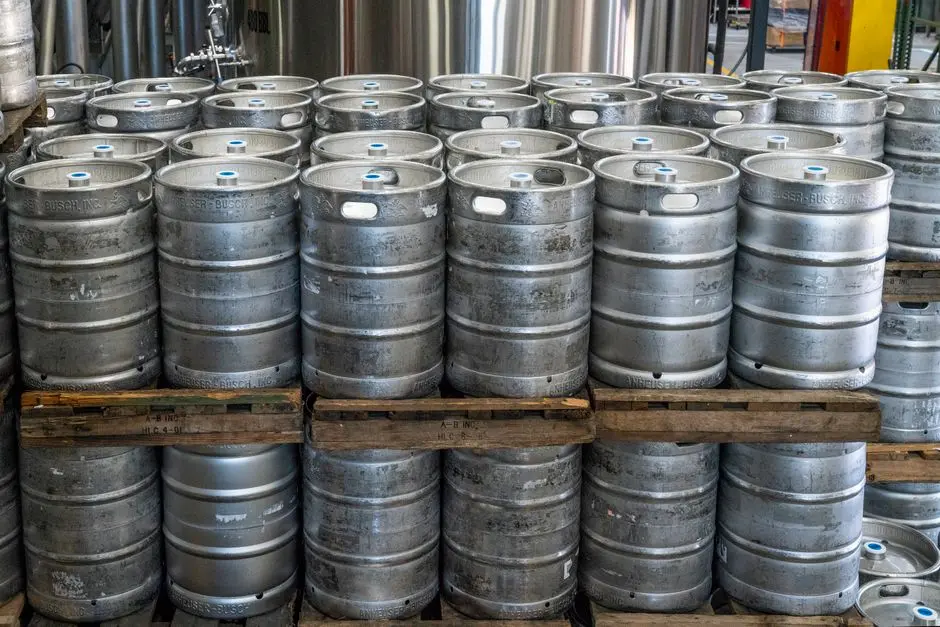
The site-specific wastewater balance must be reconstructed from operations, because brewery process wastewater can contain organic materials and cleaning agents, as stated in the HEINEKEN project evidence from Water Action Hub. The engineering question is not simply whether an ETP exists, but which streams reach it, in what sequence and under which authorization.
Map process wastewater, equipment washdown, floor and yard washdown, stormwater, sanitary sewage, laboratory drains, cooling or blowdown streams, sludge and contaminated runoff separately. For every stream, record its origin, destination, treatment unit, combining or segregation arrangement, and governing permit or sewer provision. The data-center wastewater stream-mapping structure is useful as a discipline, but the brewery’s actual process and permit—not another plant’s example—set the analytical scope.
Document how production recipes, cleaning cycles, operating hours, rainfall, shutdowns and maintenance events change flow and pollutant composition. A production average is not a suitable basis for ETP sizing when cleaning or batch discharges occur at concentrated times. Reconcile the reconstructed balance with water metering, production records, laboratory results, sewer invoices and the permit’s stated design basis.
- Identify every water-using activity and wastewater-generating operation.
- Trace collection, segregation, combination, storage and treatment routes.
- Assign the controlling authorization to each final discharge point.
- Compare measured flow and pollutant data with the authorized and permitted basis.
| Stream | Evidence required | Capacity and permit test |
|---|---|---|
| Process wastewater | Production records, batch flows, sampling results and recipe or cleaning schedule | Compare organic and cleaning-agent loads with treatment and discharge limits. |
| Equipment, floor and yard washdown | Cleaning frequency, wash-water routing, chemicals used and runoff controls | Check peak hydraulic load and whether contaminated runoff is segregated. |
| Stormwater and contaminated runoff | Drainage plan, rainfall monitoring, inspection records and spill controls | Verify the authorized outfall and whether storm flow can bypass or overload the ETP. |
| Sanitary sewage and laboratory drains | Population and laboratory waste procedures | Confirm treatment and discharge routing. |
| Cooling or blowdown streams | Operating cycles, discharge frequency and chemical inventory | Establish whether segregation or pretreatment is required. |
| Sludge and treatment residuals | Generation, characterization, storage, dewatering and disposal records | Test storage and disposal capacity separately from liquid effluent compliance. |
Test ETP performance, hydraulic capacity and compliance history
The ETP must be tested against the plant’s actual authorization and event-level loads, not against an annual average or a supplier’s catalogue flow rate. The supplied research contains no Hungarian site-specific limit, flow or capacity value. Those figures must come from the controlling permit, sewer agreement, measured records and installed equipment records.
Compare measured flows and pollutant loads with permitted limits, sewer or pretreatment limits and installed treatment capacity. Test present and forecast loads under production, cleaning, batch-discharge and downtime scenarios. A compliant average can conceal a batch discharge, storm event or shutdown excursion, so timing and duration must be evaluated alongside concentration.
Review monitoring and sampling records, chain-of-custody procedures, calibration, non-compliance notices, inspection findings, abatement actions and remediation commitments. Establish whether the sampled result represents the event it is intended to represent and whether monitoring points correspond to actual discharge routes.
Assess residual capacity for forecast production and product mix. Documented performance at current operations is evidence; an unverified supplier claim is not. The treatment-selection examples in the pretreatment-limit engineering guide and the sewer-limit treatment guide show why the controlling local limit must be established before equipment selection.
| Test | Evidence | Pass condition for transaction review |
|---|---|---|
| Hydraulic performance | Peak and event flow records; equalization and treatment records | Installed capacity remains credible for present and forecast operating scenarios. |
| Pollutant performance | Representative samples, laboratory history and operating logs | Results satisfy every applicable permit and sewer condition, including event conditions. |
| Monitoring integrity | Sampling plan, chain of custody, calibration and reporting history | Compliance evidence is traceable and defensible. |
| Compliance history | Notices, inspection findings, abatement actions and remediation commitments | Historical liabilities are bounded, remediated or contractually allocated. |
| Residual capacity | Forecast production, product mix, cleaning cycles and downtime scenarios | Capacity margin is supported by site data rather than generic equipment ratings. |
| Sludge handling | Quantity, characteristics, storage, dewatering and disposal records | Residuals can be managed through the forecast operating period. |
Identify treatment upgrades and quantify transaction exposure
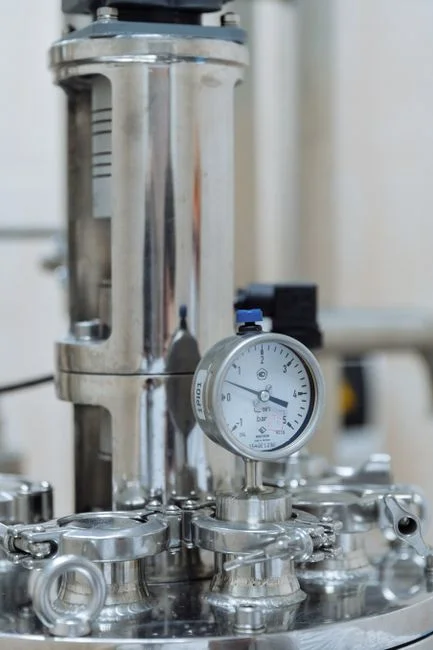
Treatment scope should follow the permit and capacity findings, not precede them. Classify the plant as requiring no further investment, a monitored upgrade, a major retrofit or compliance-driven replacement only after the wastewater balance and ETP evaluation are complete. A technology cannot be prescribed reliably before characterization establishes the deficient unit and the event causing the deficiency.
Assign each deficiency to pretreatment, equalization, biological treatment, solids separation, filtration, disinfection or sludge handling. For brewery wastewater containing organic materials and cleaning agents, a DAF system for brewery wastewater pretreatment may be one evaluated option, but only against the site’s measured streams and controlling limits. An MBR membrane bioreactor for plant wastewater upgrades likewise requires verified design inputs.
Price capital equipment, installation, commissioning, monitoring, operator training, consumables, energy, sludge disposal and regulatory delay as separate workstreams. Tie each item to a defined risk: inability to meet discharge conditions, sewer non-compliance, permit exceedance, production interruption, contaminated land, remediation cost, lender requirement or insurance exposure.
HEINEKEN’s commitment to recovery, reuse and recycling under the 2030 Every Drop strategy, as reported by WWD Magazine, is a strategic evaluation lens only. It does not prove that the Hungarian plant must install reuse equipment. Equipment sizing must follow measured and forecast flows, pollutant loads, batch and storm events and available footprint. The equipment-selection framework illustrates why generic catalogue ranges are not site evidence.
| Exposure category | Scope to estimate | Basis |
|---|---|---|
| Capital and installation | Affected treatment unit, civil works, installation and ancillary systems | Approved process basis and measured site data. |
| Commissioning and operation | Testing, training, consumables, energy and control-system work | Operating scenario and proposed performance guarantee. |
| Residuals | Sludge storage, dewatering, transport and disposal | Measured residual generation and disposal route. |
| Schedule | Equipment lead time, installation, authority acceptance and production integration | Supplier schedule and authority requirements. |
| Transaction risk | Escrow, covenant, price adjustment, indemnity or closing condition | Legal advice and the unresolved technical exposure. |
Use a pre-closing go, conditionally-go or no-go decision
The acquisition decision should follow a documented sequence: verify authorization, reconstruct streams, test treatment and quantify exposure, then assign the remaining risk to closing conditions or price. The brewery acquisition permit and treatment obligations framework can support the sequence, but Hungarian legal and environmental evidence must determine the result.
Go only when the applicable authorization is identified, the issuing authority confirms the required transaction step, current performance is supportable and required upgrades are funded. Conditionally go when consent, performance testing or a defined upgrade remains outstanding but can be resolved through a specific condition, escrow, covenant, price adjustment or closing timetable. No-go when discharge is unauthorized, material exceedances or remediation liabilities cannot be bounded, the ETP cannot meet applicable limits or a required approval cannot be obtained.
| Decision | Required evidence | Required allocation |
|---|---|---|
| Go | Confirmed permit status, authority response, defensible monitoring history, adequate capacity and funded remediation | Normal post-closing monitoring and reporting. |
| Conditionally go | Named outstanding issue, technical acceptance test, defined upgrade scope and credible timetable | Condition precedent, escrow, covenant, price adjustment or delayed effectiveness. |
| No-go | Unresolved authorization, unbounded liability, demonstrated capacity failure or unobtainable approval | Stop or restructure the transaction before accepting the risk. |
The closing checklist should cover permit status, technical evidence, treatment scope, commercial allocation, monitoring, reporting, training and post-closing corrective actions. Legal conclusions belong with Hungarian counsel; engineering design belongs with a qualified site process engineer.
Frequently Asked Questions
Does acquisition automatically trigger notification, consent, amendment, assignment or reissuance of a Hungarian wastewater permit?
No conclusion should be assumed. Identify the operative authorization and ask the issuing authority which transaction step applies to the permit holder, discharging entity and treatment arrangement. The authority’s written response should be addressed through a condition precedent, covenant or closing timetable where appropriate.
What inputs should a buyer request when budgeting treatment upgrades?
Request measured flows, pollutant loads, batch and storm events, production forecasts, current permit and sewer limits, monitoring history, available footprint and the treatment unit that fails. Request capital cost, installation, commissioning, energy, consumables, sludge handling, delay and performance-guarantee terms separately. A generic equipment price is not an acquisition budget.
How should a supplier be selected for brewery wastewater treatment?
Screen suppliers on verified process data, pilot or performance evidence, treatment objectives, solids handling, controls, commissioning support and contractual guarantees. Require the proposed equipment to be sized from the acquired plant’s measured and forecast wastewater. HEINEKEN’s global treatment percentages do not determine the Hungarian site’s budget or compliance status.
Can wastewater non-compliance affect more than an environmental permit?
Yes. Unresolved exceedances or contamination can affect land valuation, remediation cost, production continuity, lender requirements and insurance. The buyer should therefore reconcile monitoring records, inspection findings, remediation commitments and treatment capacity before closing, then allocate historical liability through the transaction documents rather than treating it solely as an ETP capital issue.