What Can Be Concluded Before Closing
Equinix’s acquisition of a plant in Hungary does not automatically create a new wastewater regime. The governing requirements remain those in the plant’s current permit, discharge authorization, sewer or pretreatment agreement, and any consent or change-of-control provisions. Before closing, Equinix should identify the permit holder, operator, discharging entity and treatment-infrastructure owner; confirm with the issuing authority whether notification, consent, amendment, assignment or reissuance is required; characterize all wastewater streams; and test present and forecast flows and pollutant loads against treatment capacity. No supplied source establishes an Equinix-specific Hungarian transaction or site limit, so the operative permit and regulator guidance must determine the answer.
The evidence boundary is important. The supplied Equinix primary source is its March 2, 2017 announcement of a purchase of four parcels spanning 34.5 acres in Loudon County, Virginia. It concerns land for data-center expansion in Ashburn, not a Hungarian plant or Hungarian wastewater permit. It cannot support a conclusion that an Equinix acquisition has occurred in Hungary or that Hungarian authorities apply a particular change-of-control procedure.
Neither the acquisition structure nor corporate ownership establishes by itself that a permit must be transferred, amended or reissued. The decisive evidence is the operative permit, consent documents and the issuing authority’s interpretation. This distinction matters when reviewing the Hungarian plant acquisition wastewater checklist.
| Question | What must be established | Closing consequence |
|---|---|---|
| Who remains legally responsible? | Permit holder, legal and site operators, discharging entity and infrastructure owner | No reliance on permit continuity until their identities and responsibilities are reconciled |
| Is authority action required? | Permit conditions, consent provisions, transaction documents and regulator confirmation | Obtain consent or make regulatory action a condition precedent where required |
| Can the site comply? | Verified stream characterization, peak flow, pollutant load, treatment performance and forecast demand | Fund operating, monitoring, retrofit or expansion work before accepting the risk |
Legal continuity, technical performance and environmental liability are separate workstreams. A permit may continue to name the same holder while the operating company changes, and compliant sampling may conceal an undocumented stream or a peak-load exceedance. Equinix should therefore use a transaction decision gate rather than a simple “permit valid or invalid” conclusion.
Identify the Five Parties That May Not Align
A plant can have a valid authorization without having five matching corporate identities. The first diligence task is to determine which entity holds the authorization, which entity performs the regulated activity, which entity physically controls the site, which entity makes the discharge and which entity owns the treatment infrastructure.
| Position | Evidence to request | Issue to resolve |
|---|---|---|
| Legal operator | Company-registration records and the site-operating agreement | Who performs and reports compliance after closing? |
| Permit holder | Current permit, amendments and consent correspondence | Does the permit remain valid for this entity? |
| Site operator | Site-operating agreement, staffing records and operating procedures | Does contractual control match regulatory responsibility? |
| Entity discharging wastewater | Discharge invoices, sewer contracts and transport records | Who is the discharger to the receiving authority? |
| Treatment-infrastructure owner | Asset register, title evidence, finance documents and service contracts | Who controls operation, maintenance and capital investment? |
For every position, obtain the underlying document rather than relying on an organizational chart. Company records establish legal identity; the operating agreement establishes the allocation of site responsibility; permit-holder details connect the authorization to a named party; ownership evidence identifies control of the assets; and sewer or treatment contracts reveal receiving-party obligations.
The mismatch is not academic. A permit may remain valid for one entity while another company operates the plant, owns the treatment assets or contracts for waste transport. Those arrangements may be lawful, but they create handover, reporting, access and enforcement dependencies that must survive closing.
Where the identities do not align, obtain transaction-counsel and authority confirmation before closing. Do not treat the transaction as a routine assignment unless the permit and governing documents support that treatment. A broader cross-border plant-acquisition wastewater diligence framework can support the same identity-first method, but Hungarian legal conclusions must rest on Hungarian documents and advice.
Build the Site’s Wastewater Authorization File

A permit file is broader than the current authorization. Request the current environmental or wastewater permit, every amendment, the discharge diagram, monitoring plan, reporting history, inspection findings, non-compliance notices and remediation records. These documents show both the authorized condition and how the site has performed in practice.
Separate the discharge route before assessing continuity. A direct discharge to surface water or groundwater requires the relevant authorization and compliance evidence. A discharge through a municipal or industrial sewer requires a sewer-acceptance or pretreatment agreement and the applicable discharge rules. Equinix must establish which route applies to each stream; similar language in a permit does not answer the receiving-party obligations.
For a sewer route, request the acceptance or pretreatment agreement and identify the municipal or industrial operator, applicable connection rules, permitted discharge characteristics, monitoring obligations, reporting responsibility, surcharge or enforcement provisions, and termination rights. For direct discharge, request the direct-discharge authorization, receiving-water conditions, monitoring points, discharge points and evidence of required notifications.
Trace stormwater and contaminated runoff separately from process water and sanitary sewage. Determine whether they share a destination, whether segregation controls exist and whether any connection or route is undocumented. An undocumented drain can convert a permit-file review into an immediate site and contractual issue.
Hungary’s 2022 UNECE Article 7 summary, as described in the supplied research, provides wider environmental-reporting context only. It is not a site permit, does not establish the acquired plant’s effluent limits and cannot substitute for the operative authorization.
| Compliance-register field | Required record |
|---|---|
| Authorization | Issuing authority, legal basis, permit number, expiry and every amendment |
| Discharge | Route, destination, discharge points and receiving-party agreement |
| Compliance | Monitoring points, reporting conditions, responsible operator, sample results and notices |
| Governance | Consent documents, change-of-control provisions, inspection findings and corrective actions |
| Evidence control | Source document, date, version, reviewer and outstanding verification |
Use one register to connect every requirement to its source and owner. Hungary’s 2022 UNECE Article 7 summary should remain identified as contextual evidence, not entered as a site authorization. A register also preserves chronology: an archived register cannot demonstrate current permit status, and an old compliance statement cannot substitute for current regulator confirmation.
Characterize Every Stream and Discharge Event
Wastewater characterization must reconstruct how the plant actually generates and routes water. Map process wastewater, equipment washdown, floor and yard washdown, stormwater, sanitary sewage, laboratory drains, cooling or blowdown streams, sludge and contaminated runoff. For each stream, establish whether it is segregated, combined, monitored, treated on site or accepted by another party.
The sampling programme should cover at least one representative production cycle. Add event-specific coverage for batch discharges, storm events, shutdowns, bypasses and unusual operating states where justified. A single compliant grab sample is not a design basis because it may miss variability, dilution, unmonitored branches or a temporary process condition.
Select parameters from the operative permit, sewer agreement, sector-specific pollutants and process risks. Flow, pH, temperature, suspended solids, COD, BOD, oil and grease, nutrients, metals and other sector-specific constituents are investigation parameters—not universal Hungarian limits. The supplied research does not establish the acquired plant’s applicable limits.
Reconcile laboratory results, online monitoring, flow meters, mass balances, water use, production inventory and regulatory reports. A mismatch between water consumption, production records and reported discharge may indicate dilution, an omitted stream or unreported flow. It should trigger further tracing rather than adjustment of the measured load without evidence.
Document generation, characterization, storage, transfer and disposal for each waste stream. Sludge and other residues require an identified route before the treatment system is judged complete. The data-center wastewater and cooling blowdown treatment article provides a useful stream-mapping structure, but the acquired plant’s process and permit—not the data-center example—set the analytical scope.
Test the Treatment System Against Actual and Forecast Loads
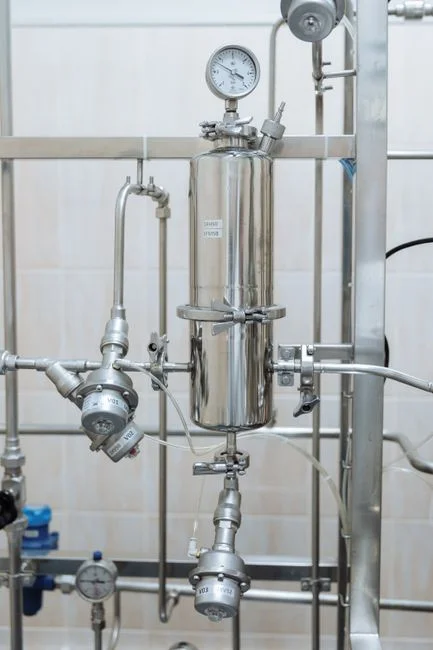
The installed treatment train must be tested against present and forecast operating conditions, not merely compared with nominal permit wording. The design review should address peak flow, pollutant load, variability, redundancy, operating constraints, safe bypass arrangements, power resilience and the route for treatment residues.
Verify calculation inputs from meter data, process records, representative sampling and independent engineering review. Confirm whether a recorded peak reflects the true hydraulic event, whether dilution affects concentrations, and whether the permit authorizes the operating envelope. A treatment system can meet an average effluent result while failing during a batch, storm or shutdown.
For oil-, grease- or solids-rich streams, evaluate whether dissolved air flotation pretreatment is credible. HydropureWater states that its DAF range is 4–300 m³/h across 13 standard models. Those figures are screening values, not site-fit evidence; stream characteristics, removal objectives, footprint, residual handling and controls must be verified.
For biological treatment or water reuse, determine whether MBR membrane bioreactor treatment is technically credible. HydropureWater states a 10–2,000 m³/day range, filtration below 1 μm and a footprint 60% smaller than conventional systems. These are supplier screening figures, not proof of capacity, effluent performance or site suitability.
HydropureWater also states a 1–80 m³/h range for its WSZ system using A/O contact oxidation, sedimentation and disinfection. That range may frame preliminary options for decentralized or low-flow sanitary arrangements, but the design basis still requires validation.
The Pureco Bonyhád video published July 6, 2022 shows a Hungarian installation using continuous-flow treatment combined with SBR. It establishes that such configurations are used in Hungary; it provides no design data for the acquired plant. Do not use it to infer hydraulic capacity, redundancy or compliance.
| Design-basis item | Evidence required | Decision affected |
|---|---|---|
| Hydraulic load | Verified flow records, peak-event review and production forecast | Headworks, pumping, equalization and treatment capacity |
| Pollutant load | Representative stream sampling reconciled with flow and inventory | Process selection and removal targets |
| Variability | Batch, storm, shutdown, bypass and product-change records | Equalization, controls and safe operating states |
| Residuals | Sludge mass balance, storage and disposal contracts | Treatment completeness and closure cost |
| Redundancy | Asset condition, outage history and contingency route | Production continuity and capital scope |
Convert Findings into Transaction Decisions
Every unresolved finding needs a named transaction treatment. Operating conditions belong in procedures, monitoring and training. Capacity constraints require an engineering estimate and delivery schedule. Permit actions require authority engagement. Historical contamination requires liability allocation, while closure obligations require a named party and funding mechanism.
Test whether contamination or permit non-compliance could affect land valuation, remediation cost, production continuity, lender requirements or insurance. The environmental review should cover site boundaries, groundwater use, drainage systems, tanks, pipes, waste areas, sludge storage and abandoned infrastructure. A review limited to the treatment tank can miss migration pathways, third-party rights and ownership liabilities.
| Risk category | Required response | Potential contractual allocation |
|---|---|---|
| Permit and authority | Confirm continuity, consent, notification, amendment, assignment or reissuance requirements | Condition precedent, specific indemnity, seller cooperation obligation and post-closing cost responsibility |
| Operations | Correct procedures, monitoring gaps, training and bypass controls | Pre-closing remediation and post-closing operating covenants |
| Engineering and capital | Estimate retrofit, added capacity or replacement with schedule and performance basis | Escrow, holdback, price adjustment or buyer-funded post-closing capital |
| Legacy contamination | Define remediation scope, access, milestones and closure evidence | Specific indemnity, retained consideration and information-sharing rights |
| Closure and residual waste | Identify responsible party, funding, records and disposal route | Escrow, milestone payments and surviving obligations |
Transaction protections must match the finding. A general representation is weaker than a specific indemnity for a quantified contamination pathway. An operating covenant does not replace a condition precedent where authority consent is required before closing.
State clearly who owns pre-closing conduct, post-closing operation, regulator communications, permit applications, monitoring costs, third-party claims and residual waste. Preserve the regulator’s statutory position: contractual allocation between buyer and seller does not necessarily limit an authority’s enforcement powers. The wider transaction allocation framework can support this structure, but the Hungarian legal analysis must use the acquired site’s documents and applicable advice.
Use a Sequenced Closing Checklist
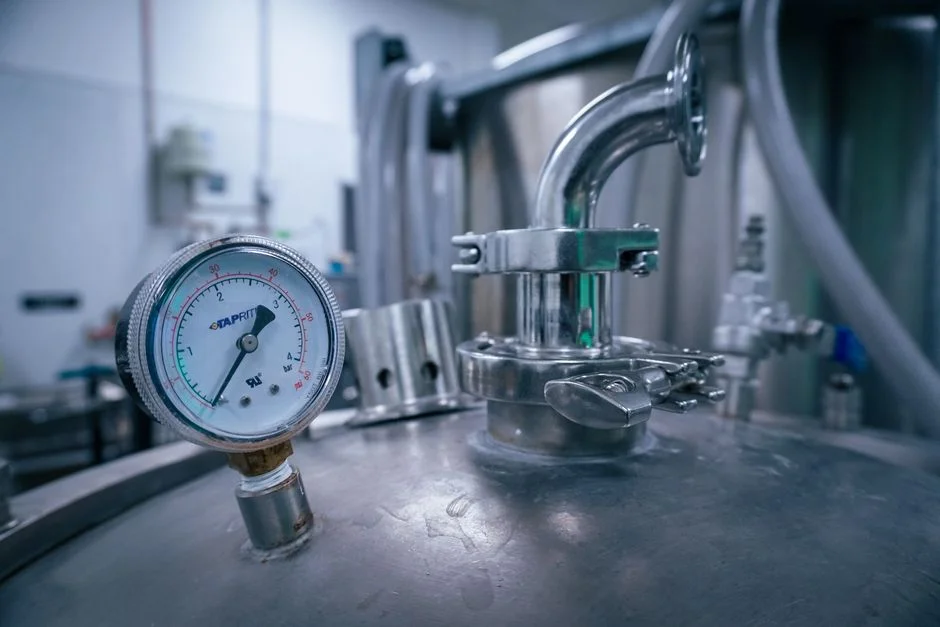
The closing process should move through explicit gates rather than a parallel environmental request list. First identify the discharge route, permit status, contamination indicators, capacity constraints and major liabilities. Proceed only after the permit, contamination and capacity exposures are identified and assigned.
Next, inspect the site; review the authorization, transaction and operating documents; complete representative sampling; verify flow and load; walk down the treatment system; and meet the operator and issuing authority. The technical baseline and authority position should then be confirmed.
Reconcile the evidence before approval. The transaction team should test permit conditions, residual risks, capital estimates, authority action and contractual allocation together. A material discrepancy should remain visible rather than being absorbed into a general risk allowance.
After closing, preserve the baseline dataset, update the compliance register, improve monitoring and assign responsibility for permit reporting. Each finding should link to its source, owner, decision, corrective action and closure evidence. The Hungarian acquisition closing sequence can be used as a working checklist, subject to confirmation against the site’s actual permit and counsel’s interpretation.
Frequently Asked Questions
Does an Equinix acquisition automatically change the plant’s Hungarian wastewater permit?
No supplied source confirms an Equinix Hungarian plant acquisition or a site-specific permit consequence. Equinix must check the current permit, change-of-control terms, transaction documents and issuing authority’s position. Record whether notification, consent, amendment, assignment or reissuance is required, and make any required authority action a condition precedent where appropriate.
Which wastewater parameters must Equinix test?
COD, BOD, pH, metals and other parameters must be selected from the operative permit, sewer acceptance or pretreatment agreement, sector-specific pollutants and process risks. They are not universal Hungarian limits. Include flow and variability across a representative production cycle and justified special events, and reconcile samples with meters, water use, production records and regulator reports.
How should treatment capacity and supplier selection be evaluated?
Size the system from verified peak flow, pollutant load, variability, discharge destination, reuse objectives and redundancy—not nominal permit capacity. Require each supplier to state its design basis, included treatment scope, civil works, utilities, controls, installation, commissioning, residuals handling, warranty assumptions and exclusions. The supplied research contains no site-specific quotation, so a defensible price cannot be given without those inputs and a supplier proposal.
Should the existing treatment plant be retrofitted or replaced?
The decision requires site-specific evidence. Compare the existing train’s condition, hydraulic capacity, process limitations, automation, sludge route, land availability and compliance gaps with retrofit, added-capacity and replacement options. An equipment range or an example Hungarian treatment configuration is not enough; the verified design basis, site constraints and performance data must support the selection.
Who should determine permit continuity and legacy liability?
Hungarian legal and environmental professionals should determine permit continuity, authority requirements and transaction liability. An environmental engineer should establish the stream characterization, treatment baseline, capacity case and contamination evidence. Equipment suppliers can develop process options and commercial proposals, but they should not make the legal determination that a permit continues, transfers or remains unchanged.