Define the Treatment Objective Before Choosing Equipment
Domestic sewage treatment in Da Nang should begin with the wastewater source, daily flow, site conditions and receiving environment—not a brand decision. Household sewage includes water from toilets, sinks, bathrooms, dishwashers and washing machines, and treatment must remove polluting material before safe discharge or reuse. For properties without dependable public-sewer access, compare an underground A/O package plant with a membrane bioreactor. The receiving route and required effluent quality determine which process boundary is relevant.
The first decision is where the treated water will go: a public sewer, an approved outfall, a drain, a soil-treatment area or a dedicated reuse system. A basic sanitary-treatment objective may support controlled discharge, while irrigation, toilet flushing or groundwater recharge requires a more stringent effluent specification and additional verification. The objective must be defined before equipment is sized.
The U.S. Environmental Protection Agency states that wastewater treatment should remove polluting material so treated water can be released safely into the environment. It identifies domestic wastewater as water from toilets, sinks, bathrooms, dishwashers and washing machines. Its domestic-treatment guidance also identifies site characterisation, design, operation and maintenance as necessary elements of a viable system.
For a Da Nang project, the designer and relevant authority must confirm the applicable Vietnamese discharge, construction and site requirements. The supplied research does not provide Da Nang-specific numerical effluent limits, so no equipment should be purchased against an assumed standard. Use the 2026 discharge-guidelines and compliance overview as a due-diligence starting point, but obtain a project-specific approval basis from the responsible authorities.
Build a Reliable Domestic Sewage Design Basis
A defensible design basis separates hydraulic capacity from wastewater quality and site suitability. The owner must first identify the design population, actual domestic wastewater flow, average and peak hourly demand, visitor or staff surges and any seasonal loading. If those data are unavailable, require a documented projection rather than allowing nominal package capacity to substitute for a duty assessment.
Wastewater characterisation should cover COD, BOD, suspended solids, nutrients, oils and greases, pH and temperature. Agree sampling points, sampling periods and analytical methods before design, particularly where kitchen wastewater, laundry flows or other non-residential streams enter the same collection system.
Include nitrogen and phosphorus in the assessment because the EPA identifies excessive releases of these nutrients as a cause of pollution in rivers, lakes and coastal waters. A unit with sufficient nominal flow can still require screening, equalisation, grease control or seasonal load management if the contaminant profile is inconsistent.
The EPA warns that improperly built or operated domestic wastewater systems can contaminate household wells with harmful bacteria and viruses. Site information is therefore part of the treatment design, not a later civil-works detail. Before using equipment information for control-system or operating-cost planning, gather the following inputs.
| Design input | Information to document | Decision affected |
|---|---|---|
| Wastewater flow | Design population, daily domestic wastewater flow, average hourly flow, peak demand and surge periods | Plant hydraulic capacity, equalisation and staged operation |
| Wastewater quality | COD, BOD, suspended solids, nutrients, oils and greases, pH and temperature | Biological loading, pretreatment and process guarantees |
| Site and receiving environment | Soil permeability, groundwater depth, flood level, drainage routes and discharge or reuse route | Burial depth, excavation, pumping, flood protection and treatment objective |
| Access and utilities | Maintenance access, available footprint, power availability and underground or above-ground space | Package configuration, controls, lifting and operating strategy |
Do not compact a soil-treatment area or build over a septic tank, according to the EPA, because access is required for maintenance and the percolation area must remain suitable for treatment. For a packaged plant, translate that principle into unobstructed access to sludge drawdown, controls, sampling points and lifting arrangements. Additional control-system scope can be coordinated through the supplier’s small-plant SCADA cost guide.
Compare A/O Package Plants and MBR for Da Nang Sites
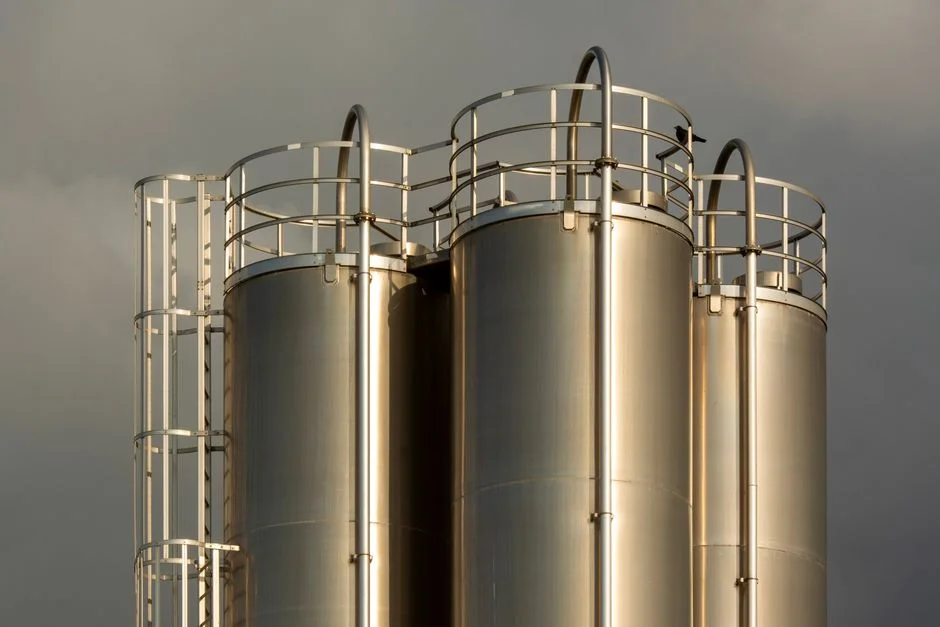
WSZ and MBR differ most clearly in process architecture and operating implications, not simply in headline capacity. A WSZ package combines anoxic/aerobic A/O biological contact oxidation, sedimentation and disinfection in one buried unit. The verified HydropureWater catalog describes it as fully automated, requiring no operator, with a capacity range of 1–80 m³/h. It can be installed below grade with landscaping above or mounted on a trailer for mobile deployment.
An MBR combines activated sludge with submerged PVDF membrane filtration. The catalogued capacity is 10–2,000 m³/day, with filtration below 1 μm. It also states a 60% footprint advantage over conventional systems. That figure compares the MBR with conventional arrangements; it is not evidence that an MBR occupies 60% less space than the WSZ package.
| Selection criterion | WSZ package architecture | MBR architecture |
|---|---|---|
| Core process | Anoxic/aerobic A/O biological contact oxidation, sedimentation and disinfection | Activated sludge combined with submerged PVDF membrane filtration |
| Catalogued capacity | 1–80 m³/h | 10–2,000 m³/day |
| Separation characteristic | Package description does not specify sub-1 μm filtration | Filtration below 1 μm |
| Installation | Can be buried below grade or trailer-mounted for mobile deployment | Requires a separate site-specific footprint assessment |
| Stated footprint comparison | No equivalent WSZ-to-MBR figure is provided | 60% smaller than conventional systems, as stated in the product catalogue |
| Primary selection driver | Compact integrated treatment train, burial flexibility and routine remote operation | Fine solids separation, reuse-sensitive applications or a justified footprint advantage |
Shortlist the underground WSZ package sewage treatment plant where an integrated A/O train, below-grade installation and limited routine attendance are priorities. Consider the submerged MBR wastewater treatment system where the specified reuse quality, footprint or solids-separation requirement justifies membrane complexity.
Neither catalogue range is a substitute for project sizing. Require each bidder to demonstrate suitability across the project’s actual flow range and wastewater profile, identify operating assumptions, and define the boundary of its performance guarantee. Compare equal scopes: treatment capacity, pretreatment, sludge removal, effluent monitoring, controls, utilities and civil works should not be distributed inconsistently between bids.
Protect the Biological Treatment Stage from Sewage Solids
The treatment train should connect solids control directly to biological treatment and sludge handling: inlet and sampling point → coarse screening or grit control where required → flow equalisation or buffering → biological treatment → solids separation → disinfection → effluent sampling and monitoring → sludge handling. The inlet cannot be designed from the “domestic wastewater” label alone. Kitchen waste, laundry lint, sanitary products, plastics and other solids may enter the collection network and affect pumps, membranes and biological solids inventory.
Da Nang evidence supports treating sludge characteristics as a specific assessment item. The Vietnam Journal of Science and Technology study on centralised industrial wastewater treatment plants in Da Nang found 1,164 particles/kg dry weight of microplastics in Hoa Cam sludge and 3,745 particles/kg dry weight in Hoa Khanh sludge. Particle sizes ranged from 1.6 to 5,000 μm. The dominant 1.6–100 μm range represented 42.5% at Hoa Cam and 51.8% at Hoa Khanh. Although the study concerned industrial wastewater plants rather than a package design for one property, it demonstrates why sludge needs project-specific assessment rather than an assumed composition.
Specify pretreatment from the actual collection risks. A mechanical bar screen can remove larger suspended material before it reaches the treatment unit, as illustrated by the rotary mechanical bar-screen arrangement. Where the process requires further solids separation before sludge handling, define the required equipment and destination rather than leaving sludge disposal undefined. The plate-frame filter-press option should be evaluated against the selected dewatering route and available labour and space.
The EPA states that domestic treatment requires site characterisation, design, operation and maintenance; poor maintenance can turn an otherwise sound concept into a contamination risk. It also warns against building over a septic tank or compacting its percolation area. For Da Nang, this translates into access for sludge removal, inspection and monitoring, plus protection of any soil-treatment or drainage zone.
Before accepting an automated package, assign the sludge-removal route, access frequency, sampling responsibility and operator qualifications. Define whether excess solids are removed on site, transported for treatment or accepted by another authorised facility. No supplier should leave the final sludge destination as an unpriced assumption.
Plan for Construction, Commissioning and Long-Term Operation
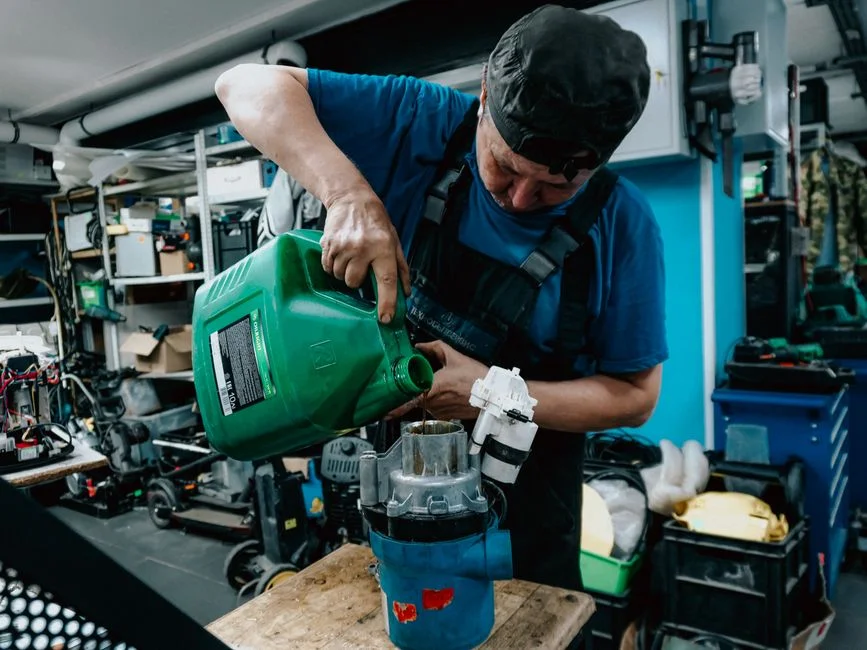
Factory-built equipment becomes a site installation only after excavation, groundwater management, flood protection, access, lifting and connection details are fixed. The civil interface should identify tank or module dimensions, excavation depth, working clearances, pipe entry and exit points, control-panel access, lifting arrangements and any above-ground components. Resolve these before manufacturing where possible, because site constraints can change equipment configuration.
Include power requirements, communications, ventilation and odour management in the supplier’s scope boundary. Define what remains with the civil contractor and who carries responsibility for clashes, drainage, backfill and restoration. The commercial drawing set should make the division explicit rather than leaving it to site interpretation.
Commissioning should verify influent and effluent sampling points, calibrated instruments, alarm functions, sludge drawdown, disinfection performance and operating instructions. These are acceptance tests, not optional handover extras. For an MBR, the protocol should also address membrane condition and cleaning access; for a WSZ package, it should verify the integrated biological, settling and disinfection stages under the agreed loading conditions.
The EPA’s 2025 inspection information provides a clear maintenance lesson: septic-tank inspections typically found about half failing, with about one quarter posing a risk to human health or the environment. While this Irish inspection evidence is not a Da Nang compliance statistic, it supports making preventive servicing, accessible components and documented inspections contractual deliverables.
Assign responsibility for inspections, pumping or desludging, membrane cleaning where applicable, laboratory sampling and corrective-action response. The EPA’s 2021 Code of Practice for Domestic Waste Water Treatment Systems, including its references to Standard Recommendation 66 and the EN 12566 series, can serve as an international design reference. It is not a substitute for project-specific Vietnamese approval or the locally applicable construction, environmental and discharge requirements.
Do not accept an operating-cost or compliance promise without the design flow, duty cycle, chemical and energy assumptions, sludge route, labour and monitoring scope. A comparable selection method for packaged sewage treatment plant selection for a housing development can support the same commercial discipline, while the 2026 Lima housing-development guide illustrates why site conditions must remain part of the technical selection.
Use a Pre-Purchase Decision Framework
Shortlist the WSZ architecture if the priority is a below-ground integrated plant, automated operation and available catalogue capacity of 1–80 m³/h. Shortlist MBR if sub-1 μm filtration, reuse-sensitive separation or the catalogue’s stated 60% footprint advantage over conventional systems justifies the added process complexity. These are screening conditions, not automatic approvals; the selected process must still match the documented flow, wastewater and receiving environment.
Require each bidder to map its process to the documented influent, hydraulic range, site constraints, effluent objective and sludge route. The commercial submission should include a process diagram, equipment list, electrical and control drawings, civil interface, commissioning protocol, operating manual, spare-parts list, warranty scope and maintenance schedule.
Also require a documented compliance basis identifying the applicable Vietnamese approvals and the supplier’s process-performance guarantee. Treat unexplained universal claims, missing boundary conditions and unpriced site works as commercial risks rather than guarantees.
Use the EPA’s 2021 Code of Practice for Domestic Waste Water Treatment Systems and its references to Standard Recommendation 66 and the EN 12566 series as international references only. The project designer must still obtain the relevant Da Nang authority’s confirmation of local requirements. For broader procurement review, the domestic sewage equipment selection and compliance guide provides a useful structure for comparing documents rather than marketing statements.
Frequently Asked Questions
How much does a domestic sewage treatment plant cost in Da Nang?
A defensible price cannot be determined from the project type or keyword alone. Request itemised quotations based on design flow, treatment objective, treatment capacity, civil works, installation, commissioning, sludge handling, monitoring, energy assumptions and maintenance scope. Ask bidders to separate factory equipment, site works, authority submissions, consumables and recurring services so that costs can be compared on the same basis.
Should I choose a WSZ package plant or MBR for a property in Da Nang?
Choose WSZ for a compact integrated A/O treatment train with catalogue capacity of 1–80 m³/h, burial flexibility and routine remote operation. Consider MBR when sub-1 μm separation, the stated reuse objective or the catalogue’s 60% footprint advantage over conventional systems justifies membrane complexity. The purchasing check is to obtain a project-specific process demonstration and performance guarantee for both options, not to select from capacity alone.
What information does a wastewater supplier need before sizing a sewage treatment system?
Provide the wastewater flow and quality data, treatment objective, receiving route, site and soil conditions, groundwater and flood levels, available footprint, utilities and maintenance access. Include visitor and staff surges, seasonal variation and any kitchen, laundry or other non-residential wastewater entering the system. Without these inputs, nominal capacity is only catalogue information, not a verified design.
How long does a packaged domestic sewage treatment plant take to deliver?
The supplied research contains no verified Da Nang lead time. Require the supplier to separate manufacturing, shipping, customs clearance, civil construction, installation, commissioning and approval dates. This is a different supplier-selection check from technical suitability: a credible schedule should identify dependencies, site-readiness dates and the party responsible for each stage.
Does an underground sewage treatment plant still need maintenance?
Yes. The EPA identifies site characterisation, design, operation and maintenance as essential, and its 2025 inspection information reports that neglected systems can create health and environmental risks. Before purchase, define inspection intervals, sludge-removal responsibility, sampling, alarm response, membrane cleaning where applicable and access to buried components. For acquisition screening, the same discipline applies to Vietnam wastewater due diligence for acquisitions.
Related Equipment
- submerged MBR wastewater treatment system — specifications, capacity range, and technical data