What an Effluent Treatment Plant in Bukhara Must Solve
An effluent treatment plant in Bukhara should be designed around the factory’s own flow, pollutant profile, discharge route and reuse objective—not simply the capacity of the municipal WWTP. HydropureWater’s 2026 Bukhara guide cites industrial limits of COD below 120 mg/L, BOD below 25 mg/L and TSS below 30 mg/L. DAF is suited to suspended solids, FOG, oil and colloidal matter; MBR combines biological treatment with filtration below 1 μm; UF can polish solids and colloids without chemicals. Final selection requires site sampling, permit review and a complete CAPEX–OPEX proposal.
The World Bank-funded municipal WWTP upgrade in Bukhara was described as a 50,000–200,000 m³/day domestic-sewage project, not an automatic transfer route or funding mechanism for industrial facilities. HydropureWater’s 2026 Bukhara guide states that factories remain responsible for industrial wastewater pretreatment. The Uzbekistan wastewater treatment plant supplier guide should therefore be read for supplier context, not treated as confirmation that municipal capacity determines the factory treatment scope.
Define the industrial ETP as site-specific treatment and monitoring that controls factory pollutants before discharge or reuse. Required inputs include average and peak flow; COD and BOD; TSS; fats, oils and grease (FOG), oil and grease, or other sector-specific contaminants; pH; temperature; dissolved salts; and relevant industrial pollutants. A single composite sample is insufficient because flow and pollutant concentrations can vary through the production cycle.
HydropureWater’s 2026 Bukhara guide identifies COD below 120 mg/L, BOD below 25 mg/L and TSS below 30 mg/L as industrial discharge limits, with phenols below 0.1 mg/L identified for gas-industry applications. These figures are design-screening inputs, not permission to design. Verify permit applicability, sampling points, averaging periods and current Uzbek requirements before selecting equipment or dividing a treatment train between the factory and municipal utility.
Build the Treatment Train from the Wastewater Profile
A defensible industrial wastewater pretreatment train follows the pollutant profile rather than a preferred machine. Start with equalization and screening, add pH control where necessary, remove floatable or settleable material with DAF or clarification, apply biological treatment where soluble organics require it, use oxidation for identified recalcitrant compounds, and finish with filtration, disinfection, monitoring and sludge handling as the reuse and discharge objectives require.
DAF is the physical stage for suspended solids, fibers, FOG, oil and grease, and colloidal material. HydropureWater’s 2026 Bukhara guide lists 13 DAF models covering 4–300 m³/h. An industrial DAF system for Bukhara effluent pretreatment should therefore be evaluated where solids or floatables dominate—not as a universal biological treatment substitute.
MBR combines biological treatment with membrane separation and is appropriate where soluble organic loads need biological removal or fine solids separation is required. The same 2026 guide lists an MBR catalog range of 10–2,000 m³/day and filtration below 1 μm. For a MBR membrane bioreactor for industrial wastewater, the bidder must justify biological loading, membrane flux, aeration, scouring and the selected flow basis.
UF is principally a downstream polishing barrier for suspended solids, colloids and microbes without chemicals. HydropureWater’s 2026 catalog information specifies 2,000–40,000 L/h capacity, 0.03 μm PVDF membranes, automatic backwash and air scour. It does not, by itself, remove dissolved organics, oils or most salts; those duties must be addressed earlier if present.
Chemical oxidation is pollutant-specific. Compound identity, oxidant dose, temperature, reaction time, contact vessel, downstream residual control and operator safety determine feasibility. An automatic chemical dosing system should therefore be specified around the confirmed chemical demand and controlled by the plant PLC rather than treated as a performance guarantee.
| Stage | Primary function | Selection condition | Evidence or constraint |
|---|---|---|---|
| Equalization and screening | Flow stabilization and removal of rags, fibers and large solids | Include where flow is variable or fibers threaten downstream equipment | HydropureWater’s 2026 guide identifies screening and pH adjustment as pretreatment prerequisites |
| DAF or clarification | Physical separation of solids, floatables, oils and colloids | Use when physical pollutants dominate | 13 DAF models and 4–300 m³/h catalog range reported by HydropureWater in 2026 |
| Biological treatment | Removal of soluble biodegradable organics | Require an identified organic load and acceptable biological design assumptions | MBR range of 10–2,000 m³/day and filtration below 1 μm reported by HydropureWater in 2026 |
| Oxidation | Destruction of specified recalcitrant compounds | Use only after compound and dose testing | Performance depends on chemistry, temperature and reaction conditions |
| UF or other polishing | Removal of residual solids, colloids and microbes | Use for reuse or polishing objectives | 2,000–40,000 L/h and 0.03 μm PVDF catalog range reported by HydropureWater in 2026 |
For reuse, the University of Twente thesis Direct nanofiltration of wastewater treatment plant effluent supports nanofiltration for polishing WWTP effluent toward EU Water Framework Directive standards and agricultural or indirect potable-use applications. That municipal-effluent research does not establish performance for an industrial pretreatment train in Bukhara. Wageningen University’s 2022 thesis also investigated constructed wetlands for micropollutant removal from WWTP effluent, but land, climate, hydraulics and site integration require a separate feasibility review before considering this route.
Compare DAF, MBR and Package Treatment for Bukhara
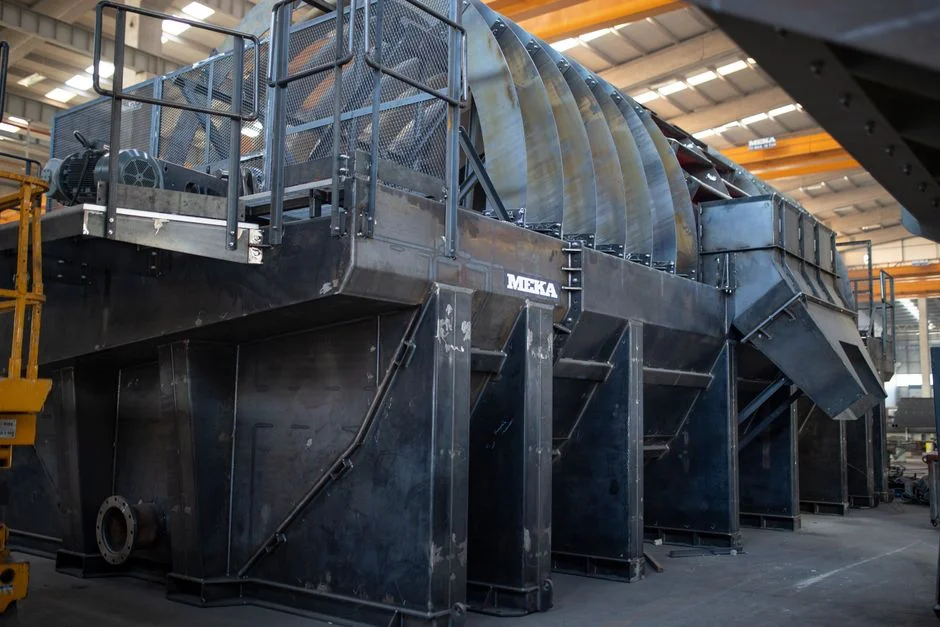
DAF is the strongest candidate when suspended solids, fibers, FOG, oil and grease or colloidal matter dominate; MBR is stronger where biological treatment and fine solids separation must be combined. Integrated package treatment is a site-format choice, while UF is a polishing function—not four interchangeable products.
HydropureWater’s 2026 Bukhara textile case reports average COD removal of 92% and TSS removal of 98% after DAF, screening and chemical dosing. These are measured results for one textile application, not guaranteed performance for every textile wastewater stream. The case also identifies incorrect polymer dosing as capable of significantly affecting DAF performance, so chemical control and operator competence belong in the acceptance plan.
For soluble organics and reuse-quality filtration, MBR merits direct comparison with DAF. HydropureWater’s 2026 guide estimates MBR CAPEX at $150–$250 per m³/day and OPEX at $0.30–$0.50/m³. The MBR membrane bioreactor for industrial wastewater should be assessed against fouling, cleaning access, membrane replacement and summer operating conditions.
The WSZ integrated package combines anoxic and aerobic biological contact oxidation, sedimentation and disinfection in a buried unit. HydropureWater’s 2026 catalog information states a range of 1–80 m³/h and automated operation for applications including factories, hotels, hospitals and residential communities. Package treatment can reduce site interfaces, but its process fit still depends on flow, organic loading, solids separation and effluent targets. The buried integrated treatment package is one configuration to evaluate, not a substitute for characterization.
| Technology | Dominant duty | Main advantage | Main risk to test |
|---|---|---|---|
| DAF | Suspended solids, fibers, FOG, oils and colloidal matter | Physical removal before biological treatment | Dose control, fiber capture, sludge withdrawal and floatable sludge handling |
| MBR | Biodegradable dissolved organics plus fine solids separation | Combined biological treatment and filtration below 1 μm | Fouling, aeration, scouring, cleaning and membrane replacement |
| Integrated package | Biological treatment, sedimentation and disinfection in one buried unit | Reduced separate unit interfaces and automated operation | Process suitability, access, peak-flow response and local maintenance capability |
| UF | Final solids, colloid and microbial barrier | Physical polishing without chemicals | It does not replace dissolved-organics, oil or salt removal |
Hot climate is not a footnote. HydropureWater’s 2026 Bukhara guide notes that summer ambient temperatures can exceed 40°C and that MBR energy costs may be up to 30% higher in Bukhara’s hot climate, potentially requiring cooling. Require each supplier to state aeration, biological-activity, membrane-scouring and cooling assumptions using the site’s wastewater temperature and ambient conditions.
Build a CAPEX and OPEX Case for the Investment
Equipment price alone will not identify the lower-risk investment. Build a common total-cost schedule that includes equipment, civil works, utilities, controls, chemical storage, commissioning, training, replacement items and operating resources, then compare bidders on the same flow and wastewater basis.
HydropureWater’s 2026 Bukhara guide gives indicative equipment CAPEX benchmarks of $80–$120 per m³/day for DAF, $150–$250 per m³/day for MBR and $30–$50 per m³/day for chemical dosing. It also states that installation can add 20–30% to equipment price. These are guide-level benchmarks, not quotations, and their exclusions must be identified in every offer. The chemical dosing design criteria for 2026 can help define what the dosing package must include.
The guide gives indicative OPEX of $0.10–$0.20/m³ for DAF and $0.30–$0.50/m³ for MBR. Require separate prices for electricity, chemicals, membrane replacement, sludge handling and operator labor; the aggregated figures alone conceal the assumptions that drive operating cost.
| Cost item | Source-reported basis | Buyer action |
|---|---|---|
| DAF equipment CAPEX | $80–$120 per m³/day, HydropureWater’s 2026 Bukhara guide | Ask bidders to reconcile the price with design flow, equipment scope and installation |
| MBR equipment CAPEX | $150–$250 per m³/day, HydropureWater’s 2026 Bukhara guide | Separate membranes, aeration, controls, civil work and replacement assumptions |
| Chemical dosing CAPEX | $30–$50 per m³/day, HydropureWater’s 2026 Bukhara guide | Require tankage, duty and standby pumps, containment and control scope |
| Installation | 20–30% above equipment price, HydropureWater’s 2026 Bukhara guide | Obtain an itemized installation and commissioning breakdown |
| DAF OPEX | $0.10–$0.20/m³, HydropureWater’s 2026 Bukhara guide | Check what energy, chemicals and labor are included |
| MBR OPEX | $0.30–$0.50/m³, HydropureWater’s 2026 Bukhara guide | Request membrane cleaning and replacement assumptions separately |
The same 2026 guide reports a Bukhara textile installation with $120,000 CAPEX, OPEX of $0.15/m³ and a projected payback of 3.2 years, based on avoided penalties and improved environmental standing. It also lists permitting fees of $5,000–$15,000, operator training of $2,000–$5,000 and sludge disposal of $0.05–$0.10/kg. Treat the payback as the source’s project case, not a transferable investment return.
The guide reports penalties of $500–$2,000 per violation. That is a compliance-risk figure reported by HydropureWater’s 2026 Bukhara guide, not the current legal penalty schedule. Obtain current sanctions from the responsible Uzbek authority before placing them in a financial model.
Specify, Test and Commission the Plant Without Performance Gaps
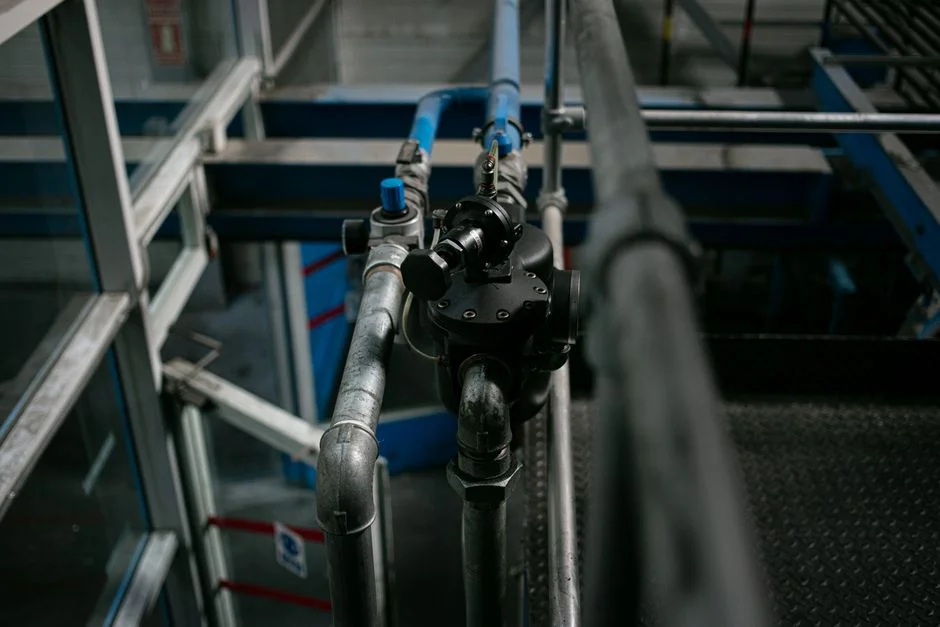
Acceptance should be tied to agreed influent conditions and reproducible effluent measurements, not an unqualified removal percentage. The minimum bidder data pack must cover flow, COD, BOD, TSS, pH, temperature, oils and greases, salinity and sector-specific contaminants, with peak and diurnal variation rather than one composite sample.
Require each bidder to state design flow, treated-effluent targets, process assumptions, equipment sizing, utilities, controls, alarms, redundancy, spare parts and sludge handling. This applies whether the solution is a new industrial wastewater pretreatment plant, a retrofit or an integrated package.
For DAF, specify fiber and rag screening, coagulant and flocculant dosing, flotation performance and sludge withdrawal. The textile-industry flocculant dosing guide is relevant to dosing-control scope, while the Bukhara case’s warning about polymer dosing shows why training must be tested rather than promised.
For MBR, require membrane-fouling controls, aeration and scouring, cleaning access, membrane replacement assumptions and a hot-climate operating strategy. Specify PLC-based monitoring and automatic dosing where consistent operation with limited specialist staffing is required. A March 2025 Uzbekistan equipment-market discussion described a shortage of professional operation and maintenance personnel and identified PLC control as an automation response; this is market context, not evidence of a particular plant’s staffing requirement.
- Freeze the influent basis, sampling plan and applicable permit limits.
- Require each bidder to demonstrate the selected process against that basis.
- Conduct factory acceptance tests for controls, alarms, dosing, interlocks and equipment sequencing.
- Run site acceptance with representative influent and verified effluent sampling.
- Document operator training, maintenance routines, spares and unresolved performance risks.
A mechanical bar screen for industrial pretreatment can be included where upstream solids protection is required. If the proposal is a capacity increase on an existing DAF installation, use the DAF retrofit and capacity-upgrade guide to identify hydraulic and control constraints before accepting additional load.
Choose a Supplier Using a Consistent Request for Proposal
Suppliers should be compared on the same data, assumptions and acceptance tests. Issue one shared data pack and require every proposal to identify process assumptions, excluded items, guarantees, commissioning deliverables, schedule assumptions and the named party responsible for each obligation.
Ask suppliers to identify which components are standard and which are engineered for Bukhara’s climate, available utilities, incoming wastewater variability and operator skill level. For PLC wastewater treatment and automatic dosing, request control narratives, alarm lists, fail-safe positions, chemical interlocks, data logging and access permissions—not just a statement that the plant is automated.
Require references for comparable flow rates and wastewater profiles and evidence of local commissioning, training and after-sales support. Verify claims against commissioning records, acceptance certificates and service agreements where possible.
Ask for lifecycle cost under at least the documented base flow and a stated peak-flow scenario. This exposes the assumptions behind the cited DAF and MBR price and OPEX benchmarks and prevents a low equipment price from obscuring higher civil, power, chemical or membrane costs.
For staged procurement, begin with characterization and permit review; then issue a conceptual process comparison; then request budgetary CAPEX and OPEX; then release a detailed RFP for the selected train; finally require site acceptance. Municipal-WWTP partnership options mentioned in HydropureWater’s 2026 Bukhara guide are avenues to investigate, not assured funding, guaranteed capacity or an automatic discharge route. The plant owner must retain evidence that its discharge route and pretreatment obligation are legally and technically clear.
Frequently Asked Questions
How much does an effluent treatment plant in Bukhara cost?
HydropureWater’s 2026 Bukhara guide gives indicative equipment CAPEX of $80–$120 per m³/day for DAF, $150–$250 per m³/day for MBR and $30–$50 per m³/day for chemical dosing, with installation potentially adding 20–30%. It cites DAF OPEX of $0.10–$0.20/m³ and MBR OPEX of $0.30–$0.50/m³. These are guide benchmarks, not quotations. Request an itemized offer covering civil work, utilities, controls, chemical storage, commissioning, training, membrane replacement and sludge disposal.
How should treatment capacity be sized for an industrial facility in Bukhara?
Size the plant from measured peak flow, flow variation, wastewater profile, treatment objectives and permit requirements—not a generic rule per industry. Include peak and diurnal sampling and define whether the quoted capacity is average, peak or design flow. Then ask each bidder to reconcile its selected DAF, MBR, UF or package configuration with that basis and with future production changes.
How should an industrial buyer select and evaluate an ETP supplier?
Issue the same RFP and influent data pack to every bidder. Require comparable references, process assumptions, excluded items, utility requirements, controls, alarms, redundancy, commissioning deliverables, training, local support and a schedule. Make acceptance dependent on agreed influent conditions and reproducible effluent tests. Verify local service claims through service agreements and reference commissioning evidence.
Does the municipal WWTP upgrade remove the factory’s wastewater pretreatment obligation?
No assumption of that kind should enter the design basis. HydropureWater’s 2026 Bukhara guide describes the 50,000–200,000 m³/day municipal WWTP upgrade as focused on domestic sewage and states that industrial facilities remain responsible for pretreatment. Confirm the factory’s current permit, discharge route, sewer conditions and any negotiated pretreatment agreement with the relevant authorities before specifying equipment.
Should a Bukhara factory choose DAF, MBR, UF or integrated package treatment?
Choose by dominant treatment function. Use DAF for suspended solids, fibers, FOG, oils and colloids; MBR when biological treatment and fine solids separation must be combined; UF to polish residual solids, colloids and microbes after upstream duties are addressed; and integrated package treatment when its anoxic/aerobic, sedimentation and disinfection configuration fits the wastewater and site constraints. The treatment train may require more than one of these functions.