Why Uzbekistan Needs Industrial Wastewater Treatment Plants in 2026
In 2026, qualified wastewater treatment plant suppliers in Uzbekistan deliver containerized or skid-mounted systems rated 10–2,000 m³/day, with combined CAPEX of $180–$650 per m³/day and OPEX of $0.08–$0.22/m³ for textile, oil & gas, mining, and agro-industrial effluent. Compliance is anchored to CAC 1.06:2004 discharge limits and SCEEP permitting, and reputable suppliers provide Russian/Uzbek documentation, CIP-Tashkent logistics, and on-site commissioning.
Uzbekistan's compliance backbone is CAC 1.06:2004 Drinking Water and CAC 1.06.007:18 Surface Water Protection, enforced by the State Committee for Ecology and Environmental Protection (SCEEP, O'zbekiston Respublikasi Ekologiya va atrof-muhitni muhofaza qilish davlat qo'mitasi). Any discharge permit, hydraulic design basis, or factory acceptance test submitted to a 2026 tender must be traceable to these documents, not to ISO 14001 alone. Donor financing has aligned tightly with this framework: the Asian Development Bank's multi-tranche water and sanitation facility exceeds $500M (ADB, 2025-09), the World Bank Syrdarya Water Resources Management Project is approximately $503M with a dedicated WWTP component (World Bank, 2025-11), and the EBRD is co-financing municipal plants in Tashkent, Samarkand, and Bukhara (EBRD, 2025-08).
Four industrial clusters dominate the 2026 influent map: the Tashkent textile zone (50–3,000 m³/day per plant), the Bukhara–Kashkadarya oil and gas corridor (200–5,000 m³/day), the Navoi mining and uranium district (100–2,000 m³/day with high-TDS acid drainage), and the Fergana Valley agro-processing belt (seasonal peaks of 500–4,000 m³/day). The procurement window is unusually dense: roughly $1.2B in active donor-funded WWTP tenders is open alongside private capex from Uzbekneftegaz, Uzkimyosanoat, and the Navoi and Almalyk mining combines, which means qualified suppliers are booked 4–6 months out for 2026 deliveries (per EBRD procurement notices, 2025-10).
Uzbekistan Discharge Standards and Influent Profiles by Sector
CAC 1.06:2004 sets the discharge ceilings that any 2026 supplier must hit on a routine operating day, not just at commissioning. The most-cited limits for surface-water discharge are pH 6.5–8.5, BOD₅ ≤15 mg/L, COD ≤80 mg/L, suspended solids ≤20 mg/L, oil products ≤0.05 mg/L, sulfates ≤100 mg/L, and chlorides ≤300 mg/L. CAC 1.06.007:18 tightens these for water-protection zones, fisheries, and the Amu Darya and Syr Darya basins, where SCEEP inspectors run monthly compliance sampling.
Matching process to influent starts with the actual numbers a plant sees at the equalization tank, not the textbook average. The table below maps the four dominant Uzbek sectors to their raw influent and the CAC ceiling they must clear.
| Sector | Typical Influent COD (mg/L) | Typical Influent BOD₅ (mg/L) | TSS / FOG / TDS (mg/L) | Key Compliance Driver |
|---|---|---|---|---|
| Textile (Tashkent cluster) | 800–2,500 | 200–600 | TSS 100–500; color 500–2,500 Pt-Co; temp 35–45 °C | Color removal >90%; COD ≤80 mg/L |
| Oil & Gas (Bukhara, Kashkadarya) | 1,500–5,000 | 300–800 | TSS 200–800; O&G 50–500; TDS 3,000–15,000; Cl⁻ 2,000–8,000 | Oil products ≤0.05 mg/L; TDS for reuse |
| Mining / Uranium (Navoi) | 100–600 (low BOD/COD ratio) | 20–150 | TSS up to 5,000; U, Mn, Fe, Cu; pH 1.5–3.5 in AMD | Heavy metals to SCEEP Annex 3 |
| Agro-Processing (Fergana Valley) | 2,000–6,000 | 1,000–4,000 | FOG 200–1,000; NH₃-N 50–200; TSS 300–1,500 | NH₃-N, FOG, seasonal 2–3× flow peaks |
Textile influent is hot, highly colored, and variable: a dyeing house can swing 2,000 mg/L COD at 7 a.m. and 600 mg/L by noon. Oil and gas produced water is the most chloride- and TDS-rich stream, which forces a brine-management decision before any biological stage is sized. Mining drainage runs acidic with high suspended solids, so pH correction and lamella clarification typically precede biological treatment. Agro-processing is the most seasonally loaded stream, with 2–3× flow peaks during fruit and cotton-oil campaigns, requiring equalization of at least 12–18 hours (per HydropureWater field data, 2026).
Process Options Supplied for the Uzbek Market
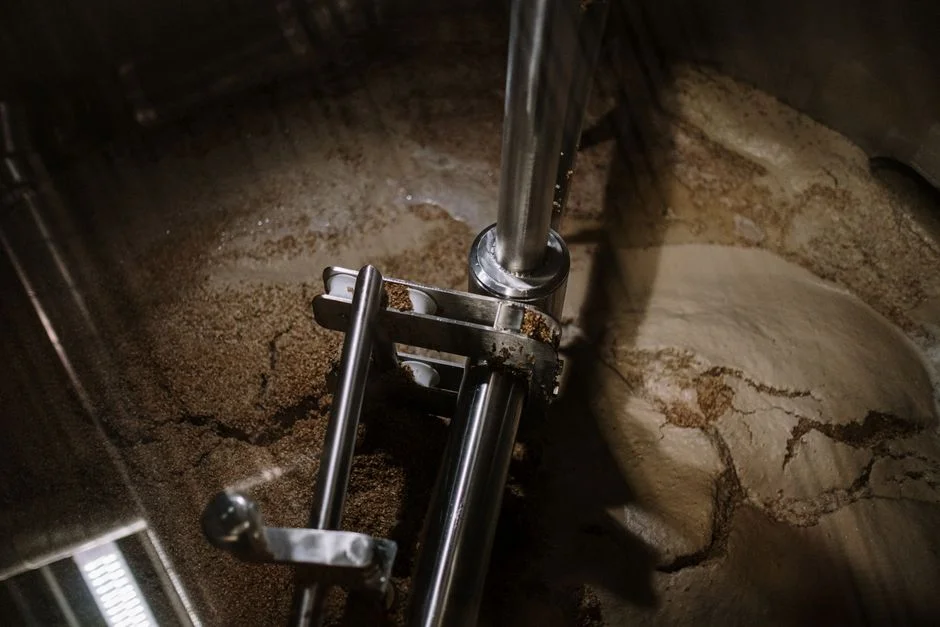
Reputable Chinese and CIS suppliers configure their packages around four blocks: pre-treatment, biological, tertiary, and sludge. The right block for a given sector is decided by influent, not by what the supplier stocks.
Pre-treatment starts with rotary bar screens at 1–10 mm aperture to remove rags, lint, and grit, followed by a HydropureWater DAF system sized at 4–300 m³/h, which removes 90–95% of TSS and 70–90% of FOG in O&G and agro streams. Equalization tanks of 12–24 hours are standard to absorb the 2–3× flow swings seen in Fergana Valley dairies and cotton-oil plants. The biological stage is typically an A/O or A²/O basin for ammonia removal, coupled with a HydropureWater MBR membrane bioreactor system rated 10–2,000 m³/day, delivering effluent COD <50 mg/L and TSS <10 mg/L at roughly 60% of the footprint of a conventional activated-sludge system. Tertiary treatment is multi-media filtration plus a HydropureWater industrial RO system when the buyer needs reuse water for cooling or boiler feed; otherwise chlorination or chlorine dioxide at 2–5 mg/L residual handles disinfection to the CAC microbiological limits. The sludge line closes with a HydropureWater plate and frame filter press dewatering to 22–28% dry solids for landfill or brick-plant co-firing.
| Process Block | Typical Unit | Capacity / Removal Spec | Best-Fit Sector |
|---|---|---|---|
| Pre-treatment | Rotary bar screen + DAF | 1–10 mm aperture; 90–95% TSS, 70–90% FOG at 4–300 m³/h | Oil & Gas, Agro |
| Biological | A/O or A²/O + MBR | <50 mg/L COD, <10 mg/L TSS; 10–2,000 m³/day; 60% smaller footprint vs CAS | Textile, O&G, Agro |
| Tertiary | Multi-media filter + RO / ClO₂ | Reuse at <500 µS/cm; 2–5 mg/L ClO₂ residual | Textile (reuse), Mining (zld) |
| Sludge | Lamella + plate-and-frame press | 22–28% DS cake; cycle 30–90 min | All sectors |
2026 CAPEX and OPEX Benchmarks for Uzbekistan
A 2026 budget sanity-check looks like this: containerized or skid-mounted package WWTP CAPEX sits at $180–$650 per m³/day depending on influent load, automation level, and whether the plant must hit reuse or zero-liquid-discharge (ZLD) targets. OPEX runs $0.08–$0.22/m³ for municipal-grade textile effluent, $0.18–$0.45/m³ for O&G with high TDS, and $0.25–$0.60/m³ for ZLD with RO and a crystallizer. Energy intensity is 0.25–0.6 kWh/m³ for MBR, 1.0–1.8 kWh/m³ for RO, and 0.05–0.1 kWh/m³ for DAF (per HydropureWater field data, 2026; consistent with EBRD benchmarks 2025-09).
Logistics is the line item most buyers underestimate. CIP-Tashkent sea or air freight for a 40-ft container ranges $8,000–$25,000 in 2026, and Uzbek import duty on WWTP equipment under HS code 8421.21 is approximately 5.5% with 12% VAT applied on the dutiable value. Greenfield installation and commissioning typically adds 18–28% to equipment cost for sites in Bukhara, Navoi, and Fergana where civil works and grid power are not yet in place. The table below gives a one-page reference.
| Cost Line | 2026 Benchmark (USD) | Notes |
|---|---|---|
| Package WWTP CAPEX | $180–$650 / m³/day | Containerized / skid-mounted, 10–2,000 m³/day |
| OPEX – textile | $0.08–$0.22 / m³ | Municipal-grade, biological + filtration |
| OPEX – oil & gas | $0.18–$0.45 / m³ | High TDS, brine handling |
| OPEX – ZLD | $0.25–$0.60 / m³ | RO + crystallizer, near-zero liquid discharge |
| MBR energy | 0.25–0.6 kWh/m³ | Aeration-dominated |
| RO energy | 1.0–1.8 kWh/m³ | High-pressure pump duty |
| CIP-Tashkent freight | $8,000–$25,000 / 40-ft | Sea or air, 2026 spot |
| Import duty + VAT | ~5.5% + 12% VAT | HS 8421.21 |
| Install / commissioning adder | 18–28% of equipment cost | Greenfield sites |
Supplier Evaluation Matrix: How to Compare WWTP Vendors
A defensible 2026 supplier score uses six weighted criteria scored 1–5, with technical fit at 25% and after-sales at 20% carrying the most weight because they decide whether the plant runs six months after handover. The remaining four — CAC/SCEEP documentation (15%), CIS/Central Asia references (15%), CAPEX (15%), and lead time (10%) — round out the rubric. This is a tighter fit to Uzbek procurement reality than the generic "price, quality, delivery" trio found in competing articles.
Technical fit is verified by asking for PVDF membranes (not PES), SS304 or SS316 wetted parts, and a PLC with a Russian/English HMI. CAC/SCEEP documentation is verified by asking for influent/effluent lab certificates, a hydraulic design basis in Russian, and an O&M manual in Russian. CIS/Central Asia references are confirmed by asking for at least three commissioned plants in Tashkent, Almaty, Astana, or Bishkek with operator contacts. ADB/EBRD procurement-track experience is a strong plus, because those tenders score on documentation as heavily as on price. After-sales is the most underweighted criterion in most buying decisions: ask for a local agent in Tashkent, a 48-hour response SLA, and a 24-month warranty on membranes and electricals. A representative Chinese supplier that fits this profile is one with CIS export experience, containerized MBR/DAF/RO packages, and Russian-language documentation, and that any serious Uzbek tender shortlist should include (per HydropureWater export records, 2026). For comparison frameworks used in other regional markets, see the Doha sewage treatment plant supplier guide and the Kuwait wastewater treatment plant buyer guide.
| Criterion | Weight | Score 1–5 (example) | Weighted Score |
|---|---|---|---|
| Technical fit (PVDF, SS316, PLC/RU HMI) | 25% | 4 | 1.00 |
| After-sales / commissioning in Uzbekistan | 20% | 5 | 1.00 |
| CAC/SCEEP documentation in Russian | 15% | 4 | 0.60 |
| CIS / Central Asia references | 15% | 5 | 0.75 |
| CAPEX vs benchmark ($180–$650 / m³/day) | 15% | 3 | 0.45 |
| Lead time (≤90 days ex-works) | 10% | 4 | 0.40 |
| Total | 100% | — | 4.20 / 5 |
10-Step Qualification Checklist Before You Sign the PO
- Request a process flow diagram (PFD) and P&ID based on your actual influent, not a generic template.
- Verify CAC 1.06:2004 compliance with letterhead certificates, lab reports, and Russian-language datasheets.
- Ask for at least three CIS-region references with plant name, capacity, start-up date, and a working operator phone number.
- Confirm CIP-Tashkent Incoterm, total lead time, and shipping weight/dimensions of the largest skid before locking the PO.
- Audit factory ISO 9001 and CE/EAC certificates; insist on a recorded FAT (factory acceptance test) video for each skid.
- Lock CAPEX, OPEX, and a 2-year spare parts list into the contract, not into a side letter.
- Confirm commissioning engineer mobilization within 30 days of arrival in Tashkent, with visa and work-permit support included.
- Negotiate a performance guarantee: 90-day biological acclimation window and COD/TSS/effluent compliance tests witnessed by an independent lab.
- Set warranty terms in writing: 24 months on membranes, 12 months on electrical, lifetime on FRP/SS tanks.
- Pre-register equipment with Uzbek customs under HS code 8421.21 and pre-clear the hydraulic design with SCEEP to avoid project hold-ups. A broader guide to selecting packaged wastewater treatment systems covers the design-basis side of this step.
Frequently Asked Questions
What is the typical lead time for a 2026 Uzbek WWTP order?
Ex-works manufacturing is 60–90 days for a skid-mounted or containerized plant, followed by 25–40 days of shipping to Tashkent, depending on whether the route is sea via the Caspian or rail via Kazakhstan. Add 2–3 weeks for FAT, packing, and customs pre-clearance at origin. For a comparable Kazakhstan food processing wastewater engineering spec, the same buffer applies.
Which payment terms do Chinese and CIS suppliers accept in 2026?
Most suppliers accept T/T 30% deposit + 70% against shipping documents, or L/C at sight for contracts over $200,000. ADB-, World Bank-, and EBRD-funded tenders require a 10% performance bond and a 5% advance payment guarantee in the Swiss-bid format; confirm this is in the supplier's standard response before bid submission.
Should I run a pilot before ordering a full-scale plant?
Yes, especially for textile and O&G streams where biological treatability is uncertain. A 1–5 m³/day containerized MBR pilot run for 30–60 days at your site gives the design engineer acclimated sludge and real effluent data, and de-risks the full-scale PO. For a regional reference, the regional industrial wastewater compliance guide covers similar pilot logic in a neighboring market.
Do suppliers handle SCEEP permitting and Russian-language documentation?
Reputable suppliers include SCEEP-ready hydraulic calculations, Russian-language O&M manuals, and on-site commissioning in the PO. If a supplier excludes commissioning or only offers English manuals, treat that as a red flag in Uzbek tenders where SCEEP inspectors expect documentation in Russian or Uzbek.