Which Process Fits a Salt Lake City Pulp Mill?
For a Salt Lake City pulp-and-paper factory, DAF is usually the stronger choice when wastewater contains substantial wood fibers, fillers, colloids, or suspended solids with densities close to water. DAF uses pressurized saturation and microbubble flotation to lift solids into a skimmable blanket, while a clarifier relies on gravity settling and remains appropriate for readily settleable solids. The correct 2026 selection depends on peak flow, particle characteristics, chemical use, available footprint, sludge handling, biological treatment requirements, and discharge or reuse targets.
Ecologix identifies high TSS, BOD, COD, color, organic compounds, wood fibers, and fillers as common characteristics of pulp-and-paper wastewater. Those constituents do not all separate in the same unit: suspended solids may be removed effectively while dissolved organics, color, and biodegradable material continue into biological treatment and polishing.
Salt Lake City adds site and compliance inputs, but location alone does not determine the separator. The factory’s current permit, sewer discharge or pretreatment requirements, water-reuse specification, available space, and utility constraints must be reviewed. No site-specific discharge limits are established in the supplied research.
At minimum, compare average and peak flow, batch discharges, solids inventory, particle-size distribution, settleability, floc stability, temperature, pH, chemical use, footprint, sludge route, and biological-treatment requirements. The regional DAF versus clarifier comparison for Henderson wastewater provides a useful neighboring-market framework, but the decision still requires mill data.
How Pulp-and-Paper Wastewater Changes the Clarification Problem
Dissolved air flotation is a clarification process in which wastewater is pressurized to dissolve air and then released at atmospheric pressure in a flotation tank. According to Ecologix, the pressure release forms microscopic bubbles that attach to suspended particles, increase their buoyancy, and carry them to the surface, where a skimming mechanism removes the concentrated sludge blanket.
That mechanism is material to pulp-and-paper wastewater because Ecologix identifies DAF as particularly effective for particles with densities similar to water that can be difficult to remove by conventional sedimentation. Wood fibers, fillers, and colloids therefore create a credible technical case for flotation, but the factory still needs representative solids data before treating that case as a selection.
| Wastewater characteristic | Selection implication | Evidence or required confirmation |
|---|---|---|
| Wood fibers and fillers | May favor flotation if their density is near water or they settle poorly. | Ecologix identifies these constituents in pulp-and-paper wastewater; confirm with representative sampling. |
| Colloidal suspended solids | Evaluate bubble attachment and chemical conditioning rather than relying on nominal tank capacity. | Ecologix describes DAF as useful for suspended matter and particles with densities similar to water. |
| BOD, COD, color, and dissolved organics | Do not assume primary clarification alone establishes discharge or reuse compliance. | Ecologix lists these contaminants alongside suspended solids; identify the applicable permit or reuse specification. |
| Fibrous debris | Protect downstream equipment before primary separation. | Review the GX rotary mechanical bar screen for fibrous-debris removal. |
Conditioning must be characterized rather than assumed. The UBC study on coagulation and flocculation for bleached kraft mill effluent shows that chemical preparation can materially affect treatment performance; the supplied excerpt does not provide enough numerical data to specify a dose for a Salt Lake City mill. Request testing across representative pH, temperature, and wastewater-variability conditions.
DAF and Clarifier Compared by Decision Factor
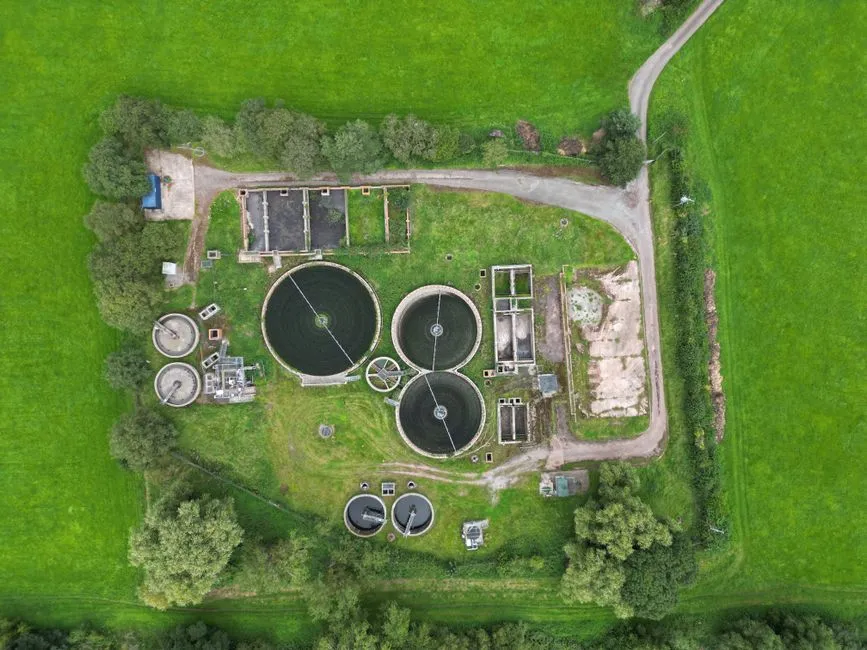
The choice should be made by matching the separation mechanism to the solids and the site constraints, not by selecting the smaller tank or the more familiar technology. DAF adds pressurized recycle, air saturation, bubble generation, and automatic skimming; gravity clarification requires that the solids demonstrate adequate settling behavior under the expected hydraulic and chemical conditions.
| Decision factor | Dissolved air flotation | Clarifier |
|---|---|---|
| Separation principle | Microbubbles attach to particles, increase buoyancy, and form a surface blanket. | Suspended solids settle under gravity, with lamella plates providing increased separation area. |
| Typical solids behavior | Strong fit for low-density fibers, fillers, colloids, and suspended solids near water density, subject to testing. | Most credible where settleable-solids performance is demonstrated. |
| Chemical conditioning | May require coagulation and flocculation to support attachment and stable floc. | May require conditioning when natural settling is inadequate. |
| Footprint and retrofit | Includes saturation and recycle equipment; modular arrangements can support retrofits. | Requires tank area and withdrawal or collection arrangements; suitability depends on existing civil works. |
| Sludge removal | Concentrated surface blanket is removed by skimming. | Sludge is withdrawn from the settling zone; lamella design changes the clarification arrangement. |
| Hydraulic variation | Performance depends on recycle flow, saturation, bubble generation, and flow distribution. | Performance depends on settling velocity, hydraulic loading, and sludge inventory. |
| Maintenance | Additional attention to recycle pumping, air system, nozzles, and skimming. | Attention to withdrawal, sludge management, fouling, and mechanical collection. |
| Downstream fit | Can precede biological treatment when primary solids removal is required. | Can provide primary solids removal where gravity performance is adequate. |
Ovivo’s Circular DAF uses pressurized saturation, circular flow distribution, microbubbles, and automatic surface-sludge removal. It also presents modular construction and retrofit integration as design strengths. Ovivo states that its circular format is designed for systems exceeding 80 feet in diameter; that is a vendor-specific product capability, not a universal DAF sizing rule.
For a lamella clarifier for gravity-based solids separation, HydropureWater’s verified catalog specifies surface loading rates of 20–40 m/h and chemical-consumption reduction of up to 30%. These figures require the manufacturer’s stated scope and test conditions before they are applied to mill wastewater. Neither technology has a supported universal ranking for footprint, reliability, or cost.
Size the System from a Mill-Wide Wastewater Profile
A defensible size comes from the verified wastewater profile, not from nominal catalog capacity. Establish average flow, peak hydraulic flow, batch or dump events, event duration, and clean-water losses from paper-machine and pulper operations before comparing DAF and clarification equipment.
| Step | Information to establish | Procurement output |
|---|---|---|
| 1. Characterize hydraulics | Average flow, peak flow, batch discharges, duration, and equalization behavior. | Design flow envelope and equalization requirements. |
| 2. Characterize solids | Total and suspended solids, particle-size distribution, fiber and filler content, settleability, and floc stability. | Measured separation load and test-duty basis. |
| 3. Test conditioning | Coagulant and flocculant demand and recovery across pH, temperature, and wastewater variability. | Chemical range, mixing basis, and consumption assumptions. |
| 4. Run representative testing | Bench or pilot work using representative normal and upset wastewater. | Observed solids-removal behavior and operating limits. |
| 5. Define acceptance | Agreed duty points, sample methods, test conditions, and performance criteria. | Supplier guarantee and acceptance protocol. |
| 6. Confirm hydraulics | Recycle, air saturation, tank distribution, sludge removal, and peak-flow response. | Final equipment size and ancillary-equipment list. |
HydropureWater’s automatic chemical dosing system for conditioned mill wastewater is tied to the need to define dosing from verified chemical demand rather than catalog assumptions. The verified DAF catalog lists 4–300 m³/h across 13 standard models; treat that as a screening reference only, then match the selected model to the measured load and operating envelope.
No defensible generic removal efficiency or guaranteed effluent value can be stated from the supplied research for an unspecified Salt Lake City mill. The pilot program should establish the accepted solids-removal duty, chemical use, hydraulic stability, sludge characteristics, and effects of upstream production changes before tank selection.
Fit the Clarifier into the Full Treatment Train
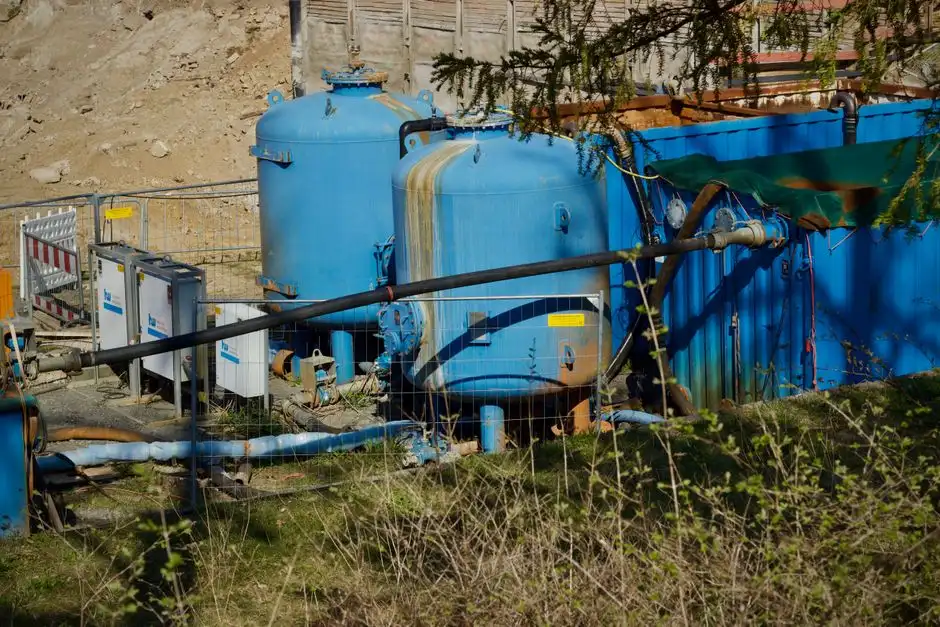
Primary clarification should be selected as part of a treatment train, not as an isolated tank. Ecologix identifies BOD, COD, color, and organic compounds alongside suspended solids, so removing fibers and fillers does not by itself demonstrate complete treatment or reuse suitability.
The process sequence should be reviewed as screening and fiber protection, equalization, conditioning, DAF or clarification, biological treatment for biodegradable organics, polishing or disinfection where required, and sludge dewatering. Ecologix describes DAF as a possible primary or secondary treatment solution, but its correct position depends on the mill process, biological capacity, and reuse objectives.
| Treatment-train stage | Primary decision | Interface to verify |
|---|---|---|
| Screening and fiber protection | Remove rags, plastics, and fibrous debris before fragile equipment. | Screen capacity, extracted-material route, and downstream access. |
| Equalization | Reduce production-driven flow and concentration variation. | Working volume, mixing, and controlled return to treatment. |
| Conditioning | Prepare solids for the selected separation mechanism. | Coagulant, flocculant, pH control, mixing, and dosing range. |
| DAF or clarification | Remove the measured suspended-solids fraction. | Guaranteed duty, hydraulic profile, sludge withdrawal, and controls. |
| Biological treatment | Remove biodegradable organics not resolved by primary separation. | Organic loading, inhibition risk, solids return, and hydraulic response. |
| Polishing and reuse | Meet the applicable discharge or reuse specification. | Permit, sewer requirements, reuse criteria, and residual contaminant tests. |
| Sludge dewatering | Prepare the selected sludge route for disposal or recovery. | Solids characterization, moisture content, cake handling, and equipment duty. |
DAF may produce a higher-volume or more concentrated skimmable blanket than the sludge stream from a clarifier, but the actual consequence must be measured. Compare solids concentration, polymer demand, moisture content, filter capacity, and disposal route rather than assuming either stream is easier to dewater.
HydropureWater’s plate and frame sludge dewatering system has a verified catalog range of 1–500 m² filtration area. Use that range to frame dewatering alternatives, not to prescribe an area for an unspecified mill. Where biological treatment and membrane-based polishing are also required, review the integrated membrane wastewater treatment configuration for treatment-train compatibility.
What Salt Lake City Buyers Should Confirm Before Ordering
A supplier should guarantee defined duty points using the factory’s verified flow and contaminant data, not quote a tank solely by nominal capacity. Require the proposed treatment train to be evaluated as one system because separation performance can change the organic and solids loads reaching biological treatment, while sludge properties affect the downstream dewatering decision.
| RFQ item | Evidence required from each bidder | Buyer check |
|---|---|---|
| Guaranteed duty | Flow, solids loading, wastewater characterization, and acceptance tests. | Does the guarantee represent the actual mill duty? |
| Process design | Treatment-train drawing, solids balance, hydraulic profile, civil or skid footprint, and utilities. | Are peak, batch, upset, startup, and shutdown conditions addressed? |
| Performance evidence | Test results on representative mill wastewater, including operating conditions and methods. | Is the evidence transferable from actual mill service rather than unrelated applications? |
| Controls and operation | Control philosophy, instruments, interlocks, alarm strategy, and operating sequence. | Can the sequence protect the downstream biological and sludge systems? |
| Whole-life comparison | Chemical consumption, compressed air, recycle pumping, sludge volume and moisture, maintenance access, spares, and training. | Are all operating consequences included in the comparison? |
| Local compliance and space | Review of current permit, sewer pretreatment requirements, reuse criteria, and available site space. | Does the proposal address the actual Salt Lake City site without inventing discharge limits? |
Reject performance claims that rely on unrelated food-processing or municipal installations without a justified transferability argument. For Salt Lake City projects, require the manufacturer to review the factory’s current discharge permit, sewer pretreatment requirements, water-reuse criteria, and available site space. The supplied research does not provide numeric local limits, so the permit and reuse specification must remain explicit procurement inputs.
Compare bids on the complete operating consequences rather than acquisition price alone: chemicals, compressed air, recycle pumping, sludge volume and moisture, maintenance access, controls, spare parts, and operator training. When evaluating an industrial DAF system for pulp and paper wastewater, require the same whole-train evidence used for a gravity alternative.
Frequently Asked Questions
How much does a DAF or clarifier cost for pulp-and-paper wastewater?
The supplied research contains no defensible DAF or clarifier price range for a Salt Lake City mill. Request a like-for-like quotation using verified average and peak flow, representative wastewater analysis, required performance targets, chemical-conditioning needs, civil or skid installation requirements, utilities, controls, and sludge handling. Do not compare prices until each offer defines the same duty and scope.
How should a pulp mill size a DAF or clarifier?
Do not select a universal tank size from flow alone. Establish peak and average flow, batch or dump events, solids loading, particle-size distribution, settleability, floc stability, and representative pH and temperature conditions. Then complete bench or pilot testing, define acceptance parameters, confirm recycle and hydraulic requirements, and match the verified duty to the selected equipment. The DAF versus clarifier selection for industrial wastewater illustrates why the decision must follow the characterization step.
What evidence should buyers request when selecting a wastewater equipment supplier?
Require performance evidence from representative mill wastewater, with test conditions, sampling methods, and operating points stated. Also request utility demands, control philosophy, startup and shutdown sequences, maintenance access, spares, operator training, and verified information about the downstream sludge stream. Ask specifically how chemical consumption, compressed-air demand, recycle pumping, and sludge volume and moisture were measured.
Does the chosen DAF or clarifier determine discharge or reuse compliance?
No. The separator removes part of the wastewater’s suspended-solids load, but that does not establish compliance for BOD, COD, color, dissolved organics, or reuse criteria. Obtain the factory’s current permit, sewer discharge or pretreatment requirements, and applicable water-reuse specification, then evaluate the complete treatment train. Equipment selection should follow those obligations and verified treatment performance, not substitute for them.