Which Treatment Is the Better Fit for Baytown Plastics and Rubber Wastewater?
For plastics and rubber factories in Baytown, choose DAF when wastewater contains floatable rubber residues, polymer fines, carbon black, oils, lubricants or conditioned solids; choose a clarifier when dense fillers and grit dominate and gravity settling is sufficient. Neither should be selected from the sector name alone: characterize flow, solids, FOG, settleability, buoyancy and discharge targets first. DAF commonly separates floatable solids faster in a compact footprint, while clarification is generally suited to simpler gravity duty. A hybrid train may be required for streams containing both floating and heavy solids.
Dissolved air flotation forms microbubbles that attach to particles or carry them to the surface for skimming. Clarification uses gravity to separate settleable solids from water. Ecologix’s selection guide describes DAF as appropriate for oils, greases and fine solids, while clarifiers suit heavier solids and cost-conscious gravity separation (Ecologix Systems, undated selection guide).
Neither route is complete wastewater treatment. DAF or clarification removes physical contaminants; dissolved surfactants, cleaners and biodegradable organics may require biological or polishing processes. Ecologix specifically states that DAF and clarifiers can be combined for complex streams.
| Plant condition | Initial equipment direction | Required confirmation |
|---|---|---|
| Floating rubber, polymer fines, oils, lubricants or conditioned solids are important | Evaluate the HydropureWater DAF system | Buoyancy, FOG, particle size, conditioning need and required removal |
| Dense fillers and grit dominate | Evaluate a lamella clarifier for heavy solids | Settleability, surface loading, sludge withdrawal and available footprint |
| Both light and heavy solids occur | Evaluate DAF followed by clarification, with equalization upstream | Composite and batch-specific wastewater analysis |
| Large debris is present | Add preliminary screening | Screen type and discharge route; see the rotary mechanical bar screen option |
Baytown location alone does not determine the route. Final selection depends on the actual production streams, wastewater analysis, effluent objectives, utilities, footprint, sludge route and future production changes.
Compare the Three Separation Routes
DAF, conventional clarification and lamella clarification remove solids by different mechanisms, so each should be matched to the contaminant behavior rather than to a generic flow rate.
| Design factor | DAF | Conventional clarifier | Lamella clarifier |
|---|---|---|---|
| Separation mechanism | Microbubbles carry particles to the surface for skimming | Hydraulic residence and settling area separate settleable solids | Inclined plates increase effective settling area |
| Best-fit contaminants | Oil, grease, rubber residues, polymer fines and conditioned solids | Dense fillers, grit and readily settleable solids | Dense solids requiring greater effective settling area |
| Footprint | Generally more compact for floatable-solids capture | Depends on settling area and hydraulic retention | Compact plate arrangement; verify the selected loading |
| Chemical use | Conditioning may be required for effective flotation | May be used where conditioning improves settling | HydropureWater catalog claims up to 30% lower chemical consumption than a conventional system |
| Energy profile | Requires air saturation, recycle and associated pumping | Depends mainly on pumping and sludge withdrawal | Depends on hydraulic design, pumping and sludge collection |
| Solids handling | Floatables are skimmed; heavy solids may collect at the bottom | Settled sludge is withdrawn from the bottom | Settled sludge is collected from the plate pack or hopper arrangement |
| Maintenance | Air system, recycle system, skimmer, auger and controls | Scraper, sludge mechanism, tank and controls | Plate pack, scraper, sludge mechanism and controls |
| Downstream fit | Useful ahead of clarification when floatables are removed first | Useful after DAF to remove residual heavy solids | Useful where dense-solids separation must fit a constrained footprint |
Clearwater Industries states that its DAF systems use 30–50 micron microbubbles and a paddle skimmer to remove floated solids (Clearwater Industries, April 27, 2026). The same source states that heavier solids settle into the DAF bottom collection zone and require auger removal. DAF therefore does not remove the need for a solids-management plan.
Material selection also belongs in the comparison. Clearwater Industries lists 304SS as standard construction, with 316SS, polypropylene and other materials available according to the application (Clearwater Industries, April 27, 2026). For lamella equipment, HydropureWater’s catalog reference specifies 20–40 m/h surface loading and up to 30% lower chemical consumption; those claims apply to the cataloged lamella clarifier system and require confirmation for the project wastewater.
Map Plastics and Rubber Wastewater to Contaminant Behavior
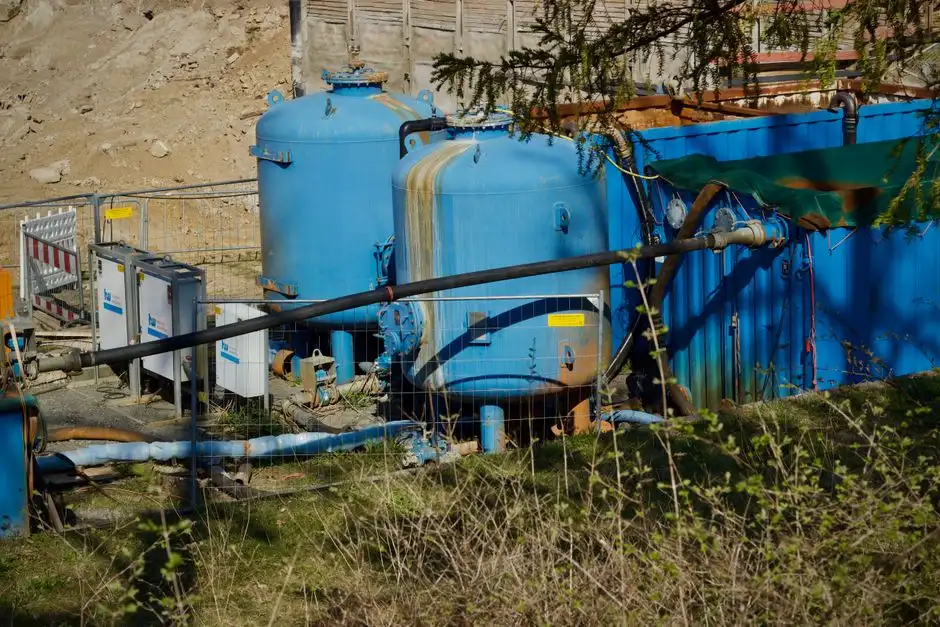
Contaminant behavior, not the label “plastics wastewater” or “rubber manufacturing wastewater,” should determine the separation route.
| Contaminant or waste source | Likely behavior | Engineering implication |
|---|---|---|
| Polymer or rubber fragments | Buoyant, dense or variable with product and formulation | Measure buoyancy and settleability; DAF is favorable when material floats |
| Carbon black | Finely suspended; behavior depends on particle properties and conditioning | Obtain particle-size distribution and flotation or settling test data |
| Mineral or glass fillers | Typically dense and negatively buoyant | Clarification is the starting point if settleability tests confirm separation |
| Release agents | Variable; may interfere with flotation or form emulsions | Identify products and assess conditioning requirements |
| Lubricants and oils | Often floatable; emulsified portions may behave differently | Measure FOG, identify free versus emulsified oil and evaluate recovery |
| Cleaning chemicals and dissolved surfactants | Dissolved or colloidal rather than physically settleable in many cases | Plan downstream biological or polishing treatment |
| Grit and heavy solids | Normally negatively buoyant | Provide solids withdrawal and disposal capacity |
| General suspended solids | Variable | Determine whether conditioning can make flotation or gravity settling reliable |
Do not rely on one combined wastewater sample. Identify the production line, batch, product grade and cleaning cycle associated with each sample. Ask the laboratory whether recovered solids are buoyant, neutrally buoyant or negatively buoyant, and request a settleability assessment before assuming a clarifier will work.
DAF is favorable for floating rubber residues, oils, greases and fine or conditioned solids. Clarification is favorable for heavy fillers, grit and dense solids that settle readily. Emulsified oils and release agents may require conditioning, while dissolved surfactants and cleaners may require downstream treatment.
The characterization program should also cover production, washdown, dumping and storm-water contributions as separate streams where possible. The supplied research does not establish a Baytown flow range for plastics or rubber plants, so a defensible flow series must come from plant records and site measurement.
Use the Wastewater Analysis to Size the Treatment
A valid equipment size requires a flow series and contaminant characterization; quoting from average flow alone will not define a reliable treatment train.
| Supplier input | Why it is required | Information to request |
|---|---|---|
| Flow | Defines hydraulic loading and equalization | Average and peak flow, batch dumps, washdown peaks and diurnal variation |
| Solids and FOG | Defines separation duty and sludge loading | TSS, FOG, particle-size distribution and representative laboratory results |
| Separation behavior | Determines whether flotation or gravity is credible | Density, buoyancy and settleability assessment |
| Process chemistry | Influences conditioning and material compatibility | pH, temperature and cleaning-chemical information |
| Performance requirement | Sets the design objective | Required effluent or sewer-discharge profile |
| Site constraints | Determines executability | Footprint, utilities, controls, sludge route, odors and growth plan |
Separate equalization from separation. Document how variable production washes and dumps will be blended before DAF or clarification. For DAF, require the supplier to define the recycle, saturation and skid arrangement. Clearwater Industries states that its COMPACT DAF reference handles flows of 66 GPM or less per single skid and uses a modular two-skid arrangement for larger flows (Clearwater Industries, April 27, 2026).
For clarification, require documentation of surface loading, hydraulic retention, sludge withdrawal and the selected plate or settling geometry. HydropureWater’s lamella clarifier catalog reference specifies 20–40 m/h surface loading; the proposal should state how that basis applies to the plant’s measured flow and settling characteristics.
Where waste characteristics vary, request pilot results or representative jar and settling tests rather than transferring removal claims from another industry. Also place downstream constraints in the supplier scope: available area, compressed air, electrical service, chemical storage, sludge disposal, odor controls, controls integration and future production growth. An automatic chemical dosing and conditioning system should be specified only after chemical selection and compatibility review.
Compare Lifecycle Cost Without Hiding the Auxiliaries
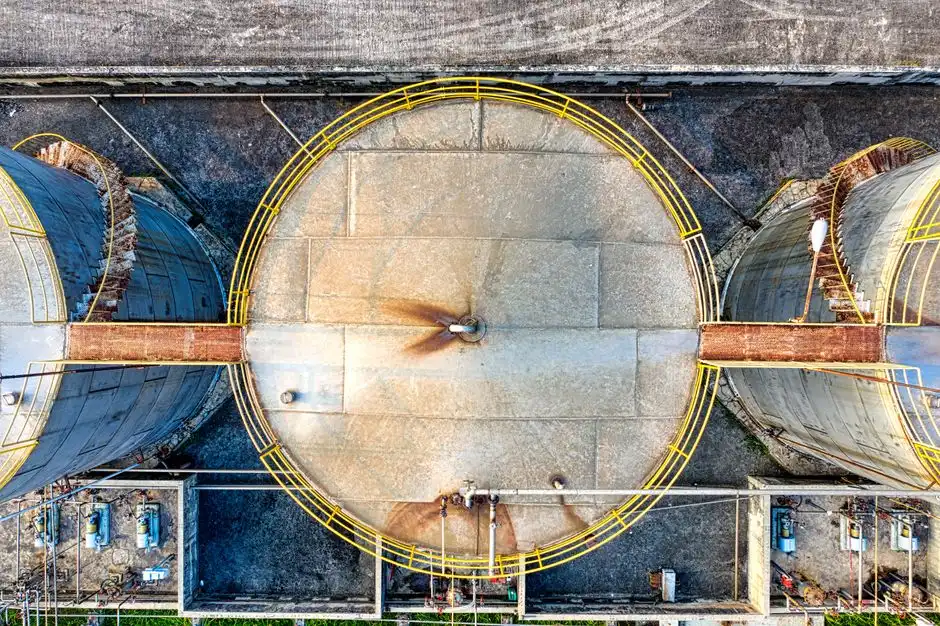
The comparison must cover the complete treatment package because DAF’s air, recycle and conditioning auxiliaries change both capital scope and operating cost.
| Cost or scope item | DAF | Conventional clarification | Lamella clarification |
|---|---|---|---|
| Core separation equipment | Flotation tank, saturation and recycle system, surface skimmer | Settling tank, scraper and sludge withdrawal | Plate pack, tank, scraper and sludge collection |
| Common pretreatment | Equalization and screening | Equalization and screening | Equalization and screening |
| Conditioning | Potentially required for flotation performance | Only where needed for settling | Chemical demand must be established for the application |
| Utilities | Compression, recycle pumping and electrical demand | Pumping and electrical demand | Pumping and electrical demand |
| Solids handling | Skimming, bottom-solids removal and disposal | Sludge withdrawal and disposal | Sludge withdrawal and disposal |
| Site and controls | Odor control, access and plant integration | Access, odor control and plant integration | Access, odor control and plant integration |
Ecologix describes clarifiers as generally having lower operating costs, while DAF may be more cost-effective for specific oil-and-grease applications (Ecologix Systems, undated selection guide). This is a directional industry comparison, not a Baytown quotation.
Ecologix gives an example of 95% oil-and-grease removal by DAF compared with 70% for a clarifier in a food-processing application, and separately reports 90% solids reduction for a clarifier in mining. The excerpt gives no test conditions, so those values must not be represented as expected plastics-and-rubber performance (Ecologix Systems, undated selection guide).
Require bidders to price conditioning chemicals, compressed-air demand, standby power, operator labor, sludge disposal and maintenance separately. Compare those inputs over the factory’s operating plan rather than using tank price alone. The supplied sources contain no comparable 2026 cost matrix for Baytown, so a defensible purchase price or payback period cannot be stated without quotations.
Build a Hybrid Treatment Train When One Unit Cannot Do Everything
A plastics or rubber plant with both floatable and heavy solids can justify a train that uses DAF and clarification for their distinct separation duties.
A practical sequence is equalization, screening, chemical conditioning where required, DAF for floatables, clarification for residual heavy solids, biological treatment for biodegradable organics, and filtration or disinfection if the permit requires them. Screening limits debris loads before the HydropureWater DAF system, while clarification can follow flotation to remove material that does not float.
Ecologix states that DAF and clarifiers can be combined to address complex wastewater streams. The academic study on DAF combined with MMBBR concerns synthetic oily wastewater, so it is not performance evidence for plastics or rubber plants.
Chemical selection must follow jar testing and a compatibility review. An automatic chemical dosing and conditioning system may support pH adjustment, coagulation or flocculation, but its scope should not pre-empt the wastewater study. Where biological treatment is needed, define the downstream requirement before selecting an integrated wastewater treatment system.
DAF float and bottom solids both require a disposal route. If the selected equipment produces sludge that must be dewatered, a plate-and-frame filter press can be evaluated downstream; it is not automatically required. The lamella clarifier for heavy solids should be positioned as a solids-separation stage, not as complete treatment.
Qualify the Vendor and Pilot Before Ordering
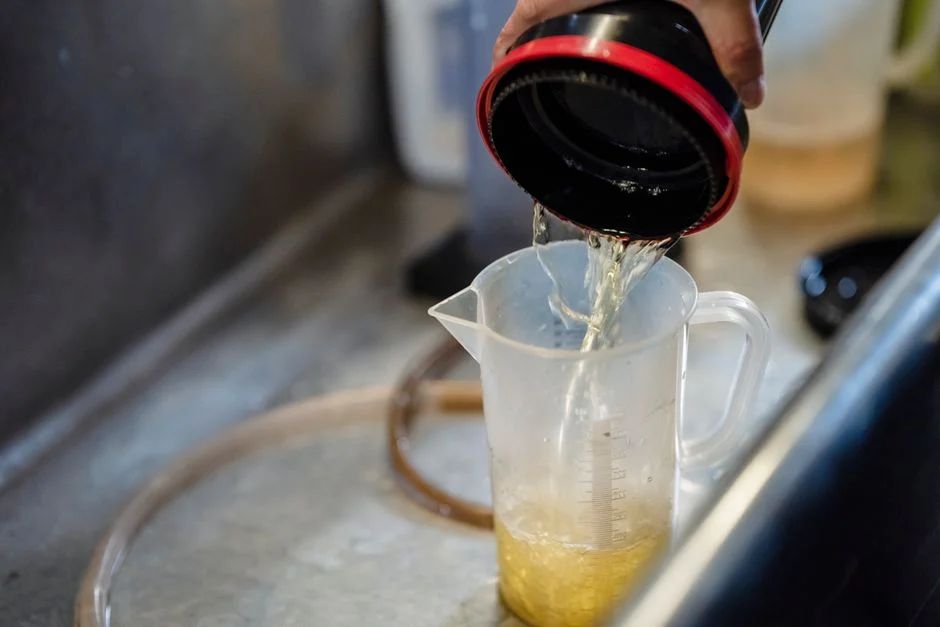
A proposal should be tied to the plant’s wastewater characterization, measured flow curve, discharge target and application-specific test results.
- Require guaranteed operating parameters and a guarantee for the contaminant relevant to the application, rather than a generic removal percentage.
- Request turndown provisions, control philosophy, material selection, general arrangement drawings, process drawings and electrical/instrument documentation.
- Obtain utility and footprint details, including compression, recycle pumping, chemical storage, sludge handling, access clearances and controls integration.
- Confirm corrosion resistance for site conditions and process chemistry. Clearwater Industries lists 304SS as standard for its DAF systems and offers 316SS, polypropylene and other materials (Clearwater Industries, April 27, 2026).
- Verify commissioning, operator training, spare-parts support and supplier service access to the Baytown site.
Require pilot or bench-test data from the plant’s representative wastewater whenever the stream varies. Ask the bidder to explain how its proposed DAF or clarifier responds to batch dumps, washdown chemistry and production changes.
EPA publication EPA-625/1-83-015, Design Manual for Municipal Wastewater Stabilization Ponds, dates from October 1983. Treat it as historical process-design context, not as proof that an offered system complies with current Baytown, state or permit requirements. The current permit and sewer-discharge profile remain the controlling inputs.
Frequently Asked Questions
Is DAF or a clarifier cheaper for a Baytown plastics or rubber plant?
There is no defensible 2026 dollar comparison in the supplied research. Ecologix describes clarifiers as generally having lower operating costs, while DAF may be cost-effective for specific oil-and-grease duties (Ecologix Systems, undated selection guide). Ask each bidder to price air compression, recycle pumping, chemicals, standby power, labor, maintenance and sludge disposal separately, then compare those costs over the factory’s operating plan.
What wastewater data is needed before sizing DAF or a clarifier?
Require average and peak flow, batch and washdown variation, TSS, FOG, particle-size distribution, buoyancy or settleability, pH, temperature and the required discharge profile. For a DAF proposal, also require the recycle and saturation arrangement; for clarification, require the surface-loading and sludge-withdrawal basis. HydropureWater’s lamella catalog reference specifies 20–40 m/h surface loading, but its applicability must be checked against the plant’s flow and solids behavior.
How should a supplier be selected for primary treatment equipment?
Ask for application-specific test data, drawings, utility demand, controls scope, sludge handling, installation details, commissioning, training and service support. Require the proposal to reference the plant’s measured wastewater and discharge target, not a removal percentage transferred from food processing, mining or another example.
Can DAF and clarification together satisfy the plant’s discharge requirements?
Not necessarily. DAF and clarification are physical separation steps, and dissolved surfactants, cleaners or biodegradable organics may require biological or polishing treatment. Ask the selected supplier to check the complete train against the plant’s actual permit and sewer requirements. When both floating and heavy solids are present, DAF followed by clarification is technically defensible, but the final performance must be established with representative wastewater data.