DAF or ETP: Which Treatment Does the Factory Actually Need?
A Jeddah factory generally needs a dissolved air flotation system when the main treatment objective is to remove recoverable oil, grease, suspended solids or colloidal material. It needs a complete industrial effluent treatment plant when biological COD/BOD removal, regulated discharge or water reuse is required. DAF is physicochemical clarification, not a substitute for biological treatment, polishing and sludge handling. Selection should follow representative wastewater results, measured peak flow, production-event data and the receiving or reuse target—not flow capacity alone.
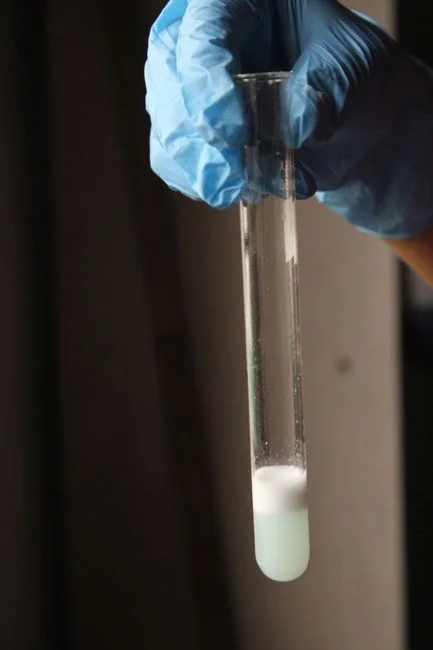
DAF works by dissolving air under pressure and releasing microbubbles in a flotation tank. The bubbles attach to suspended solids, oil, grease and flocculated colloids, which float and are removed by skimming. Clear-Ion’s Saudi DAF system overview, published in 2026, describes this as a clarification process for suspended solids, oils and greases.
The practical test is the required outcome. If treatment stops at oil-and-solids interception, assess a standalone industrial DAF system for suspended solids and FOG removal. If the factory must reduce soluble biodegradable organics, stabilise the effluent, meet a defined discharge condition or produce reusable water, assess an ETP. DAF can protect downstream biological and membrane processes by removing FOG and excessive solids, but it does not remove the full soluble COD/BOD load.
Keep two decisions separate. DAF, MBR and UF are treatment technologies; standalone equipment, a packaged ETP and a civil-built ETP are delivery formats. Any of the three formats can include DAF. The best DAF unit selection framework therefore helps identify technology duty, while procurement must separately establish installation, civil, controls and downstream scope.
| Decision point | Assess DAF | Assess a complete ETP |
|---|---|---|
| Primary objective | Intercept or recover oil, FOG, suspended solids and colloidal material | Reduce soluble COD/BOD, stabilise effluent, support discharge or reuse |
| Wastewater character | High removable solids or floatable contamination | Biodegradable dissolved organics remain after physical separation |
| Required scope | Flotation, chemical dosing, sludge removal and equalisation | DAF where suitable, biological treatment, solids separation, required polishing, disinfection and sludge handling |
| Delivery form | Standalone unit or DAF within a packaged or civil-built train | Packaged ETP or site-integrated civil-built ETP |
Match the Wastewater Profile to the Treatment Objective
Representative wastewater analysis determines the unit operations, chemical demand and guarantee basis before a supplier selects equipment. The issue to bidders should include COD, BOD, TSS, FOG or oil and grease, pH, temperature and conductivity, with sampling across normal production as well as cleaning, batch-discharge and other abnormal events. Flow records should accompany the laboratory results.
For food, beverage and paper production, high suspended-solids and FOG streams commonly begin with DAF. Spans’ Saudi food-sector data, cited in HydropureWater’s 2026 Dammam ETP and DAF guide, report BOD of 500–5,000 mg/L and FOG of 50–500 mg/L for dairy, meat, poultry and confectionery wastewater. The guide identifies DAF as the typical primary stage for FOG and TSS removal, followed by biological treatment.
HydropureWater reports DAF performance of up to 90% TSS removal and up to 95% FOG removal when coagulation is properly controlled, according to its 2026 Dammam guide. These are supplier-stated performance figures, not universal guarantees or a substitute for wastewater-specific testing. A bid should state the tested wastewater, operating condition and compliance method behind any removal claim.
pH adjustment and chemical dosing are part of the flotation process, not optional accessories. Coagulants and flocculants help aggregate fine particles so they attach more effectively to bubbles; pH adjustment supports chemical performance and protects downstream biological treatment. Specify automatic chemical dosing for coagulation and pH control as part of the complete duty rather than treating chemical consumption as an operating detail outside the bid.
| Parameter or condition | Information needed for selection | Treatment implication |
|---|---|---|
| COD and BOD | Representative results and soluble versus particulate split where available | Establish whether biological treatment is required after DAF |
| TSS and FOG | Concentrations across production and discharge events | Define coagulation, flotation duty and recovered-sludge scope |
| pH | Operating range and discharge or reuse target | Determine acid or alkali adjustment requirements |
| Temperature and conductivity | Measured operating range | Check biological activity, membrane behaviour and materials |
| Flow | Average, measured peak and batch-discharge profile | Size equalisation and treatment capacity |
Build the Correct Treatment Train for a Jeddah Factory
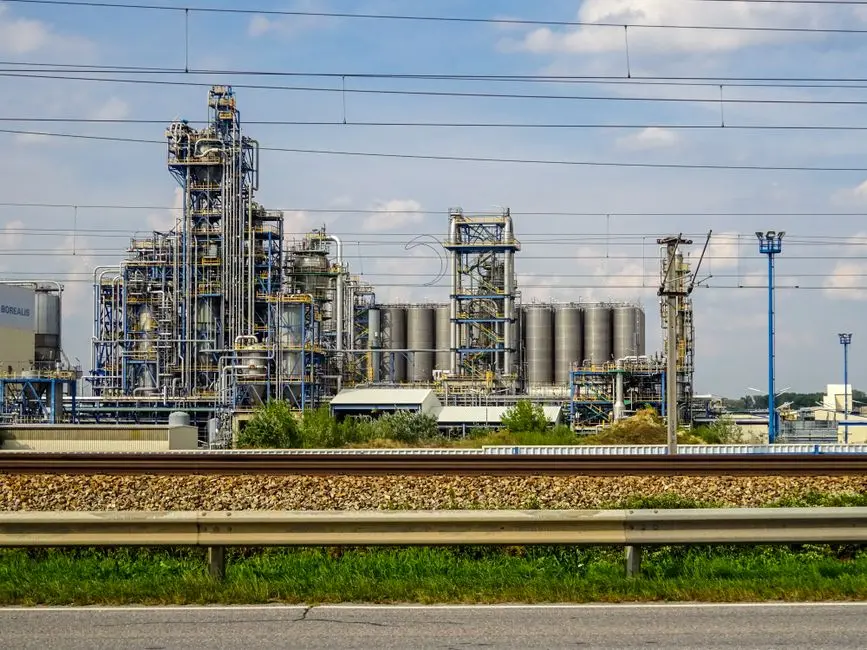
A complete treatment train should follow the wastewater from inlet to final disposal or reuse, with each stage solving a defined pollutant or hydraulic duty. A common sequence is screening and equalisation; pH adjustment and chemical dosing; DAF; biological treatment; clarification or MBR solids separation; optional UF/RO polishing; sludge dewatering; and disinfection. Not every stage is mandatory: the final sequence depends on the factory stream, receiving route and reuse quality.
- Screen and equalise the incoming flow, including identifiable batch-discharge periods.
- Adjust pH and dose the chemicals required for coagulation and flotation.
- Remove floatable oils, FOG, solids and colloids by DAF where justified.
- Remove residual soluble biodegradable organics through biological treatment where required.
- Separate biological solids by clarification or an MBR process.
- Add disinfection and UF/RO polishing only where the discharge or reuse brief requires them.
- Thicken and dewater sludge before the agreed disposal route.
Spans describes containerised ETPs covering 10–500 m³/day that combine screening, physicochemical treatment, DAF, MBBR biological treatment, clarification, sand filtration and disinfection, as reported in HydropureWater’s 2026 Dammam guide. That example demonstrates the scope of a packaged ETP; it does not establish the required capacity or treatment target for a Jeddah factory.
Where biological treatment and membrane solids separation are required, HydropureWater lists an MBR integrated wastewater treatment system covering 10–2,000 m³/day and using submerged PVDF membranes. This is an available configuration range, not a recommendation without wastewater and hydraulic verification.
For sensitive reuse or a reverse-osmosis pretreatment duty, the supplier’s UF system for membrane pretreatment is specified at 2,000–40,000 L/h with 0.03-micron PVDF membranes, turbidity acceptance up to 300 ppm, automatic backwash and air scour. RO should be specified only after the reuse quality and pretreatment requirements are defined.
DAF and sludge dewatering remain separate equipment duties. A plate-and-frame filter press for sludge dewatering is available with 1–500 m² filtration area and manual, hydraulic or automatic PLC operation. Flotation creates sludge; it does not remove the obligation to thicken, dewater, store and dispose of it.
| Train stage | Function | Bid information required |
|---|---|---|
| Pre-treatment and equalisation | Screen incoming flow and moderate variable loads | Flow profile, storage basis, screen duty and bypass arrangements |
| Chemical dosing and DAF | Remove floatable oils, FOG, solids and colloids | Selected duty, chemical assumptions, air-saturation method and sludge yield |
| Biological treatment and solids separation | Remove biodegradable COD/BOD and separate biomass | Process type, loading basis, aeration, sludge production and effluent target |
| Polishing and disinfection | Meet the specified discharge or reuse condition | Required analytes, membrane duty, controls and acceptance testing |
| Sludge handling | Reduce sludge volume before disposal | Feed characteristics, dewatering mechanism, cake handling and disposal route |
Size Against Peak Flow, Variable Loads and Saudi Operating Conditions
Neither DAF nor ETP selection can be completed from average daily flow alone; measured peak flow, batch discharges, wastewater characteristics and the operating envelope determine the duty. HydropureWater’s DAF catalogue spans 4–300 m³/h across 13 standard models, according to its 2026 Dammam guide, but that catalogue range is not a universal sizing rule.
Give bidders a production-event flow profile showing normal operation, cleaning, start-up, shutdown and any batch release. Define whether each quoted hydraulic figure represents average, peak or instantaneous flow. Equalisation should be assessed against the selected treatment capacity and the actual discharge pattern, rather than added as an unspecified tank in the quotation.
Spans reports Saudi influent temperatures of 35–45°C, as cited in HydropureWater’s 2026 guide. The guide notes that warmer wastewater can accelerate microbial metabolism while increasing MBR membrane fouling and ammonia-stripping requirements. Temperature therefore belongs in the biological and membrane design basis, not only the operator’s daily log.
A comparable bid should identify the selected flow duty, hydraulic loading, chemical demand, electrical demand, air-saturation method and performance assumptions. It should also state how the supplier handles peak or intermittent operation. The DAF process and selection guide provides a useful technical reference, but the proposal must remain tied to the factory’s submitted dataset.
Request confirmation of whether equalisation is upstream, how hold-up is calculated, and how the system responds when incoming flow exceeds the guaranteed treatment rate. For an ETP, request the corresponding biological loading basis, aeration design, membrane flux assumptions and solids inventory. These documents allow the buyer to compare operating consequences rather than compare tank names.
Compare Supplier Quotes by Scope, Delivery Format and Guarantee
A standalone DAF has the narrowest process scope; a packaged ETP may integrate a wider treatment sequence under one supply contract; a civil-built ETP is a site-integrated arrangement with defined interfaces between equipment and civil construction. DAF, MBR and UF can be incorporated into either a packaged or civil-built plant, so delivery format must not be confused with process selection.
Issue every bidder the same wastewater dataset, flow basis, operating conditions and final performance target. The HydropureWater Saudi industrial ETP and DAF selection guide makes the same point for 2026: a comparable ETP bid must price and guarantee the complete treatment scope.
Require each quotation to separate equipment; civil works; installation; commissioning; initial chemicals; power; controls; operator training; maintenance; spare parts; and sludge disposal. It should also list the included biological process, clarification or MBR separation, disinfection, sludge dewatering and optional UF/RO polishing. An equipment-only offer may omit pumps, valves, local instrumentation, wiring, civil interfaces and downstream costs.
The guarantee should name the inlet dataset, sampling point, parameter, limit, test method and acceptance condition. If the reuse target is non-potable cooling or cleaning, the parties must define the relevant quality criteria rather than treating “ETP water” as automatically reusable. Emvees, as cited in HydropureWater’s 2026 guide, states that treated ETP water can often serve non-potable cooling and cleaning, but feasibility must be confirmed for the specific stream.
| Bid item | Minimum information to request | Commercial risk if omitted |
|---|---|---|
| Design basis | Same wastewater dataset, flow profile, temperature, treatment target and acceptance method | Offers are not technically comparable |
| Process scope | DAF, biological treatment, solids separation, polishing, disinfection and sludge handling | Hidden downstream equipment and operating costs |
| Delivery format | Standalone, packaged or civil-built; responsibility matrix for interfaces | Civil, installation and supply gaps |
| Operating inputs | Chemical demand, power, air, spare parts, operator training and maintenance | Lifecycle cost is understated |
| Performance guarantee | Parameter, limit, test method, conditions and remedy | Ambiguous acceptance and liability |
Frequently Asked Questions
What does a factory in Jeddah need to request before choosing a DAF or ETP?
Request representative wastewater results for COD, BOD, TSS, FOG or oil and grease, pH, temperature and conductivity, together with average and peak flow, batch-discharge records and the final discharge or reuse target. This evidence is needed to determine whether DAF alone addresses the objective or whether biological treatment, solids separation, polishing, disinfection and sludge handling must also be included.
How much should a standalone DAF or packaged ETP cost?
No supported quotation or generic price is available for the factory described, so a defensible budget cannot be stated from flow alone. Request itemised offers for the same wastewater dataset and performance target, separating equipment, civil works, installation, commissioning, chemicals, power, controls, training, maintenance, spares and sludge disposal. Compare the complete scope rather than accepting a tank or flotation-equipment price as the whole treatment cost.
Can HydropureWater’s 4–300 m³/h DAF range be used to select the correct model?
No. HydropureWater’s 2026 Dammam guide identifies 4–300 m³/h across 13 standard models as a catalogue range, not a universal sizing rule. The selected duty must be checked against measured peak flow, batch discharges, hydraulic retention requirements, wastewater characteristics and the operating envelope.
Should the buyer specify standalone DAF, a packaged ETP or a civil-built ETP?
Start with the required treatment result and site interfaces, then choose the commercial format that delivers it. A standalone DAF suits narrowly defined oil-and-solids interception; a packaged ETP can consolidate a wider sequence under one contract; a civil-built ETP requires explicit equipment, civil, installation and commissioning interfaces. Obtain each bidder’s process list, battery limits and guarantee so that a lower equipment price is not masking omitted treatment or sludge-handling scope.
Is treated ETP effluent suitable for factory reuse?
Reuse feasibility must be confirmed for the specific stream and intended application. Spans and Emvees information cited in HydropureWater’s 2026 guide supports non-potable reuse in appropriate cases, including cooling and cleaning, but it does not establish suitability for every factory. Define the receiving use and required water-quality parameters, then include any necessary polishing and acceptance testing in the ETP scope.