What System Does a Bucharest Factory Actually Need?
A Bucharest factory usually chooses between a DAF machine and a complete ETP by defining four inputs: wastewater composition, average and peak flows, the discharge or reuse route, and available infrastructure. DAF is normally the physical solids-removal stage; an industrial effluent treatment plant is the complete train needed to achieve the required final water quality. Select the smallest train that meets the permit or reuse specification during representative production and discharge peaks. A DAF retrofit fits oily or solids-heavy wastewater requiring pretreatment, while a complete ETP adds biological treatment, clarification and other stages where the final outcome demands them.
Pressurized air in a DAF unit creates microbubbles that attach to suspended solids and small oil droplets. The combined particles rise and are skimmed from the surface, while clarified water leaves beneath an overflow weir. That makes DAF useful for factory wastewater pretreatment where suspended material, colloidal particles, FOG, or oil could impair downstream biological treatment.
The equipment package is only part of the decision. A factory should distinguish product capacity from whole-plant performance: equalization, storage, pumping, chemical dosing, controls, sludge handling, electrical supply and future expansion can determine whether the installed system works under real operating conditions. The 2026 DAF unit engineering and cost decision framework provides a useful basis for this separation before any proposal is requested.
DAF Unit or Full Industrial ETP?
DAF alone is a pretreatment option, not a guaranteed final treatment solution; a complete ETP is required when biological treatment and controlled final effluent are part of the compliance or reuse objective. The correct choice follows from the contaminants, hydraulic variation and required outcome—not from the size of the equipment catalogue.
| Option | When it fits | Process scope | Key limitation |
|---|---|---|---|
| DAF-focused retrofit | Wastewater contains suspended solids, colloidal material, FOG, oil and grease that must be removed before another process. | Equalization where needed, chemical conditioning, DAF, sludge collection and transfer. | Does not, by itself, establish biological treatment or final effluent performance. |
| DAF plus biological treatment | Oily or solids-rich wastewater also contains biodegradable organic load and requires biological treatment downstream. | DAF followed by an appropriate biological reactor and clarification; polishing may be added. | DAF must protect the biological stage from excessive oil and solids loading. |
| Full industrial ETP | The factory needs biological treatment, several discharge parameters, a controlled final effluent or a defined reuse route. | Physical-chemical pretreatment, biological treatment, clarification and optional tertiary or reuse stages. | Requires more scope, site works, controls and operating management. |
DAF can remove emulsified oil and fine solids before they reach biological reactors in refinery-type applications. A Quora engineering answer published on 15 July describes DAF as a protective barrier: emulsified oil can coat biomass, reduce oxygen transfer and damage the microbial population. It remains a pretreatment stage, not a substitute for biological treatment.
The industrial DAF selection guide explains the equipment decision, while the DAF process-mechanism guide covers flotation performance considerations. Neither establishes a Romanian discharge limit. The buyer must obtain the factory’s current authorization, identify the receiving water and confirm the applicable permit conditions before assuming either guaranteed performance or regulatory compliance.
Romanian Projects Show Why Treatment Trains Differ
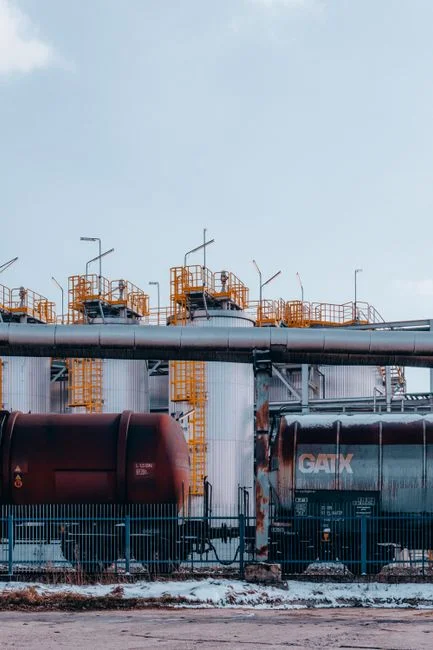
Business Review reported on 9 December 2020 that two Romanian industrial wastewater projects required different treatment architectures because their wastewater loads and final-water objectives differed.
| Project | Reported wastewater and treatment | Outcome and project status |
|---|---|---|
| Clean Tech International, Ciulnita | Existing plant rehabilitation and expansion for a high COD load of 16,000 mg/l, using DAF and membrane bioreactor technology. Total flow was 420 m³/d. | Part of the flow was purified by reverse osmosis and reused as boiler feed water. The turnkey project had commissioning scheduled for the end of 2021. |
| GreenFiber International, Buzau | Modernization of physical-chemical and biological stages, with screening, secondary clarifiers and pumping stations added to treat a 2,500 m³/day wastewater stream. | The turnkey project had commissioning scheduled for the end of 2021. |
These examples illustrate treatment-train design based on specific project requirements. Clean Tech combined solids removal, biological treatment and reverse osmosis because the application combined a high COD load with boiler-feed reuse. GreenFiber retained physical-chemical and biological treatment while adding screening, clarification and pumping capacity.
Business Review also reported a combined contract value of more than €5 million for the two turnkey projects. That figure covered both projects and their wider scopes; it is not a DAF price or a current Bucharest budget. Retrofit and greenfield comparisons must include civil works and auxiliary systems, not only the main treatment machine. For current project selection, the factory ETP and DAF selection guide provides a transferable decision structure, but the Romanian authorization and current site data remain controlling.
Match the Treatment Train to the Factory
Factory sector determines which contaminants must be removed first, but actual wastewater analysis must determine the final configuration.
| Factory profile | Train to evaluate | Selection question |
|---|---|---|
| Food and protein processing | Screening and equalization, physical-chemical pretreatment, DAF for FOG and solids, then biological treatment; optional polishing for reuse. | Does the wastewater contain variable FOG, high COD or washdown discharges that could overload biological treatment? |
| Recycling and fibre production | Screening, physical-chemical treatment, biological treatment and secondary clarification, with auxiliary pumping and sludge handling. | Does the stream require the GreenFiber-type combination of physical-chemical and biological stages, or is a different pretreatment route justified? |
| Metalworking and oily industry | DAF for oil, grease and suspended material, followed by biological, filtration or polishing stages if required. | Is DAF adequate as pretreatment, and what final parameters must the receiving route enforce? |
| Factories seeking industrial water reuse | Clarified or biologically treated water, followed by the treatment required for the intended application; RO only where the required quality justifies it. | Will the water enter process equipment, boiler feed or another reuse application, and what water-quality specification governs each destination? |
The Clean Tech DAF–MBR configuration provides context for a protein-processing site with high COD and boiler-feed reuse, but it is not a universal recipe. The dairy wastewater DAF design guide illustrates why food-sector applications require attention to FOG and operating variability. The DAF system specifications provide further equipment-selection detail.
For every sector, request analysis of COD, oil and grease, suspended solids, pH, toxicity or biological-inhibition indicators, flow variability and the destination of the treated water. These results connect the factory’s production activity to the treatment train rather than relying on a generic sector template.
Size the System from Real Operating Data
DAF unit sizing and whole-plant capacity must be based on verified peak flow and wastewater character; an equipment catalogue does not establish the required hydraulic or treatment performance.
| Input | What the supplier needs | Why it affects selection |
|---|---|---|
| Representative samples | Samples across production, cleaning and discharge cycles, including batch events. | An annual average can conceal load peaks, FOG releases and variable COD. |
| Hydraulic profile | Average and peak flow, operating hours, batch-discharge volumes and future production changes. | DAF sizing, equalization and biological reactor loading must address representative peaks. |
| Wastewater characterization | COD, suspended solids, oil and grease, pH, temperature and relevant toxicity or inhibition indicators. | These results determine pretreatment, chemical demand and biological feasibility. |
| Required outcome | Permit parameters or water-quality targets for discharge, process reuse or boiler feed. | The final specification determines whether filtration, membranes, disinfection or other polishing is needed. |
The industrial DAF system catalogue covers 4–300 m³/h across 13 standard models. This is a product range, not a universal sizing rule. The integrated MBR wastewater treatment system range covers 10–2,000 m³/day for applications combining biological treatment and membrane filtration below 1 micron.
Ask the supplier to state which capacity belongs to the main product and which belongs to the complete installation. Storage, equalization, pumping, controls, power, sludge handling and expansion allowances must be shown separately; otherwise, two nominally similar offers may have different whole-plant performance.
Plan Retrofit, Greenfield and Water Reuse
A defensible proposal separates equipment scope from the engineering required to deliver a working treatment plant.
- Retrofit: Record the existing process train, pipework, footprint, utilities, controls and measured performance. Identify constraints imposed by factory operation, including shutdowns, restricted access and production continuity.
- Greenfield: Include preliminary engineering, civil works, equipment, installation, commissioning, operator training and long-term spare parts. A main-unit price does not represent this installed scope.
- Industrial water reuse: Attach a water-quality target to every destination. In the Clean Tech project reported by Business Review on 9 December 2020, reverse osmosis followed biological purification and part of the 420 m³/d flow was reused as boiler feed water.
- Residual handling: Include DAF sludge or floated-solids collection, thickening, dewatering, storage and disposal. Chemical conditioning should be considered with the automatic chemical dosing system, while dewatering may require equipment such as a plate-frame filter press.
For reuse projects, do not specify reverse osmosis merely because water reuse is planned. Establish what the receiving equipment requires, then identify the least demanding complete route that reliably achieves that specification.
Questions to Ask Before Ordering an ETP or DAF Supplier
A supplier selection should be tested against treatment performance, operating conditions, installed scope and regulatory responsibility.
| Question | Evidence requested |
|---|---|
| What performance is being guaranteed? | Test parameters, influent limits, sampling conditions, acceptance criteria and measurement methods. |
| How has peak and variable operation been addressed? | Design basis, equalization assumptions, batch-discharge controls, shutdown and restart provisions, and growth allowance. |
| What is included in the offer? | Equipment, construction materials, electrical and control requirements, civil works, installation boundaries, commissioning tests, training, warranty and spare-parts support. |
| How will compliance risk be managed? | The authorization and receiving-water constraints addressed by the proposed train, supported by an independent review where the compliance boundary is complex. |
Ask the supplier to explain operating implications as well as capital cost: chemical consumption, sludge production, energy demand, operator involvement, maintenance access and replacement strategy. The DAF system engineering guide supports technical review of the proposed principles.
Reject any proposal that promises compliance without identifying the actual Romanian authorization boundary. Process capability, equipment availability and regulatory acceptance are separate checks.
Frequently Asked Questions
What budget should a Bucharest factory allow for an ETP or DAF system?
There is no defensible current price without a defined flow, wastewater analysis and scope. Business Review reported a combined value of more than €5 million for two Romanian turnkey projects in December 2020,
Frequently Asked Questions
How much does an industrial ETP or DAF system cost for a factory in Bucharest?
For a standard industrial facility in Bucharest, a compact Dissolved Air Flotation (DAF) unit typically ranges from 25,000 EUR to 85,000 EUR, depending on flow capacity and metallurgy (AISI 304 vs. 316L). A complete turnkey Effluent Treatment Plant (ETP) involving biological treatment, sludge dewatering, and automation can range from 150,000 EUR to over 500,000 EUR.
Costs are significantly influenced by site-specific civil works, connection to the municipal Apă Canal network, and the integration of advanced PLC/SCADA systems required for real-time monitoring of discharge parameters.
How do I choose a reliable DAF or ETP supplier in Romania?
A reliable supplier must demonstrate experience in complying with NTPA-002/2002 regulations for discharge into municipal sewers. Verify that the provider offers local support for spare parts and emergency maintenance, as response times are critical to avoiding operational shutdowns and environmental fines.
Prioritize suppliers who provide pilot testing services on-site to validate chemical dosing requirements (coagulants and flocculants) specific to your factory's effluent matrix. Request references from similar manufacturing sectors in the Ilfov or Bucharest metropolitan regions.
How do I size a DAF unit for an industrial wastewater stream?
Sizing is primarily based on the hydraulic loading rate (m³/h) and the surface overflow rate (m³/m²/h). A standard DAF unit typically operates at a surface loading rate between 5 to 10 m³/m²/h, depending on the concentration of Total Suspended Solids (TSS) and Fats, Oils, and Grease (FOG).
Engineers must also calculate the Air-to-Solids (A/S) ratio, which is typically maintained between 0.01 and 0.05 ml of air per mg of solids to ensure effective flotation. Peak flow rates must be calculated based on the maximum production shift output, incorporating a safety factor of at least 20% to account for hydraulic surges.
Can a DAF system meet Romanian wastewater discharge requirements by itself?
While a DAF system is highly efficient at removing suspended solids (up to 95%) and FOG (up to 90%), it is rarely sufficient as a standalone solution for complex industrial effluents. If the wastewater contains high levels of dissolved organic matter, a DAF must be paired with biological treatment processes such as Activated Sludge or MBBR (Moving Bed Biofilm Reactor).
DAF is primarily a primary treatment step designed to lower the chemical oxygen demand (COD) and biochemical oxygen demand (BOD) to levels manageable by secondary treatment, ensuring compliance with the stringent limits set by local environmental authorities.
Should a Bucharest factory build a new ETP or modernize its existing wastewater plant?
Modernization is generally more cost-effective if the existing civil structures (tanks, concrete basins) are sound and the treatment process simply requires better automation or upgraded mechanical equipment. Upgrading to high-efficiency aeration systems or installing modern DAF units into existing basins can reduce energy consumption by up to 30%.
A new ETP is recommended only when the current plant footprint is insufficient for production expansion, if the structural integrity of existing concrete is compromised, or if the current treatment technology is fundamentally incapable of meeting updated 2026 environmental discharge standards for specific industrial pollutants.