Which packaged treatment route fits a Jeddah housing development?
For a Jeddah housing development, select the smallest packaged system that covers the verified wastewater flow, satisfies the required effluent route, and fits the available below-grade site. The WSZ is a lower-footprint option for typical residential wastewater, with a stated capacity of 1–80 m³/h in a buried A/O, sedimentation and disinfection arrangement. Consider MBR where filtration below 1 μm or a tighter physical footprint is required, subject to project-specific approval.
No universal package can be selected from the location and development name alone. The design must connect verified residential flow and waste quality to the receiving sewer or reuse route, while accounting for groundwater, soil, access, sludge handling and future development phases.
Jeddah’s independent sewage treatment plant provides scale context, not a housing-package precedent. TYPSA reports a 2023 project with average daily influent of 300,000 m³/day, potential expansion to 500,000 m³/day and a beneficiary population of 2 million inhabitants. Its proposed treatment train includes primary clarification, advanced sequencing batch reactors, disk filtration and disinfection, with a separate multi-stage sludge line. Those city-scale facilities cannot be used directly to size an individual residential development.
| Decision | Preferred route | Required confirmation |
|---|---|---|
| Residential flow lies within the WSZ range | Buried WSZ A/O package | Verified design flow, effluent criteria, groundwater and soil conditions |
| Very fine solids separation or tighter footprint is required | MBR membrane bioreactor | Project-specific approval criteria, pretreatment and membrane-maintenance provisions |
| Only a municipal Jeddah precedent is available | Neither package can be selected from that precedent | Development water balance, sewer survey and authority requirements |
For the initial commercial screening, compare the underground WSZ sewage treatment plant against the MBR membrane bioreactor. The comparison should begin with process requirements rather than catalogue capacity alone.
Build the design basis before choosing equipment
The first deliverable should be an auditable design-basis brief, because package selection cannot be audited from a nominal population or a product flow range alone.
- Establish wastewater flow. Prepare a water balance covering average daily flow, peak-hour flow, minimum night flow and the development horizon. Document occupancy assumptions and wastewater-generation factors before converting them into a design flow. Record whether the package serves one phase or must accommodate later phases.
- Characterize the wastewater. Obtain representative results for BOD, COD, suspended solids, fats, oils and grease, and pH. Identify commercial or contractor wastewater entering the housing sewer and establish whether its flow and quality are intermittent or continuous.
- Map every network interface. Survey the connection point, receiving sewer invert and available capacity. Identify private drainage rights-of-way, access routes, future phase connections, emergency bypass provisions and the legally permitted route for treated effluent.
- Define physical and environmental constraints. Record the available footprint, landscaping requirements, access for maintenance, burial depth, groundwater level, soil bearing conditions and flood exposure. Evaluate how Jeddah’s hot climate affects buried biological and mechanical equipment, including heat dissipation, odor control and maintenance access.
- Assign ownership and approvals. Confirm which authority approves the design, who owns the plant, who operates it, how monitoring will be conducted and what operating records, as-built drawings and certificates must be handed over.
The brief should follow the compact sewage treatment unit design criteria, but those criteria must be populated with project measurements rather than assumed values. The same questions also appear in packaged sewage treatment plant selection for housing developments and Lima housing development packaged treatment guide; their structural questions can be adapted, while Jeddah-specific flow, climate, sewer and approval inputs must be verified locally.
| Design-basis item | Information the developer must provide | Why it affects selection |
|---|---|---|
| Hydraulic basis | Average, peak-hour and minimum-night flow; phase plan; horizon | Determines whether the selected package remains hydraulically appropriate |
| Wastewater quality | BOD, COD, suspended solids, fats, oils and grease, pH; commercial contributions | Sets biological loading and pretreatment requirements |
| Site and climate | Footprint, access, burial depth, groundwater, soil, flood exposure and thermal conditions | Determines civil works, siting and environmental-control design |
| Effluent route | Sewer connection or proposed reuse; authority criteria; discharge point | Defines the compliance basis and required process performance |
| Governance | Owner, operator, monitoring regime, emergency response and handover records | Allocates long-term operating and compliance responsibility |
Compare WSZ biological contact oxidation with MBR
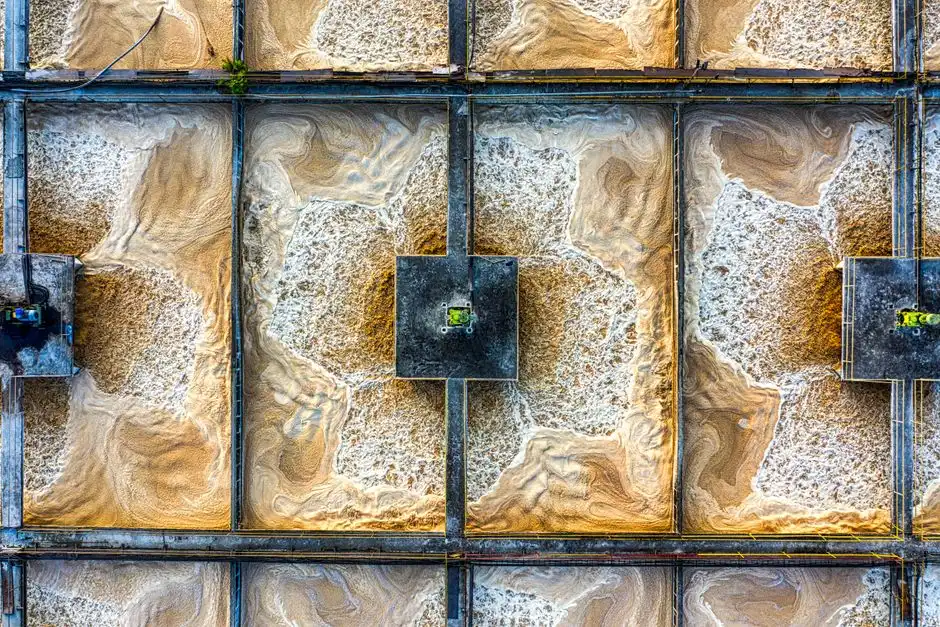
WSZ is the more direct fit when the verified flow falls within its stated range and a simple below-grade biological installation satisfies the discharge route. MBR becomes the stronger candidate when the project requires very fine solids separation, reuse-sensitive quality or a smaller installed footprint.
The WSZ combines anoxic/aerobic A/O biological contact oxidation, sedimentation and disinfection in a single buried package. Its stated capacity is 1–80 m³/h, and the catalogue states that it requires no routine operator attendance. That makes the process arrangement potentially compatible with landscaping and restricted above-ground space. However, the supplied catalogue information does not provide effluent figures, aeration data or lifecycle-cost comparisons. Those omissions must be resolved through guaranteed performance data and a project-specific process calculation.
The MBR membrane bioreactor combines activated sludge treatment with submerged PVDF membrane filtration. Its stated capacity is 10–2,000 m³/day, its filtration performance is stated as below 1 μm, and the catalogue reports a footprint 60% smaller than conventional systems. These are useful screening attributes, but they are not substitutes for discharge approval. The supplied catalogue does not state an effluent standard, so the developer must obtain a project-specific compliance demonstration for the intended sewer-discharge or reuse route.
| Criterion | WSZ | MBR |
|---|---|---|
| Process train | Buried A/O biological contact oxidation, sedimentation and disinfection | Activated sludge with submerged PVDF membrane filtration |
| Stated flow capacity | 1–80 m³/h | 10–2,000 m³/day |
| Physical separation | No fine-pore filtration figure supplied | Filtration stated as below 1 μm |
| Footprint statement | Described as a below-grade package | Catalogue reports 60% smaller footprint than conventional systems |
| Key buyer check | Obtain effluent performance, aeration demand and service clearances | Obtain approved effluent basis, pretreatment and membrane-maintenance scope |
Compare both packages using the same commercial and technical boundary: verified flow basis, guaranteed process performance, civil works, above-ground service clearances, power demand, instrumentation and alarms, chemical use, spare parts, sludge removal, monitoring, operator involvement and ownership responsibilities. Pretreatment must also be allocated to the correct party; a rotary mechanical bar screen may form part of the headworks strategy, but it should not be added without a character-based inlet assessment.
Design the inlet, sludge route and discharge interface
The inlet, sludge route and final effluent interface can determine whether an otherwise suitable package works in service. Specify them before accepting the main-process selection.
For the inlet, assess screening and grit or grease control against the character of the housing sewer. The GX rotary mechanical bar screen is designed for continuous-duty municipal and industrial wastewater headworks and can protect downstream pumps, valves and biological processes. The question is not whether headworks can be installed, but whether the housing sewer requires them and where they fit within the available civil works.
For MBR, pretreatment must protect submerged PVDF membranes from solids, fibrous material and excessive grit. Membrane filtration does not remove upstream headworks risks; it requires a defensible upstream barrier and an operating protocol that responds to screen bypass, hydraulic upset and abnormal solids loading.
The sludge route must name the extraction point, storage method, transport arrangement and authorized destination. The city-scale Jeddah project illustrates the complexity of a managed sludge system: TYPSA reports gravity thickening, mechanical thickening, anaerobic digestion, centrifuge dewatering and thermal drying up to 90% dry solids. That municipal configuration should not be copied into a housing package without confirming whether its residuals require sludge dewatering filter press, storage containers, vacuum collection or direct removal.
| Interface | Design requirement | Bid document |
|---|---|---|
| Inlet | Character-based screening and grit or grease control | Inlet flow and solids basis; upstream protection; screen bypass response |
| MBR pretreatment | Protection of submerged membranes from solids, fibrous material and grit | Required pretreatment, cleaning method and membrane replacement responsibility |
| Sludge | Extraction, storage, transport and authorized destination | Residual volume and frequency; handling equipment; disposal route; records |
| Final effluent | Defined sewer-discharge, irrigation, landscape-reuse or other route | Applicable authority criteria, sampling points, monitoring and reporting |
| Operations | Named responsibility for alarms, chemicals, sludge and operating records | Control philosophy, alarm matrix, maintenance schedule and response times |
For decentralized operation, define who inspects the plant, records operating data, manages chemicals and residuals, responds to alarms and replaces failed parts. Automated operation does not mean zero maintenance. The discharge route must be identified before any catalogue statement is treated as regulatory compliance.
Procure and commission the package without scope gaps
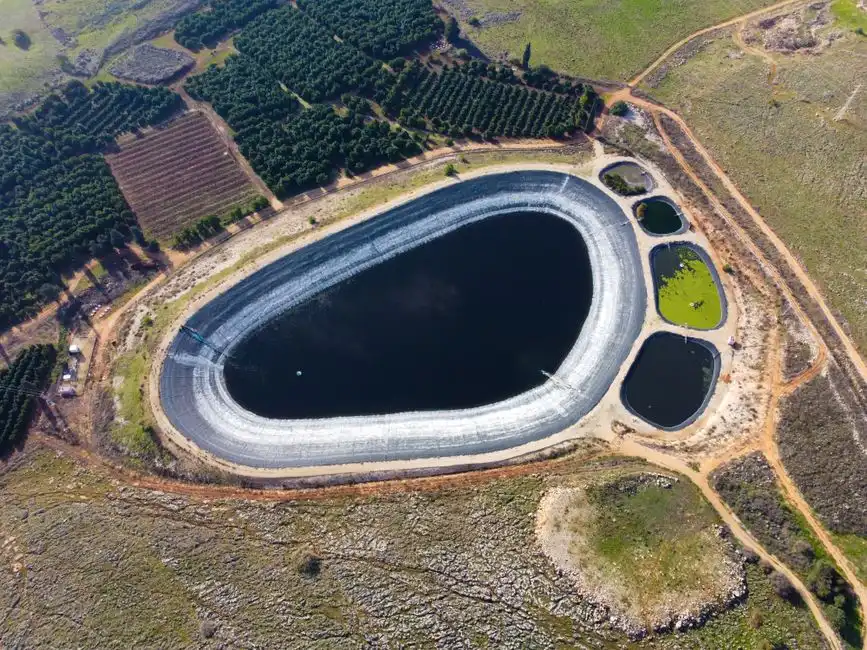
A defensible tender starts with the design basis as the bid basis, not a product name and nominal capacity.
Issue the verified design flow, wastewater characterization, discharge or reuse criteria, site drawings, soil and groundwater information, power availability, automation requirements and sludge-disposal route. Require each bidder to identify assumptions and list exclusions. A capacity claim without its corresponding flow composition, duty and service conditions is not a comparable offer.
Ask bidders to submit:
- Selected process and guaranteed flow envelope;
- Process calculations and guaranteed process performance;
- Equipment dimensions, civil interfaces and utilities;
- Control philosophy, alarm strategy, instruments and monitoring;
- Commissioning and performance-test procedures;
- Training, spare parts, warranty, technical support and handover documents.
Use separate acceptance milestones for factory testing, delivery, installation, hydraulic testing, biological start-up, performance testing and final acceptance. The supervising consultant and relevant authority should identify their witnessing and approval requirements before these stages begin.
| Stage | Evidence required | Hold point |
|---|---|---|
| Bid review | Process basis, guaranteed flow, exclusions, civil and utility interfaces | Clarification before equipment selection |
| Factory test | Approved inspection and test records | Release for shipment |
| Installation | Civil works, pipework, access, power and control records | Mechanical completion inspection |
| Start-up | Hydraulic and biological start-up records | Demonstrate stable operation |
| Performance and handover | Performance results, O&M plan, training, spares, as-builts and certificates | Final acceptance |
Research on Saudi infrastructure procurement planning describes PPPs as a mechanism for delivering Saudi Vision 2030 infrastructure, but the contracting model should be selected only after commercial and risk review. Whether the project is owner-operated, privately operated or structured through a PPP will affect power, monitoring, sludge, performance risk and handover obligations. Before acceptance, the owner must approve an O&M plan covering inspections, membrane or media maintenance where applicable, sludge removal, monitoring, emergency response and replacement parts.
Frequently Asked Questions
Which packaged sewage treatment plant capacity should I choose for a Jeddah housing development?
Use the verified project flow—not
Frequently Asked Questions
What size packaged sewage treatment plant does a housing development in Jeddah need?
Sizing is determined by calculating the average daily flow based on the Jeddah Municipality guidelines, typically estimating 200 to 250 liters per capita per day (lpcd) for residential occupancy. A standard calculation applies a peak factor of 2.5 to 3.0 to ensure the hydraulic capacity handles fluctuations during morning and evening hours.
For a typical mid-sized housing development, plants are generally sized between 100 cubic meters per day (m³/day) for smaller compounds up to 2,000 m³/day for larger gated communities. Engineers must account for the specific occupancy load and the required hydraulic retention time (HRT) to ensure effective biological degradation.
Should a Jeddah housing development choose an A/O package or an MBR system?
An Anoxic/Oxic (A/O) system is suitable for secondary treatment where space is abundant and the treated effluent is intended for subsurface irrigation or secondary-grade landscaping. However, A/O systems generally produce effluent with higher Total Suspended Solids (TSS) and Biological Oxygen Demand (BOD), often requiring secondary filtration and disinfection stages to meet local reuse standards.
Membrane Bioreactor (MBR) systems are increasingly preferred in Jeddah for their superior effluent quality, consistently achieving BOD levels below 5 mg/L and TSS near zero. Because MBR technology replaces the secondary clarifier, the plant footprint is reduced by up to 50%, making it the ideal choice for dense urban housing projects where land value is high and water reuse for premium landscaping is required.
How much does a packaged sewage treatment plant cost for a Jeddah housing project?
Capital expenditure (CAPEX) for a packaged plant in Jeddah typically ranges from 1,500 SAR to 3,500 SAR per cubic meter of daily capacity, depending on the technology chosen and the level of automation. MBR systems command a higher initial investment compared to traditional activated sludge or A/O packages due to membrane module costs and sophisticated control systems.
Operational expenditure (OPEX) should be budgeted at approximately 1.50 SAR to 3.00 SAR per cubic meter of treated water. This includes electricity consumption, chemical dosing (coagulants and disinfectants), membrane cleaning cycles, and sludge hauling costs, which are subject to local disposal regulations and contractor logistics.
Which Jeddah authority should approve the wastewater treatment and discharge route?
The primary regulatory body for wastewater infrastructure in the region is the National Water Company (NWC). All designs for packaged sewage treatment plants must comply with the Saudi Arabian Standards Organization (SASO) requirements and the technical specifications set forth by the Jeddah Municipality (Amanah).
For environmental compliance and discharge or reuse permits, the project must also align with the standards of the National Center for Environmental Compliance (NCEC). Developers must submit detailed engineering drawings, hydraulic calculations, and an environmental impact assessment to obtain the necessary permits for construction and operational discharge.
What should I check when selecting a packaged sewage treatment supplier?
Ensure the supplier provides a proven track record of installations within the Kingdom of Saudi Arabia that have successfully operated under the extreme ambient temperatures and high saline conditions characteristic of Jeddah. Verify that the supplier holds valid certifications from the NWC and has a local technical support team capable of responding to maintenance requests within 24 hours.
Request detailed technical specifications regarding membrane life expectancy, energy efficiency ratings (kWh/m³), and the availability of spare parts locally. A reputable supplier should also provide a performance guarantee for the treated effluent quality, ensuring it meets the mandatory standards for unrestricted irrigation or discharge as per current environmental regulations.