Separate the Wastewater Streams Before Choosing Equipment
A Kolwezi data center generally needs separate treatment systems for cooling-tower blowdown, sanitary wastewater, and any process wastewater. The cooling train should normally start with side-stream filtration and ultrafiltration, followed by brackish reverse osmosis when permeate reuse is justified. Antiscalant control matters because silica, calcium carbonate, and calcium sulfate constrain conventional RO recovery to approximately 75–80%, according to IDE Tech (2026). Final design must follow Kolwezi site sampling and early regulatory engagement because the supplied research identifies no specific numeric cooling-blowdown discharge limit for the DRC.
Do not design cooling blowdown as “mining wastewater” merely because Kolwezi is a mining-region city. The supplied research does not characterize the proposed data center’s source water or effluent chemistry. A source water influenced by regional conditions may affect turbidity, organic loading, iron and manganese, but those conditions must be measured rather than imported from another DRC city or assumed from nearby mining operations.
Evaporative cooling produces a controlled purge because evaporation leaves salts and treatment chemicals behind in the recirculating loop. Commercial Water Lab (2026) describes concentrated blowdown as potentially containing salts, minerals, biocides, corrosion inhibitors, and heavy metals. The exact profile depends on the cooling system and chemical program. Direct liquid or immersion cooling is a different case: Commercial Water Lab (2026) notes that refrigerants or PFAS-containing coolant can require specialized handling and should not enter the ordinary blowdown treatment train.
The practical stream map is therefore:
- Cooling loop: side-stream filtration → ultrafiltration → brackish RO → cooling-makeup reuse, with a separate concentrate route.
- Sanitary wastewater: a separate biological treatment train sized from flow and wastewater characteristics.
- Process wastewater: separate sampling and treatment selection based on its specific contaminants.
This separation follows the source-specific approach described in the data-center blowdown treatment in a water-stressed region and the broader data-center cooling blowdown treatment framework.
| Stream | Treatment objective | Provisional route | Design inputs still required |
|---|---|---|---|
| Cooling blowdown | Recover water for cooling makeup and control concentrate | Side-stream filter → UF → RO; concentrate treatment if required | Loop chemistry, blowdown flow, cycles of concentration, source-water analysis |
| Sanitary wastewater | Biological treatment and sanitary compliance | Separate wastewater treatment train | Flow, wastewater analysis, sewer or disposal route |
| Process wastewater | Remove or isolate stream-specific contaminants | Characterization before equipment selection | Constituent inventory, toxicity, flow variability, discharge destination |
| Closed-loop coolant discharge | Control specialized chemicals | Dedicated collection and specialist treatment | Coolant composition, refrigerant or PFAS status, manufacturer requirements |
Establish the Kolwezi Feed-Water and Blowdown Design Basis
Final equipment sizing requires a Kolwezi-specific feed-water analysis because no intake value for the proposed site appears in the supplied research. Commission representative sampling for turbidity, silica, hardness, alkalinity, iron, manganese, TOC, and microbiological counts before selecting media, UF configuration, antiscalant, or RO operating limits. This is the same feed-water analysis requirement identified in the HydropureWater Kisangani guide (2026), but the analysis must be performed for Kolwezi rather than transferred from Kisangani.
Use published ranges only to develop a preliminary screening envelope. Genesis Water Tech (2026) gives a blowdown TDS envelope of 1,200–6,000 mg/L and suspended solids of 10–50 mg/L. Those figures describe the literature design envelope, not a measured Kolwezi condition. The supplier request should therefore ask bidders to state their assumed feed ranges, permitted operating envelope, sampling basis, and response to values outside those assumptions.
The operating envelope must also describe the cooling plant. Record the cooling technology, loop volume, cycles of concentration, evaporation rate, makeup-water source, blowdown flow, and variation between minimum and maximum load. Request the chemical inventory and safety data for each biocide, corrosion inhibitor, antiscalant, and dispersant. Residual concentrations and formulation compatibility matter because chemicals that protect the cooling system can foul membranes or conflict with the discharge route.
Confirm electrical supply, outage exposure, demand charges, and whether standby power is available. Mechanical vapour compression and full zero-liquid-discharge systems have substantial electricity demand; the supplied research does not establish Kolwezi power reliability or cost, so economics cannot be closed without site data. A bidder relying on automatic chemical dosing for antiscalant and other treatment chemicals should include the power, control, storage, and service requirements in its offer.
Map the receiving route before selecting a discharge method: river, drain, sewer, evaporation basin, haulage point, or controlled collection system. The supplied sources do not establish the receiving-water flow, sewer capacity, permitted discharge envelope, or basin capacity at the proposed site. Multi-media filtration for Kolwezi source-water pretreatment should be specified around the actual analysis, not a generic regional assumption.
| Design input | Evidence currently available | Kolwezi action before award |
|---|---|---|
| Source-water chemistry | Full analysis required by Genesis Water Tech (2026) | Sample the actual source under seasonal and operating variations |
| Blowdown TDS | 1,200–6,000 mg/L preliminary literature envelope, Genesis Water Tech (2026) | Measure site blowdown and state bidder assumptions |
| Blowdown suspended solids | 10–50 mg/L preliminary literature envelope, Genesis Water Tech (2026) | Measure under representative loop conditions |
| RO recovery constraint | Approximately 75–80% with conventional BWRO where silica, calcium carbonate, and calcium sulfate limit recovery, IDE Tech (2026) | Use site analysis and saturation modelling to set a defensible target |
| Discharge limits | No specific numeric cooling-blowdown limit identified in the reviewed DRC evidence | Obtain written requirements from the competent authorities |
| Power and disposal infrastructure | Not established by the supplied research | Document reliability, tariffs, sewer capacity, haulage access, and controlled disposal options |
Use Side-Stream Filtration Before Ultrafiltration
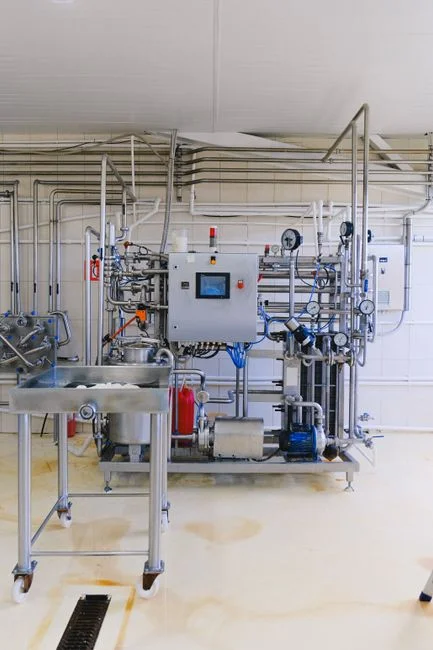
Suspended solids and corrosion debris should be removed before UF because the RO train depends on consistent pretreatment rather than timer-based operation. Genesis Water Tech (2026) specifies a continuously operated side-stream self-cleaning spiral filter with a 10–25 micron cut for corrosion products, biofilm fragments, and airborne particulates, sized at 1–5% of total circulation flow. The filter removes material that would otherwise reach UF and RO.
UF then provides the final particle and microbiological barrier before RO. The supplied technical range is 0.01–0.1 micron, 10–30 psi operating pressure, and 90–95% recovery, as reported by Genesis Water Tech (2026). For humid, organics-rich intake water, Genesis Water Tech (2026) recommends periodic chemical-enhanced backwash. The Kolwezi design should select the backwash regime from source-water results and membrane-fouling trials rather than assume that cartridge filtration alone provides equivalent protection.
The pretreatment sequence matters because Genesis Water Tech (2026) states that skipping robust UF pretreatment can put RO membranes on a fouling trajectory measured in weeks instead of the cited 1–3 month chemical-cleaning baseline. That is a design warning, not a warranty of cleaning intervals. Membrane condition still depends on feed chemistry, dosing, control response, pretreatment performance, and operating discipline.
Position the multi-media filter upstream when the intake carries turbidity, suspended solids, or colloids. Position UF immediately before RO as the stable-sdi provider described in the research. A practical multi-media filtration package for Kolwezi source-water pretreatment and hollow-fiber ultrafiltration pretreatment for cooling blowdown should each state its design flow, particle-removal objective, backwash sequence, controls, and contribution to the overall water balance.
Require automatic backwash, air scour where appropriate, feed and filtrate turbidity instruments, permeate-flow monitoring, and differential-pressure trends. Timer-only backwash is not adequate because feed quality and load can change faster than a fixed schedule. Define alarm responses for high filtrate turbidity, abnormal pressure rise, excessive recovery loss, and repeated backwash demand.
Recover Cooling Makeup with Brackish RO and Controlled Chemistry
Brackish RO is the principal water-recovery step for concentrated cooling blowdown. Genesis Water Tech (2026) gives 95–99% salt rejection, permeate at 10–50 mg/L TDS, and achievable recovery of 50–85% at 150–400 psi. These are source-reported performance ranges, not guaranteed Kolwezi outputs. Final guarantees must be tied to the measured feed and a defined recovery duty.
Retain antiscalant injection in the base scope. The product must be compatible with the UF and RO elements, the cooling chemistry, and the concentrate-disposal route. Automatic dosing should track feed flow and be interlocked with RO operation; a fixed dose independent of flow or temperature is not an adequate design basis. Dispersant and biocide compatibility should be checked against the membrane manufacturer’s limits.
Silica, calcium carbonate, and calcium sulfate are the three sparingly soluble species that constrain conventional brackish RO recovery to approximately 75–80% in the design cited by IDE Tech (2026). Site-specific saturation calculations may justify a different target, but only after the feed-water analysis, blowdown chemistry, and antiscalant programme are established. Do not allow suppliers to offer recovery based only on TDS; recovery also depends on ionic composition and scaling potential.
Use conductivity to estimate permeate salinity and normalized permeate flow to assess membrane condition. The control system should record feed temperature, feed and concentrate pressure, flow, conductivity, pH where required, recovery, antiscalant dose, and cleaning events. Operators need a defined sequence for deciding whether a performance change reflects feed chemistry, fouling, scaling, instrument error, or inadequate dosing.
Plan membrane logistics before award. Require staged spare UF and RO elements, or evidence that replacements can be held in-country or reached through a short regional freight route. The commercial literature identifies membrane availability as an uptime risk (Genesis Water Tech, 2026). Compare the cost of a staged supply of RO and UF replacement elements with realistic delivery lead times, customs exposure, and storage conditions.
Permeate reuse must still be checked against the cooling system’s scaling tendency, chemical programme, corrosion limits, and make-up requirements. The source’s 10–50 mg/L permeate TDS is not a universal guarantee for every cooling loop. Specify the required permeate quality by actual cooling chemistry rather than by a general ultrapure-water label.
| RO design element | Source-reported basis | Supplier commitment required for Kolwezi |
|---|---|---|
| Salt rejection | 95–99%, Genesis Water Tech (2026) | Guarantee at the agreed feed composition and recovery |
| Permeate TDS | 10–50 mg/L, Genesis Water Tech (2026) | Define the test basis and cooling-system acceptance limit |
| RO recovery | 50–85%, Genesis Water Tech (2026) | State the site-specific operating point and scaling calculation |
| Operating pressure | 150–400 psi, Genesis Water Tech (2026) | State normal, maximum, and cleaning pressures |
| Recovery ceiling | Approximately 75–80% for conventional BWRO where silica, calcium carbonate, and calcium sulfate govern, IDE Tech (2026) | Provide the site saturation study and recovery guarantee |
| Controls and chemistry | Antiscalant injection identified as mandatory for blowdown duty, Genesis Water Tech (2026) | Provide flow-paced dosing, interlocks, product compatibility data, and monitoring |
Choose a Concentrate Route That Survives Local Constraints
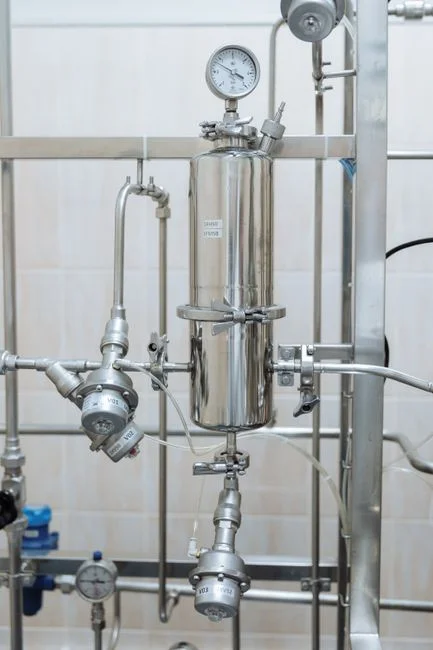
Concentrate management is a permitting and infrastructure decision, not an automatic consequence of installing RO. The route must be selected before award because sewering, hauling, brine reduction, and zero-liquid-discharge systems impose different capital, operating, and compliance burdens. The HydropureWater Kisangani guide (2026) provides facility-scale screening logic that can be adapted to Kolwezi, but every site input and permit condition remains unverified.
For a smaller edge or colocation facility, the supplied DRC guide supports multi-media filtration, UF, and a small RO skid, with concentrate sewered or trucked to an approved facility. The buyer must verify sewer capacity, industrial pretreatment acceptance, truck access, carrier capacity, and the receiving facility’s acceptance criteria.
For a 1–10 MW regional facility, the guide supports UF plus brackish RO at 70–80% recovery, with brine reduction if the local permit establishes a TDS cap. This is a screening framework from Genesis Water Tech (2026) and IDE Tech (2026), not a guarantee that a Kolwezi facility in that power range will require the same configuration.
For a hyperscale site above 10 MW with reliable on-site power, the guide supports UF, RO, and mechanical vapour compression, with concentrate volume reduced by 80–95% before final disposal. Mechanical vapour compression is reported at 95–98% recovery and distillate TDS below 10 mg/L, with energy use of 15–25 kWh per 1,000 US gallons of distillate, according to Genesis Water Tech (2026). Kolwezi power cost and reliability are not supplied and must be measured before this route is priced.
Reserve full zero-liquid-discharge for a permit or closed-loop design that explicitly requires zero surface discharge. Genesis Water Tech (2026) reports 95–99% overall recovery and capital cost of USD 3–8 million for full ZLD. That figure is a literature reference range, not a Kolwezi quotation, and it excludes the site-specific consequences that may dominate the project.
Do not apply a generic industrial-effluent TDS threshold of 1,500 mg/L to Kolwezi without regulatory confirmation. The HydropureWater Kisangani guide (2026) describes that threshold as an example from some jurisdictions and states that the DRC has no specific numeric cooling-blowdown limit in the evidence reviewed. Absence of a published limit is not evidence that unrestricted discharge is permitted.
Engage early with the Ministère de l’Environnement et Développement Durable and the relevant local watershed authority. Ask them to define the acceptable discharge route, TDS treatment, biocide limits, thermal-pollution requirements, monitoring, and permit conditions. Confirm which authority receives the application and obtain the requirements in writing before comparing bids.
| Disposal option | Screening basis from the supplied DRC guide | Decision conditions and unresolved Kolwezi inputs |
|---|---|---|
| Reuse as cooling makeup | RO is the primary recovery step, Genesis Water Tech (2026) | Confirm cooling chemistry, heat load, loop balance, membrane performance, and residual treatment requirements |
| Sewered discharge | Permitted route for the smaller-facility package, Genesis Water Tech (2026) | Obtain sewer acceptance criteria, capacity, pretreatment requirements, and connection terms |
| Hauled disposal | Permitted route for the smaller-facility package, Genesis Water Tech (2026) | Identify the receiving facility, vehicle and access requirements, carrier capacity, and destination documentation |
| Brine reduction | Use where a local permit establishes a TDS cap, Genesis Water Tech (2026) | Confirm the numeric limit, treatment objective, power supply, and residual-disposal route |
| MVC plus final disposal | 80–95% concentrate-volume reduction in the hyperscale package; 95–98% recovery and 15–25 kWh per 1,000 US gallons of distillate, Genesis Water Tech (2026) | Verify Kolwezi power reliability, tariff, heat balance, maintenance capability, and final-disposal capacity |
| Full ZLD | 95–99% overall recovery and USD 3–8 million capital, Genesis Water Tech (2026) | Proceed only where the permit or closed-loop design requires it; obtain a site-specific lifecycle cost |
Compare Treatment Packages by Facility Scale and Investment
Reference capital ranges can screen proposals, but they are not Kolwezi prices. The HydropureWater Kisangani guide (2026), citing Genesis Water Tech (2026), places side-stream filtration at USD 50,000–200,000, a 50,000 GPD RO skid at USD 250,000–500,000, mechanical vapour compression at USD 1–3 million, and full ZLD at USD 3–8 million. The guide also gives operating-cost references of USD 1.50–3.00 per 1,000 gallons for a 50,000 GPD RO skid and USD 5–15 per 1,000 gallons for full ZLD.
Use those figures to identify implausibly low bids and missing scope. They do not include every site-specific civil, electrical, duty-cycle, freight, tax, permit, or concentrate-disposal consequence. They should not be transferred to a Kolwezi offer without a common design basis.
Compare packages using recovered-water value, concentrate destination, electrical demand, operator attendance, membrane logistics, chemical compatibility, and permit exposure. Lowest installed price is not the same as lowest lifecycle cost. A lower-cost RO package with no approved concentrate destination may be technically undeployable.
Each bidder should state the design flow, normal and peak blowdown flow, recovery target, permeate TDS, concentrate volume and destination, power demand, chemical consumption, membrane guarantees, start-up scope, critical spares, and the site water and mass balance. Require the bidder to identify every exclusion, especially civil works, high-voltage supply, storage, haulage, laboratory services, residuals handling, and permit support.
The data-center treatment package comparison provides a useful structure for this evaluation, but Kolwezi quotations must be built from local sampling and confirmed disposal infrastructure.
| Package component | Literature screening range | Scope to request from each bidder |
|---|---|---|
| Side-stream filtration | USD 50,000–200,000, Genesis Water Tech (2026) | Flow, filter cut, continuous-duty basis, controls, solids outlet, installation, and warranty |
| 50,000 GPD RO skid | USD 250,000–500,000; USD 1.50–3.00 per 1,000 gallons operating cost, Genesis Water Tech (2026) | Feed basis, recovery, permeate quality, power, chemicals, membranes, spares, and concentrate destination |
| Mechanical vapour compression | USD 1–3 million, Genesis Water Tech (2026) | Feed and distillate basis, energy calculation, compression equipment, controls, maintenance, and residual route |
| Full ZLD | USD 3–8 million capital; USD 5–15 per 1,000 gallons operating cost, Genesis Water Tech (2026) | Complete recovery balance, solids outlet, energy demand, utilities, operator attendance, and site-specific exclusions |
Build a Site-Specific Procurement and Implementation Checklist
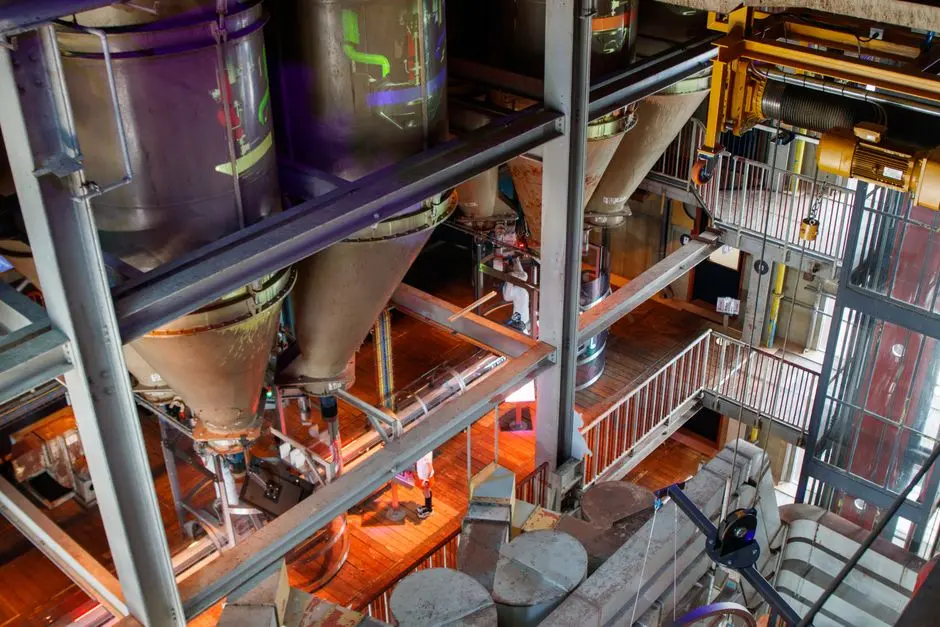
A defensible award requires measured inputs and a complete disposal balance, not a treatment train selected from regional assumptions. Complete representative sampling of source water, cooling-loop water, blowdown, sanitary wastewater, and any process effluent. Obtain a signed water and mass balance covering loop inventory, evaporation, blowdown, makeup, permeate reuse, concentrate generation, and every destination stream. This closes the gap between equipment capacity and site demand.
- Issue one common design-basis package to every bidder, including the confirmed analyses, cooling operating envelope, treatment objectives, receiving-route options, and required guarantees.
- Require evidence of operating references for tropical surface-water feeds, not only brackish well-water projects, because TOC and biological loading can alter pretreatment and membrane performance, as noted in the HydropureWater Kisangani guide (2026).
- Require documentation of membrane compatibility with the proposed cooling chemicals, automatic controls, cleaning strategy, normalized performance monitoring, critical spares, and regional service arrangements.
- Verify spare RO and UF membrane elements and the availability of valves and media through the supplier’s regional supply chain. The required valves, filter media, and treatment parts should be listed with lead times, recommended stocks, and approved alternatives.
- Include commissioning, operator training, membrane-replacement logistics, remote monitoring, concentrate and solids handling, laboratory support, escalation procedures, and permit-change response in the supplier scope.
- Make the final commercial comparison conditional on the same flow, recovery, permeate-quality, concentrate, power, and service guarantees.
Frequently Asked Questions
What treatment cost should a buyer budget for a Kolwezi data center?
Use the literature ranges only to screen proposals: side-stream filtration at USD 50,000–200,000, a 50,000 GPD RO skid at USD 250,000–500,000, mechanical vapour compression at USD 1–3 million, and full ZLD at USD 3–8 million, according to Genesis Water Tech (2026) as presented in the HydropureWater Kisangani guide (2026). These are not Kolwezi quotations. Request a priced design basis stating blowdown flow, recovery, permeate TDS, concentrate volume and destination, power demand, chemical use, civil exclusions, and freight. Also request operating-cost assumptions for power, membranes, chemicals, labour, residuals handling, and maintenance.
How should a buyer select and size a treatment supplier?
Select against a project-specific design basis, not a catalogue package. Require the UF treatment scope and RO recovery scope to identify the measured feed-water basis, normal and peak flows, recovery target, permeate quality, concentrate destination, antiscalant compatibility, normalized controls, cleaning strategy, membrane guarantees, and regional spare-parts plan. Check references for tropical surface-water feeds and require a named concentrate route; equipment selection without a disposal destination is incomplete.
What source-water and cooling-blowdown tests are required before equipment selection?
Commission a full feed-water analysis covering turbidity, silica, hardness, alkalinity, iron, manganese, TOC, and microbiological counts, together with representative cooling-loop and blowdown testing, as required by Genesis Water Tech (2026). Record cooling technology, cycles of concentration, evaporation rate, makeup source, chemical products, blowdown flow, and load variation. The literature envelope of 1,200–6,000 mg/L TDS and 10–50 mg/L suspended solids is preliminary only (Genesis Water Tech, 2026); it is not a substitute for Kolwezi measurements.
What discharge limit applies to cooling blowdown in Kolwezi?
The supplied research identifies no specific numeric DRC cooling-blowdown discharge limit, so unrestricted discharge cannot be assumed. The HydropureWater Kisangani guide (2026) describes a TDS limit below 1,500 mg/L as an example from some jurisdictions, not an established Kolwezi requirement. Obtain written confirmation from the Ministère de l’Environnement et Développement Durable and the relevant local watershed authority covering TDS, biocides, thermal pollution, discharge route, monitoring, and permit conditions. If the route remains uncertain, keep concentrate treatment and disposal alternatives in the commercial scope.