Which Packaged Treatment Plant Suits a Dammam Housing Development?
A buried WSZ A/O sewage treatment package is normally the first candidate when a Dammam housing development needs an automated, below-grade solution, while an MBR membrane bioreactor for high-quality effluent merits evaluation when reuse, treatment quality or footprint drives the decision. WSZ packages are catalogued from 1–80 m³/h; MBR systems cover 10–2,000 m³/day and provide filtration below 1 μm. Neither capacity can be selected without project flow, site and disposal data. Dammam’s municipal ISTP is context, not a development-size template.
Metito describes the Dammam ISTP as Saudi Arabia’s first wastewater PPP, awarded under a 25-year build-own-operate-transfer model by a consortium led by Metito Utilities with Mowah and Orascom Construction. Its initial capacity is 200,000 m³/day, with expansion potential to 350,000 m³/day, and it serves nearly one million residents. That scale serves a municipality, not a single housing development.
The practical selection rule is therefore conditional. Use WSZ when an automated buried installation and conventional residential treatment are the dominant requirements. Evaluate MBR when the confirmed effluent specification, reuse plan or available footprint creates a stronger case for membrane separation. Neither option establishes the legal discharge route or SWPC development approval; those remain project-specific.
The research provides product catalogues and municipal-project references, but no Dammam-specific flow, permit limit, groundwater datum or reuse requirement for the proposed development. A defensible shortlist starts by converting the site into measured inputs rather than choosing a model from municipal capacity figures. The comparison is similar in method to packaged sewage treatment options for housing developments, but Dammam infrastructure and approval conditions must be verified independently.
Build the Dammam Design Basis Before Comparing Equipment
A vendor can compare plant capacity only after the development has defined its hydraulic duty, installation constraints, receiving route and treatment objective. The supplier schedule should therefore identify current and ultimate phases rather than accepting a nominal housing-unit count as a wastewater load.
| Design input | Information the buyer must obtain or define | Why it affects package selection |
|---|---|---|
| Wastewater flow | Average daily flow, peak-hour flow, projected population or units by phase, and development horizon | Sets process and hydraulic capacity; a unit count alone is not a loading basis |
| Collection route | Gravity or pumped network, inlet works, equalisation needs and outlet location | Determines lift, headworks and pre-treatment requirements |
| Site conditions | Available footprint, installation depth, landscaping requirements, groundwater level, flood exposure, access and vehicle loading | Controls buried or above-ground arrangement, maintenance access and structural design |
| Receiving route | Connection to a sewer, alternative disposal route or intended reuse service | Defines the required treatment specification and auxiliary equipment |
| Effluent and reuse objective | Authority-confirmed discharge or reuse criteria and any application-specific water-quality requirements | Determines whether clarification and disinfection are sufficient or membrane separation is justified |
| Development phases | Current and ultimate duty, expansion sequence and provision for future phases | Prevents initial oversizing followed by inadequate ultimate capacity |
Ask the design team to distinguish average flow from peak-hour flow and to state the selected peak factor. Equalisation should be assessed from the incoming flow pattern rather than added automatically. If the package receives wastewater through a pumped network, confirm where pumps, screening and controls fall within the supplier’s scope.
For a buried WSZ arrangement, require the supplier to define excavation depth, access covers, lifting provisions, buoyancy or groundwater protection, and the effect of the design groundwater level. For an above-ground or trailer-mounted arrangement, require enclosure, noise, odour, security and maintenance-access details. The site constraint is not satisfied merely by quoting a nominal treatment footprint.
No Dammam-specific discharge limits or private-development reuse criteria were supplied in the research. Obtain those conditions from the competent authority before fixing the biological process. This is the same discipline used in packaged STP selection for residential subdivisions: specify the receiving requirement first, then ask suppliers to demonstrate compliance against that requirement.
WSZ A/O Package Versus MBR for Residential Development
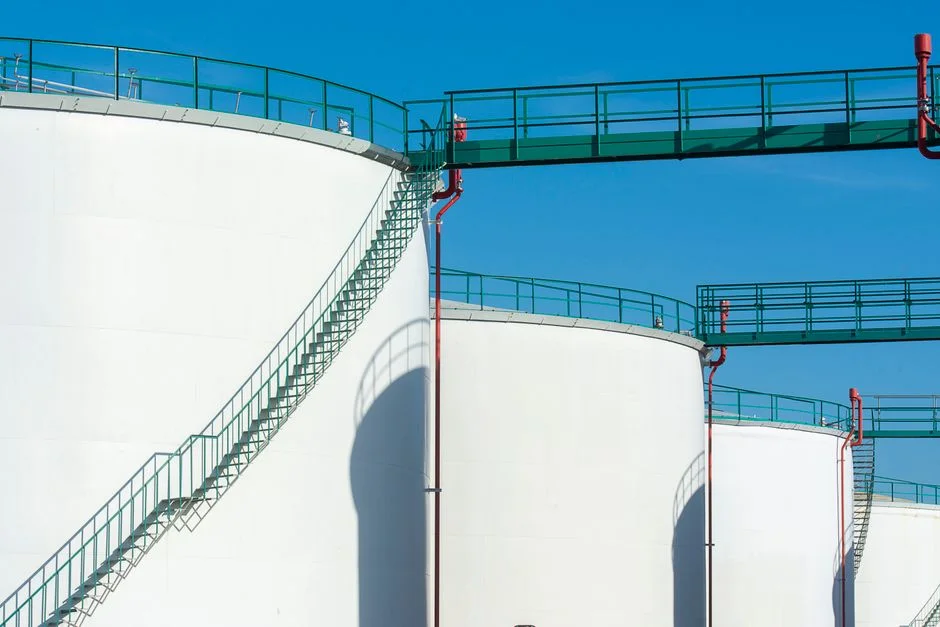
WSZ and MBR satisfy different project priorities: WSZ combines an automated buried treatment train, while MBR adds membrane separation for a smaller installation and higher-quality effluent proposition.
| Decision factor | WSZ A/O package | MBR system |
|---|---|---|
| Catalogued capacity | 1–80 m³/h | 10–2,000 m³/day |
| Treatment configuration | Anoxic/aerobic biological contact oxidation, sedimentation and disinfection in a single buried package | Activated-sludge treatment combined with submerged PVDF membrane filtration |
| Installation | Can be installed below grade with landscaping above, or mounted on a trailer for mobile deployment | Requires an above-ground or otherwise defined installation arrangement within the project footprint |
| Operation proposition | Fully automated and described as requiring no operator | Requires membrane operation, cleaning, monitoring and replacement planning |
| Effluent proposition | Biological clarification and disinfection; suitability depends on the confirmed receiving specification | Filtration below 1 μm and a stated footprint approximately 60% smaller than conventional systems |
| Principal trade-off | Conventional treatment and buried integration, with no project-specific reuse performance supplied here | Higher-quality separation and compactness against added process and maintenance complexity |
The WSZ proposition is strongest when the development wants a buried residential package and the confirmed effluent requirement can be met through biological contact oxidation, clarification and disinfection. Its automatic operation does not remove the need for maintenance access, electrical supply, inspection, sludge management or authority acceptance.
MBR should be compared through the required performance specification, not selected simply because it uses membranes. The submerged PVDF filtration train and stated footprint advantage may support the decision where reuse, water quality or site area is controlling. The buyer must then examine membrane life, cleaning strategy, replacement provisions and redundancy, together with the electrical and operating requirements.
The same nominal treatment footprint does not establish equal process loading. Biological capacity, hydraulic retention, membrane area and peak-flow behaviour must be quoted against the project duty. The MBR engineering guide for wastewater treatment provides additional context, but UAE conditions and quotations must not be transferred to Dammam.
Neither technology changes the legal route for treated water. Sewer connection, alternative discharge and reuse approval must be confirmed separately. Technology selection follows the confirmed route; it does not create it.
How Dammam's Expanding Wastewater Infrastructure Affects the Decision
The Dammam ISTP demonstrates that municipal wastewater can be delivered through a long-term PPP structure, but its scale and process train must not be copied into a housing-development package quotation. Metito identifies the plant as the Kingdom’s first wastewater PPP, developed under a 25-year build-own-operate-transfer model by Metito Utilities, Mowah and Orascom Construction.
TYPSA reports an initial municipal capacity of 200,000 m³/day, expansion potential to 350,000 m³/day and a beneficiary population of 930,000 residents. It also records a construction budget of USD 185 million for the 2023 project. That figure is a municipal-project benchmark, not a packaged-plant price or a defensible development budget.
The municipal process train includes pretreatment, primary decanting, activated sludge with nutrient removal, secondary decanting, filtration, disinfection and phenol removal. The sludge line includes mechanical thickening, anaerobic digestion, dewatering and drying. This configuration shows the additional treatment stages possible at municipal scale; it does not mean a packaged development plant must reproduce them.
Metito’s first-year operating report for the ISTP records nearly 50 million m³ of treated wastewater, 100% plant availability, more than 178,000 safe man-hours with zero lost-time injuries and more than 50% local content. These are municipal operating and delivery benchmarks. Their procurement lesson is to require a named operating plan, measurable performance and local support, rather than relying on a general statement that a package is automated.
Dammam’s wastewater infrastructure therefore provides an important context for domestic sewage equipment selection and compliance: development approval and utility interaction remain project-specific even where the city is investing in major municipal capacity. Ask bidders to identify the SWPC or other competent-authority approvals, connection requirements and proposed evidence for development acceptance.
Match the Package to the Reuse and Discharge Strategy
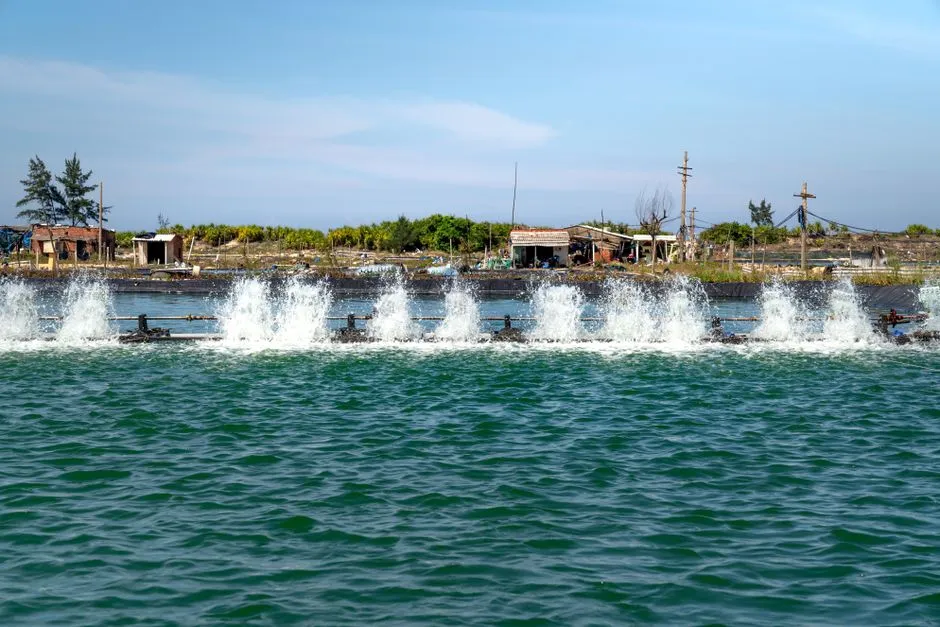
The reuse objective must be defined before treatment equipment is selected because the confirmed water-quality specification determines whether clarification, membrane separation, disinfection or additional polishing is justified.
For domestic sewage followed by a confirmed sewer-discharge route, compare the WSZ sequence of biological contact oxidation, clarification and disinfection with MBR’s biological treatment and membrane separation against the same effluent specification. Do not compare one package against an undefined “reuse grade”; ask each bidder to demonstrate the same receiving requirement and identify every process step needed to achieve it.
If reclaimed water will serve landscaping, irrigation or another approved application, obtain the receiving standard and application-specific water-quality requirements first. Metito describes the Dammam ISTP as supporting reuse for landscaping and agriculture, but that municipal project description does not automatically establish approval criteria for a private housing development. The authority must confirm whether, where and under what quality specification reuse is permitted.
Where incoming wastewater needs screening or grit management, assess a rotary mechanical bar screen as a headworks option. Its relevance depends on the incoming wastewater characteristics and the need to protect downstream pumps and biological treatment; it should not be included solely because another package is proposed elsewhere.
Where the confirmed treatment train requires chemical dosing, an automatic chemical dosing system provides PLC-controlled injection and can be included as a skid-mounted accessory. The buyer must define the chemical, duty, storage, containment and control interface. If reuse requires further disinfection or polishing, evaluate the relevant equipment only after the reuse objective and required quality are confirmed; a UV sterilizer for water treatment can then be assessed against that specification.
Create a Defensible Vendor Enquiry and Procurement Sequence
A comparable quotation requires the same inputs, performance criteria and scope boundaries from every shortlisted supplier.
- Issue a common design-basis and effluent-performance schedule, including current and ultimate flow, site conditions, receiving route and reuse objective.
- Require each bidder to state design flow, selected peak factor, process-stage capacities, tank and membrane or media details, power consumption, installed footprint, utilities and control philosophy.
- Add technology-specific evidence: buried-installation and groundwater provisions for WSZ; membrane life, cleaning, replacement and redundancy for MBR.
- Require identification of authority approvals, connection agreement, discharge route, commissioning tests and performance acceptance criteria.
- Compare the complete commercial scope, including commissioning, training, spares, controls, sludge handling and maintenance access.
| Quotation review item | Evidence required from the bidder | Buyer check |
|---|---|---|
| Hydraulic sizing | Average flow, peak-hour flow, peak factor and stage-by-stage capacities | Matches the issued current and ultimate design basis |
| Installation | Footprint, depth, groundwater provisions, access and utilities | Fits the surveyed site and maintainable arrangement |
| Process performance | Treatment stages and the effluent specification offered | Demonstrates the confirmed receiving or reuse requirement |
| Equipment lifecycle | Media or membrane life, cleaning, replacement, spares and redundancy | Responsibilities are named and commercially clear |
| Approvals and handover | Authority submissions, connection requirements, tests, training and documentation | No generic compliance statement remains unresolved |
Evaluate lifecycle requirements and operating resources, not equipment price alone. No supported packaged-plant price range is available in the research; request a project-specific quotation using the completed design basis. The only supplied cost is TYPSA’s USD 185 million construction budget for the 2023 Dammam municipal treatment plant, and it must not be used as a development-package estimate.
If sludge dewatering or disposal equipment is needed, identify its interface with the package. A plate-frame filter press can be evaluated as an ancillary item, but its selection depends on the generated sludge and disposal route. The same applies to a comparison of MBR and conventional activated-sludge approaches: process context must match before its conclusions are applied.
Frequently Asked Questions
How should a Dammam housing development size a packaged sewage treatment plant?
Size it from measured average and peak-hour wastewater flows for the current and ultimate development phases, supported by the population or unit schedule. Do not convert housing units directly into a permitted load without a wastewater-generation basis. The WSZ catalogue covers 1–80 m³/h, while the MBR catalogue covers 10–2,000 m³/day, so the project duty must be established before comparing models.
Should the shortlist include both WSZ A/O and MBR systems?
Include both where reuse, effluent quality or footprint may control the outcome. The WSZ is the stronger candidate for an automated buried solution; the MBR deserves evaluation when membrane filtration and the stated footprint advantage justify added operating complexity. Require each supplier to price the same confirmed effluent specification rather than comparing different performance claims.
What should be included in a packaged plant quotation?
Request design flow, peak factor, process-stage capacities, equipment details, power consumption, installed footprint, utilities, controls, approvals, commissioning, training, spares, sludge handling and maintenance access. For WSZ, add buried-installation and groundwater evidence; for MBR, add membrane life, cleaning, replacement provisions and redundancy. The commercial scope should be comparable across bidders.
How should a buyer assess cost and select a supplier for SWPC development approval?
Request a quotation based on the completed site-specific design basis and separate capital cost from lifecycle operating and replacement obligations; no defensible generic packaged-plant price is supplied in the research. Shortlist suppliers that can identify the exact SWPC or other authority approvals, connection agreement, discharge route, commissioning tests and named local operating support. A generic statement of compliance is not sufficient evidence.