What wastewater profile should define the Batam ETP design?
An industrial effluent treatment plant in Batam should be selected from the factory’s wastewater profile, required flow, discharge route and reuse objective—not from a generic package. DAF is suited to pretreatment where oil, grease, colloids and suspended solids must be removed; biological treatment or MBR can then address dissolved and biodegradable loads; lamella clarification, UF or advanced polishing may be needed before discharge or reuse. Capacity must include equalization because published ETP research found treatment lagged behind incoming flow during high-flow periods, contributing to pond overflow risk and a 20.79% TSS out-of-specification rate. Final design requires site sampling and confirmation of applicable Indonesian discharge and reuse requirements.
Start with representative sampling across production cycles, not an average laboratory result. A low average can conceal concentrated rinse water, equipment cleaning, slug loads from batch production or wash-down discharges. Sample at the proposed inlet and across relevant operating states, then record pH, oil and grease, suspended solids, COD/BOD characteristics, metals and process-specific contaminants. For electronics or PCB work, include copper; the industrial supplier research describes a Batam PCB example requiring very low copper in discharged water. The applicable limits cannot be inferred from that example, and the supplied research does not establish current Batam-specific numerical discharge limits.
Hydraulic design must distinguish normal flow from peak flow and batch-discharge behavior. Record production flow, wash-water demand, storm-water contribution, operating duration and the available equalization volume. Also establish whether treated water will be discharged, reused in production, used for cooling or landscaping, or transferred to another treatment route. That decision changes the required polishing and monitoring.
Ask the facility’s environmental manager for current permit, sewer-discharge, pretreatment and reuse requirements from the relevant authority. The ETP should be designed around those conditions; treatment equipment does not replace discharge authorization. For local process context, review the ETP compliance and equipment-selection guide while obtaining the actual Batam requirements.
| Design input | Evidence to obtain | Decision affected |
|---|---|---|
| Wastewater characterization | Cycle-based samples; pH, oil and grease, TSS, COD/BOD, metals and process contaminants | DAF, biological process, MBR and polishing selection |
| Hydraulic profile | Average flow, peak flow, batch dumps, wash-down and storm-water contribution | Equalization, pretreatment and treatment capacity |
| Destination | Discharge route or production, cooling, landscape reuse requirement | Final treatment and monitoring |
| Legal requirements | Current permit, sewer conditions, pretreatment and reuse requirements | Performance basis and acceptance tests |
Protect the inlet with a rotary mechanical bar screen where rags, plastics or fibrous debris could enter the plant. Where the wastewater requires coagulant, flocculant or pH adjustment, include an automatic chemical dosing system as part of the controlled process rather than an accessory added after commissioning.
How the industrial effluent treatment process should flow
A defensible industrial ETP design uses each unit for a defined contaminant-removal task: source protection, equalization, contaminant-specific pretreatment, biological treatment where applicable, solids separation, required polishing, and monitored discharge or reuse. Screening and equalization come first because neither biological treatment nor membranes can safely absorb irregular hydraulic loads without controlled feed and adequate hold-up.
The rotary mechanical bar screen protects pumps, valves and downstream biological processes by removing suspended solids, rags, plastics and fibrous debris. Equalization then mixes variable discharges and provides buffering, but its working volume must be established from the factory’s batch pattern and peak inflow rather than copied as a generic ratio.
For oil-, grease- and solids-heavy wastewater, an industrial DAF pretreatment system can remove suspended solids, FOG, oil and grease and colloidal matter before biological or fine treatment. HydropureWater specifies capacities from 4–300 m³/h across 13 standard models. That range identifies available configurations; it does not establish which unit is adequate for a particular factory. The selected DAF must be checked against peak flow and the required pretreatment loading.
Chemical treatment needs controlled dosing rather than fixed manual additions. The supplied HydropureWater information describes skid-mounted, pre-wired and factory-tested automatic chemical dosing systems, with PLC control stated in the product description. The controls should work with the measured wastewater condition, such as flow-triggered dosing or pH-linked adjustment, and chemical demand must be established through jar or pilot testing.
Where compact solids separation, sludge recirculation and flocculation are required, the high-efficiency lamella sedimentation tank is a candidate. HydropureWater states a surface loading rate of 20–40 m/h and chemical consumption reducible by up to 30%. These are supplier-stated design parameters, not independent site guarantees; the proposed arrangement must still match the feed characteristics and settling test results.
Reuse requires a separately validated train. University of Twente research identifies nanofiltration as a method for polishing wastewater-treatment-plant effluent to EU Water Framework Directive standards for agricultural or indirect potable-use objectives. That evidence supports polishing as a subject for validation, not adoption of an EU endpoint for a Batam discharge. The MBR process design for industrial wastewater provides a useful explanation of biological and membrane integration for comparison.
| Process stage | Primary task | Key verification |
|---|---|---|
| Screening and equalization | Remove debris and buffer hydraulic or concentration variation | Peak-flow analysis, screenability and available equalization volume |
| DAF and chemical pretreatment | Remove oil, grease, colloids and suspended solids | Representative contaminant loading and peak-flow duty |
| Biological treatment or MBR | Remove biodegradable dissolved and particulate loads | Influent characteristics, aeration demand, membrane flux and controls |
| Lamella clarification | Separate flocculated solids and support sludge handling | Settling tests, surface loading and sludge-recirculation arrangement |
| UF or advanced polishing | Meet reuse or discharge-quality requirements | Target water specification, pretreatment and membrane-fouling risk |
Which treatment technology fits the factory’s wastewater?
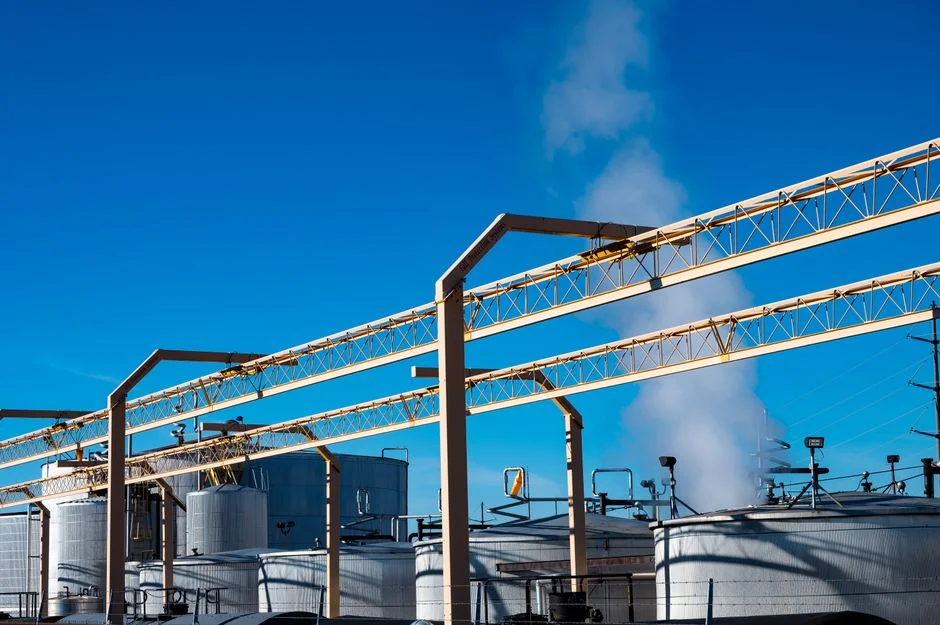
The correct technology is determined by the contaminant and failure mode, not by whether the equipment is described as an ETP. DAF, MBR, lamella clarification and UF perform different tasks; a factory may need several in series. The comparison below should therefore follow the sampling results, hydraulic profile and destination of the treated water.
DAF is a strong candidate when oil, grease, colloids and suspended solids dominate the pretreatment problem. Its selection should be tied to the measured contaminant load and the peak flow, including batch dumps that could otherwise exceed the flotation unit’s hydraulic capacity. A DAF receiving routine overload is not a substitute for adequate equalization or pretreatment capacity.
MBR is appropriate where biological treatment, automation and a compact installation are priorities. HydropureWater states that its integrated MBR wastewater treatment system produces near-reuse-quality effluent, with filtration below 1 μm, a 60% smaller footprint than conventional systems, and capacities from 10–2,000 m³/day. These are supplier claims. They require verification against the proposed duty, wastewater chemistry, product-water definition, aeration demand, sludge production and site constraints.
UF is appropriate where physical separation of bacteria, colloids and suspended solids is needed without chemicals, or where a membrane is required for pretreatment. HydropureWater states a flow range of 2,000–40,000 L/h, 0.03 μm PVDF membranes and turbidity input up to 300 ppm for its UF water treatment system. These limits define the supplied configuration; influent compatibility, flux, cleaning frequency and recovery still require project-specific verification.
Lamella clarification is appropriate where flocculation and solids separation can be controlled and sludge recirculation is part of the design. Advanced polishing should follow from the reuse target or contaminant profile rather than from a preference for more membrane stages. Nanofiltration has academic support for effluent polishing, while the Batam PCB example identifies copper as a contaminant that may require specialized removal. Do not add RO, EDI or desalination by default: each introduces rejection, pretreatment, energy and concentrate-management questions that must be answered for the intended product water.
| Technology | Best-supported role | Stated technical basis | Main buyer check |
|---|---|---|---|
| DAF | Oil, grease, colloid and solids pretreatment | HydropureWater: 4–300 m³/h across 13 models | Peak flow and contaminant loading |
| MBR | Compact biological treatment with membrane solids separation | HydropureWater: below 1 μm filtration; 60% smaller footprint; 10–2,000 m³/day | Definition and demonstration of “near-reuse quality” |
| Lamella clarification | Flocculated-solids separation | HydropureWater: 20–40 m/h surface loading; chemical use reducible by up to 30% | Settling test and chemical basis |
| UF | Physical barrier for bacteria, colloids and TSS | HydropureWater: 2,000–40,000 L/h; 0.03 μm PVDF; turbidity input up to 300 ppm | Fouling, cleaning and recovery |
| Nanofiltration or specialised removal | Reuse polishing or contaminant-specific separation | University of Twente thesis supports nanofiltration for WWTP-effluent polishing | Target specification and concentrate route |
How should peak flow, sludge and discharge reliability be engineered?
Peak hydraulic conditions determine whether an ETP contains wastewater or releases it. The JAMERE study “Pengaruh Kapasitas Cavitation Air Flotation Terhadap Penurunan Total Suspended Solid Berdasarkan Baku Mutu Air Limbah di PT. X,” published by the Journal of Applied Mechanical Engineering and Renewable Energy, found that on several days only 80% of waste sent from the production plant was treated. It also reported a 20.79% TSS out-of-specification rate against operational standards and linked reduced flotation capacity to high wastewater flow.
That documented sequence is important: incoming flow exceeded treatment capacity, levels in the accident and equalization ponds rose, and overflow into the environment became possible. For a Batam design, the corrective response is not automatically to copy the study’s proposed CAF addition. It is to verify that pretreatment and treatment units remain within their hydraulic and contaminant-loading duties during batch dumps, cleaning operations and abnormal production conditions.
Use three checks during ETP capacity calculation: sustained flow, peak flow and batch-discharge storage. Confirm whether equalization can absorb the difference between incoming flow and treatment capacity for the required operating duration. Check the treatment train downstream of the equalization tank because buffering is not a substitute for sufficient treatment capacity. The industrial ETP and DAF selection guide provides a transferable framework for connecting pretreatment loading with peak-flow verification.
Include solids handling in the scope. HydropureWater states that its plate and frame filter presses cover filtration areas from 1–500 m² and offer manual, hydraulic or fully automatic PLC-controlled dewatering. The selected arrangement must match sludge volume, solids content, polymer demand, cake-discharge method and available sludge-disposal route.
For discharge reliability, require high-level alarms, defined bypass destinations, representative influent and effluent sampling, treated-flow measurement and independent parameter monitoring. Operators need to see rising equalization levels, abnormal water quality and treatment-unit overload before an environmental release occurs. The plate and frame filter press should be integrated with that monitoring and containment strategy rather than treated as an isolated dewatering machine.
What should an industrial ETP supplier prove before you buy?
A supplier should demonstrate that its proposed system is a project-specific treatment train, not a catalogue package selected from average flow. The technical proposal should reference the factory’s wastewater analysis, normal and peak flow, batch schedule, treatment objectives, discharge or reuse route, utilities and civil constraints.
Ask for duty-point evidence, equipment sizing calculations, materials of construction, control philosophy, utility demand, maintenance tasks, spare-parts availability and commissioning tests. A guarantee must identify the parameter, influent concentration and flow at which it applies, together with the test method and acceptance condition. “Near-reuse quality” is not an acceptance criterion until the buyer defines the required water specification.
Check local execution capability, installation readiness, operator training, after-sales support and responsibility boundaries. The contract should identify whether the supplier supplies equipment only, supplies and installs it, or also performs civil works, commissioning and performance testing. Integration with existing drains, power, chemical systems, sludge handling and effluent sampling must be shown.
For a reuse or discharge train, request the proposed monitoring system and the records needed to demonstrate effluent quality monitoring. Membrane or filter-element proposals should include the applicable membrane data and consumables; the RO and UF membrane filter elements reference can help define the documentation request, but a product family is not proof of compatibility with the proposed feed.
Finally, verify generic case-study claims against the same wastewater, flow, operating schedule and compliance endpoint. A percentage from an unrelated factory does not establish performance at your site. Request a pre-acceptance test protocol, operating data at agreed loads and a remedy for failure to meet the specified duty and quality conditions.
| RFQ package | Supplier response required | Buyer acceptance check |
|---|---|---|
| Basis of design | Wastewater analysis, flow and batch data, destination and applicable requirements | Inputs match the factory’s records and permit conditions |
| Process proposal | Process flow, unit duties and control narrative | Every unit has a contaminant-removal task and verified capacity |
| Equipment and civil | Specifications, utilities, materials, footprint and installation requirements | Compatibility with drains, power, chemicals and soil conditions |
| Performance | Guarantees, test methods and acceptance procedure | Limits, influent basis and remedies are explicit |
| Operations | Training, maintenance, spare parts and support | Named responsibilities and handover records |
Frequently Asked Questions
How much does an effluent treatment plant in Batam cost?
There is no defensible price range without the wastewater analysis, required flow, treatment train, civil works, controls and sludge or reuse provisions. Request a quotation that separates equipment, installation, civil works, utilities, commissioning and consumables, and state whether chemical consumption and membrane replacement are included. Treat any performance-linked price as conditional on defined influent and flow conditions.
How should we size an industrial ETP for a Batam factory?
Start with the average flow, then identify the governing peak and batch-discharge pattern. Use those data to determine equalization and the required treatment duty; do not size every unit from the average. Ask the supplier to show the duty calculation, operating buffer and response to a batch dump. A preliminary envelope should be confirmed by representative sampling and process tests.
Which documents should we request before selecting an ETP supplier?
Request a process proposal, sizing calculations, equipment specifications, control narrative, utility demand, materials of construction, commissioning protocol, performance guarantees, training plan, maintenance schedule and local support responsibilities. Require the guarantee to state the guaranteed parameters, test method, influent basis and flow. Check references using the same wastewater and operating conditions.
Does effluent treatment alone satisfy our discharge obligations?
No. Treatment performance and discharge authorization are separate matters. The final train must match the current permit, sewer-acceptance conditions and receiving route confirmed by the relevant authority. The supplied research does not provide current Batam-specific numerical limits, so the buyer must obtain those requirements and include them in the RFQ and acceptance tests.
When should DAF, MBR and UF be combined instead of treated as alternatives?
Use DAF for oil, grease, colloid or solids pretreatment, biological treatment or MBR for biodegradable loads and membrane separation, and UF where a physical barrier or membrane pretreatment is needed. Combining them is justified when each stage has a defined removal task and the combined pretreatment and fouling risks remain manageable. The sequence must follow site data rather than a standard package.
Related Equipment
- industrial DAF pretreatment system — specifications, capacity range, and technical data