Start with the receiving sewer authority, not a generic mining limit
Mining and metals plants near Brownstown meet sewer pretreatment limits through the receiving POTW’s industrial-user permit, adopted local limits, applicable categorical pretreatment standards, sewer-use ordinance, and monitoring conditions. EPA’s 134-page Local Limits Development Guidance provides a five-step framework—identify pollutants of concern, collect and analyze data, calculate maximum allowable headworks loadings, implement limits, and address collection-system concerns—but it is guidance, not a permit. The permit and controlling regulations govern. Facilities characterize each wastewater stream, establish peak flow and pollutant loads, select treatment against final permit criteria, and maintain auditable sampling, flow, calibration, residuals, and corrective-action records.
The first engineering task is to identify the POTW that owns or operates the receiving sewer. Request its industrial-user application, sewer-use ordinance, local-limit schedule, discharge permit, monitoring conditions, fee schedule, and enforcement procedures. A regional pretreatment compliance workflow for mining and metals plants can organize the request, but it cannot replace the receiving authority’s documents.
EPA states in its 2021 guidance that indirect dischargers’ obligations are determined by POTW-issued permits or equivalent control mechanisms and applicable regulatory requirements; where guidance conflicts with a permit or regulation, the permit or regulation controls. The St. Joseph, Missouri study and Circleville example demonstrate methods for developing local limits. Neither establishes a Brownstown requirement. Likewise, equipment specifications and other municipalities’ studies are engineering references, not enforceable Brownstown criteria.
| Document or decision | What it establishes | What the project must obtain |
|---|---|---|
| Industrial-user permit or equivalent control mechanism | Facility-specific discharge conditions, monitoring, reporting, and enforcement duties | Issued permit, application requirements, fees, discharge point, sampling provisions, and renewal requirements |
| Adopted local-limit schedule | POTW-specific limits and supporting calculations | Current schedule, effective dates, supporting record, and applicable facility conditions |
| Categorical pretreatment standards | Federal discharge limitations and monitoring requirements where applicable | Industrial-category determination and written applicability analysis |
| Sewer-use ordinance | Connection authorization, prohibited discharges, fees, and local controls | Current adopted ordinance and all amendments |
| Unresolved project inputs | Information needed before treatment can be sized or accepted | Receiving POTW identity, discharge point, industry category, candidate pollutants, concentration or mass limits, monitoring frequency, and enforcement triggers |
Build a permit-to-compliance matrix
The permit-to-compliance matrix must separate concentration limits, mass-loading limits, categorical standards, prohibited discharges, monitoring, reporting, fees, and enforcement because each creates a different control and a different evidence requirement. A concentration limit does not replace a mass-loading limit, and neither establishes that the proposed equipment complies.
For every enforceable condition, identify representative stream samples, synchronized flow records, the calculation basis, the approved process description, the sampling point, analytical method, and acceptance result. EPA’s sequence is: determine pollutants of concern; collect and analyze data; calculate maximum allowable headworks loading; designate and implement local limits; and address collection-system concerns.
Maximum allowable headworks loading is an estimate of the upper pollutant loading that can enter a POTW without causing pass-through or interference. Maximum allowable industrial loading allocates permissible loading among controlled industrial sources. Neither term supplies the missing Brownstown limit: the final permit and adopted local-limit schedule must do that.
The October 2021 St. Joseph report illustrates the evidence behind an MAHL calculation. It used historical monitoring data and supplemental sampling during October, November, and December 2020 to calculate pollutant loads, site-specific removal efficiencies, domestic contributions, and recommended local limits. That study is an audit example, not a Brownstown limit set.
| Permit obligation | Required evidence | Treatment function | Acceptance evidence |
|---|---|---|---|
| Concentration limit | Representative samples, approved sampling point, and specified analytical method | Removal or conversion required for the regulated pollutant | Compliance result under stated operating conditions |
| Mass-loading limit | Synchronized concentration and flow records with an agreed calculation basis | Peak-flow and pollutant-load control | Calculated load at the permitted flow basis |
| Prohibited discharge | Process inventory and source-control records | Segregation, diversion, or separate treatment | Demonstration that the prohibited stream cannot reach the sewer |
| Monitoring and reporting | Calibrated instruments, sampling records, analytical results, and operating logs | Continuous monitoring and controlled treatment response | Passed calibration, alarm, excursion, and reporting tests |
| Categorical standard | Written applicability determination and applicable standard | Any additional treatment needed beyond local limits | Demonstration tied to the applicable categorical condition |
For biological process selection, compare MBR versus conventional activated sludge for mining wastewater against temperature, hydraulic retention, organic loading, and variable-loading behavior.
Characterize every wastewater stream before sizing equipment
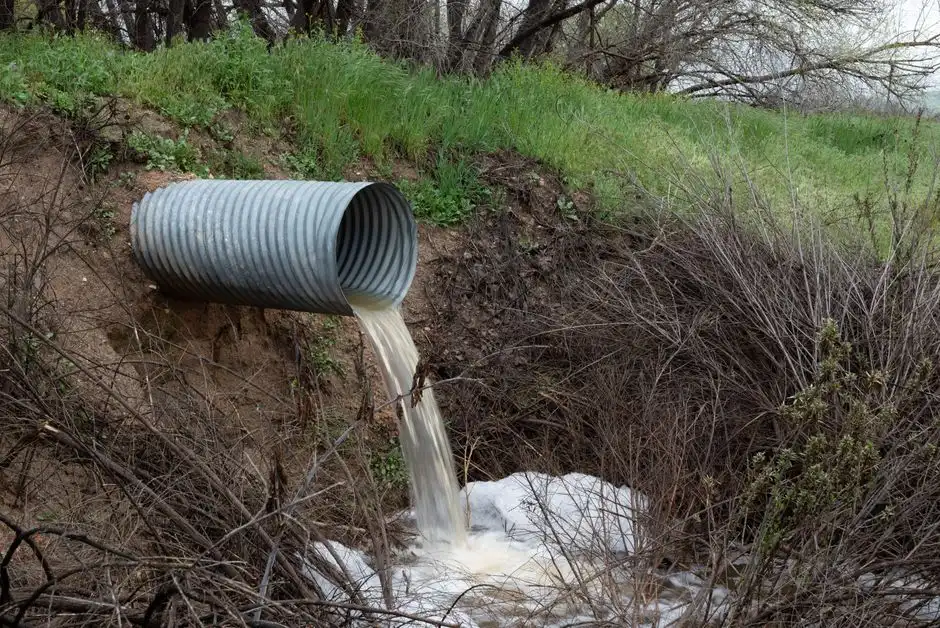
Average flow is not a defensible sizing basis for intermittent mining or metals wastewater because concentration compliance and mass-loading compliance are different tests. A permitted average concentration can coexist with an isolated high-strength event that exceeds a loading limit or causes collection-system interference.
Inventory contact water, drainage, washdown, floor and equipment washing, process water, cooling water, stormwater, and hauled waste. Segregate clean streams, streams requiring treatment, and wastes needing separate POTW approval. Screen each relevant stream for metals, suspended solids, oil and grease, ammonia, pH, flow variability, and every pollutant identified by the receiving POTW.
Request average and peak flow, duration of peaks, rainfall response, temperature, chemical additions, analytical method, reporting limit, method detection limit, and qualifiers. Continuous or time-stamped flow data are necessary because concentration alone does not establish allowable mass loading.
The Circleville study, as described in the supplied research, evaluated 16 pollutants and used seven consecutive days of 24-hour composite influent and effluent samples collected February 4–10, 2020. That program shows how to structure representative sampling; it is not a substitute for Brownstown sampling or its adopted limits.
| Characterization input | Why it affects the design | Minimum record requested |
|---|---|---|
| Stream inventory and discharge point | Defines segregation and treatment boundaries | Process map, source ownership, sampling points, and permitted connection |
| Average and peak flow | Determines hydraulic capacity, equalization, and sampling frequency | Time-stamped flow data for normal, peak, rainfall, and upset conditions |
| Pollutant profile | Determines whether physical, chemical, biological, or filtration functions are needed | Representative concentrations, loads, temperature, and analytical qualifiers |
| Intermittent discharges | Controls dilution assumptions and the risk of untreated surges | Event duration, sequencing, storage response, and diversion plan |
| Residuals route | Determines whether collected solids can be handled safely and lawfully | Expected solids character and approved destination |
Where chemical feed is considered, an automatic chemical dosing system for repeatable reagent application can be evaluated, but its tank capacity and control logic must follow the actual wastewater chemistry and flow record rather than catalog assumptions.
Choose treatment functions that match the pollutants and peak flow
No single physical unit establishes full permit compliance for mining or metals wastewater. Treatment selection should proceed from each enforceable criterion to the required removal function, then to representative testing and an acceptance protocol.
For suspended solids, oil and grease, and colloidal matter, evaluate DAF or clarification followed by solids handling. Size the system against actual peak flow, contaminant loading, required removal, and the residual-solids route. A DAF system for suspended solids and oil and grease pretreatment addresses that physical function; it does not establish dissolved-metals, ammonia, pH, or mass-loading compliance.
For dissolved metals or other difficult pollutants, evaluate chemical precipitation, filtration, or another specialist process using representative testing of the actual wastewater matrix. MBR equipment for mining wastewater treatment may be relevant to biological and solids-separation duties, while plate-and-frame filtration for solids dewatering addresses residual handling. Neither replaces a process demonstration tied to the permit.
For ammonia and other biological criteria, evaluate nitrification using temperature, hydraulic retention, organic loading, and variable-loading behavior. Integrate pH adjustment with the relevant removal process, and document target pH, chemical demand, dosing-control limits, and downstream impacts. PLC-controlled chemical dosing for pH adjustment and metals precipitation should be specified with capacity, alarms, interlocks, calibration access, and operating records.
For intermittent or high-strength flow, evaluate segregation and equalization before treatment, including storage response, diversion, and behavior when treatment is unavailable.
| Treatment function | Potential compliance role | Design evidence required | What it cannot prove alone |
|---|---|---|---|
| DAF or clarification | Remove suspended solids, oil and grease, and part of the colloidal load | Peak flow, contaminant loading, required removal, and solids handling | Dissolved-metals, ammonia, pH, or mass-loading compliance |
| MBR or other biological treatment | Organic removal, nitrification, and biological solids separation | Temperature, hydraulic retention, organic loading, and variable-load performance | Compliance where chemical precipitation or specialist polishing is required |
| Chemical precipitation and filtration | Remove dissolved metals or other difficult pollutants when supported by testing | Representative wastewater testing, reaction controls, residual analysis, and solids route | Compliance with criteria not represented in the test matrix |
| Equalization | Reduce peak-flow and loading effects before treatment and sampling | Event profile, storage response, mixing behavior, and upset plan | Pollutant removal by itself |
| pH correction | Support removal processes and maintain the permitted discharge condition | Target pH, chemical demand, control limits, and downstream effects | Removal of regulated pollutants by itself |
HydropureWater’s catalog ranges—DAF at 4–300 m³/h across 13 standard models, MBR at 10–2,000 m³/day, and UF at 2,000–40,000 L/h—are screening references only. They do not establish suitability, performance, or Brownstown capacity.
Design the treatment train for sampling and failure response

A defensible treatment train moves from flow measurement and equalization through physical removal, biological or chemical treatment, clarification or filtration, final polishing, pH correction, and a monitored discharge. Each stage needs a defined duty, an owner, a measurable response, and a documented failure mode.
Define approved sampling points and coordinate grab or composite sampling, inspector access, data transmission, reporting, and monitoring frequency with the POTW before commissioning. Provide calibrated instruments for flow, pH, and every continuously controlled parameter. Define alarms and responses for excursions, high level, chemical interruption, invalid readings, bypasses, and upset flow.
Where filtration is included, a UF system with a 0.03-micron PVDF specification may have a defined physical-separation function. That catalog attribute does not demonstrate dissolved-metals removal or compliance with a Brownstown discharge limit. A sedimentation tank for solids separation likewise requires project-specific sizing and performance evidence.
Require simultaneous flow and treatment-response data under normal and peak conditions. A catalog removal percentage or supplier statement is not acceptance evidence. The test should show how the train responds while concentrations, loads, chemical demand, residuals, and monitored parameters change together.
Turn permit criteria into acceptance tests and supplier requirements
Acceptance criteria must come from the final industrial-user permit: relevant pollutants, flow basis, sampling method, analytical methods, representative operating conditions, test duration, and required demonstration. Generic “removal efficiency” language is not comparable because it may omit the pollutant, flow condition, analytical method, or mass-load calculation.
Require each bid to state its flow basis, hydraulic and contaminant loading, chemical consumption, sludge yield, backup-power requirements, control philosophy, included accessories, exclusions, commissioning responsibilities, and performance criteria. Identify the exact permit condition behind every compliance claim and the test method demonstrating it.
Put equalization, solids handling, chemical storage, controls, sampling provisions, redundancy, commissioning, operator training, and maintenance in the common pricing basis. The DAF versus clarifier selection for mining wastewater provides a useful comparison structure, but the Brownstown permit and project data must set the acceptance basis.
| Bid item | Comparable information required | Acceptance check |
|---|---|---|
| Design basis | Average and peak flow, pollutant loads, temperature, permit criteria, and operating conditions | All bidders use the same approved basis |
| Performance | Permit condition, method, sampling point, duration, and calculation method | Claim is tied to a reproducible test |
| Equipment scope | Equalization, treatment, controls, storage, solids handling, sampling, redundancy, and accessories | No critical exclusion remains unpriced |
| Commissioning | Supplier duties, customer inputs, calibration, training, and demonstration responsibilities | Responsibilities are assigned and accepted |
| Schedule and cost | Itemized price, delivery assumptions, dependencies, milestones, and delay conditions | Price and schedule are commercially comparable |
The supplied research establishes no Brownstown project cost, lead time, or guaranteed removal performance. Require itemized quotations and proposed schedules from each vendor. Do not transfer the 90-day application lead time cited for an Oregon program into the Brownstown permit process.
Maintain an auditable compliance file after commissioning
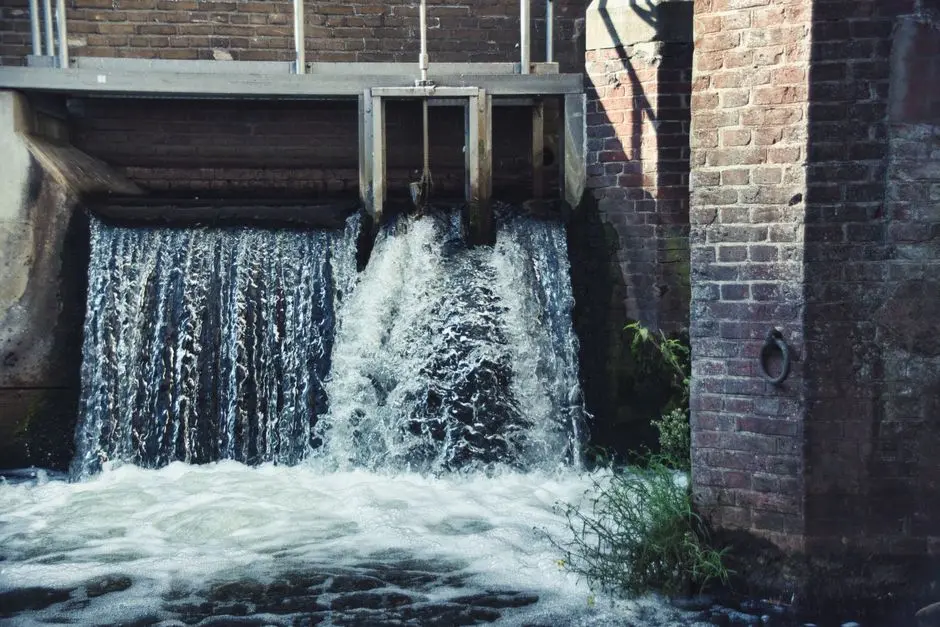
Successful commissioning does not end the compliance obligation because industrial-user monitoring remains part of the permit evidence. Maintain the industrial-user permit, wastewater characterization, POTW correspondence, approved process description, equipment drawings, chemical records, sludge-management records, calibration records, operating logs, analytical results, and corrective-action documentation.
Track concentration and mass load together. Operating flow records connect measured concentration to permitted loading and are necessary for interpreting excursions and demonstrating corrective action. Set recurring sampling and reporting according to the applicable permit and pretreatment program, not another municipality’s schedule.
Define corrective actions for failed samples, chemical shortages, bypasses, upset flows, and maintenance, including the permit’s notification and reporting steps. Review the local-limit basis when plant loading changes, a new pollutant appears, a requirement changes, or POTW collection-system concerns emerge. Chemical-use and cost controls should be addressed through wastewater chemical-dosing cost optimization without weakening dosing control, monitoring, or treatment response.
Frequently Asked Questions
Can a DAF system alone prove compliance for a Brownstown mining discharge?
No. DAF addresses suspended solids, oil and grease, and colloidal material. Additional biological, chemical, filtration, or polishing treatment may be required for ammonia, dissolved metals, pH, or mass-loading criteria, and the final industrial-user permit must identify the applicable conditions.
What data is needed to request a defensible equipment quote?
Provide the receiving POTW requirements, wastewater profile by stream, average and peak-flow basis, treatment objectives, residuals route, site constraints, monitoring plan, and acceptance criteria. Without those inputs, the quote cannot be compared on a defensible hydraulic and contaminant-loading basis.
How should bids be compared without inventing performance claims?
Require every bidder to identify the exact permit condition, analytical method, test protocol, sampling point, representative operating condition, flow basis, loading, controls, accessories, exclusions, commissioning scope, and schedule assumptions. Do not accept a general removal claim or catalog specification as acceptance evidence.
What should be included in ongoing pretreatment compliance records?
Keep the permit, sampling and analytical results, synchronized flow records, chemical and sludge logs, calibration records, alarms, excursions, corrective actions, and POTW correspondence. The file should show what happened, when it happened, what response was taken, and whether the response met the permit’s reporting requirements.
Can another city’s local limits be used for Brownstown?
No. EPA guidance is not a regulation, and local limits are POTW-specific. Use another city’s study only to understand methodology; rely on the receiving POTW’s adopted schedule, industrial-user permit, sewer-use ordinance, categorical standards, and applicable regulations for enforceable criteria.