How transportation wastewater changes the MBR versus CAS decision
For transportation equipment wastewater in Madisonville, MBR is usually the stronger option when wash-water variability, limited space, unreliable clarifier settling, or reuse of treated water justify the added equipment complexity. Conventional activated sludge remains attractive when wastewater is relatively uniform, land is available, the goal is basic BOD removal, and lower capital and operating costs take priority. MBR replaces secondary clarification with membrane separation and generally provides better solids control in a compact footprint, but fouling, cleaning, energy, and membrane replacement must be budgeted. Final selection depends on Madisonville-site flow, COD, TSS, oil and grease, pH, toxicity, reuse targets, and permit requirements.
The first procurement task is to define the wastewater train rather than compare equipment catalogs. Separate vehicle or equipment wash water, floor drainage, stormwater-contaminated process water, and concentrated oily discharges wherever practical. A drain connected to mixed sources may conceal the load that determines biological reactor volume, equalization requirements, membrane protection, and reuse feasibility.
Transportation washing can combine soluble detergents with grit, paint flakes, oil, and captured solids. That combination affects both processes, but it is especially consequential for MBR because retained solids and oil can increase membrane fouling. Equalization and upstream solids or oil removal should therefore be evaluated before selecting either biological process.
No Madisonville transportation-equipment wastewater values are supplied in the research, so flow, COD/BOD, TSS, oil and grease, pH, temperature, surfactants, toxicity, metals, and episodic wash-event concentrations must be measured rather than assumed. Characterize normal operation, wash peaks, and episodic discharges separately. The practical outcome is clear: select MBR when tighter solids control, compact installation, variable loading, or reuse potential controls the decision; retain CAS when the stream is uniform, land is available, and basic treatment is sufficient.
| Procurement stream | Information needed before comparison | Decision relevance |
|---|---|---|
| Vehicle or equipment wash water | Representative flow, COD/BOD, TSS, detergents, surfactants, oil and grease, pH, temperature, toxicity | Sets biological loading and membrane-fouling risk |
| Floor drainage and wash-cycle runoff | Peak flow, grit, settled solids, episodic wash events | Defines equalization and pretreatment capacity |
| Stormwater-contaminated process water | Runoff contribution, seasonal variability, solids entry | May widen the design flow and loading envelope |
| Oily or concentrated discharge | Source, concentration, free oil, surfactants, discharge frequency | May require segregation and oil/water separation |
The 2026 pretreatment requirements for EV and auto plants and pretreatment guide for fabricated-metals plants provide adjacent planning context, but Madisonville flow, wastewater composition, and sewer-authority requirements still require site-specific verification.
What each treatment process does
Conventional activated sludge uses microorganisms in an aeration tank to degrade soluble and particulate organics, followed by gravity settling in a secondary clarifier. Settled biological solids are returned to the aeration basin to maintain the active population, while excess sludge is removed for handling. CAS is therefore a two-stage separation arrangement: biological treatment first, then settling.
An industrial wastewater membrane bioreactor retains the biological stage but replaces the secondary clarifier with membrane modules that separate solids from treated water. The membrane barrier provides more consistent physical solids separation than gravity settling and permits a more compact arrangement. This makes MBR attractive where clarifier reliability, footprint, or reuse quality is important.
The MBR cost per m3 and lifecycle economics explains the process in terms a buyer can use for evaluation. The commercial comparison by Eureka Patsnap describes CAS as established and comparatively straightforward, while MBR provides more consistent solids separation and a smaller footprint because the secondary clarifier is removed.
An MBR is not automatically a complete high-purity reuse system. The HydropureWater verified product catalog describes an integrated MBR wastewater treatment system that combines activated-sludge treatment with submerged PVDF filtration below 1 μm. That physical separation removes suspended material, but it does not by itself establish suitability for boiler feed or other applications requiring dissolved-solids control. Reverse osmosis, demineralization, or another polishing step may still be required.
The central MBR trade-off is membrane fouling. Maintenance cleaning, chemical cleaning, scouring aeration, and eventual replacement must be included in the operating plan. A membrane system should therefore be compared with CAS as a complete treatment train, not as a reactor vessel that can be installed without the supporting controls, air scour, cleaning access, and operator procedures.
Performance, footprint, and operating comparison
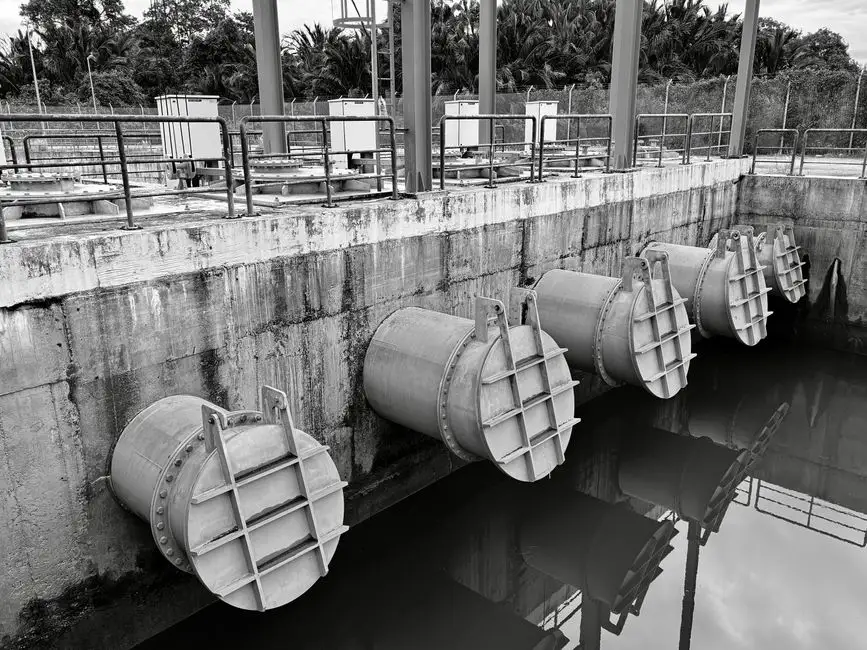
MBR generally provides the tighter solids separation and more compact equipment arrangement, while CAS generally offers the simpler biological process and lower capital and operating cost. The difference becomes material when the buyer is paying for poor settling, constrained land, variable wash loading, or water that can be reused.
The HydropureWater verified product catalog states that its integrated MBR system provides a 60% smaller footprint than conventional systems. That comparison depends on the treatment boundaries used: an MBR can eliminate the secondary clarifier and may reduce downstream filtration, but equalization, aeration, pretreatment, sludge handling, and site utilities remain in the project. CAS needs clarifier area, return-sludge and wasting provisions, and the civil works associated with gravity settling.
For directional comparison, HydropureWater’s 2026 chemicals-industry guide reports MBR TSS below 5 mg/L and turbidity below 1 NTU, compared with CAS TSS of 10–30 mg/L at best. These are chemicals-stream figures, not guarantees for transportation-equipment wastewater in Madisonville. The applicable outcome still depends on influent characterization, biological loading, membrane design, hydraulics, and operation.
The commercial MBR-versus-CAS comparison by Eureka Patsnap characterizes MBR as generally more adaptable to influent-composition and load variation. CAS can lose effective separation when sludge settling becomes unreliable, whereas the membrane physically retains biomass. That distinction is useful during episodic vehicle-washing events, provided the MBR also receives adequate equalization and pretreatment.
Sludge is not automatically the deciding factor. HydropureWater’s chemicals-industry guide reports 20–40% less waste activated sludge for MBR and notes that long biosolids-haul distances can make the difference financially relevant. Madisonville haul distance, dewatering performance, disposal route, and disposal cost must be established before that percentage is applied to a local lifecycle estimate.
| Evaluation point | MBR | Conventional activated sludge |
|---|---|---|
| Solids separation | Physical membrane barrier; less dependent on final settling | Secondary clarifier performance depends on sludge settleability |
| Footprint | Verified catalog claims 60% smaller footprint for the referenced integrated system; project boundaries must be confirmed | Includes aeration and clarifier civil works |
| Load response | Commercial comparison characterizes MBR as more adaptable to load variation | Performance can degrade during fluctuating loads and settling upsets |
| Reuse readiness | Closer to reuse-grade solids separation; dissolved-solids polishing may still be required | More likely to suit basic treatment or discharge compliance |
| Sludge | Chemicals-industry guide reports 20–40% less waste activated sludge; local validity must be checked | Requires return sludge, wasting, dewatering, and disposal provisions |
| Maintenance and staffing | Scouring, maintenance and chemical cleaning, replacement planning, and specialized operator knowledge | Established operating practices centered on aeration and sludge handling |
| Cost | Higher capital and operating costs, offset partly by reuse or avoided downstream treatment | Generally lower capital and operating costs where land and effluent quality permit |
The principal MBR disadvantages are therefore not limited to membrane price. They include higher capital and operating costs, fouling, cleaning requirements, and the need for specialized operator knowledge. Those costs must be tested against the value of reliable solids separation and reuse.
Pretreatment can determine which option is practical
Both MBR and CAS require pretreatment before reliable biological treatment or membrane operation can be assumed. HydropureWater’s 2026 chemicals-industry guide identifies equalization, pH control, and sometimes oil/water separation as common requirements. For transportation equipment facilities, that sequence should be adapted to debris, grit, captured wash solids, lubricants, detergents, and concentrated cleaning discharges.
Mechanical protection comes first. Screening removes rags and debris that could lodge in equipment. Grit removal is needed where floor drainage carries appreciable sediment. Oil and grease control protects biological activity and limits deposits or fouling on MBR components. A DAF system for oil and solids pretreatment may be relevant where the characterization supports it, but the buyer should require the equipment supplier to demonstrate performance with the actual waste rather than assume that flotation alone resolves emulsified oil or detergent.
Equalization controls the difference between a nominal average flow and the wash-cycle peaks that can upset biology or membrane flux. pH adjustment may be needed before biological activity can be relied upon; the automatic chemical dosing system represents one treatment approach, while dosing rate and chemical demand remain site-specific.
HydropureWater’s 2026 guide also states that chemical toxicity must be pretreated to avoid adverse membrane-flux effects. That principle extends to transportation streams containing solvents, caustic cleaners, detergents, or other industrial products. A membrane can retain biomass, but it cannot make a toxic or incompatible feed safe for the biological community.
The pretreatment sequence should be: characterize the stream; remove protectable solids; control oil and grease; stabilize pH and flow; then conduct biological treatability testing and membrane-compatibility testing before final sizing. A bench test may establish whether biological activity is inhibited. A pilot trial is more defensible when variability, toxicity, or fouling potential is significant.
| Decision stage | Required evidence | Effect on MBR or CAS selection |
|---|---|---|
| Stream characterization | Normal, peak, and episodic flow and pollutant data | Defines reactor and equalization basis |
| Mechanical protection | Debris, grit, and suspended-solids observations | Reduces plugging and downstream maintenance |
| Oil and grease control | Source concentration, emulsion characteristics, and disposal route | May add DAF or another unit operation |
| pH and flow stabilization | Range, duration, chemical demand, and operating sequence | Protects biology and stabilizes membrane loading |
| Treatability and membrane compatibility | Bench or pilot results for representative mixed waste | Confirms viability before equipment commitment |
Reuse is the strongest economic reason to choose MBR
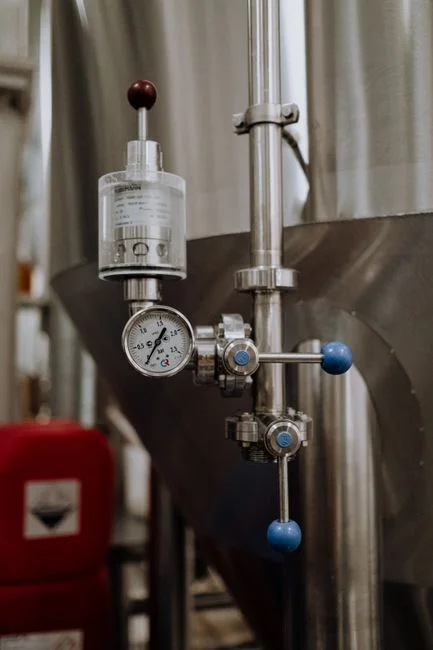
Reuse should be evaluated as a water-balance and treatment decision, not as a reason to assume that MBR effluent is suitable for every purpose. Non-contact process use may require less polishing than boiler feed or another high-purity application, but the receiving equipment’s limits must be identified first.
The commercial comparison by Eureka Patsnap identifies MBR as the preferred option when high-quality effluent for reuse is required, and CAS as more appropriate where basic BOD removal and discharge compliance are sufficient. That distinction becomes financial only when the buyer can identify how much water is reused, what quality it must have, and what it displaces.
HydropureWater’s 2026 chemicals-industry framework places MBR capital cost at roughly 1.4–1.8 times CAS and operating cost at roughly 1.2–1.5 times CAS per cubic meter for a comparable train. The guide also states that reuse can shorten the payback period. Those ratios are directional chemical-industry comparisons, not Madisonville budget estimates, because they exclude a site-specific balance of purchased water, discharge charges, chemical use, labor, maintenance, and sludge disposal.
MBR effluent and reuse-grade water should be kept separate in the design. An industrial reverse-osmosis water-purification system may be needed if dissolved salts or other contaminants prevent direct reuse. An industrial water-softener system addresses a different quality requirement. The need for either must follow from the specified endpoint and membrane permeate analysis, not from the label “reuse.”
The commercial case should credit only verified savings or value: avoided purchased process water, reduced chemical demand, avoided discharge charges, and usable reuse volume. A mass balance must account for wash-line losses, quality downgrades, downtime, membrane cleaning interruptions, and the water consumed by backwashing or other plant operations.
Cost and procurement checklist for a Madisonville project
Comparable bids require complete treatment trains with the same performance duty and discharge boundary. An equipment price that excludes equalization, pretreatment, sludge handling, controls, civil work, or commissioning is not comparable with a full CAS installation.
For MBR, request separate pricing for equalization, pretreatment, biological reaction capacity, membrane modules and frames, aeration and scouring, controls, chemical systems, sludge handling, redundancy, installation, commissioning, and training. Require membrane area, design flux, membrane material, expected cleaning frequency, cleaning chemicals, replacement assumptions, and spare-parts strategy.
For CAS, request clarifier area, aeration and blower requirements, return-sludge and wasting provisions, standby capacity, sludge dewatering and removal, controls, and the civil works required for gravity settling. A plate-and-frame sludge filter press should be included in either bid if biosolids require mechanical dewatering.
Ask each bidder to guarantee flow, TSS, turbidity, COD or BOD, ammonia or total nitrogen where required, and the specified reuse-water endpoint. The guarantee should identify test methods, sampling points, acceptance periods, and remedies. Do not treat catalog effluent claims as site guarantees.
HydropureWater’s 2026 chemicals-industry framework gives directional MBR economics of approximately 1.4–1.8 times CAS capital cost and 1.2–1.5 times operating cost per cubic meter for a comparable train. Request a Madisonville-specific quotation rather than adopting those ratios as a project budget.
| Bid package | MBR information required | CAS information required |
|---|---|---|
| Process capacity | Design flow, load, MLSS/SRT basis, membrane area, design flux | Design flow, load, aeration volume, SRT basis, clarifier loading |
| Mechanical equipment | Modules, frames, blowers, scouring, pumps, controls | Diffusers, blowers, pumps, clarifier drives, controls |
| Pretreatment | Screening, grit, oil/grease, equalization, dosing | Screening, grit, oil/grease, equalization, dosing |
| Sludge handling | Withdrawal, wasting, thickening or dewatering, disposal | Return sludge, wasting, thickening or dewatering, disposal |
| Performance | Guaranteed effluent and reuse endpoint | Guaranteed effluent and reuse endpoint |
| Lifecycle inputs | Electricity, chemicals, cleaning, replacement, labor, disposal, downtime | Electricity, chemicals, sludge hauling, labor, disposal, downtime |
The evaluation should include electricity, chemicals, membrane cleaning, membrane replacement, biosolids hauling, operator labor, disposal, and downtime over the buyer’s planning horizon. Use the MBR cost per m3 and lifecycle economics as a framework, then replace every unavailable site input with a bidder value or a clearly identified allowance.
Recommended selection path
The most defensible selection follows the wastewater evidence in sequence rather than beginning with a preferred treatment brand.
- Characterize the waste. Sample normal operation, wash peaks, and episodic discharges. Establish flow, COD/BOD, TSS, oil and grease, pH, temperature, detergents, toxicity, and relevant metals.
- Define the destination. Confirm whether the treated water will be discharged, reused for non-contact process purposes, or require higher-purity polishing. Obtain the current Madisonville site permit and applicable sewer-authority pretreatment limits; the supplied research provides no site-specific limit.
- Screen pretreatment. Identify protection needed for debris, grit, oil and grease, pH, flow, and toxicity. Complete biological treatability testing and membrane-compatibility testing where variability or toxicity is material.
- Compare complete trains. Evaluate net cost, footprint, redundancy, operator capability, maintenance access, utility demand, civil works, and lifecycle risk.
- Select or refine the concept. Choose CAS for a stable, lower-complexity stream with adequate land and basic treatment needs. Choose MBR for tighter solids control, constrained space, variable loading, or valuable reuse. Consider a hybrid membrane retrofit when existing biological capacity can be retained; evaluate the DF-series flat-sheet MBR membrane module only after compatibility testing. For polishing applications, define RO/UF needs from measured residual contaminants rather than assume they are required.
If characterization remains incomplete, the correct procurement decision is to defer final sizing. A conceptual comparison can still establish which data the next testing and bidding phase must produce.
Frequently Asked Questions
Is MBR more expensive than conventional activated sludge for a Madisonville transportation facility?
MBR generally requires more capital and operating expenditure. HydropureWater’s 2026 chemicals-industry guide reports roughly 1.4–1.8 times CAS capital cost and 1.2–1.5 times operating cost per cubic meter for a comparable train. A Madisonville budget requires a site-specific quote covering equalization, pretreatment, utilities, membrane cleaning and replacement, sludge handling, installation, and commissioning.
What information is required to size an MBR or CAS system?
Valid sizing requires flow, COD/BOD, TSS, oil and grease, pH, temperature, toxicity, reuse target, and operating schedule, including normal and peak conditions. The HydropureWater verified catalog gives a product range of 10–2,000 m³/day, but that is a catalog range—not a site-sizing rule or performance guarantee. Ask bidders to document the design flow, organic loading, biological basis, membrane area and design flux, or clarifier loading.
How should a buyer select an MBR supplier?
Require guaranteed performance at the stated flow and effluent endpoint, membrane material and area, design flux, cleaning strategy and chemicals, redundancy, controls, installation boundaries, commissioning tests, training, and lifecycle-cost support. Also request spare-parts availability, membrane-replacement assumptions, operator competency requirements, and references for comparable wastewater service. The MBR cost per m3 and lifecycle economics can support bid review, but the supplier commitments must be project-specific.
Does either MBR or CAS guarantee compliance with Madisonville discharge and pretreatment requirements?
No. Neither process guarantees a permit outcome without a defined influent, controlled operation, and an applicable compliance endpoint. The buyer must compare the proposed effluent and pretreatment train with the facility’s current permit, sewer-authority requirements, and any reuse specification. Confirm current local requirements during design and before finalizing the bid; the supplied research does not establish Madisonville-specific limits.