Separate the data center’s wastewater streams
A data center in Ulaanbaatar generally needs two treatment assessments: continuous cooling-tower blowdown and any domestic or process wastewater. The priority is to characterize source-water hardness, silica, alkalinity, conductivity, biocide residues and suspended solids, then decide whether treated blowdown can return as cooling makeup, requires discharge pretreatment, or must enter a partial or full zero-liquid-discharge train. UF can remove solids and biological material, while RO can remove dissolved salts and produce reusable permeate. Because Ulaanbaatar’s industrial pretreatment and discharge monitoring are incomplete, the design should preserve a compliant disposal contingency rather than assume sewer acceptance.
Cooling-tower blowdown is the concentrated residual from evaporative cooling. Water leaves the circulating loop as vapor, while dissolved solids, treatment chemicals, corrosion products and biological material remain and accumulate. The Water Utility Report, updated 2026-04-14, notes that blowdown may also contain elevated salts, heavy metals, biocides, corrosion inhibitors and altered pH.
Keep domestic sewage, equipment-room drainage, process wastewater, fire-water runoff and cooling blowdown as separate streams until sampling demonstrates that they can be combined. Blending can dilute a concentrated stream, but it can also introduce sanitary loading, surfactants or variable chemistry into a membrane feed. The World Bank’s October 2024 policy paper found that approximately 500 factories connected to Ulaanbaatar’s central network discharge about 44,000 m³/day, while a vast majority have little or no pretreatment. Shared industrial wastewater therefore cannot be assumed uniform.
Prepare a source-water and discharge inventory covering average and peak flows, seasonality, cooling chemical programs, storm events, storage capacity and emergency disposal. For additional stream-separation guidance, compare this approach with the data-center wastewater treatment guide for Johor Bahru and the cooling-blowdown treatment requirements for a data center.
Use Ulaanbaatar’s water and industrial-wastewater context
Ulaanbaatar’s industrial-water conditions make discharge acceptance and reuse-water quality two separate engineering questions. The World Bank’s October 2024 policy paper reports that the city is home to about half of Mongolia’s 3.45 million inhabitants and that its urban population expanded by more than 70% over the preceding two decades. The same document estimates that approximately 500 factories connected to the central wastewater network discharge about 44,000 m³/day, with most having little or no pretreatment.
Monitoring is also incomplete. The World Bank estimated that about half of commercial and industrial discharge into the central wastewater network was neither registered nor monitored and therefore was not subject to pollution fees. That does not establish the standard that will apply to a data center, but it does show why an assumption of uniform industrial wastewater would be unsafe.
There is a local reuse precedent. The MCC Compact Agreement described by the World Bank in October 2024 includes a water-recycling plant intended to supply recycled water from the new Central Wastewater Treatment Plant to CHP Plants 3 and 4 for cooling. This demonstrates that cooling-water reuse has a local institutional precedent. It is not a universal approval route: the relevant authority, discharge standard, discharge agreement and reuse-water quality specification still require confirmation for the proposed data center.
The tariff structure also needs local checking. The World Bank reported that water-use fees and water-service charges did not reflect the cost of delivering the service, while wastewater discharge was regulated by multiple water agencies. A Water Pollution Compensation Fee could apply if effluent quality exceeds discharge standards. Consequently, neither avoided discharge cost nor a pollution-fee saving can be assumed during concept design.
The Water Utility Report’s 2026-04-14 warning is the central design implication: recycled water reduces freshwater demand but changes the chemistry and pretreatment challenge. The same site-specific water-quality questions discussed in its cooling-blowdown treatment requirements for a data center remain relevant, but Ulaanbaatar’s receiving-system conditions must be verified locally.
Characterize cooling blowdown before selecting equipment
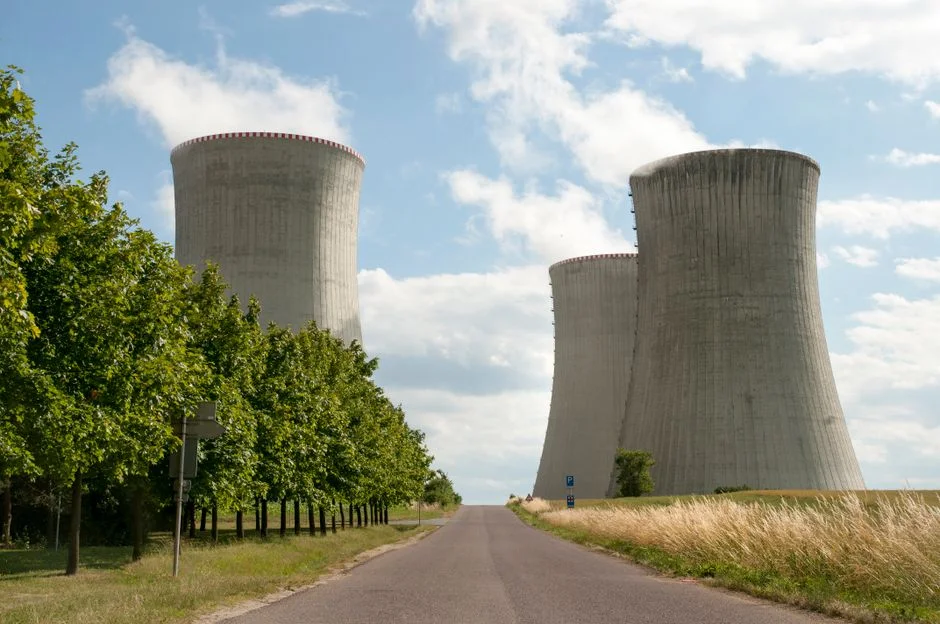
Blowdown composition follows the concentration mechanism: as water evaporates, the dissolved and nonvolatile constituents remain. Genesis Water Technologies states that blowdown TDS is typically 4–8 times makeup-water TDS and ranges from 1,200 to 6,000 mg/L, depending on cycles of concentration and source-water quality. The same source reports typical suspended solids of 10–50 mg/L; these are reference values, not guaranteed Ulaanbaatar site conditions.
Test conductivity, TDS, calcium, magnesium, silica, alkalinity, pH, turbidity, suspended solids, relevant metals, residual biocide, corrosion-inhibitor residuals and organics. Record the cooling cycles of concentration and chemical program because Genesis Water Technologies reports that a tower operating at four cycles typically loses approximately 25–30% of makeup water as blowdown.
| Parameter | Design relevance | Evidence or required site input |
|---|---|---|
| TDS and conductivity | Sets osmotic pressure, concentrate risk and the need for TDS reduction | Genesis Water Technologies reports blowdown at typically 4–8 times makeup-water TDS and 1,200–6,000 mg/L; measure site values |
| Calcium, magnesium, silica and alkalinity | Identifies scaling potential and pretreatment requirements | Measure seasonal concentrations and saturation tendency |
| Suspended solids and turbidity | Indicates fouling load before UF, NF or RO | Genesis Water Technologies reports a typical 10–50 mg/L suspended-solids range; do not assume it |
| Biocide, inhibitor and organic residuals | Checks membrane compatibility and discharge obligations | Obtain the complete current chemical program and product data |
| Cycles of concentration | Controls blowdown volume and concentration | Genesis Water Technologies reports approximately 25–30% makeup-water loss at four cycles |
The main fouling mechanisms are precipitation of calcium, magnesium, silica and alkalinity compounds, biological growth, corrosion products and incompatibility with legacy cooling chemicals. A multimedia filtration stage may be required, while an automatic chemical dosing system should be assessed against the actual biocide, corrosion-control and antiscalant program.
Request seasonal source-water and blowdown datasets before sizing. The supplied research establishes no universal Ulaanbaatar flow or chemistry for this project, so equipment selection based only on the city name would not be defensible.
Choose the treatment objective before choosing a process
The end use determines the treatment train: cooling makeup, compliant discharge, partial zero liquid discharge, or full zero liquid discharge are different performance objectives. Genesis Water Technologies reports 60–85% recovery for cooling-tower makeup reuse, while discharge compliance depends on the permit parameters and receiving-system limits.
The supplied research does not establish the numeric discharge limits applicable to this Ulaanbaatar project. Identify the receiving authority, applicable standard, sampling protocol and written discharge conditions before selecting UF, NF, RO or evaporation. Do not design reuse around a sewer connection that has not been accepted in writing.
| Objective | Principal output | Residual-management requirement |
|---|---|---|
| Cooling makeup reuse | Water with controlled scaling, solids, biological content and treatment chemistry | Manage residual concentrate or blowdown through an accepted route |
| Compliant discharge | Water meeting the site-specific permit and receiving-system conditions | Retain a contingency route for off-spec water and upsets |
| Partial zero liquid discharge | Reclaimed water plus a smaller concentrated residual stream | Secure acceptance or removal terms for the concentrate |
| Full zero liquid discharge | Reclaimed water and a solid residual | Define salt handling, equipment reliability and solid-disposal acceptance |
Partial ZLD concentrates and evaporates residual liquid to reduce disposal volume; full ZLD adds crystallization and eliminates the liquid-waste stream. Neither should be selected automatically. Compare freshwater savings, discharge cost, chemical consumption, membrane cleaning, energy, operator labor, concentrate or salt removal, and downtime over the full lifecycle.
If RO or NF is selected, specify membrane elements and replacement strategy with the RO and UF membrane range, but make the final selection from pilot performance and site chemistry rather than catalog limits.
Build a treatment train for the likely Ulaanbaatar use case
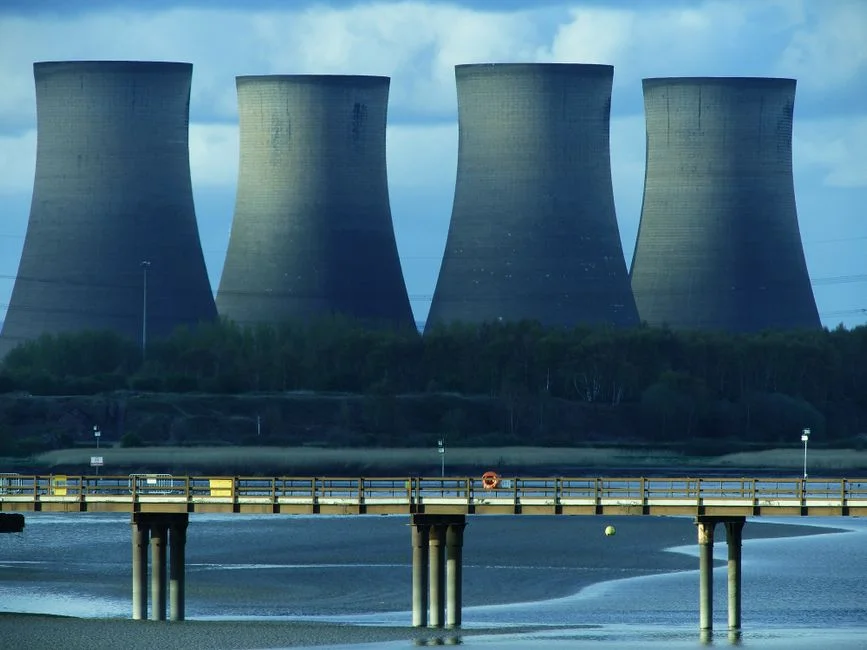
A defensible train starts with the cooling system, not the treatment plant. Genesis Water Technologies states that side-stream filtration is commonly sized at 1–5% of total circulation flow and that self-cleaning spiral filters provide 10–25-micron filtration. This stage reduces solids and biological loading before a recovery train and should be considered alongside changes to cycles of concentration and cooling chemistry.
Add UF where biological and particulate removal is the main objective or where membrane pretreatment is required. The supplied catalog describes hollow-fiber PVDF systems with 0.03-micron pores, capacities from 2,000 to 40,000 L/h, turbidity acceptance up to 300 ppm, automatic backwash and air scour. A hollow-fiber UF system for blowdown pretreatment is therefore technically relevant, but its actual flow and feed acceptance must match the measured site conditions.
For cooling-makeup reuse or material TDS reduction, evaluate RO after solids removal and chemical conditioning. Genesis Water Technologies reports 95–99% dissolved-solids removal, permeate TDS of 10–50 mg/L, operating pressure of 150–400 psi and blowdown-RO recovery of 50–85%. An industrial RO system for cooling-water reuse should therefore be assessed with antiscalant dosing, filtration below 10–15 microns and a defined cleaning strategy.
Consider NF when hardness, rather than total TDS, drives the constraint. The supplied figures are 75–150 psi operating pressure, 70–85% recovery and permeate TDS at roughly 30–50% of feed concentration. NF is not a substitute for RO where silica, chloride or overall dissolved-solids removal is required.
| Process step | Use when | Key design input |
|---|---|---|
| Cooling optimization and side-stream filtration | Always considered before recovery | Circulation flow, water quality, 1–5% filtration benchmark and 10–25-micron spiral-filter reference |
| UF | Particulate and biological removal or membrane pretreatment is required | Site turbidity, solids, biological loading and flux testing |
| NF or RO | Hardness removal or broader dissolved-solids reduction is required | Target quality, scaling analysis, recovery and concentrate route |
| Chemical conditioning | Scale, corrosion, disinfection or biological control must be maintained | Cooling chemistry compatibility and membrane-fouling tests |
| MVC or evaporation | Residual disposal is restricted or partial ZLD is justified | Concentrate flow, available energy and residual-disposal terms |
| Crystallization | Full ZLD is required and justified | Salt chemistry, solids handling, waste acceptance and lifecycle cost |
If residual disposal remains restricted, Genesis Water Technologies reports 95–98% MVC recovery from concentrate, distillate below 10 mg/L TDS and energy use of 15–25 kWh per 1,000 US gallons of distillate. Reserve full ZLD crystallization for sites where liquid discharge is prohibited, unavailable or economically indefensible; the supplied estimate is $3–8 million in capital and $5–15 per thousand gallons treated for data-center ZLD.
Compare treatment outcomes and commercial exposure
Generic cost benchmarks provide a screening frame, not a Ulaanbaatar budget. Compare each route by feed suitability, recovery, product quality, residual fate, energy demand, capital exposure, operating cost and operator complexity.
| Option | Supplied reference benchmark | Commercial limitation |
|---|---|---|
| RO blowdown treatment | $250,000–$500,000 installed for 50,000 GPD; $1.50–$3.00 per thousand gallons treated, according to Genesis Water Technologies | Not a Ulaanbaatar quotation; excludes site-specific civil work and local pricing validation |
| MVC | $1–3 million for 10,000–30,000 GPD and 15–25 kWh per 1,000 US gallons of distillate, according to Genesis Water Technologies | Requires local energy, equipment and construction validation |
| Full ZLD | $3–8 million capital and $5–15 per thousand gallons treated, according to Genesis Water Technologies | Economics depend on discharge availability, utility costs and solid-waste terms |
UF is appropriate mainly for solids, biological control and pretreatment. NF is the intermediate option when hardness dominates. RO provides the broadest dissolved-solids separation and therefore suits reuse or TDS-controlled discharge, but it transfers much of the burden to concentrate handling. Partial ZLD reduces that liquid volume while retaining a residual disposal obligation. Full ZLD removes the liquid stream but adds crystallization, salt disposal, higher energy demand and greater operating complexity.
Do not derive a Ulaanbaatar return on investment without local freshwater prices, wastewater tariffs, pollution or compensation fees, energy prices, brine-disposal terms, staffing and construction costs. The World Bank’s October 2024 finding that tariffs did not reflect service-delivery costs reinforces the need to request current local tariff data. Additional procurement context can be found in the water-treatment cost and ROI framework and the industrial-effluent compliance guide, without treating either as a substitute for Ulaanbaatar inputs.
Move from desktop design to an implementation checklist
The equipment specification should follow a sequence of evidence gates, not a generic technology catalogue.
- Commission representative source-water and blowdown sampling across operating and seasonal conditions.
- Obtain written confirmation from the relevant water, sewer and environmental authorities covering discharge, reuse, sampling, reporting and residual management.
- Define design flows for average and peak blowdown, domestic and process wastewater, and emergency storage without inserting unsupported values into the blueprint.
- Pilot the proposed membrane train with site water to establish flux, scaling tendency, cleaning frequency, recovery and concentrate chemistry.
- Specify online monitoring for flow, conductivity or TDS, turbidity, pH, differential pressure and critical treatment-chemical residuals.
- Define operating triggers, bypass actions and the tested contingency route for off-spec water.
- Price pretreatment, chemicals, membranes, energy, waste removal, monitoring, operator training and standby capacity over the full lifecycle.
Before detailed design, agree the acceptance basis in writing: design flow, product-water specification, recovery guarantee, concentrate quality, membrane flux, cleaning frequency, test protocol and treatment obligations. The supplied research does not provide project-specific limits, so acceptance criteria must be developed from the confirmed authority requirements and pilot results.
Use the treatment valves, filters and media range to identify likely auxiliary items, and prepare the operating team for recovery-related issues using ultrafiltration troubleshooting for data-center pretreatment.
Frequently Asked Questions
Can a wastewater treatment system be sized for a Ulaanbaatar data center from the city name alone?
No. Equipment sizing requires measured source-water and blowdown chemistry, average and peak flows, cycles of concentration, the intended reuse rate, available storage and an accepted residual-disposal route. No supplied source establishes a universal Ulaanbaatar flow or chemistry for this project. Require the supplier to state its feed basis, design flow and performance guarantees in those site-specific inputs.
What should the buyer request when comparing treatment costs and budgeting?
Request a written lifecycle quotation based on measured feed flow and chemistry, not a city-wide unit-price estimate. It should identify pretreatment, chemicals, membrane replacement, energy, waste removal, monitoring, operator labor and standby scope separately. The supplied RO, MVC and full-ZLD figures are generic benchmarks, not Ulaanbaatar quotations; local freshwater prices, wastewater tariffs, pollution or compensation fees, energy prices and residual-disposal terms are required before calculating savings.
Is UF sufficient, or are NF and RO necessary?
UF alone is appropriate when biological and particulate removal is the main requirement, but it does not remove dissolved salts. NF is justified when hardness dominates the constraint; Genesis Water Technologies reports 70–85% recovery and permeate TDS at roughly 30–50% of feed concentration. RO is more appropriate for broader TDS reduction or cooling-makeup reuse, with 95–99% dissolved-solids removal and 50–85% blowdown recovery reported by Genesis Water Technologies.
How should the owner select a supplier and avoid a performance gap?
Evaluate suppliers against a common data package: representative feed analysis, design-flow basis, pretreatment requirements, recovery and permeate guarantees, membrane flux, cleaning assumptions, chemical compatibility, reject-water handling, redundancy and operator training. Require a pilot where site-water scaling or fouling remains uncertain, and require the contingency route to be documented before awarding the main equipment package. Relevant evidence includes the RO and UF membrane specifications and ultrafiltration troubleshooting considerations for data-center pretreatment.