What Makes Saratov Data-Center Water Treatment Different?
Saratov data-center wastewater treatment cannot be specified from a generic Russian or Moscow profile because the controlling inputs are site-specific: source-water chemistry, cooling configuration, winter discharge conditions, sewer acceptance, and the chosen reuse route. The treatment design must first establish the local water and permit basis, then quantify blowdown and treatment duty before selecting equipment. This is especially important where the facility is preparing for higher-density AI racks: cooling demand, blowdown composition, and reuse targets can change before the first treatment skid is delivered.
Request a current certificate for the actual Saratov source water, covering TDS, hardness, silica, conductivity, pH, and temperature. Do not transfer Moscow chemistry or Moscow regulatory assumptions to Saratov without confirmation. Also document whether the cooling architecture is evaporative or hybrid, the design cycles of concentration, drift losses, winter operating conditions, and planned load changes.
The same screening must confirm the applicable sewer pretreatment conditions, receiving-water route, permitted daily discharge, temperature limits, and whether a water-scarcity or zero-discharge commitment applies. The 2026 Moscow cooling-blowdown treatment guide identifies preliminary design inputs of pH 7.5–9.0, silica 20–80 mg/L as SiO₂, and 30–40°C. These are preliminary characterization targets, not confirmed Saratov values. The supplied research provides no Saratov-specific temperature limit, so the buyer must obtain current utility and permit requirements before designing equalization for thermal mitigation.
| Engineering gate | Information required for Saratov | Why treatment sizing depends on it |
|---|---|---|
| Source water | Current certificate for TDS, hardness, silica, conductivity, pH, and temperature | Sets concentrate chemistry, scaling risk, membrane recovery, and pretreatment demand |
| Cooling design | Architecture, CoC, drift, winter temperature, and planned AI-load changes | Defines blowdown flow, temperature buffering, and future capacity |
| Discharge route | Sewer acceptance, receiving-water requirements, temperature limit, daily volume, and pretreatment conditions | Determines whether discharge, reuse, MLD, or ZLD is technically viable |
| Policy | Water-scarcity or zero-discharge requirement | May override the lowest-cost discharge concept |
Build the Cooling-Water Balance Before Selecting Equipment
The treatment flow should come from an auditable site water balance, not from IT load alone. The HydropureWater Moscow guide calculates approximately 720,000 L/day of makeup water for a 20 MW site at 1.8 L/kWh, citing Ecologix 2025. That figure is an example, not a Saratov design value: Saratov makeup demand must be recalculated from actual or guaranteed IT load, measured WUE, cooling architecture, and operating mode.
For an evaporative cooling system, calculate theoretical blowdown as B = E/(CoC − 1), where E is evaporation and B is blowdown. Genesis Water Tech states that at 4 CoC, blowdown equals 25% of makeup; at 6 CoC, it equals 20%. Moving from 4 to 6 CoC therefore reduces blowdown by 20%, not 50%. The same guide’s illustrative 20 MW case at CoC 5 gives approximately 180,000–220,000 L/day of blowdown, but this remains a worked-example scale rather than a Saratov design value.
Reconcile the theoretical balance with measured makeup, blowdown, evaporation, drift, emergency dumps, chemical dilution water, and off-spec reuse. Genesis Water Tech reports that actual blowdown can exceed theoretical calculations by 15–30% because of unmeasured losses and emergency dumps. The HydropureWater Moscow guide recommends 24–48 hours of equalization HRT and oversizing by 20–30% for possible AI-driven rack-density increases; these are design recommendations in the cited guide, not Saratov acceptance criteria.
| Water-balance component | Calculation or measurement | Procurement consequence |
|---|---|---|
| Makeup | Actual IT load × site-specific WUE, reconciled with meter data | Sets source-water demand and treatment feed |
| Evaporation | Measured from operating data or a validated site model | Drives the CoC-based blowdown equation |
| Blowdown | E/(CoC − 1), then reconciled with actual discharge | Sets equalization and treatment capacity |
| Other losses | Drift, emergency dumps, dilution water, and off-spec reuse | Creates operating and future-capacity allowances |
| Equalization | 24–48 h HRT; 20–30% future-capacity allowance, per the Moscow guide | Defines basin volume and mixing duty |
Characterize the Wastewater and Blowdown Streams
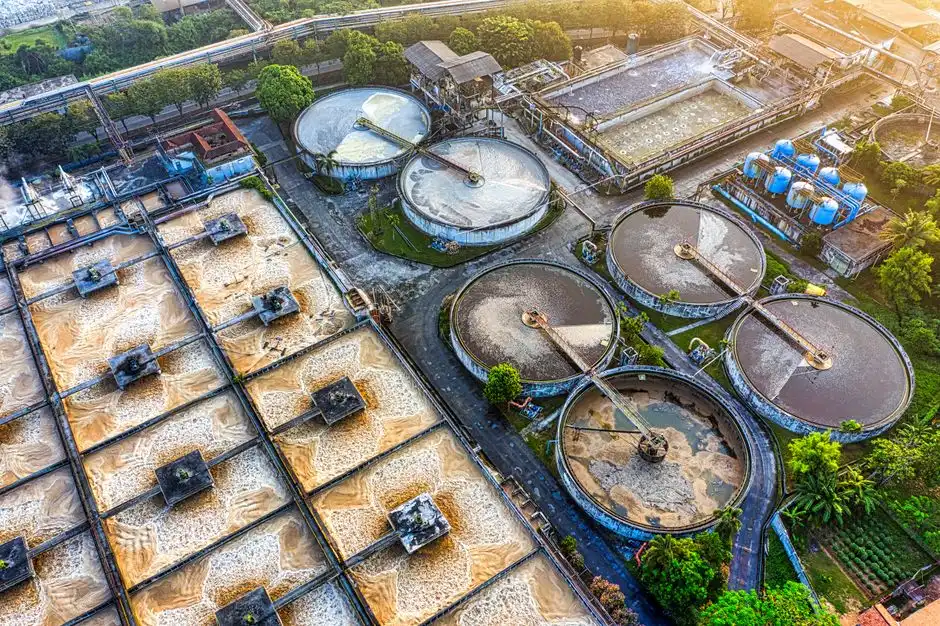
Equipment selection should follow representative sampling, not a generic wastewater specification. Sample makeup, circulating water, and blowdown across the operating conditions expected at Saratov, including startup, normal load, peak load, winter operation, and chemical-control changes. Include pH, conductivity, TDS, hardness, silica, suspended solids, oil and grease if present, temperature, residual biocides, phosphonates, and Cu/Zn from corrosion-inhibitor breakdown.
The HydropureWater Moscow guide gives pH 7.5–9.0, silica 20–80 mg/L as SiO₂, and 30–40°C as preliminary design inputs. Its cited 1,500–3,000 ppm blowdown TDS window applies to moderate-hardness supply at CoC 5–6. Neither the chemistry envelope nor that TDS range is confirmed for Saratov; calculate the project range from the certified supply TDS and selected CoC.
Scaling analysis must cover calcium carbonate, calcium sulfate, and silica before RO recovery and antiscalant dosing are fixed. Genesis Water Tech also notes that fouling, microbiologically influenced corrosion, and scaling risks increase above approximately 5–6 CoC without advanced treatment. Field observations should therefore include biofilm, deposits, corrosion products, and evidence of chemical-control excursions.
| Sample | Required measurements | Decision supported |
|---|---|---|
| Cooling-tower makeup | TDS, hardness, silica, conductivity, pH, temperature | Expected concentrate concentration and scaling risk |
| Circulating water | Same core parameters plus biocides, phosphonates, Cu/Zn, and operational observations | CoC, chemical control, and corrosion/fouling condition |
| Blowdown | Flow, TSS, oil and grease if present, chemistry, and temperature across operating conditions | Clarifier duty, membrane pretreatment, and discharge or reuse route |
Choose the Treatment Objective Before Choosing the Equipment
The correct equipment train follows from the required destination of the water: permitted sewer discharge, noncritical reuse, cooling-tower makeup reuse, or zero liquid discharge. Genesis Water Tech identifies irrigation, toilet flushing, and outdoor equipment washing as noncritical reuse options. Cooling-makeup reuse requires more complete treatment because the stream must also perform reliably inside the cooling system.
The HydropureWater Moscow guide presents three triggers for on-site treatment: effluent exceeds municipal limits; a water-scarcity commitment requires ZLD or at least 70% recovery; or the local WWTP cannot accept the daily volume. For cooling-makeup reuse, the same guide cites 75–80% RO recovery as the default, subject to scaling analysis and economic review. A supplier’s industrial RO system for cooling-makeup reuse should therefore be evaluated against that recovery basis, not marketed independently of it.
MLD is not a discharge-free concept: Saltworks states that the resulting high-salinity, low-volume brine still requires discharge from the site, either through an accepted sewer route or another approved method. ZLD becomes necessary where permit or policy requires no liquid discharge and brine disposal is otherwise unavailable. Saltworks identifies ZLD as the highest-cost option and recommends comparing cost, energy consumption, and risk rather than defaulting to the most advanced process.
| Treatment objective | Indicative train | Principal unresolved input |
|---|---|---|
| Permitted discharge | Equalization, clarification, filtration, and discharge under the applicable permit | Current sewer quality, temperature, and volume acceptance |
| Noncritical reuse | Physical treatment appropriate to the receiving use | Reuse demand, public-health requirements, and seasonal demand |
| Cooling-makeup reuse | Clarification, multimedia filtration, UF, and RO; cited default recovery 75–80% | Certified source chemistry, scaling analysis, and concentrate route |
| MLD | High-recovery membrane treatment followed by brine management | Acceptable brine discharge route |
| ZLD | Brine concentration and crystallization | Permit requirement, residue handling, energy, and capital cost |
Compare Reuse-Only, High-Recovery, and ZLD Trains
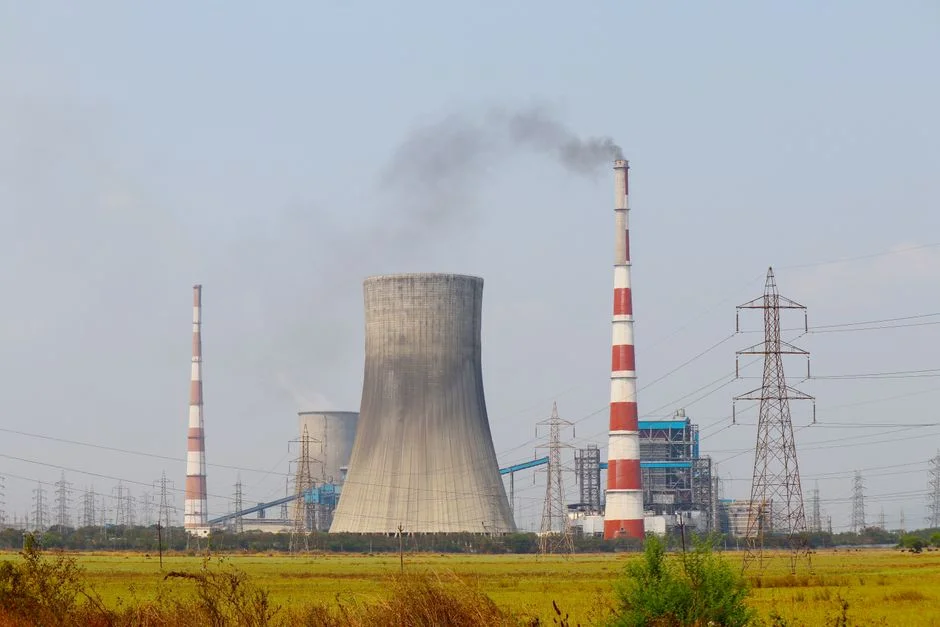
The base train in the HydropureWater Moscow guidance is equalization, DAF or lamella clarification, multimedia filtration, UF, RO, and then permitted sewer reject or reuse. DAF is appropriate where suspended solids, oil, or colloidal material vary; the supplied product context lists 4–300 m³/h across 13 DAF models. The lamella-clarifier reference gives a surface-loading rate of 20–40 m³/m²·h. These are catalog references, not Saratov sizing values.
Multimedia filtration protects the membranes and targets SDI below 5 before UF. The supplied UF specification uses 0.03 μm PVDF membranes, accepts feed up to 300 NTU, achieves consistent SDI below 3, and is offered from 2,000–40,000 L/h. The final selection must use Saratov flow, temperature, water chemistry, operating profile, and recovery target. Relevant options include a DAF system for cooling-tower blowdown, a lamella clarifier for blowdown solids removal, multimedia pretreatment for the RO train, and UF pretreatment for the blowdown treatment train.
High-recovery and ZLD options carry additional integration burdens. The Moscow guide states that brine concentration plus crystallization for ZLD costs roughly 2–3 times the reuse-only train. Saltworks likewise identifies ZLD as the highest-cost option and states that MLD requires a viable brine-disposal path. Compare the alternatives on energy, chemical use, concentrate handling, staffing, and permit exposure rather than equipment price alone.
Chemical dosing should be limited to the selected process. Genesis Water Tech warns that aggressive chemical programs can increase chemical cost, dissolved solids, and operating complexity. Where controlled dosing is justified, evaluate the PLC-controlled chemical dosing skid for pH correction, antiscalant, and biocide control, with interlocks linked to water chemistry and operating conditions.
| Train | Best fit | Main limitation | Supplier evidence required |
|---|---|---|---|
| Discharge-only | Permitted sewer route with manageable chemistry | Thermal and quality acceptance | Certified flow and temperature duty at worst case |
| Reuse with RO | Cooling-makeup reuse where recoverability and brine disposal are viable | Scale, membrane fouling, and concentrate | Recovery at measured feed chemistry and winter temperature |
| MLD | High recovery with a defined brine outlet | Concentrate disposal remains necessary | Residual chemistry, volume, and receiver acceptance |
| ZLD | Permit or policy requires zero liquid discharge | Highest capital, energy, and residue-management burden | Complete mass and energy balance with salt-handling route |
Make the Business Case with Local Inputs
The investment case should price the full cost of water and discharge risk, not just equipment purchase cost. Obtain current Saratov municipal-water charges, sewer-discharge fees, chemical and sludge costs, electricity prices, maintenance assumptions, and compliance exposure from the client, utility, and permitting authorities. The supplied research does not provide a current Saratov tariff or quotation, so the buyer should request those inputs rather than substitute an international benchmark.
Genesis Water Tech provides one sensitivity benchmark: a 15 MW facility recovering 60% of blowdown with approximately $200,000 CAPEX and a 6.7-year simple payback on water savings alone. The source states that including avoided discharge fees, energy recovery, and sustainability benefits can improve payback to 3–5 years. These are cited example values for a 15 MW case, not Saratov forecasts.
The same source cites a $5–15 per 1,000 gal discharge-fee range for water-stressed regions, but the HydropureWater Moscow guide explicitly advises requesting current Saratov utility fees instead of assuming a generic value. Apply the cited case only as a sensitivity check and require a Saratov-specific proposal for equipment, installation, energy, chemicals, maintenance, sludge, brine handling, and commissioning.
Saltworks reports that an effective treatment and recycling program reduced cooling-system water consumption by up to 40% in its 200 MW case. This documents a case outcome, not a guaranteed Saratov reduction. The defensible savings estimate must follow from the measured baseline, selected recovery, rejected flow, and future operating scenarios.
| Financial input | Required evidence | Use in the decision |
|---|---|---|
| Water and sewer charges | Current Saratov tariff schedule and applicable tariff class | Calculates avoided variable cost |
| Operating costs | Energy, chemicals, sludge, membrane cleaning, labor, and brine handling | Calculates total cost of ownership |
| Recovery value | Measured baseline and site-specific recovery scenario | Quantifies water and discharge-fee savings |
| Compliance exposure | Current permit conditions and utility acceptance | Tests whether a discharge option is commercially viable |
Plan Implementation and Supplier Evaluation
Implementation should proceed through engineering gates rather than a single equipment purchase. First confirm source water and permits; then complete characterization and the water balance; issue the treatment-basis design; verify pretreatment and membrane sizing; pilot-test challenging water; commission with online monitoring; and finally scale reuse. A pilot is particularly important where chemistry, scaling, or chemical-control variability could invalidate nominal membrane performance.
Require each supplier to demonstrate capacity at the actual Saratov design flow and winter temperature. The proposal should state membrane recovery, concentrate-management route, chemical consumption, cleaning requirements, PLC controls, alarm strategy, available service capability, and acceptance tests. A formal mass balance must cover makeup, evaporation, blowdown, treated reuse, concentrate, sludge, and final discharge so water-savings claims can be audited.
Operability and scale discipline matter as much as nominal capacity. Genesis Water Tech reports that smaller facilities can struggle with hyperscale RO and multi-stage systems because of capital requirements and specialist operating demands; it recommends modular systems aligned with actual contaminants and staffing capability. The project should also provide a data-center blowdown treatment framework for other locations as a process reference, while treating all Saratov data as site-specific requirements.
Specify performance tests using measured feed chemistry rather than nominal supplier data. The reuse loop needs conductivity, flow, pressure, turbidity, and chemistry-based divert or shutdown logic. Final acceptance criteria must connect treatment performance to reuse quality, permit compliance, and the agreed mass balance.
| Phase | Required deliverable | Decision to proceed |
|---|---|---|
| Basis and permits | Source-water certificate, utility correspondence, discharge route, and applicable limits | Water has a viable destination |
| Characterization and balance | Representative sampling, measured flows, CoC analysis, and future-load case | Treatment duty is defensible |
| Design and pilot | Process basis, supplier guarantees, pilot results, and complete mass balance | Pilot supports design recovery and reuse quality |
| Commissioning and scale-up | Acceptance tests, online monitoring, operating procedures, and audited water balance | Performance remains stable at actual duty |
Frequently Asked Questions
What will treatment cost for a data center in Saratov?
No Saratov quotation is available in the supplied research. Genesis Water Tech’s example of approximately $200,000 CAPEX and a 6.7-year simple payback for 60% blowdown recovery at a 15 MW facility is a sensitivity case, not a Saratov price. Request a Saratov-specific offer separating equipment, installation, electrical works, chemicals, energy, sludge, brine handling, maintenance, and commissioning, then calculate payback using current local water and sewer charges.
How should the treatment system be sized?
Size it from measured blowdown flow, selected CoC, winter temperature, source-water chemistry, equalization duty, reuse target, and reject route. Include evaporation, drift, emergency dumps, chemical dilution water, and off-spec reuse in the balance. The HydropureWater Moscow guide cites 24–48 hours of equalization HRT and a 20–30% allowance for possible AI-driven rack-density increases, but neither value should replace a Saratov design calculation.
Which treatment train should be selected?
Select the train after answering three questions: What quality must the water achieve? What sewer or receiving-water route will accept the residual? What recovery or zero-discharge obligation applies? Noncritical reuse may need less treatment than cooling-makeup reuse. The Moscow guidance cites 75–80% RO recovery for blowdown-to-cooling-tower reuse, subject to scaling analysis and economics.
How should suppliers be evaluated for Saratov compliance risk?
Require suppliers to separate treatment performance from discharge compliance. Demand the current Saratov utility acceptance criteria, applicable permit basis, concentrate route, and worst-case temperature and chemistry guarantees. Do not accept Moscow limits, generic tariffs, or unconfirmed local temperatures. Also request an auditable mass balance and acceptance tests based on the measured Saratov feed rather than nominal source-water data.