What SBR Means in Rubber Wastewater Treatment
For rubber processing wastewater, an SBR is a sequencing batch reactor used to treat organic and nitrogen loads through controlled fill, react, settle, and discharge cycles. It can be highly effective for rubber latex wastewater when oxic and anoxic zones are integrated: a peer-reviewed study reported average COD removal above 95%, ammonium nitrogen below 1.0 mg/L, and maximum TN removal of 92% and 97% at COD/TN ratios of 5–6. However, successful performance depends on characterization, adequate pretreatment, suitable loading, and cycle control; the cited results apply to the tested rubber-latex stream rather than every rubber plant.
SBR has two unrelated meanings in rubber-related searches. It can denote styrene-butadiene rubber, a synthetic rubber, or sequencing batch reactor, the biological treatment process evaluated here. The BSI record for BS ISO 21561:2005+A1:2010 concerns the microstructure of solution-polymerized styrene-butadiene rubber; it was published in 2006 and withdrawn in 2016. It does not provide wastewater-treatment design guidance.
The treatment system discussed in this guide operates through discrete time-based cycles rather than as a continuously mixed tank. During fill, treated wastewater enters the reactor. The react phase provides controlled aerobic and anoxic conditions, followed by settling and decanting or discharge. The sequence allows biological treatment and solids separation to occur within one reactor, subject to the design and operating controls specified by the supplier.
The direct performance evidence discussed below concerns rubber latex processing wastewater. It should guide preliminary feasibility and supplier questions, not replace site characterization, pilot work, or a performance guarantee. For broader context on time-based biological treatment, see the 2026 SBR design guide for industrial wastewater and the 2026 SBR design guide for sugar-mill wastewater.
What the Rubber-Latex Study Proves
The peer-reviewed rubber-latex study demonstrates that a modified sequencing batch reactor can combine substantial COD removal with nitrification and denitrification under its tested conditions. The strongest evidence is a reported average COD removal above 95%, effluent ammonium nitrogen below 1.0 mg/L, and maximum total nitrogen removal of 92% in reactor R1 and 97% in reactor R2. These are study results, not universal design guarantees.
Both reactors contained oxic and anoxic zones and operated with one simultaneous oxic/anoxic phase per treatment batch. R1 used constant aeration. R2 used lower airflow early in the reaction phase and higher airflow later. That distinction matters because a supplier should specify how airflow, mixing, residence time, and cycle controls reproduce the biological conditions needed for the proposed duty.
| Verified study parameter | Reported scope or result | Design interpretation |
|---|---|---|
| COD/TN ratio | 3.4–6.0 gCOD/gN | Investigated range; performance varied with carbon availability relative to nitrogen |
| COD loading | 0.8–1.7 kgCOD×m⁻³×d⁻¹ | Study envelope, not a universal sizing value |
| TN loading | 0.15–0.34 kgN×m⁻³×d⁻¹ | Study envelope, not a universal sizing value |
| Average COD removal | Over 95% | Achieved in the tested rubber-latex system |
| Effluent ammonium nitrogen | Below 1.0 mg/L | Reported as almost complete elimination |
| Maximum TN removal | 92% for R1; 97% for R2 | Maximum at COD/TN ratios of 5–6 |
The Vietnam Journal of Science and Technology/Science and Technology study found that COD and ammonium removal did not change remarkably across the investigated COD/TN and loading ranges. TN removal, however, increased significantly as the COD/TN ratio rose from 3.4 to 6.0 and decreased slightly as TN loading increased from 0.15 to 0.34 kgN×m⁻³×d⁻¹. The most effective COD/TN ratios were 5–6.
For a buyer, the useful conclusion is not “SBR always exceeds 95% COD removal.” It is that an oxic/anoxic SBR can achieve that result on the tested rubber-latex stream when organic carbon, nitrogen, aeration, and cycle timing are properly balanced. The paper does not establish a universal reactor volume, cycle length, or guaranteed effluent concentration for a different plant.
Characterize the Wastewater Before Sizing the Reactor
A defensible reactor size requires a representative characterization of the actual production stream, not a single sample or an assumed industrial-average composition. HydropureWater’s 2026 process guide gives screening values of 200–800 mg/L NH₃-N, 1,500–6,000 mg/L COD, 300–1,500 mg/L suspended solids, and pH 6–9, citing a 2019 Malaysian rubber-wastewater characterization. The same guide reports BOD₅/COD of 0.20–0.35.
That BOD₅/COD range is a warning against assuming that all measured COD is readily biodegradable. The SBR study demonstrates performance for its particular rubber-latex wastewater; a plant with a lower biodegradable fraction, different additives, or a tighter carbon-to-nitrogen balance may behave differently. Permit compliance must therefore be assessed against measured influent and the actual treatment train.
| Parameter to obtain | Why it affects the SBR decision |
|---|---|
| COD and BOD₅ | Defines organic loading and the biodegradable fraction available for carbon oxidation and denitrification |
| TN and ammonium nitrogen | Sets nitrification and denitrification requirements and the external-carbon question |
| Suspended solids | Indicates settling demand, solids carryover, and the need for solids pretreatment |
| pH and temperature | Influence biological activity, alkalinity demand, and cycle performance |
| Oil and grease, sulfide, and zinc | Identifies inhibition, separation, and pretreatment requirements |
| Rubber-additive residuals | Establishes whether refractory compounds or process inhibitors can affect the biological stage |
The sampling program should cover production cycles, batch starts and ends, coagulant or accelerator dosing, cleanup operations, and the periods following an additive change. Each sampling event should record flow and operating condition alongside the laboratory result. Otherwise, the supplier may size against an average that masks the peak that controls tankage and equalization.
Request a proposal that shows how reactor volume and cycle sequence respond to measured peak COD and TN loads. The supplied research provides no universal SBR sizing rule for rubber wastewater. Before comparing equipment, ask bidders to identify their design loads, selected COD and TN loading rates, peak-day and batch criteria, and the calculation basis. The DAF versus clarifier comparison for plastics and rubber pretreatment provides a useful parallel for evaluating solids-removal options, but it does not establish reactor volume.
Protect the SBR with the Right Pretreatment
Equalization should be the first process decision because rubber production can produce batch-dependent flows and shock loads that an SBR must not receive without controlled attenuation. HydropureWater’s 2026 process guide identifies three pretreatment operations for rubber wastewater: dissolved air flotation for suspended solids and oil, aluminum-carbon micro-electrolysis for refractory additives, and hydrolytic acidification for shock-load equalization.
DAF is not automatically required for every rubber stream. It becomes more compelling where the characterization shows solids or oil that would interfere with biological treatment, settling, or downstream equipment. The guide’s screening range of 300–1,500 mg/L suspended solids supports evaluating solids removal before the SBR rather than assuming the biological reactor can absorb every particulate load.
| Decision condition | Treatment response to evaluate | Verification required |
|---|---|---|
| Batch-variable flow or shock loading | Equalization ahead of the biological stage | Peak-flow and batch-production records |
| High suspended solids or oil | Industrial DAF pretreatment for rubber wastewater | Solids, oil, and grease testing across production conditions |
| Refractory additives or inhibitory metals | Aluminum-carbon micro-electrolysis | Residual additive, zinc, sulfide, and biodegradability tests |
| Inadequate carbon for denitrification | Hydrolytic acidification or external carbon | COD/TN ratio, volatile fatty acid yield, and anoxic carbon balance |
Hydrolytic acidification can convert hydrolysed organics into volatile fatty acids, providing carbon for anoxic denitrification. That does not eliminate the external-carbon question: the available COD/TN ratio, VFAs, and permit limit determine whether internal carbon is sufficient. If it is inadequate, carbon dosing must be included in the controls and operating-cost scope.
Evaluate the treatment train as a whole. Coagulation can change suspended solids and residual additives; sulfide and zinc can inhibit biology; and refractory-organism treatment can change the carbon available for denitrification. Chemical addition should therefore be coordinated through PLC-controlled chemical dosing for SBR pretreatment, with feed rates linked to measured flow and contaminant loading rather than fixed by time alone.
Configure Oxic and Anoxic Zones for COD and Nitrogen Removal
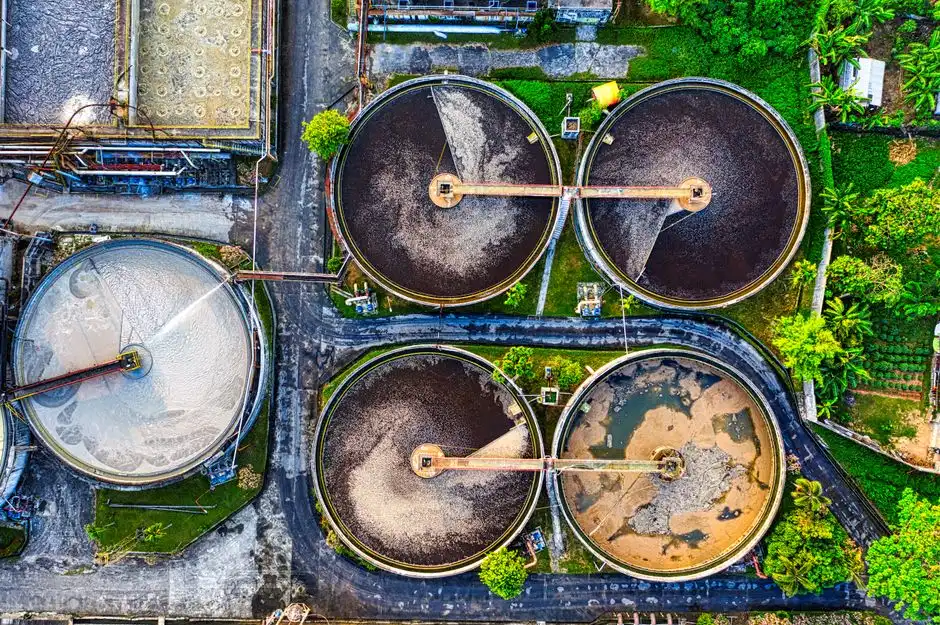
The rubber-latex study’s combined oxic-and-anoxic configuration is the defensible starting point when the objective includes COD and TN removal. Aerobic conditions support oxidation of biodegradable organics and ammonium, while anoxic conditions allow nitrate to be reduced when suitable carbon remains available. A biological tank without an intentional carbon balance cannot be assumed to deliver the study’s TN performance.
The study found that TN removal increased significantly as the COD/TN ratio rose from 3.4 to 6.0, with the most effective range at 5–6. This supports a carbon-aware reactor design. Hydrolytic-acidification VFAs can supply internal carbon, while methanol, acetate, or another approved external source may be needed when the measured balance is insufficient. The procurement package should identify which source will be used and how its dosing will be controlled.
The broader rubber processing wastewater nitrogen removal guide describes aerobic nitrification followed by anoxic denitrification, with VFAs or external carbon where required. It also places alkalinity, dissolved oxygen, mixing, temperature, and carbon availability among the operating conditions that determine biological performance.
- Use the oxic zone to oxidize biodegradable COD and ammonium under controlled aeration.
- Use the anoxic zone and retained carbon to reduce nitrate to nitrogen gas.
- Control mixing so biomass remains available without introducing oxygen that defeats anoxic operation.
- Track alkalinity consumption, dissolved oxygen, and carbon availability as acceptance-critical operating parameters.
These functions should be explicit in the equipment offer. A bid that lists only reactor volume and nominal cycle times leaves the biological mechanism undocumented. Require drawings showing zone arrangement, mixing and aeration equipment, DO control, alkalinity or pH adjustment provisions, and the carbon-dosing interface where external carbon is necessary.
Match Reactor Loading and Cycles to Plant Conditions
Compare measured plant loading with the rubber-latex study’s range of 0.8–1.7 kgCOD×m⁻³×d⁻¹ and 0.15–0.34 kgN×m⁻³×d⁻¹ before accepting a proposed reactor volume. The study’s figures are a verified comparison point, not default design values. The supplier should state the selected design loading separately for COD and TN and show the margin to the plant’s measured peak loads.
An SBR’s time-based operation can suit batch rubber production with changing schedules, but flexibility does not eliminate the need for a defined cycle. The operating sequence must fit production batches and permitted discharge windows while preserving settle and decant time. Adding influent during settling or shortening anoxic contact to meet a production schedule would change the treatment performance.
| Cycle element | Information required from the supplier | Acceptance evidence |
|---|---|---|
| Fill | Flow-dependent level control and maximum influent condition | Level, flow, and batch records |
| Mixing and aeration | Equipment arrangement, control sequence, and DO targets | DO profiles and aeration logs |
| Anoxic contact | Duration, mixing method, and carbon source | DO and carbon-dose records |
| Settling | Minimum settling period and sludge withdrawal logic | Sludge blanket and TSS observations |
| Decanting | Maximum discharge rate and final drawdown limits | Flow and effluent-quality records |
| Standby and emergency hold | Behavior during production interruption, high load, or equipment failure | Approved operating procedure and functional test |
Require the proposal to explain how reactor volume was calculated from actual flow, COD, TN, batch duration, and operating-day criteria. Also request the selected sludge age or wasting basis, because reactor volume alone does not define biological capacity. Published results should remain a benchmark; wastewater composition, equipment configuration, and operating conditions differ between plants.
Choose Between SBR, MBR, and Continuous-Flow Alternatives
SBR is most defensible when batch variability justifies time-based control and the required effluent can be achieved through biological treatment, settling, and any necessary polishing. MBR is a different configuration: it adds membrane solids separation to activated sludge. It may be appropriate for a constrained footprint or reuse objective, while a continuous-flow biological process may offer more familiar operation when flow is sufficiently steady and control staff prefer it.
HydropureWater’s 2026 positioning assigns SBR to batch rubber operations with swing production schedules. It identifies MBBR or MBR for retrofits, limited footprints, or toxic-influent risk, and MBR where near-reuse-quality effluent is desired. Those are decision categories, not proof that any configuration will meet a given permit.
| Selection factor | SBR | MBR | Continuous-flow biological alternative |
|---|---|---|---|
| Production pattern | Well matched to variable batch operation | Can accommodate variable feed with membrane and biological controls | Generally simplest where flow is steady |
| Solids separation | Included in settle and decant cycle | Added by membrane filtration | Requires a separate clarifier or equivalent solids separation |
| Footprint | Must include reaction, settling, and standby volume | HydropureWater’s 2026 catalog states a 60% smaller footprint than conventional systems | Tankage and solids-separation requirements must be evaluated |
| Control burden | Cycle sequencing and batch interlocks | Biological controls plus membrane operation and cleaning | Flow-proportional process control |
| Effluent polishing | Depends on biological performance and permit | Relevant where reuse or low solids are required | May require downstream polishing |
The integrated MBR treatment system is described in the 2026 HydropureWater catalog as covering 10–2,000 m³/day and offering a stated 60% footprint reduction compared with conventional systems. Those are product-positioning values, not comparative cost or site-performance guarantees.
Make the final choice against permit limits, required reuse quality, available footprint, batch variability, pretreatment complexity, controls capability, sludge handling, and polishing requirements. The supplied research does not provide defensible comparative prices for SBR, MBR, and continuous-flow alternatives, so any capital-cost comparison must be based on site-specific bids.
Verify Performance Before Final Acceptance
Published SBR performance becomes useful during procurement only when bidders explain how their proposed configuration relates to the evidence. Ask each supplier to state which results it considers reproducible from the study’s over 95% average COD removal, effluent ammonium nitrogen below 1.0 mg/L, and maximum TN removal of 92% and 97%. A responsible response will also identify why site wastewater, reactor geometry, aeration, and cycle control could produce different results.
Require a site-specific pilot or representative-wastewater trial before accepting literature performance as a plant guarantee. The trial should use the intended wastewater and the proposed pretreatment, aeration, mixing, carbon, and cycle arrangements. If the project schedule does not permit a pilot, specify a conservative commissioning route and make the supplier responsible for demonstrating performance with the final equipment.
- Define startup and biological-acclimation procedures, including sampling and DO records.
- State analytical methods, sampling frequency, laboratory qualifications, and data validation requirements.
- Define bypass provisions for equipment failure or exceedance of pretreatment limits.
- Set performance remedies for failure to meet contracted acceptance criteria.
Commissioning records should include COD, ammonium nitrogen, TN, suspended solids, pH, dissolved oxygen, temperature, flow, and cycle times. An ultrafiltration system may be relevant if the selected train requires solids separation or reuse polishing, but it does not remove the need to verify the biological stage and pretreatment.
The final acceptance basis must be checked against the current discharge permit and applicable sewer pretreatment requirements. No universal effluent limit can be inferred from the supplied research. A supplier should not be allowed to substitute the study’s reported concentrations for the buyer’s contractual limits unless those limits are explicitly written into the acceptance schedule. The 2026 DAF-versus-clarifier guide for petroleum wastewater illustrates the related procurement discipline: compare pretreatment functions against measured contaminants rather than preselecting equipment.
Frequently Asked Questions
Is SBR suitable for rubber processing wastewater?
SBR can be suitable for a rubber-latex stream when oxic and anoxic zones, adequate pretreatment, and controlled cycles are provided. The peer-reviewed Vietnam Journal of Science and Technology/Science and Technology study reported average COD removal above 95%, ammonium nitrogen below 1.0 mg/L, and maximum TN removal of 92% and 97% under its tested conditions. Those results do not guarantee treatment of every rubber-processing stream; site characterization and pilot verification remain necessary.
What is the estimated cost of an SBR for rubber wastewater?
The supplied research does not provide a defensible SBR cost range for this application. A buyer should request itemized quotations for reactor and civil works, equalization, solids and oil pretreatment, aeration and mixing, controls, chemical dosing, sludge handling, external carbon if needed, polishing, installation, commissioning, and operation. The quotation should state design flow, measured COD and TN loads, reactor volume, cycle duration, and acceptance conditions so bidders price the same duty.
How should an SBR supplier be selected?
Select on demonstrated relevance and verifiable design, not literature performance alone. Require evidence from comparable rubber or latex streams, site-specific reactor sizing, a stated COD and TN design basis, cycle and controls details, pretreatment integration, commissioning support, and contractual acceptance criteria. The supplier should also show how it will accommodate measured batch peaks, additive variation, carbon availability, sludge handling, and the current permit. These checks distinguish a workable proposal from one that merely cites an SBR as an established process.
Can SBR meet low total-nitrogen limits?
Possibly, but the permit limit and carbon balance must be established first. The study reported maximum TN removal of 92% for R1 and 97% for R2 at COD/TN ratios of 5–6, while TN removal decreased slightly as TN loading increased across the investigated range. The plant should verify the measured COD/TN ratio, VFAs or external-carbon availability, denitrification performance, and required final TN concentration before selecting the reactor configuration.
Is DAF required before an SBR?
Not automatically. HydropureWater’s 2026 process guide identifies DAF for suspended solids and oil removal, and the cited screening range includes 300–1,500 mg/L suspended solids. That makes DAF a strong candidate for evaluation where testing confirms the solids or oil load. The decision should follow characterization of suspended solids, oil and grease, additives, sulfide, zinc, and flow variability, with the selected pretreatment train verified against the SBR design basis.