What Canned Food Wastewater Changes About SBR Design
An SBR is a practical biological treatment option for canned-food wastewater because it combines equalization, biological treatment and secondary settling in a timed fill-and-draw cycle. A 2025 Sustainability study on canned soup wastewater reported influent averages of 819 mg/L BOD5 and 1,197 mg/L COD, with a biodegradability ratio of 0.68. Under an 8-hour cycle, the tested SBR produced outlet TCOD of 201–319 mg/L, while reducing color by 72.3% and turbidity by 83.3%. These laboratory results establish feasibility, not full-scale capacity: final design requires measured flow and variability, COD, BOD5, TSS, nutrients, pH, alkalinity, temperature, pretreatment needs and discharge limits.
High-strength food-processing wastewater changes SBR design because organic loading can exceed what the biomass inventory can absorb without a controlled feed, adequate settling time or external equalization. The 2025 Sustainability study also identifies limited nutrient concentrations as a characteristic challenge. In some food-industry applications, wastewater discharges account for up to 70% of total water use, ranging from 0.2 to 10 m3 per tonne of product, according to Sustainability (2025). That range describes the wider food sector, not a specific canned-food plant.
The same study measured 72.3% color removal and 83.3% turbidity removal, showing that biological treatment can address more than soluble COD. However, the 2 L reactor cannot resolve the full-scale questions created by suspended solids, oil and grease, FOG, colloidal material, seasonal production changes or washdown peaks. Canned soup, canned vegetables and other canned-food lines can differ substantially, so food and beverage wastewater pretreatment requirements must be established through representative characterization rather than inferred from production rate.
How the SBR Treatment Cycle Works
The US EPA defines a sequencing batch reactor as a fill-and-draw activated sludge system in which equalization, biological treatment and clarification occur within one reactor under a predetermined control sequence.
- Idle: treated effluent is withdrawn and influent enters the reactor.
- Fill: influent mixes with acclimated biomass under static, mixed or aerated conditions.
- React: biological reactions continue; the phase may be aerobic, anoxic or mixed.
- Settle: biomass settles under quiescent conditions.
- Draw: a decanter removes treated supernatant without withdrawing settled sludge.
Static fill creates a high substrate concentration when mixing begins. Mixed fill can support denitrification when nitrate serves as the electron acceptor, while aerated fill starts aerobic treatment and may reduce the subsequent aerated reaction time. These are operating choices, not a default sequence: the EPA states that industrial wastewater normally requires treatability work to establish the optimum operating sequence.
| Cycle element | Documented study condition | Engineering significance |
|---|---|---|
| Working volume | 2 L | Laboratory reactor; not a scale-up factor |
| Reactor contents | 70% wastewater and 30% adapted biomass | Mixture did not represent a full-scale biomass inventory without justification |
| Operational cycle | 8 hours | One documented research condition |
| Fill | 0.25 hour, static fill | Not automatically transferable to variable industrial flow |
| Aerobic reaction | 7.0 hours | Study-specific reaction period |
| Sedimentation | 0.5 hour | Must be verified against site-specific sludge settleability |
| Discharge | 0.25 hour | Decant performance and carryover remain design issues |
| Hydraulic retention time | 11.4 hours | Result for the documented reactor and cycle |
| Sludge retention time | 15 and 25 days tested | Study conditions; SRT must be recalculated for the plant |
These values come from the 2025 Sustainability study. They demonstrate a workable laboratory sequence under the tested wastewater and acclimation conditions, not a full-scale reactor design.
What the 2025 Canned Soup Study Actually Proves
The 2025 Sustainability study shows that the tested sequencing batch reactor produced outlet TCOD of 201–319 mg/L under its two treatment conditions, below the cited Venezuelan discharge regulation of 350 mg/L.
| Evidence item | Reported result or condition | What it establishes |
|---|---|---|
| Study context | Canned soup processing wastewater | Direct relevance to one canned-food wastewater, not all canned-food plants |
| Influent characterization | BOD5 819 mg/L; COD 1,197 mg/L; biodegradability ratio 0.68 | Strongly biodegradable organic load under the sampled conditions |
| Second COD characterization | Average COD 1,232 mg/L; 80.6% biodegradable and 19.4% non-biodegradable COD | A portion of the measured organic load was not directly biodegradable |
| Physical characteristics | Turbidity 83 NTU; color 113 UC | Color and suspended or colloidal material require process verification |
| Reactor configuration | 2 L working volume; 70% wastewater and 30% adapted biomass | Process-feasibility evidence at laboratory scale |
| Operating sequence | 8-hour cycle: 0.25-hour fill, 7.0-hour aerobic reaction, 0.5-hour sedimentation and 0.25-hour discharge | A documented cycle, not a universal cycle schedule |
| Measured results | TCOD 201–319 mg/L; color reduction 72.3%; turbidity reduction 83.3% | Reported performance under the study protocol |
| Nutrient handling | 0.038 g/L urea and 0.064 g/L monopotassium phosphate added | Nutrient supplementation was part of the experiment |
| Main limitation | Small reactor, supplemented nutrients and one canned soup wastewater | No direct full-scale or site-specific performance guarantee |
Nutrient balance is a direct scale-up issue. Because the experiment added urea and monopotassium phosphate, a plant with limited nitrogen or phosphorus must determine whether supplementation is necessary. The wider food-sector context also requires attention to proteins and lipids, while avoiding assumptions about the composition of a particular discharge.
The outlet range cannot be transferred to another jurisdiction or plant. Final performance depends on the actual wastewater, reactor configuration, operational control and applicable permit. The study establishes three useful points: the sampled wastewater was biodegradable, the tested SBR removed organic matter, color and turbidity, and nutrient condition influenced the experiment. It does not establish that an SBR alone will meet a buyer’s discharge or reuse requirements.
Build a Pretreatment-to-Final-Treatment Train
An SBR should be evaluated as part of a treatment train, not as an isolated reactor. The correct sequence begins with characterization, then addresses materials that interfere with biological treatment or settling, followed by equalization and biological treatment, and ends with whatever polishing the discharge or reuse route requires.
Where characterization shows suspended solids, oil and grease, FOG or colloidal material, an industrial DAF pretreatment system may be appropriate. Its selection should follow testing rather than assumption: removal performance, recovered sludge characteristics, hydraulic loading and effects on COD must be considered together. DAF is not automatically required because the wastewater came from a food plant; it is a response to measured constituents.
The EPA lists design flow, maximum daily flow, BOD5, TSS, pH, alkalinity, temperature, TKN, ammonia-nitrogen and total phosphorus among the influent characteristics that must be established. Oil and grease, soluble COD, color and turbidity may also require site-specific testing for food-processing applications.
Fill operation provides equalization within the SBR, but the reactor’s biological inventory and settling performance must still tolerate the proposed batch load. Equalization after the SBR may be necessary before filtration or another batch-sensitive process; otherwise the filters may have to accept the full batch discharge, which the EPA notes can require impractical filter area.
Downstream risks also need explicit design provisions. The EPA identifies possible sludge carryover during Draw, aeration-device plugging and the potential need for filtration or disinfection. If water reuse or very fine solids separation is required, an integrated MBR wastewater treatment system may justify evaluation, but membrane fouling control, aeration, cleaning and maintenance become additional design obligations. Automatic chemical dosing should be included only where characterization identifies a corrective need such as pH control, nutrient supplementation or coagulation. An automatic chemical dosing system cannot be scoped from the study’s nutrient additions alone.
Size and Specify an SBR Without Guessing
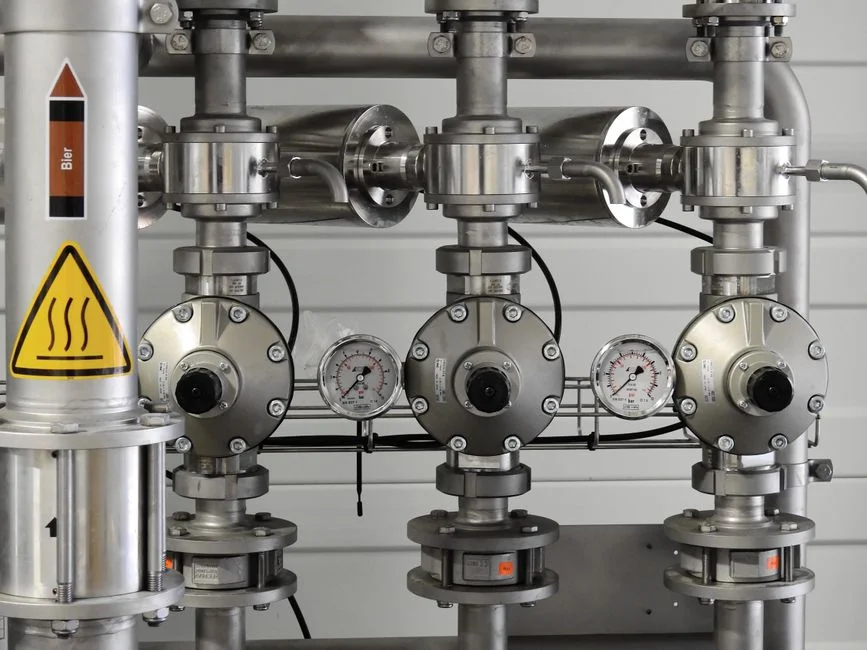
A procurement-grade SBR proposal must start with plant-specific wastewater data and expose every assumption used to calculate reactor capacity, aeration, decant volume and sludge handling.
- Establish the wastewater basis: require representative data covering average and maximum daily flow, production and clean-in-place cycles, COD, BOD5, TSS, oil and grease, pH, alkalinity, temperature, TKN, ammonia-nitrogen and total phosphorus.
- Define the treatment objective: identify the discharge or reuse route, applicable permit limits and whether nutrient removal, filtration, disinfection or further polishing is required.
- Check loading and cycle feasibility: evaluate the food-to-mass ratio, MLSS, SRT, HRT, cycle schedule, number of basins, decant volume and number of cycles per day.
- Validate the biological sequence: require a treatability or pilot basis addressing nutrient limitation, shock loads, color, turbidity and seasonal product changes.
- Confirm the complete boundary: establish which pretreatment, equalization, aeration, piping, controls, polishing, electrical, sludge-handling and commissioning items are included.
The EPA’s industrial design values—4.0–24 hours for treatment-cycle duration, 2,000–4,000 mg/L for MLSS and 0.15–0.6/day for food-to-mass ratio—can serve as initial reference points during requests for information. They are not guarantees or substitutes for a wastewater-specific mass balance.
| Parameter | 2025 study reference | EPA industrial reference | Project-specific field required |
|---|---|---|---|
| Flow | Not a full-scale design basis | Design and maximum daily flow required | Average, peak and batch discharge profile |
| COD | 1,197 and 1,232 mg/L reported in two characterizations | Influent characterization required | Representative COD and biodegradable fraction |
| BOD5 | 819 mg/L | Influent characterization required | Representative BOD5 |
| Cycle | 8 hours | 4.0–24 hours | Sequence selected for wastewater and permit |
| MLSS | Not a full-scale design value | 2,000–4,000 mg/L | Achievable inventory and sludge-settling result |
| Food-to-mass ratio | Not stated as a scale-up value | 0.15–0.6/day | Calculated from plant loading and biomass inventory |
| HRT | 11.4 hours | Site-specific | Calculated from basin volume and operating level |
| SRT | 15 and 25 days tested | Site-specific | Calculated from wasting and biomass inventory |
| TSS and nutrients | Turbidity 83 NTU; color 113 UC; nutrient supplementation used | TSS, TKN, ammonia-nitrogen and total phosphorus required | Plant measurements and supplementation assessment |
Each supplier should document basin count, working volume, cycles per day, fill, react, settle and draw durations, decant volume, aeration design and sludge-wasting strategy. Reject any capacity statement that cannot be traced to measured wastewater inputs and those hydraulic calculations.
Compare SBR, Continuous Activated Sludge and MBR
The choice should follow the plant’s flow pattern, land, automation capability, effluent objectives and operating team rather than a generic technology ranking.
| Decision factor | SBR | Continuous activated sludge | MBR |
|---|---|---|---|
| Hydraulic operation | Timed fill-and-draw sequence with batch equalization | Continuous flow through separate biological and clarification functions | Integrated biological treatment and membrane solids separation |
| Cycle flexibility | Cycle phases and nutrient-removal conditions can be adjusted | Requires different process arrangements for comparable flexibility | Biological operation remains subject to membrane and fouling constraints |
| Equipment and controls | More sophisticated timing, valves and controls; sludge carryover and aeration plugging require attention | Established operating approach with separate clarifier and return-sludge systems | Adds membrane fouling control, aeration, cleaning and maintenance |
| Footprint | Can combine several functions in one basin | Generally requires additional tankage and clarification | Integrates membrane separation but adds equipment complexity |
| Downstream flow | Post-SBR equalization may be needed before filtration | Usually provides more continuous downstream flow | Requires attention to membrane cleaning and reuse quality |
| Preferred decision condition | Variable flow and flexible cycle control are priorities | Steady flow and established activated-sludge operations favor continuity | Fine solids separation or reuse quality dominates |
Favor an SBR when batch variation and adjustable cycle control are central to the operating problem. Evaluate MBR when integrated biology and sub-micron membrane separation are required and the team can support fouling control and maintenance. Retain continuous biological treatment where steady flow, existing clarifiers and established operating practices provide a practical advantage. The EPA states that SBR and conventional activated sludge use the same core biological unit processes; the distinction is largely operation in time rather than space.
Questions to Ask an SBR Equipment Supplier

- What wastewater basis supports the design? Require the characterization, sampling period, treatability work or pilot results and the project-specific COD, BOD5, TSS, flow, temperature, pH, alkalinity, TKN, ammonia-nitrogen and total phosphorus used.
- How will solids, nutrients, color and turbidity be handled? Ask how pretreatment, nutrient supplementation, shock loading and seasonal product changes affect the proposed cycle.
- What is the complete cycle and hydraulic design? Request basin count, working volume, cycles per day, fill, react, settle and draw durations, decant volume, aeration, mixing, decanter and sludge-wasting details.
- Where does the supply boundary begin and end? Check screens, pretreatment, equalization, tankage, aeration, piping, controls, downstream filtration, disinfection, electrical requirements, sludge handling and commissioning.
- What operating support is proposed? Request evidence of food-processing or comparable industrial operation, service support, spare-parts availability and operator training.
- What performance is actually demonstrated? Require pilot results or a performance model with explicit assumptions. A guaranteed outlet concentration without a wastewater basis and test protocol is not a procurement-grade commitment.
The evaluation should also define how batch discharge is coordinated with downstream polishing, how decanter failure or carryover is handled, and what operating adjustments are available when the production schedule changes. A supplier should be able to connect every major equipment item to a design input and permit obligation.
Frequently Asked Questions
How should an SBR reactor be sized for canned-food wastewater?
Reactor capacity must be calculated from measured flow and loading, cycle timing, SRT, biomass inventory, hydraulic retention and decant requirements. The 2025 study’s 2 L reactor and 8-hour cycle demonstrate laboratory feasibility; the EPA’s industrial reference ranges are screening values, not final answers. Obtain a plant-specific wastewater characterization and require each bidder to show the mass balance and hydraulic calculations behind its proposal.
What should a buyer check when selecting an SBR supplier?
Check industrial treatability capability, relevant food-processing references, basin and cycle calculations, controls architecture, decanter selection, complete equipment scope, service support and operator training. Require pilot evidence or a model with stated assumptions. Tank price alone cannot reveal whether the supplier has addressed variable production flow, nutrient limitation, sludge carryover or downstream polishing.
What does an SBR installation cost include?
Request a scope-based quotation covering pretreatment, equalization, tankage, aeration and mixing, controls, piping, electrical service, downstream polishing, sludge handling, utilities, commissioning and operator training. No defensible price range can be derived from the supplied research. The quotation should identify exclusions, civil works, site conditions, replacement equipment and performance assumptions.
Does the 201–319 mg/L TCOD result guarantee regulatory compliance?
No. The 2025 Sustainability study reported outlet TCOD of 201–319 mg/L under its protocol and compared it with a cited Venezuelan limit of 350 mg/L. The purchaser must obtain the applicable permit, reuse requirements and receiving-water criteria, then demonstrate compliance using the actual wastewater, proposed configuration and operating controls.
Can an SBR be added to an existing food-processing wastewater plant?
Possibly, but retrofit feasibility requires review of batch-flow hydraulics, upstream equalization, aeration, biomass acclimation, decant capacity, controls, sludge handling and downstream treatment. Existing tankage cannot be judged from the SBR concept alone. A site survey and wastewater characterization should determine whether a new basin, equalization upgrade or additional polishing is required.
Related Equipment
- integrated MBR wastewater treatment system — specifications, capacity range, and technical data