Which Rules Control a Seattle-Area Sewer Discharge?
King County’s wastewater limits apply in addition to federal limits, and categorical dischargers must obtain a full King County permit regardless of discharge volume (King County, current webpage). The controlling documents are the EPA National Pretreatment Program in 40 CFR Part 403, any applicable categorical pretreatment standard, Washington requirements, the local sewer-use ordinance, and the site-specific permit or discharge authorization. Start by confirming the receiving authority because a discharge point served by another municipality may be governed by that agency’s permit and limits.
Federal pretreatment standards apply to specified industrial categories under 40 CFR Parts 405–471. Relevant food-processing references include Part 405 for dairy products, Part 406 for grain mills, Part 407 for canned and preserved fruits and vegetables, Part 408 for canned and preserved seafood, and Part 409 for meat products (HydropureWater, 2026). HydropureWater’s food-and-beverage categorical material also identifies 40 CFR Part 432. Applicability depends on the plant’s regulated process and industrial classification; the permit application and KCIW determination should resolve that issue rather than an equipment vendor.
Before designing a treatment train, obtain the current King County Industrial Waste permit, sewer-use requirements, discharge authorization, applicable categorical determination, monitoring schedule, and any approved FOG control plan or oil-and-water separator plan. See the food and beverage pretreatment limits guide for the broader permit-to-equipment workflow.
| Control layer | Engineering question | Document to obtain |
|---|---|---|
| Federal pretreatment program | Does the discharge qualify as an indirect discharge requiring local pretreatment controls? | 40 CFR Part 403 applicability |
| Categorical standard | Does the plant’s regulated process fall under a relevant food-processing subpart? | Current categorical standard and KCIW applicability determination |
| King County local limits | Which local limits and prohibited discharges apply in addition to federal limits? | King County discharge limits, Public Rule, permit and discharge authorization |
| Site authorization | What monitoring, sampling, reporting and operating conditions attach to this discharge? | Current permit, FOG control plan and required approvals |
Turn the Permit into a Compliance Design Basis
The strictest applicable concentration, mass and monitoring condition governs the design; a local limit can add requirements beyond the categorical standard. HydropureWater’s 2026 pretreatment material identifies six core design parameters for food-and-beverage treatment: BOD/COD, TSS, FOG, total phosphorus, pH and temperature. These are screening inputs, not a universal limit set. The current permit must supply the applicable numeric values, averaging period, monitoring frequency, test method and discharge point.
King County states that facilities that are not significant industrial users and discharge less than 5,000 gallons per day need comply only with the instantaneous limits (King County, current webpage). That relief does not determine whether a plant needs a permit: King County also states that categorical dischargers must obtain a full permit regardless of discharge volume (King County, current webpage). A categorical determination therefore needs to be resolved before using the smaller-discharger provision to simplify the compliance matrix.
For pH, King County identifies an instantaneous violation when any grab sample or continuous recording is below pH 5.0. A daily minimum violation occurs when a recording remains below pH 5.5 for 15 minutes or longer, or when four consecutive grab samples collected at least 15 minutes apart within 24 hours are all below pH 5.5 (King County, current webpage). These are distinct events; equipment and records must address both.
| Design parameter | Permit condition to confirm | Sampling or record basis | Required treatment response |
|---|---|---|---|
| BOD/COD | Concentration or mass limit and averaging period | Permit-specified composite method and frequency | Equalization plus biological treatment sized to the enforceable load |
| TSS | Instantaneous, daily-average or mass limit | Permit-specified sample and test method | Screening, solids removal and final clarification or polishing |
| FOG | Nonpolar limit; any separate polar-FOG controls | Approved sampling and analysis protocol | DAF or equivalent pretreatment, with approved FOG controls |
| Total phosphorus | Concentration or mass limit, if listed | Permit-specified composite sampling | Biological uptake or chemical precipitation only if required by the permit |
| pH | Instantaneous minimum and maximum; daily-minimum rule | Continuous recording and grab-sample logic | Equalization, trim control, alarms and fail-safe dosing |
| Temperature | Maximum at treatment plant and at discharge | Continuous or event-based monitoring as required | Equalization and cooling before biological treatment |
Segregate the Wastewater Before You Size the Plant
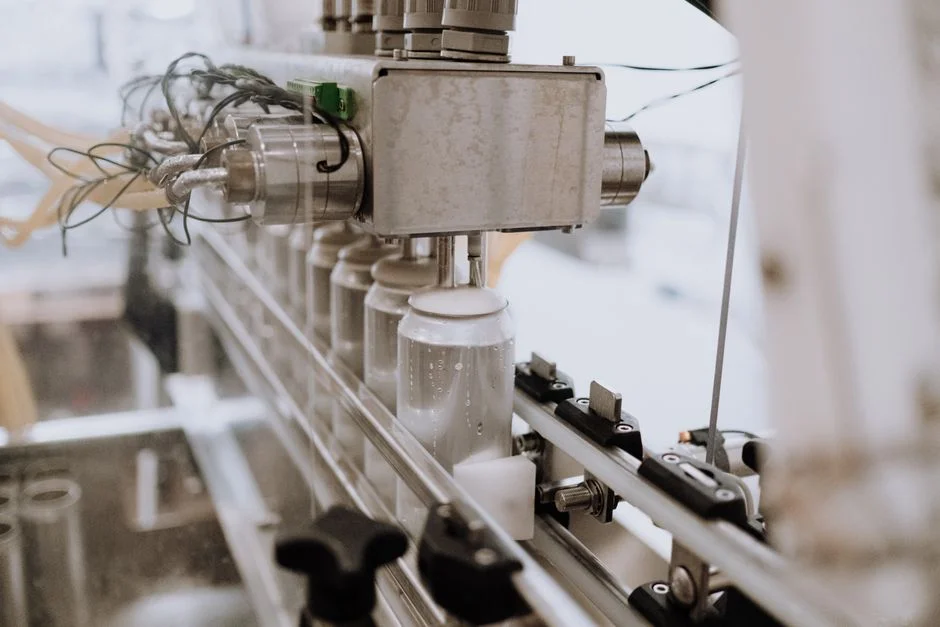
Stream segregation is the first equipment decision because process water, floor wash, CIP chemicals, cooling-water blowdown and sanitary wastewater present different compliance risks. Hixson’s food-processing wastewater article states that food-processing effluent can be 10 to 100 times stronger than domestic wastewater in BOD and COD terms, while production schedules and cleaning cycles create major variability (Hixson, current webpage). An average flow or average concentration can therefore conceal a destructive cleaning dump or a high-FOG slug.
- Route high-FOG and solids-bearing process water or floor wash to screening and dissolved air flotation.
- Combine flow and CIP streams in equalization to damp production peaks and pH excursions.
- Keep cooling-water blowdown separate until its composition, temperature and permit conditions are known.
- Evaluate sanitary wastewater separately so its hydraulic and organic contribution is not hidden inside the industrial design flow.
DAF is the stronger primary candidate where emulsified oil, nonpolar FOG or floatable solids dominate. A lamella clarifier is more appropriate when TSS is the primary load and reducing chemical use is an operating priority; the supplied product specification states a surface-loading range of 20–40 m/h and up to 30% lower chemical consumption than conventional clarification (HydropureWater, 2026). For cooling blowdown, request the composition and applicable discharge conditions before selecting segregation, pretreatment or a separate authorization.
Do not combine streams simply because they enter the same building drain. Document each stream’s flow range, production schedule, BOD/COD, TSS, FOG, pH and temperature, then confirm how the permit treats the proposed routing. This avoids sizing biological capacity for a short CIP event that should instead be neutralized and equalized.
Use a Treatment Train That Targets the Actual Exceedance
The defensible sequence is screening and equalization, FOG and solids removal, biological treatment, permit-driven pH or nutrient control, and final monitoring before discharge. Each stage answers a different failure mode. Screening protects downstream pumps and equipment; equalization controls hydraulic and chemical peaks; primary removal protects biology; biological treatment addresses soluble organics; and final monitoring provides the evidence required by the permit.
For emulsified oil, FOG, colloidal matter and floatable solids, use a dissolved air flotation system for food-processing wastewater. HydropureWater’s stated DAF range is 4–300 m³/h across 13 standard models (HydropureWater, 2026). DAF breakthrough points to inadequate conditioning or hydraulic overload, so recycle, chemical feed, surface loading and peak flow must be included in the design basis rather than treated as operating details.
Biological treatment addresses soluble BOD and related organics. An MBR membrane bioreactor for biological wastewater polishing can provide a compact solids-retentive polishing stage. HydropureWater specifies an MBR range of 10–2,000 m³/day with submerged PVDF membranes below 1 μm (HydropureWater, 2026). Compare that option against conventional activated sludge using the permit’s BOD and TSS requirements, available footprint, aeration energy, membrane maintenance and reuse potential; the comparison is described further in MBR versus conventional activated sludge for food and beverage wastewater.
Where TSS dominates and chemical consumption is a priority, a lamella clarifier is the more direct choice. For pH excursions, inadequate equalization or failed trim control is usually the root cause, so automatic dosing must be paired with a properly sized basin and a fail-safe response. Poor flocculation control is a more likely explanation when solids carry through a chemical-precipitation stage.
Temperature control is mandatory, not optional. King County prohibits wastewater above 104°F (40°C) when it reaches the treatment plant and above 150°F (65°C) when discharged into the public sewer system (King County, current webpage). A hot CIP or cooking discharge can therefore trigger a violation before it reaches the biological stage or interfere with biological processes.
| Observed failure | Likely process cause | Corrective action | Proof required |
|---|---|---|---|
| FOG breakthrough | DAF conditioning deficiency or hydraulic overload | Restore feed chemistry; verify recycle and peak-flow capacity | Trend flow, pH and FOG results; retain corrective-action record |
| pH excursion | Inadequate equalization or failed trim loop | Stop or divert the event source; restore trim and dosing | Continuous pH record, alarm history and event disposition |
| Solids breakthrough | Poor flocculation control | Adjust and verify coagulant or flocculant feed | Calibration records, dose trend and permit-method TSS results |
| Temperature exceedance | Hot process or CIP flow admitted to the train | Segregate, cool and equalize the discharge | Continuous temperature record linked to flow and operating events |
Prove Compliance with Monitoring, Controls and Records
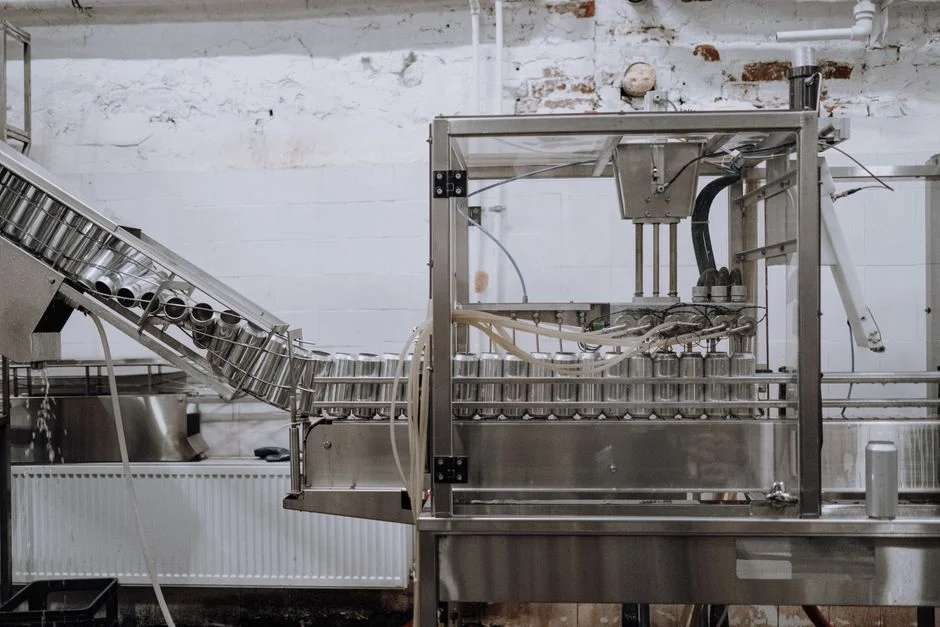
Equipment capacity does not demonstrate permit compliance; the permit requires monitoring at designated locations and methods. Build the controls around pH, flow, FOG, BOD, TSS and every other listed parameter. Continuous instruments support event detection, while composite or grab samples provide the analytical results required by the permit. The permit must determine which are continuous, event-based, composite or grab samples and how results are reported.
King County’s pH provisions show why event logic matters. One grab sample below pH 5.0 violates the instantaneous minimum. A recording below pH 5.5 for 15 minutes or longer violates the daily minimum, as do four consecutive grab samples at least 15 minutes apart within 24 hours when all are below pH 5.5 (King County, current webpage). A control system should therefore retain the relevant recording history, not merely the daily average.
An automatic chemical dosing system can support pH adjustment and coagulant or flocculant feed, but it is only one layer of compliance. Specify alarms, fail-safe dosing behavior, calibration, power-loss response, chemical availability and retained event data. A permit-to-design traceability matrix should connect every limit to its sensor, sampling point, test method, alarm, corrective action, reporting owner and retention location.
Include hazardous-waste screening before authorizing a discharge. King County requires notification to King County, EPA and the Washington Department of Ecology when listed or characteristic RCRA hazardous waste enters the sewer (King County, current webpage). King County also states that facilities sending more than 100 kilograms per month of listed or characteristic hazardous waste to the sewer must follow additional requirements (King County, current webpage). Confirm the applicable notification path with KCIW rather than treating hazardous material as ordinary industrial wastewater.
Choose Equipment and Suppliers by Risk, Not by Package Name
A defensible bid ties every offered unit to an enforceable permit condition. Require each bidder to identify the guaranteed parameter, design flow, influent basis, duty point, test method, instrument package, utilities, startup conditions and exclusions. Then test whether the proposed arrangement addresses the actual failure mode rather than relying on a generic capacity claim.
For primary solids removal, compare DAF with lamella clarification. DAF is the stronger fit for FOG and emulsified oil; lamella clarification is the stronger fit for TSS-dominant service where lower chemical use is important. Compare footprint, chemical consumption, recovered sludge, available utilities and sensitivity to hydraulic overload. A sedimentation system cannot compensate for an upstream DAF stage that lacks conditioning or peak-flow capacity.
For biological treatment, compare activated sludge with MBR against BOD and TSS requirements, footprint, aeration energy, membrane maintenance and reuse potential. Neither is universally superior. Ask suppliers to describe the effects of CIP dumps, temperature excursions, power loss, hydraulic overload and chemical-system failure.
For sludge-generating systems, require a dewatering and disposal concept. HydropureWater states that its plate and frame filter presses span 1–500 m² filtration areas and offer manual, hydraulic or fully automatic PLC-controlled operation (HydropureWater, 2026). Review the plate and frame filter press for sludge dewatering and the high-efficiency sedimentation tank for solids clarification against the actual sludge quantity, cake-handling route and operating labor.
| Procurement check | Information required from bidder | Reason for the check |
|---|---|---|
| Permit achievability | Guaranteed parameter, limit and test method | Prevents selection against a generic design basis |
| Hydraulic and load basis | Peak flow, influent characterization, operating envelope and excluded conditions | Exposes overload assumptions |
| Controls and monitoring | Sensors, sample points, alarms, data retention and fail-safe behavior | Links equipment operation to compliance evidence |
| Operations | Chemical use, aeration demand, maintenance access and operator workload | Supports lifecycle comparison and staffing decisions |
| Sludge and utilities | Residue estimate, dewatering concept, utilities and shutdown response | Identifies costs often omitted from equipment pricing |
| Commercial terms | Scope exclusions, installation, commissioning, validation and support | Prevents gaps between price and compliant operation |
Frequently Asked Questions
How much will pretreatment equipment cost for a Seattle-area food or beverage plant?
There is no defensible regional price in the supplied research. A bid should separate the primary FOG or solids stage, biological treatment, controls and instrumentation, sludge dewatering, installation, commissioning, chemical consumption, energy and maintenance. Give suppliers the current permit, flow and load characterization, required performance and excluded conditions so comparable scopes can be evaluated.
How long will the equipment take to arrive and satisfy the compliance schedule?
Confirm delivery against the defined equipment scope and the plant’s actual compliance deadline. Ask for the manufacturing schedule, shipping assumptions, installation duration, commissioning plan, operator training and approval dependencies. The supplied research does not establish a universal lead time for Seattle-area projects, so a delivery date without those scope conditions is not a usable commitment.
What should be included in a wastewater-equipment sourcing checklist?
Request permit-performance guarantees, the flow and load basis, FOG and TSS test methods, pH controls, monitoring locations, alarms, data retention, fail-safe operation, reference drawings, utilities, sludge handling, commissioning evidence and O&M support. Also request overload responses for CIP dumps, temperature excursions, power loss and chemical-system failure.
Does King County always control the permit for a food or beverage plant near Seattle?
No. Confirm the receiving sewer authority for the specific discharge point and whether the plant is a categorical discharger. King County states that categorical dischargers require a full King County permit regardless of discharge volume, but facilities connected to another POTW may be governed by that authority’s requirements. Obtain the current permit and discharge authorization before treating any equipment proposal as final.
Can one treatment technology guarantee sewer compliance?
No. Compliance depends on influent characterization, stream segregation, treatment-train design, controls, operation, maintenance and permit-specific verification. DAF, lamella clarification, biological treatment and MBR each address different loads; they must be combined and operated as a system whose monitored performance can be defended to the sewer authority.