What the Sulaymaniyah data center must treat separately
A data center in Sulaymaniyah needs two independently designed treatment trains: biological treatment and disinfection for sanitary wastewater, and pretreatment plus controlled desalination for cooling-tower blowdown. Blowdown reuse can reduce freshwater demand and discharge volume, but silica, calcium carbonate and calcium sulfate limit conventional brackish reverse osmosis, which IDE-Tech reports at 75–80% recovery before scaling becomes limiting. Final equipment selection requires measured source-water chemistry, cooling-tower flows, seasonal evaporation, sewer capacity, discharge limits, power reliability and a permitted concentrate route. Any treatment concept must be validated with Sulaymaniyah data rather than regional proxy assumptions.
The separation is driven by contaminant load and reuse destination. Cooling-tower blowdown is concentrated, scale-prone water containing dissolved treatment chemicals; sanitary wastewater carries biological solids, organic matter and hygiene risk. They may share a building, pumping header or control system only after their hydraulic and chemical compatibility has been demonstrated. Their treatment trains should remain independently sized and guaranteed, as explained in the Sulaymaniyah effluent treatment plant guide.
| Stream | Primary treatment objective | Design decision |
|---|---|---|
| Cooling-tower blowdown | Remove scale-forming salts and control residual chemicals | Filtration, chemistry control, membrane separation, disinfection where required, and concentrate management |
| Softener regeneration brine | Control salinity and hardness loading | Route separately until flow, temperature and chemistry compatibility are measured |
| Humidification and chiller bleed | Remove applicable treatment chemicals and suspended solids | Co-handle only after sampling confirms compatibility |
| Once-through auxiliary cooling | Meet the authorised discharge temperature and quality limits | Measure independently; this stream may constrain discharge capacity |
| Wash-down and cafeteria wastewater | Remove grease, colloids and organics | Pre-treat before any biological or membrane application |
| Domestic sewage | Meet biological and disinfection requirements | Use a separate sanitary train with a defined reuse or discharge destination |
Genesis Water Technologies reports in 2026 that cooling-tower blowdown commonly represents 20–40% of facility intake. That makes it the primary recovery candidate, but not an automatic basis for combining it with sanitary wastewater. For the sanitary side, the domestic sewage treatment options in Sulaymaniyah provide the relevant reuse context.
Establish the site water balance before choosing a treatment train
Measured water flows, rather than a catalogue flow or a generic data-center ratio, must determine treatment capacity. Meter make-up water, evaporation, blowdown, each auxiliary stream, sanitary wastewater and recovered-water reuse. Use conductivity and operating records to distinguish continuous purge from emergency dumps, because a short discharge event can distort both peak flow and concentrate volume if it is not identified separately.
The basic relationship is B/M = 1/(CoC − 1), where B is blowdown, M is make-up and CoC is cycles of concentration. At 4 CoC, blowdown is 25% of make-up; at 6 CoC, it is 20%. The change is five percentage points, or a 20% relative reduction—not a 50% reduction as the nominal cycle increase might suggest. This relationship is identified in the HydropureWater Baghdad guide, 2026.
Baseline measurement must precede equipment sizing. Genesis Water Technologies reports in 2026 that actual blowdown can exceed theoretical blowdown by 15–30% because losses and emergency discharges are unmeasured. That is a warning to verify the water balance, not a guaranteed site allowance to add to every design case.
The operating record should include the cooling configuration, tower count, design wet-bulb temperature, design CoC, measured make-up and blowdown, evaporation, and seasonal variation. Add summer peaks, lower cooling load, planned outages, emergency blowdown and future expansion to the capacity scenarios. Recovered-water storage and reuse meters must be included; otherwise the site may count recycled water as withdrawal even when it returns to the cooling loop.
Two different flow questions must be answered before equipment selection. The sanitary train follows fixture counts, occupancy and operating hours. The blowdown train follows the tower water balance, including continuously purged water and verified dump events. Combining the two into one flow envelope can produce a plant that is oversized for wastewater or undersized for membrane pretreatment.
Confirm the source water and the Sulaymaniyah compliance boundary
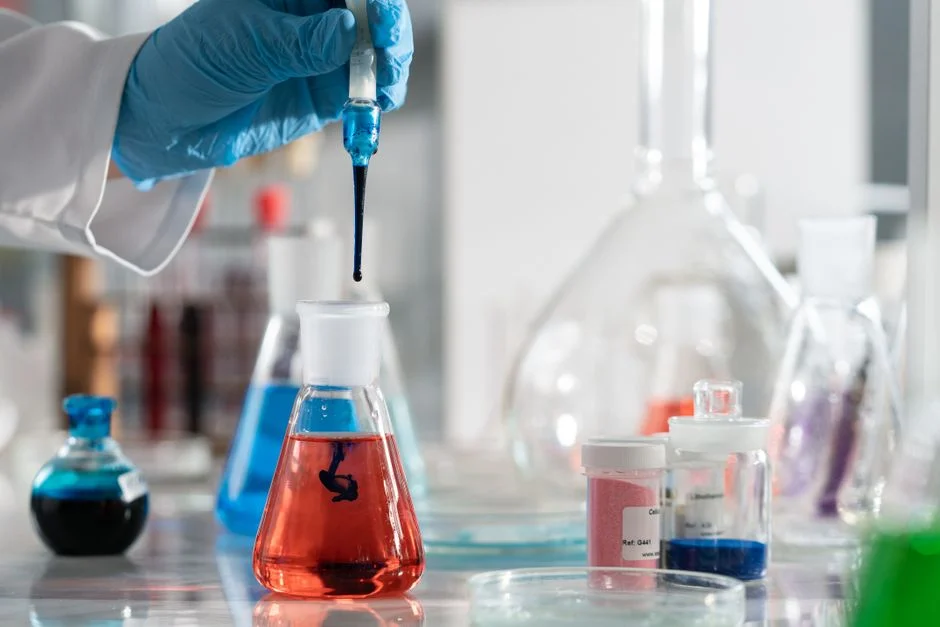
The equipment basis must be a current, site-specific source-water analysis rather than a regional proxy. Request results with sampling dates, laboratory identification and operating conditions for TDS, calcium, alkalinity, silica, sulfate, chloride, temperature, turbidity and residual treatment chemicals. A single sample is a starting point, not a design basis for seasonal operation.
The authority boundary must be confirmed in parallel. Establish the responsible project and environmental authorities, sewer connection capacity, permitted temperature and water-quality limits, discharge receptor, reuse restrictions and the permitted route for membrane concentrate or other residuals. The supplied research establishes no universal numeric discharge limit for Sulaymaniyah, so limits from Baghdad, Abu Ghurayb, the Gulf or the United States should not be imported.
| Open item | Evidence required | Equipment decision affected |
|---|---|---|
| Cooling-blowdown chemistry | Dated analysis for silica, calcium, alkalinity, sulfate, chloride, TDS and temperature | Filtration, softening, antiscalant control and membrane recovery |
| Sanitary wastewater | Fixture, occupancy, operating-hour and wastewater-flow data | Equalisation, biological treatment, solids separation and disinfection |
| Discharge route | Current permit, sewer capacity and receptor conditions | Permitted treatment level and controlled-discharge option |
| Reuse destination | Authority and customer approval for the intended use | Water-quality acceptance criteria and disinfection |
| Concentrate route | Permitted disposal, handling and storage confirmation | Maximum feasible recovery |
| Electrical supply | Grid reliability, backup generation, outage duration and available electrical capacity | Pump, blower, membrane and controls configuration |
Power reliability is a process constraint, not an ancillary electrical note. Membrane feed pumps, blowers and high-recovery controls must maintain controlled operation during utility disturbances. Confirm available electrical capacity, backup-generation characteristics, expected outage duration and ride-through requirements before selecting equipment loads.
The HydropureWater Baghdad guide, 2026, gives an LSI operating band of −0.5 to +0.5 and RSI of 6.0–7.0 for a regional cooling-water application. These are reference values only. Sulaymaniyah chemistry, source-water variability and manufacturer limits must validate or replace them. The same caution applies to capacity assumptions in the Sulaymaniyah effluent treatment plant guide.
Route cooling blowdown through the right recovery process
The defensible blowdown sequence is equalisation and screening, filtration, chemistry control, membrane or alternative desalination, disinfection where required, and reuse or concentrate management. Equalisation protects downstream equipment from variable flow and composition; filtration protects membranes; chemistry control manages scale; concentrate management determines whether the selected recovery is operationally possible.
For conventional brackish RO, the regional Baghdad train identified in the HydropureWater Baghdad guide, 2026, specifies mechanical screening, multi-media filtration targeting SDI below 3, softening or antiscalant dosing, RO at 75–80% local recovery, and UV or chlorine-dioxide polishing. An industrial reverse osmosis system for cooling blowdown should therefore be offered only with a defined feed-water basis, recovery guarantee, concentrate analysis and cleaning assumptions.
| Process option | Recovery evidence | Principal constraints |
|---|---|---|
| Controlled discharge after pretreatment | Not established by the supplied research; depends on the confirmed permit | Must still meet the authorised discharge requirements |
| Conventional brackish RO | 75–80% before scaling and operating limits dominate, according to IDE-Tech, 2026 | Silica, sulfate, hardness, power and concentrate route |
| High-recovery treatment | Around 95% recovery and about 1 mg/L permeate silica in an IDE-Tech industrial application, 2026 | Pilot evidence, precipitation controls, solids handling, energy and operator competency |
IDE-Tech’s 2026 finding is the key screening criterion: conventional brackish RO generally reaches a 75–80% recovery plateau before scaling, chemical consumption and operational instability dominate. Increasing recovery through additional conventional RO stages therefore also adds pumps, interstage controls, cleaning demand and complexity.
Higher-recovery treatment requires a different process architecture. The configuration reported by IDE-Tech, 2026, uses conservative local RO followed by controlled precipitation of silica, calcium carbonate and other sparingly soluble salts. Dense pellets are withdrawn as solid waste, leaving concentrate dominated by sodium chloride. The published industrial application operated at around 95% recovery and produced permeate silica of about 1 mg/L; these are application results, not guaranteed Sulaymaniyah performance.
Multi-stage or high-recovery operation should proceed only after source chemistry, recovery target, electrical load, precipitated-solids handling and concentrate disposal have been confirmed. Pretreatment may require multi-media filtration for RO pretreatment, while pilot work must establish whether the local water supports the proposed precipitation chemistry. The data-center cooling-blowdown treatment workflow provides a comparative process reference, not a substitute for Sulaymaniyah pilot data.
Protect equipment and reuse water without creating a second wastewater problem
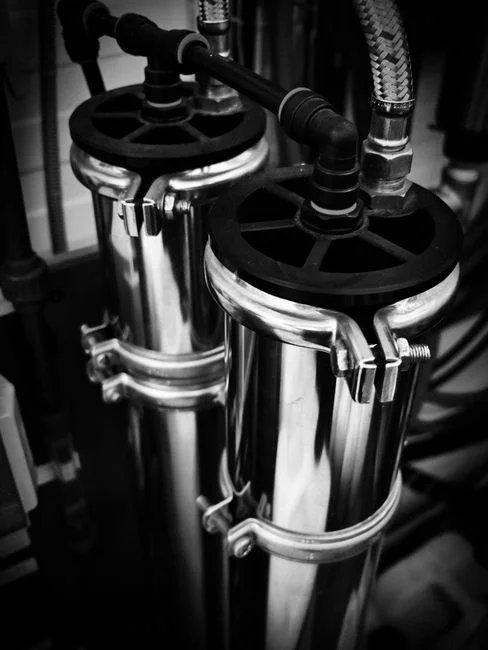
Reclaimed water must be accepted against the cooling system’s make-up specification, not against permeate quality alone. Validate conductivity or TDS, pH, residual oxidant, scaling indices and treatment-chemical residuals against tower metallurgy, coatings, heat exchangers and the existing chemical-control programme. A membrane can remove dissolved solids while leaving an oxidant or antiscalant residual incompatible with the cooling equipment.
The HydropureWater Baghdad reference, 2026, identifies intake flow, blowdown flow, TDS, pH, temperature, residual oxidant and RO or MBR differential pressure as the minimum starting point for site-specific instrumentation. Add silica, hardness or scaling controls, recovery, permeate flow, concentrate flow and off-spec alarms where the process design requires them.
Define the mechanical and operational connection before commissioning. Specify the reclaimed-water header and blending arrangement, isolation and drain paths for off-spec water, storage turnover to limit biological growth, and the treatment required for storage feed. The discharge route should not become a new uncontrolled wastewater stream when the reuse train is unavailable.
Lifecycle energy must be assessed beside water savings. The Open Engineering study cited in the HydropureWater Baghdad guide, 2026, reports a wastewater scenario with about twice the freshwater scenario’s global warming potential, with treatment energy responsible for roughly 80% of that difference. The same source reports that its UF+RO wastewater scenario used more than five times the energy of its freshwater case. These results support an explicit energy model; they do not establish the energy consumption of a Sulaymaniyah system.
Where lower-strength water must be conditioned before reuse, ultrafiltration pretreatment for industrial reuse can form part of the specified train, but its duty must follow the measured solids load and selected downstream process.
Treat sanitary wastewater through a separate biological and disinfection train
Sanitary treatment capacity must come from fixture counts, occupancy, operating hours, wastewater sampling and seasonal variation—not cooling demand. Define the permitted destination first: toilet flushing, landscape irrigation or controlled discharge each imposes different biological, particulate and disinfection requirements.
The core sequence is equalisation, biological treatment, solids separation and disinfection. The HydropureWater Baghdad reference, 2026, uses dissolved-air flotation for fats, oils, grease and colloidal material, followed by an MBR and disinfection. A chlorine-dioxide generator or UV unit is a context-specific polishing choice, and residual control must be verified where reclaimed water will enter the cooling system.
| Sanitary stage | Design input | Acceptance evidence |
|---|---|---|
| Equalisation | Peak flow, operating hours, equalisation volume and wastewater variability | Hydraulic model and operating-level record |
| DAF or equivalent pretreatment | Grease, solids and colloid observations | Sampling results and performance test |
| Biological treatment and solids separation | Organic load, flow profile and required effluent quality | Process guarantees and commissioning records |
| MBR | Required solids separation and reuse quality | Permeate flow, quality and differential-pressure data |
| Disinfection | Reuse destination, residual requirements and contact conditions | Validation report and residual-monitoring procedure |
An MBR system for separate sanitary wastewater treatment should not be assumed to produce cooling make-up chemistry automatically. Conversely, a blowdown membrane train cannot replace biological sanitation. Shared pumping or buildings may reduce civil cost, but biological capacity, membrane duty, redundancy and reuse acceptance must remain independently defined.
Match the treatment option to the site’s reuse and discharge constraints
The defensible option is the one that meets the confirmed reuse requirement while remaining compatible with discharge capacity, permit conditions, grid reliability and concentrate handling. A lower-cost treatment train is not defensible if it cannot legally discharge its residuals or cannot maintain cooling-water quality.
Option A is controlled discharge after the pretreatment required by the confirmed sewer or environmental permit. It is not permission to discharge untreated blowdown. Option B is partial loop closure using pretreatment and industrial RO where moderate reuse, reliable electricity and a manageable concentrate route exist. Option C uses controlled salt precipitation and advanced membrane operation where higher reuse is required or discharge capacity is limited; it requires pilot evidence, lifecycle-energy disclosure, operator competency and a solids route. Option D reserves space, utilities, storage and control architecture for staged expansion without omitting the initial concentrate and storage provisions needed later.
| Option | When it fits | Evidence required before award |
|---|---|---|
| Controlled discharge | A lawful receiver has capacity and defined limits | Permit, sewer confirmation and discharge-quality prediction |
| Partial loop closure | Moderate reuse is valuable and power and concentrate capacity are adequate | Guaranteed permeate flow, recovery, quality and concentrate volume |
| Advanced high recovery | Higher reuse is necessary or discharge capacity is constrained | Pilot data, energy model, solids route and operator competency |
| Staged expansion | Flows or future cooling demand remain uncertain | Reserved footprint, utilities, storage and control architecture |
Genesis Water Technologies, 2026, describes modular systems in a 100–300 GPM range and presents a 15 MW reference case with 60% recovery, USD 200,000 CAPEX and a 6.7-year simple payback on utility cost alone. The same analysis improves payback to three-to-five years when full cost-of-water accounting is included. These are reference cases, not a Sulaymaniyah forecast or quotation; final capacity must follow measured local flow and operating scenarios. The data-center cooling blowdown treatment workflow shows how these constraints can be structured into a procurement comparison.
Build an operator-ready package with monitoring, maintenance and handover
The supplier should submit the site water balance, chemistry basis, process guarantees, equipment datasheets, P&IDs, controls philosophy, monitoring points, commissioning tests, O&M assumptions and lifecycle-energy disclosure. Each guarantee must identify its source-water and operating conditions. A performance number without a defined feed-water basis is not a procurement commitment.
Specify acceptance tests for permeate flow and quality, recovery, concentrate volume and chemistry, differential pressure, disinfection performance, off-spec isolation and automatic control response. State the frequency and expected cost of membrane cleaning, including the chemicals, contact time, recovery testing and production loss associated with each event.
Include storage, standby power and an emergency strategy for loss of power or cooling. The emergency sequence should address emergency blowdown, safe recovery of essential cooling service, preservation of treatment equipment and the controlled disposal or storage of off-spec water. Confirm whether the cooling system can remain stable during a power interruption without continuous treatment.
Maintenance and handover should cover chemicals, spare membranes, filter elements, tool requirements, operator training, remote support, troubleshooting, recordkeeping and revision of operating limits after performance testing. The disinfection and oxidant options discussed in the ozone, UV and chlorine water-treatment comparison must be selected for the actual reuse destination rather than copied between streams.
Make every guarantee conditional on confirmed site inputs. List unresolved measurements, authority decisions and operating assumptions in the offer. If source chemistry, sewer capacity, reuse approval or concentrate disposal remains unresolved, identify it as a priced condition, limitation or exclusion rather than burying it in general performance language.
Frequently Asked Questions
How much should a Sulaymaniyah data center budget for cooling blowdown treatment?
No verified Sulaymaniyah quotation is available in the supplied research. Genesis Water Technologies, 2026, provides a 15 MW reference case with 60% recovery, USD 200,000 CAPEX and a 6.7-year simple payback on utility cost alone; the HydropureWater Baghdad guide, 2026, lists USD 350,000–600,000 for a 10 MW illustrative package. Request a quotation based on measured hourly and seasonal flows, source chemistry, recovery target, discharge route, utilities, civil works, freight, commissioning and O&M assumptions. Compare lifecycle cost rather than treating either regional figure as a local price.
What size wastewater treatment system does a Sulaymaniyah data center need?
Size each process train from measured demand, not a generic per-megawatt estimate. For blowdown, meter make-up, evaporation and blowdown; apply B/M = 1/(CoC − 1) as a cross-check, then test actual flow against the theoretical calculation. For sanitary wastewater, use fixture counts, occupancy, operating hours, sampling and seasonal variation. Confirm current flows, future cooling configuration and emergency discharges before selecting the capacity envelope.
Is conventional reverse osmosis sufficient for cooling-tower blowdown reuse?
It may be sufficient for a moderate-reuse target when silica, sulfate, hardness, power and the concentrate route are manageable. IDE-Tech, 2026, reports a conventional brackish-RO plateau at 75–80% recovery before scaling, chemical consumption and operational instability dominate. Use measured Sulaymaniyah chemistry and a site-specific pilot to confirm the available recovery; do not select advanced precipitation solely from a catalogue recovery claim.
How should a buyer evaluate a high-recovery blowdown-treatment supplier?
Ask the supplier to demonstrate the proposed recovery with feed chemistry matching Sulaymaniyah, disclose energy consumption, define membrane-cleaning frequency and provide a route for precipitated solids and chloride-rich concentrate. IDE-Tech’s around-95% recovery and about 1 mg/L permeate silica result, published in 2026, came from an industrial application and is not a guaranteed site result. Require pilot evidence, operating-personnel competency, an emergency strategy and contractual performance tests.
Can sanitary wastewater and cooling-tower blowdown share one treatment plant?
Shared buildings, pumping or controls may be feasible, but the process trains should remain independently designed. Sanitary wastewater requires biological treatment, solids separation and disinfection; blowdown requires scale control, membrane treatment and concentrate management. Co-handling is defensible only when measured flow, chemistry, temperature, biological loading, redundancy and the permitted reuse destination are compatible.