

What Determines the Right Package Plant for a Guadalajara Development?
The best fit is usually an underground A/O package plant when the Guadalajara housing development has sufficient land, conventional discharge is acceptable and no irrigation reuse is required. Choose MBR when the site is constrained, higher-quality effluent is needed, or water reuse has value. The decision starts with average and peak residential sewage flow, available footprint and the permitted discharge or reuse route—not the package size alone. For screening, HydropureWater reports WSZ capacities of 1–80 m³/h and footprints of about 1.5 m² per m³/day, versus approximately 0.8 m² per m³/day for MBR. Federal compliance cited in the supplied research includes BOD ≤30 mg/L and TSS ≤40 mg/L, subject to the current permit and receiving water.
Four inputs should be settled before requesting equipment proposals: average daily flow, peak and surge conditions, available treatment footprint, and the permitted discharge or reuse route. Add two development-specific questions: will the neighborhood be delivered in phases, and does the collection system need equalization, screening or solids management?
On that evidence, the underground WSZ A/O package sewage treatment plant is generally the lower-footprint-cost screening option where land is available and reuse is unnecessary. The integrated MBR membrane bioreactor becomes more compelling where space is tight, reuse is planned or the required effluent is more demanding.
Catalog capacity is not a complete engineering proposal. The supplier must still establish project-specific influent quality, hydraulic and organic loading, treatment objectives, collection interfaces and permit requirements.
Turn Housing Occupancy and Flow Data into a Sizing Basis
Housing-development capacity must be derived from the wastewater flow generated by the occupied development, not from a catalogue maximum or an assumed occupancy factor that has not been documented.
First separate average daily wastewater flow from peak-hour and peak-day flow. Document occupancy assumptions, unit mix, garden irrigation entering the sewer, commercial leakage, stormwater entry and the occupancy expected in each development phase. Do not transfer hotel or resort guest-night factors to residential housing.
The calculation sequence is:
- Collect flow inputs from the land-use and occupancy schedule.
- Calculate average flow in m³/day.
- Establish peak and surge design flow from the collection-system assessment.
- Check hydraulic and organic loading against the proposed process.
- Select treatment capacity, equalization and module arrangement.
For equipment screening, HydropureWater’s product information gives WSZ a capacity range of 1–80 m³/h, while the integrated MBR product covers 10–2,000 m³/day. These are equipment boundaries, not project design flows. The 2026 domestic-sewage MBBR design guide also reinforces the need to reconcile treatment units with actual domestic-sewage loading and hydraulic conditions.
| Sizing input | What the supplier must document | Buyer check |
|---|---|---|
| Average wastewater flow | Basis of occupancy, unit mix and wastewater generation | Does the proposal cover current and future occupied phases? |
| Peak and surge flow | Hourly and daily peaks, collection concentration and slug loading | Can equalization and treatment absorb the identified peaks? |
| Treatment capacity | Selected module capacity and expansion provisions | Is capacity based on project flow rather than catalogue maximum? |
| Footprint and excavation | Tank or module area, access, cover depth and civil interfaces | Does the arrangement fit available land and future development? |
Convert the applicable design flow into a daily capacity check and compare it with both the selected module and the available excavation or land area. Equalization must also be addressed: a unit rated for average flow may not adequately absorb sudden loading or dirty-water slugs.
Community Sewer’s residential-development supplier information states that modular systems allow development in phases rather than purchase of the entire system upfront. Require the proposal to state whether treatment modules can be added or operated in parallel as occupancy grows, and identify the triggers for each expansion stage.
Compare A/O, MBR and Pretreatment for Residential Sewage
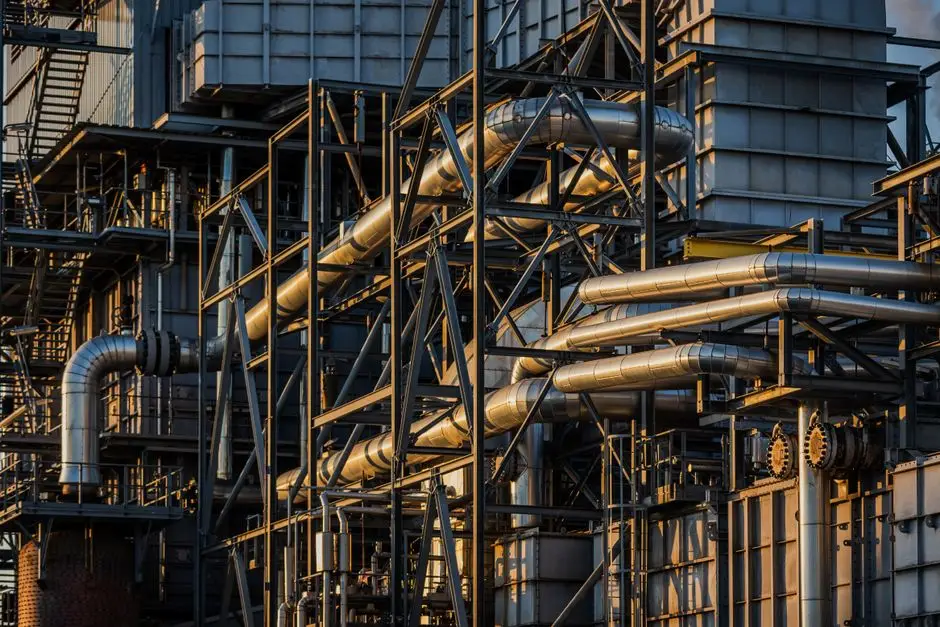
The WSZ configuration combines anoxic and aerobic contact oxidation, sedimentation and disinfection in one buried unit, while the MBR configuration combines activated sludge with submerged PVDF membrane filtration.
HydropureWater’s Jalisco guide reports approximately 1.5 m² per m³/day of capacity for WSZ and 0.8 m² per m³/day for MBR. The 2026 hotel guide reports source-specific technology figures of BOD below 30 mg/L for WSZ, BOD below 5 mg/L for MBR and MBR filtration below 1 μm. These are reported technology figures, not universal project guarantees; the supplier must demonstrate compliance against the current permit and receiving-water conditions.
| Selection issue | A/O biological treatment | MBR |
|---|---|---|
| Reported footprint | Approximately 1.5 m² per m³/day | Approximately 0.8 m² per m³/day |
| Reported effluent figure | BOD below 30 mg/L | BOD below 5 mg/L; filtration below 1 μm |
| Best initial fit | Land available; conventional discharge; no reuse requirement | Land constrained; reuse has value; tighter filtration is required |
| Main buyer check | Treatment zones, disinfection, sludge access and complete buried civil scope | Membrane system, cleaning access, aeration demand and replacement assumptions |
DAF is primarily a pretreatment choice for suspended solids and FOG, not the default biological treatment plant for domestic housing sewage. Include a DAF pretreatment module only where the influent characterization supports it. The GX rotary mechanical bar screen should likewise be included only where the collection system and influent warrant solids screening; request a headworks design rather than adding equipment by default.
Use a plate-and-frame filter press where residual-sludge dewatering and hauled-sludge volume materially affect the operating plan. For irrigation reuse, distinguish basic compliant treatment from reuse-specific tertiary treatment and disinfection. BOD and TSS compliance alone does not demonstrate that reuse is permitted.
Match the Treatment Plant to the Site and Development Phases
A buried WSZ unit allows the treatment footprint to remain below landscaped ground where the development perimeter provides sufficient room, excavation access and vehicle access. Its integrated treatment train reduces the number of separately arranged process units, but it does not eliminate civil interfaces.
For a compact urban infill site, MBR’s footprint advantage becomes more important. HydropureWater’s 2026 hotel guide states that MBR occupies roughly 60% less footprint than a conventional activated-sludge layout of equivalent effluent quality. The buyer should compare usable treatment area rather than nominal tank footprint alone, including membrane maintenance, sludge withdrawal, electrical equipment, odor control, sampling and equipment replacement access.
Require a site plan showing that maintenance and sludge handling can occur without removing planted areas. Confirm that roof runoff, groundwater and excessive stormwater are directed away from the sanitary influent where practicable. The collection design should also demonstrate how the plant will receive wastewater from occupied lots during each phase.
Phasing should connect treatment capacity to occupied lots and completed infrastructure. Ask the supplier to define the installed capacity for each phase, the operating configuration before the next module is installed, and the trigger for adding capacity. This avoids committing the full first-phase capital expenditure while still maintaining collection, equalization and treatment capability.
The commissioning plan should identify startup tests, sampling points, operator instruction and a performance-verification period. Community Sewer describes a follow-up assessment after twelve weeks to confirm treatment levels and remediate deficiencies; that sequence can be requested as a contractual reference point without treating the supplier’s account as independent verification. A packaged sewage treatment comparison for a housing development provides a useful phase-based reference for comparing supplier proposals.
Budget for Equipment, Civil Work and Permitting Together
The published Jalisco ranges are preliminary equipment benchmarks, not quotations for an installed housing-development treatment plant.
HydropureWater’s Jalisco guide gives MXN 1.2M–3M for a standard 10–30 m³/h WSZ unit and MXN 5M–15M for a 50–100 m³/h MBR system, described as FOB Jalisco 2025 estimates. The same source reports operating benchmarks of MXN 0.80–1.50/m³ for WSZ and MXN 2.50–4.00/m³ for MBR.
| Cost element | Required quotation detail |
|---|---|
| Treatment package | Technology, model, design flow, footprint, controls, disinfection and included accessories |
| Balance of plant | Equalization, screening, collection interfaces, sludge handling and reuse equipment |
| Civil and installation | Excavation, supports, pipework, access covers, electrical connections, lifting and site works |
| Commissioning and compliance | Testing, training, startup, sampling, regulatory support and performance verification |
| Lifecycle commitments | Membrane or media replacement, spare parts, power assumptions, O&M scope and warranty exclusions |
| Commercial terms | Freight, customs, taxes, exchange-rate validity, delivery and local support |
These figures do not establish the installed price in Guadalajara. Request separate pricing for the treatment package, equalization, collection interfaces, civil works, installation, electrical power, commissioning, controls, sludge handling and regulatory support.
MBR’s higher operating benchmark is linked in the source to membrane replacement cycles typically occurring every 5–7 years and aeration for membrane scouring. Ask the supplier to update the replacement-cost assumption for 2026 and identify what is covered by the warranty.
Do not convert avoided fines into verified savings, and do not apply the source’s industrial return-on-investment example to a housing project. Require quotations to state freight, customs, taxes, exchange-rate validity, local commissioning, warranty exclusions, replacement items, spare parts and O&M assumptions.
Plan the Guadalajara Permit and Compliance Path
The supplied federal benchmark for surface-water discharge is BOD at or below 30 mg/L and TSS at or below 40 mg/L under NOM-001-SEMARNAT-1996; the buyer must verify the current consolidated standard and project permit conditions with the authorities.
HydropureWater’s Jalisco guide describes a PROEPA permitting sequence comprising an environmental impact assessment, submission of the NOM-certified design and establishment of operator training records. Its 2026 hotel guide reports a simplified Jalisco SEMA procedure for package systems below 30 m³/day that typically clears in 60–90 days, with the SEMARNAT DAR permit running concurrently. For systems above 30 m³/day, it reports 4–6 months for SEMARNAT approval and an additional 30–60 days for CFE interconnection. These are published schedule benchmarks and must be confirmed for the actual project.
The permit strategy should identify the receiving water body, discharge point, collection-system ownership, sampling frequency, flow measurement, notification requirements and whether reuse is proposed. If reuse is part of the development plan, identify the applicable reuse requirements separately from ordinary surface-water discharge.
Request current, project-specific NOM-compliant effluent test reports and verify their authenticity rather than relying on a general supplier statement. Include an automatic chemical dosing system only where chemical control is justified by the influent and permit. Likewise, specify an UV disinfection system only after confirming that its disinfection basis is acceptable for the intended discharge or reuse route.
The compliance-risk review should cover pH, equalization capacity, automated controls, operator records, sampling and contingency response if final permit limits differ from the selected package performance.
Use a Supplier Qualification and Performance Checklist
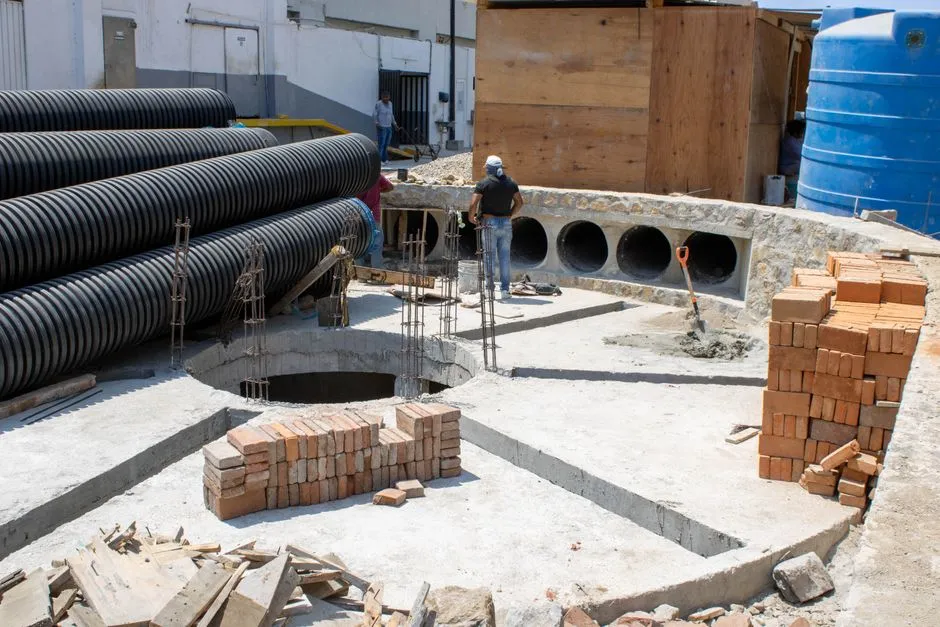
A technically credible proposal must show the selected process against the actual development flow, occupancy schedule, collection system, site constraints and permit conditions rather than merely identifying a catalogue model.
Community Sewer’s residential-development sequence—requirements consultation, regulatory research, engineering and project management, build and ship, installation and startup, followed by a twelve-week assessment—provides a useful procurement framework, but each element requires documentary evidence and contractual responsibility.
| Verification area | Supplier evidence requested | Procurement decision |
|---|---|---|
| Design basis | Average and peak flows, influent data, loading calculations, footprint and expansion plan | Accept only a site-specific proposal |
| Performance | Current test reports, sampling methods, acceptance periods and treatment guarantees | Verify authenticity and permit relevance |
| References | Comparable housing or domestic-sewage installations | Check operating conditions and local support |
| Delivery and startup | Freight plan, lifting route, installation sequence, commissioning protocol and training | Assign responsibilities and milestones |
| Contract | Remedies for non-conformance, warranty exclusions, spares and follow-up visits | Make acceptance objectively testable |
Define sampled parameters, test methods, sample locations, acceptance periods, remedy for non-conformance, warranty exclusions and startup milestones in the contract. Confirm who is responsible for delivery to Guadalajara, customs or import clearance, lifting, installation, commissioning personnel and post-startup performance visits.
Verify the proposed process against current permits and influent data. Do not accept a generic model selected from a catalogue, and do not treat a reference installation as proof of this project’s performance without checking its wastewater characteristics and operating conditions.
Make the Final Selection with a Decision Tree
Start with reuse. If the permitted plan requires irrigation-grade reuse, evaluate MBR with project-specific tertiary treatment and disinfection; a standard package should not be treated as automatically reusable.
Next test site space. If the available area cannot accommodate the WSZ footprint estimate plus access and civil works, compare MBR using its reported footprint advantage.
Then test hydraulic variability. If equalization and collection design cannot control peak flow or slug loading, require a staged treatment train and verified equalization capacity before accepting the standard package.
If land, reuse and compliance conditions are comfortable with the selected technology, compare the lower published WSZ capital and operating benchmarks against MBR’s tighter footprint and higher-quality filtration. Consider the value of reuse and the verified operating plan rather than nominal capacity alone.
The final recommendation should require five signed-off documents: a process proposal, permit pathway, installed price, O&M plan and performance guarantee. If any one depends on an assumption, keep the technology conditional and return the unresolved input to the supplier.
Frequently Asked Questions
How much does a packaged sewage treatment plant cost for a housing development in Guadalajara?
HydropureWater’s Jalisco guide gives preliminary FOB Jalisco 2025 equipment benchmarks of MXN 1.2M–3M for a 10–30 m³/h WSZ unit and MXN 5M–15M for a 50–100 m³/h MBR system; these are not installed housing-project quotations. Request separate prices for the treatment package, equalization, collection interfaces, civil works, installation, electrical service, controls, commissioning, sludge handling, regulatory support and performance testing. Also require freight, customs, taxes, exchange-rate validity, warranty exclusions, replacement costs, spares and O&M assumptions.
Should a Guadalajara housing development choose WSZ A/O or MBR?
Choose WSZ for initial screening when the site has enough room for the estimated 1.5 m² per m³/day footprint, conventional discharge is acceptable and irrigation reuse is not required. Choose MBR when the site cannot accommodate WSZ plus access and civil works, reuse has value, or the permit requires tighter filtration. The final choice must follow a site-specific proposal and permit review rather than catalogue performance alone.
What flow does a housing development need to size its package plant?
Establish average daily flow, peak-hour flow, peak-day flow, occupancy growth, garden irrigation entering the sewer, leakage, stormwater entry and development phasing before selecting a module. Convert those inputs into hydraulic and organic loading checks, then compare the required daily capacity with the proposed equipment, equalization system, excavation area and expansion plan. No generic per-capita factor should be used unless it is documented and accepted for the project.
What permits and standards apply to a packaged sewage plant in Guadalajara?
The supplied research cites NOM-001-SEMARNAT-1996 surface-water benchmarks of BOD at or below 30 mg/L and TSS at or below 40 mg/L. The 2026 hotel guide also describes Jalisco SEMA review, SEMARNAT DAR permitting and, for systems above 30 m³/day, reported SEMARNAT and CFE timeframes. Confirm the current standard, receiving water, discharge point, sampling conditions and any reuse requirements with the responsible authorities; a general compliance statement is insufficient.
How can a developer verify a wastewater equipment supplier’s credentials?
Request authentic current test reports, comparable housing references, site-specific flow and loading calculations, an installed-cost breakdown, commissioning evidence, operator training, local spare-parts support and a testable performance guarantee. Define sample locations, methods, acceptance periods, remedies for non-conformance and startup milestones in the contract. Confirm separately who will deliver, install, commission and perform post-startup performance visits in Guadalajara.