Baghdad’s Sewage Treatment Context and Project Implications
Domestic sewage treatment in Baghdad requires matching technology to the development’s flow, wastewater characteristics, discharge route and available space. Baghdad is improving sewer mains and pumping stations: a World Bank mission in July 2024 documented work on the Ghazaliya trunk sewer, Rusafa 2, Habibiya, four Ghazaliya pumping stations and Al Doura pumping station, with the project closing date revised to May 31, 2026. For locations that cannot connect promptly, an underground package plant may be practical. Larger or reuse-oriented projects may require an MBR system, subject to site-specific characterization, effluent requirements and authority review.
The World Bank’s July 2024 implementation mission covered the Baghdad Water Supply and Sewerage Improvement Project, including drinking-water and wastewater infrastructure. It followed the Ghazaliya sewer trunk, Rusafa 2, Habibiya and four Ghazaliya pumping stations, while accelerating procurement for the Ghazaliya/Al Khadra and Al Doura pumping stations. The revised project closing date was May 31, 2026.
These investments do not establish sewer availability, connection capacity or approval for an individual parcel. A developer must obtain site-specific confirmation from the relevant Baghdad authority before treating public sewerage as the discharge route. If connection timing, network capacity, site layout or discharge arrangements make that route impractical, decentralized sewage treatment becomes a separate design-and-procurement decision.
That decision must be evidence-led. The January 2024 Journal of Food Protection review, Waterborne Diseases and Wastewater Treatment in Iraq, reports that Iraqi wastewater treatment plants are often poorly maintained or overloaded and links contaminated water with continuing exposure to enteric diseases. Domestic sewage and industrial process wastewater also require different design bases: characterize the actual influent rather than assuming that one treatment profile fits every project.
What Baghdad Developers Must Confirm Before Selecting Equipment
A Baghdad project should be priced against a complete design brief, not a nominal treatment capacity. The buyer must establish flow and wastewater composition, define the discharge route and required effluent quality, and identify physical, utility, operating and sludge-handling constraints before comparing equipment.
The Al-Rustamiya wastewater treatment plant study by the Journal of Engineering reported a raw-wastewater BOD5/COD ratio of 0.67, characterized as typical of untreated domestic wastes. That result supports measuring domestic-strength wastewater, but it applies to the Al-Rustamiya influent and is not a universal Baghdad design constant.
The same study listed Iraqi effluent targets of BOD5 40 mg/L, COD 100 mg/L, TSS 60 mg/L and chloride 600 mg/L. These are preliminary screening benchmarks only. The buyer must confirm the applicable standard, sewer agreement or receiving-water permit before fixing contractual guarantees.
| Design input | Information the buyer must establish |
|---|---|
| Hydraulic demand | Average and peak wastewater flow, with current and future development phases. |
| Wastewater composition | BOD5, COD, TSS, chloride and relevant characteristics of the actual influent. |
| Discharge route | Public sewer, approved decentralized outfall, reuse route and applicable authorization. |
| Site and utilities | Footprint, soil, groundwater, access, power, control-system requirements and operator capability. |
| Residuals and reuse | Sludge removal and disposal plan, plus intended reuse or irrigation requirements. |
Hydraulic capacity does not establish treatment quality. The proposed process must reconcile flow with biological loading, clarification and disinfection. Where industrial flows enter the system, separate domestic sewage from process wastewater and determine whether equalization, additional pretreatment or a separate discharge route is required. Inlet screening and flow control should be addressed where required; the rotary mechanical bar screen is one equipment option, while the plate-frame filter press can be evaluated as part of a defined sludge-dewatering chain.
Design teams should require each bidder to identify the design inlet basis, treated-flow basis, process stages, retention times, loading assumptions, sludge production, control philosophy, test points and commissioning deliverables. These are the inputs needed to compare offers technically rather than by headline capacity.
How a Compact Domestic Sewage Treatment Process Works
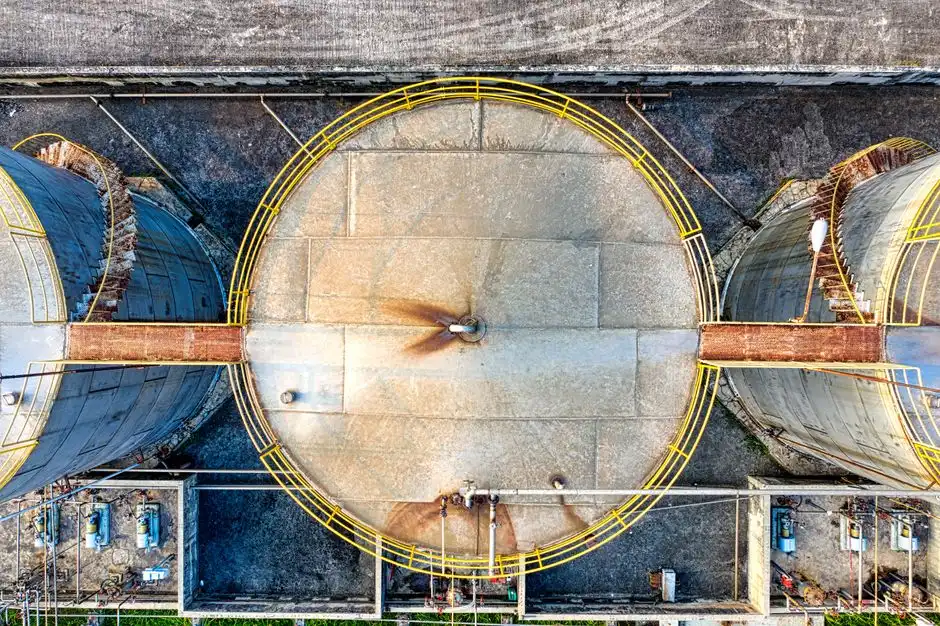
The underground WSZ package sewage treatment plant follows a defined treatment sequence: incoming sewage, inlet screening and flow control, anoxic biological treatment, aerobic contact oxidation, sedimentation, disinfection and monitored discharge. The verified product catalog describes the WSZ as a single buried package combining anoxic/aerobic A/O biological contact oxidation, sedimentation and disinfection.
- Inlet control: incoming sewage is screened and metered through the inlet arrangement.
- Anoxic stage: the process provides the biological zone used for anoxic treatment before aerobic oxidation.
- Aerobic contact oxidation: aerobic biological contact oxidation addresses biodegradable organic material in the wastewater.
- Sedimentation: clarified liquid is separated from settled biological solids.
- Disinfection: the final stage controls pathogens before the specified discharge point.
- Monitoring: treated flow must be checked against the project’s agreed performance criteria.
The HydropureWater verified catalog describes the WSZ as fully automated and requiring no operator. That is a catalog specification, not a substitute for site-specific operating responsibility, maintenance access, alarm handling and residual management. Buyers should also confirm how “no operator required” is interpreted in the contract and whether routine site visits remain necessary.
Sludge is still generated. The package boundaries the liquid-treatment process; they do not eliminate the need to collect, condition, dewater and dispose of residuals. The WSZ can be installed below grade with landscaping above or mounted on a trailer for mobile deployment.
The IntechOpen constructed-wetland and microbial-fuel-cell chapter supports the concept of integrating biological treatment with energy recovery. Its supplied excerpt did not expose usable performance numbers, so it cannot support a quantitative equipment or effluent comparison.
Packaged Treatment, MBR and Decentralized Alternatives Compared
No treatment architecture is universally superior: the correct choice depends on confirmed flow, effluent duty, land, reuse objectives, utilities, maintenance capability and residual handling. Catalog specifications indicate architecture and scale, but they are not guaranteed project outcomes.
| Selection factor | WSZ packaged plant | MBR system |
|---|---|---|
| Catalog capacity | 1–80 m³/h | 10–2,000 m³/day |
| Configuration | Single buried package; also available mounted on a trailer for mobile deployment. | Catalogued integrated MBR configuration. |
| Treatment process | Anoxic/aerobic A/O biological contact oxidation, sedimentation and disinfection. | Membrane bioreactor treatment with submerged PVDF membranes and filtration below 1 micron. |
| Effluent position | Performance depends on the specified design basis, influent, operation and permit. | Catalog describes near-reuse-quality effluent; project performance remains conditional. |
| Footprint statement | Buried configuration is relevant where land is constrained. | Catalog states a footprint 60% smaller than conventional systems. |
| Maintenance focus | Access, controls, aeration, clarification, disinfection and residuals. | Membranes, aeration, pumping and membrane cleaning in addition to biological process controls. |
All capacity, filtration and footprint figures in this table are HydropureWater catalog specifications, not Baghdad project guarantees. The MBR membrane bioreactor system is relevant where the project requires a higher-specification separation route, larger flow or reuse-oriented treatment, provided that membrane cleaning, replacement and specialist operating support are included in the lifecycle plan.
The Al-Rustamiya study demonstrates why average removal alone is inadequate. It reported BOD5 removals of 92.1%, 90.31% and 92.96% for F0, F1 and F2, respectively, but said the treated BOD5/COD ratios did not confirm typical ratios and that further treatment was needed. Performance therefore needs to be tested against defined effluent indicators, not one headline percentage.
Decentralized vermifiltration is another academic alternative. The IntechOpen study describes it as efficient, viable, requiring less expertise and suitable for decentralization. However, the supplied excerpt does not provide sufficient sizing or performance data for a direct equipment comparison. Its suitability for a Baghdad project would require a separate design basis.
The mechanical scope matters as well. The World Bank’s July 2024 document identifies rehabilitation of pumps, panels, cables, valves, fittings and screens, supporting a lifecycle assessment of mechanical assets rather than a tank-only comparison.
A Practical Selection and Procurement Framework
A defensible award follows four decisions: establish the discharge route and requirements; define flow and wastewater characteristics; compare process fit, footprint and expansion; then assess utilities, maintenance, sludge handling, commissioning and supplier support.
- Define the route: obtain written confirmation of sewer availability, connection approval, discharge authorization and project timing.
- Define the duty: issue the design influent, peak-flow basis, effluent indicators, reuse conditions and future-development requirements.
- Define the architecture: compare process drawings, footprint, installation method, redundancy, expansion and utilities.
- Define the contract: make guarantees, testing, commissioning, training, maintenance and authority liaison measurable.
Request a process flow diagram, design basis, hydraulic and organic loading calculations, guarantees tied to defined influent and effluent conditions, equipment data sheets, electrical and control drawings, installation drawings, O&M manual, training plan, spare-parts list and commissioning protocol. A separate containerized MBR treatment plant sizing guide can help structure the hydraulic review, while MBR effluent quality and performance expectations can inform the performance specification.
Ask bidders how the unit responds to peak flow, variable organic loading, fats or solids, odor control, power interruption and sludge-removal intervals. The supplied research provides no universal numerical answers, so each response must be tied to the design assumptions.
The contract should define compliant performance, test methods, sampling points, operator attendance, defect response and responsibility for permit submissions or liaison with Baghdad authorities. Use BOD5, COD, TSS and chloride as separate indicators where applicable rather than relying on one removal percentage.
Installation, Commissioning and Operating Considerations
A buried WSZ installation must be assessed for excavation depth, soil conditions, groundwater, access covers, lifting requirements, vent arrangements and protection from vehicle loading over unsuitable areas. Landscaping above the package should not conceal access or exceed the installation’s loading constraints.
Before delivery, confirm electrical supply, control-panel location, alarm routing, spare-parts strategy and the responsibilities of local operators or service providers. For a housing development, see also the packaged sewage treatment guidance for housing developments.
Handover should require wet commissioning, performance testing against the agreed design basis, operator training and a documented O&M schedule. These activities should be supported by a sludge-management plan covering removal, conditioning, dewatering and final disposal or permitted reuse. The plate-frame filter press may form part of that chain, but it does not replace the required disposal route.
The January 2024 Iraq review’s finding that treatment plants are often poorly maintained or overloaded makes preventive maintenance, staffing clarity and effluent quality monitoring central to long-term performance.
Frequently Asked Questions
How much does domestic sewage treatment in Baghdad cost?
The supplied research contains no defensible Baghdad price range. Request itemized quotations based on average and peak flow, measured influent, effluent targets, excavation and foundation work, utilities, installation, controls, commissioning, sludge handling, training and long-term service scope. Separate equipment cost from civil works, authority submissions, consumables and maintenance so that bidders quote the same commercial boundary.
How should a domestic sewage treatment plant be sized?
Nominal capacity alone is insufficient. Give the supplier measured flow and wastewater characteristics, the duty basis, future growth, redundancy requirements, discharge route, reuse objectives and peak-
Frequently Asked Questions
How much does a domestic sewage treatment plant cost in Baghdad?
For a standard residential development in Baghdad, capital expenditure for a modular Membrane Bioreactor (MBR) or Moving Bed Biofilm Reactor (MBBR) system typically ranges from $450 to $850 per cubic meter of daily treatment capacity. Total project costs are highly dependent on civil works, land preparation, and the specific level of tertiary treatment required for local reuse standards.
Ongoing operational expenses, including electricity for aeration, sludge disposal, and membrane cleaning chemicals, generally range between $0.15 and $0.35 per cubic meter of treated water. Budgeting should also account for a 15% contingency fee to cover logistics and specialized equipment import costs common in the Iraqi market.
How do I size a sewage treatment system for a residential development in Baghdad?
Sizing is calculated based on an average daily per capita flow rate of 150 to 200 liters, adjusted for the specific occupancy density of the development. Engineers must apply a peaking factor of 2.5 to 3.0 to ensure the system can handle hydraulic surges during morning and evening peak usage hours without compromising effluent quality.
The organic load is typically calculated using a Biochemical Oxygen Demand (BOD5) generation of 50 to 60 grams per person per day. Systems must be sized to accommodate these specific influent concentrations to ensure the biological process remains stable under the high-temperature conditions characteristic of Baghdad, which can accelerate microbial activity and oxygen demand.
What should I check when choosing a sewage treatment plant supplier in Baghdad?
Verify that the supplier provides localized technical support and maintains a readily available inventory of critical spare parts, such as aeration diffusers, submersible pumps, and membrane modules. A qualified supplier should offer a minimum two-year comprehensive warranty and provide documented evidence of previous installations within Iraq that have successfully operated for at least 24 months.
Ensure the supplier can provide a detailed process design package that includes hydraulic profiles, mass balance calculations, and expected effluent parameters. It is essential to confirm their capacity to provide on-site commissioning, operator training, and an after-sales service contract to manage the specific challenges of local power grid instability and high ambient temperatures.
Can a private treatment plant be used instead of connecting to Baghdad’s public sewer?
Yes, private treatment plants are permitted and often necessary in areas where the municipal sewage network is incomplete or at capacity. However, the installation must be approved by the Baghdad Municipality and the Ministry of Environment, requiring a formal application that includes a design report, site layout, and an environmental impact assessment.
If the treated effluent is intended for discharge into the public storm-water drainage system or local waterways, the facility must meet the Iraqi National Environmental Standards for the discharge of liquid waste. Failure to secure these permits before construction can lead to immediate site closure and the imposition of heavy administrative fines.
What are the compliance risks when discharging treated domestic sewage in Baghdad?
The primary compliance risk is failing to meet the Iraqi Ministry of Environment’s discharge limits, which mandate a BOD5 concentration of less than 40 mg/L and Total Suspended Solids (TSS) below 60 mg/L for general discharge. Exceeding these limits can result in the revocation of operating licenses and potential legal action if the discharge causes downstream contamination or public health hazards.
Compliance is monitored through periodic water quality testing; facilities are expected to maintain an internal log of effluent parameters. Risks are significantly elevated if the system is improperly maintained, as fluctuating electricity supply can cause mechanical failures that lead to the discharge of untreated or partially treated sewage, triggering immediate regulatory intervention and environmental liability.