Determine Which Sewer Authority Controls the Fab
The enforceable limits come from the sewer use ordinance and industrial discharge permit issued by the authority that receives the parcel’s wastewater, not from a universal semiconductor standard. Federal pretreatment rules under 40 CFR Part 403 require local programs to prevent pass-through and interference, while 40 CFR Part 413 establishes federal categorical minimums for semiconductor manufacturing. EPA places semiconductor facilities within the Electrical and Electronic Components framework in 40 CFR Part 469, whose listed pollutants include fluoride, arsenic, and organic compounds (EPA, “Electrical and Electronic Components Effluent Guidelines”).
Santa Clara County fabs can discharge through the Palo Alto RWQCP, San Jose-Santa Clara Regional Wastewater Facility, or Sunnyvale WPCP collection system; the parcel’s collection-system connection therefore determines which permit governs the design. HydropureWater’s 2026 Santa Clara pretreatment guide identifies the following distinctions. These published values are not a substitute for the current ordinance and permit.
| Receiving authority | Applicable values identified in the research | Design consequence |
|---|---|---|
| Palo Alto RWQCP | Current site-specific limits must be obtained from the governing ordinance and permit. | Do not transfer San Jose or Sunnyvale values to a Palo Alto-connected site. |
| San Jose-Santa Clara Regional Wastewater Facility | BOD at or below 30 mg/L; TSS at or below 50 mg/L; FOG at or below 10 mg/L; pH from 6.0 to 9.0, as reported in HydropureWater’s 2026 San Jose guide. A formal slug-control plan is required when fluoride exceeds 50 mg/L, according to HydropureWater’s 2026 Santa Clara guide. | Design chemical feed and equalization around batch dumps and include slug controls in the permit-compliance narrative. |
| Sunnyvale WPCP | Fluoride ceiling of 10 mg/L, according to HydropureWater’s 2026 Santa Clara guide. | Fluoride removal and continuous verification need more stringent project-specific design attention. |
Monthly Discharge Monitoring Reports and five-year permit renewals apply at all three facilities according to HydropureWater’s 2026 Santa Clara guide. The permit connection, applicable limits, monitoring schedule, and slug-control obligations must be confirmed before equipment sizing is frozen.
Characterize and Segregate Fab Wastewater
An average wastewater flow can conceal the short chemical load that determines whether a treatment train can comply. A defensible design therefore begins with a segregated water balance and a mass-loading record, not a single blended flow rate.
EPA describes semiconductor wastewater generation from etching, cleaning, rinsing, degreasing, cutting, and grinding, with fluoride, arsenic, and organic compounds among the associated pollutants (EPA, “Electrical and Electronic Components Effluent Guidelines”). Each drain must then be assigned a treatment objective and sampled under the operating conditions that produce its highest load.
| Wastewater stream | Primary design concern | Required engineering response |
|---|---|---|
| Wet-etch drain | Fluoride and acidic or alkaline pH excursions | Segregate for calcium-driven fluoride removal and verify the precipitation pH window. |
| CMP drain | Copper, nickel, and related metals | Provide a separate metal-hydroxide precipitation stage with controlled pH. |
| Developer drain | Organic compounds and high pH | Establish organic-removal and pH-control requirements before combining with other drains. |
| Utility drain | Suspended material and debris | Install mechanical screening to protect downstream equipment. |
Tool dumps can raise fluoride mass loading to 3–5 times the daily average, according to HydropureWater’s 2026 Santa Clara guide. The characterization program should therefore include at least 8–12 weeks of hourly or event-based data across production states, tool dumps, cleaning cycles, and shutdowns when sufficient records exist. If historical data are unavailable, conduct a representative sampling campaign across all major operating modes.
Segregation must be resolved before the fab piping is fixed. HydropureWater’s 2026 Santa Clara guide states that retrofitting separate drains after construction is rarely cost-effective. A rotary mechanical bar screen in the utility-drain headworks is one equipment application described in the source, although screening does not replace the required chemical treatment.
Build a Peak-Capacity Treatment Train
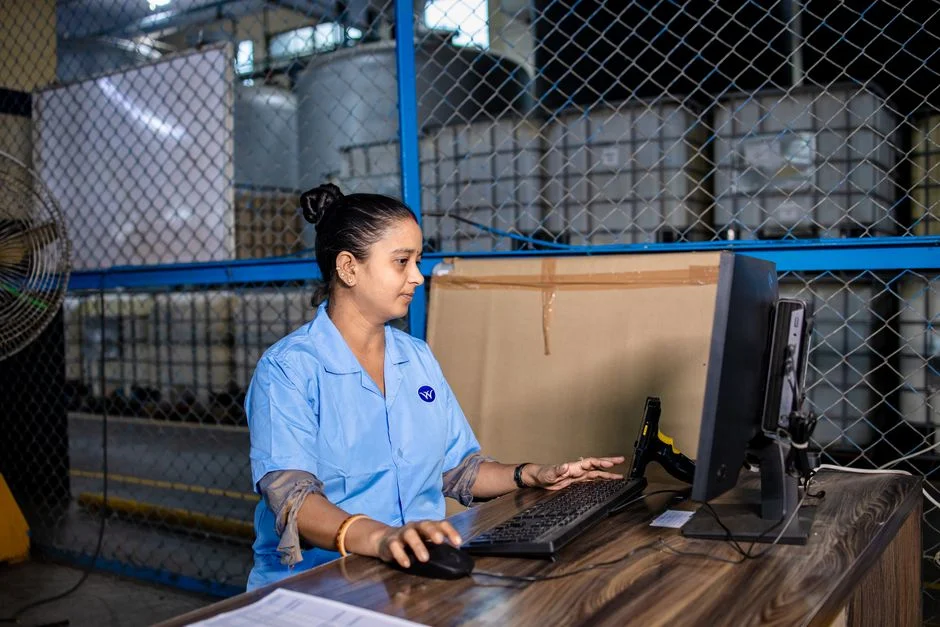
The treatment train should buffer batch dumps before applying chemistry, preserve each stream’s required pH window, and size dosing equipment on peak contaminant mass rather than average hydraulic flow.
- Equalize batch discharges. Equalization prevents a tool dump from imposing its full fluoride or metal load on the chemical system in a single reaction period.
- Remove fluoride from the segregated etch stream. HydropureWater’s 2026 Santa Clara guide specifies calcium chloride at a 1.2–1.5 stoichiometric ratio with pH held from 6.5 to 7.5. The dosing skid must be sized on peak kilograms per day of fluoride.
- Precipitate CMP metals separately. Sodium hydroxide or lime raises pH from 9.5 to 10.5 for copper, nickel, and related metals. Redundant pH probes and self-cleaning sensors are specified in the guide.
- Clarify the precipitated solids. The selected solids-removal equipment must handle the hydraulic peak and the settleability demonstrated by jar testing.
- Polish according to the permit and reuse target. Additional treatment is selected only after the combined effluent chemistry and final disposal route are known.
| Treatment stage | Design basis in HydropureWater’s 2026 Santa Clara guide | Procurement requirement |
|---|---|---|
| Fluoride precipitation | Calcium chloride at a 1.2–1.5 stoichiometric ratio; pH from 6.5 to 7.5 | Size on peak kg/day fluoride and include flow-paced control. |
| CMP metal precipitation | Sodium hydroxide or lime; pH from 9.5 to 10.5 | Provide redundant probes, self-cleaning sensors, and automatic interlocks. |
| Chromium reduction | Bisulfite at pH 2–3 before polishing for chromium-bearing lines | Include only where chromium chemistry and the permit require it. |
| Trace-metal polishing | Ion exchange below about 50 m³/h throughput | Confirm the flow and residual-metal basis against pilot or jar-test results. |
| Reuse polishing | Industrial RO at 75–95% recovery when the fab targets at least 50% reuse | Tie the decision to water quality, pretreatment, concentrate disposal, and reuse demand. |
Keeping fluoride and CMP drains separate preserves the fluoride-removal window at pH 6–8 and the metal-hydroxide window at pH 9–10.5. HydropureWater’s 2026 Santa Clara guide reports that mixing can reduce fluoride removal by 40–60% when pH drifts.
The numerical pH and dosing values are design guidance from HydropureWater’s 2026 Santa Clara guide, not substitutes for jar tests, permit conditions, or the selected vendor’s design. A PLC-controlled chemical dosing system should therefore receive the validated mass-loading calculation and operating envelope, not merely a nominal flow rate.
Choose Clarification and Solids-Handling Equipment
Clarifier selection must follow from the waste profile, hydraulic peak, footprint, and resulting sludge volume—not from a general preference for one technology.
| Selection factor | DAF | Lamella clarification |
|---|---|---|
| Hydraulic loading in HydropureWater’s 2026 Santa Clara guide | 4–25 m/h | 20–40 m/h |
| Preferred application identified in the guide | Fluoride-rich or oily wastewater | Dense metal-hydroxide solids |
| Layout or flow trigger | Consider DAF when influent exceeds about 150 m³/h or oil and grease dominates. | Consider lamella when available bay width is under 6 meters. |
| Mandatory validation | Confirm jar-test settleability, peak m³/h, footprint, oil and grease, sludge haul cost, and spare-parts lead time. | |
A DAF system for fluoride-rich or oily wastewater and lamella clarification are therefore conditional choices, not interchangeable bids. Hydraulic loading must be checked against the selected geometry and the measured solids characteristics.
Chemical precipitation creates a solids-management obligation that continues after clarification. HydropureWater’s 2026 Santa Clara guide reports that polymer at 0.5–2 mg/L typically produces a 25–35% dry-solids cake in a plate-and-frame filter press. A plate-and-frame sludge dewatering system should be selected against the precipitate properties, batch-cycle requirement, cake-disposal route, and expected haul cost.
Clarification, dewatering, and any reuse decision must remain compatible with the site’s final disposal route and discharge requirement. A clarifier that performs adequately hydraulically can still create an untenable solids path if the cake cannot be dewatered or disposed of as planned.
Turn the Design into a Compliance-Control Plan
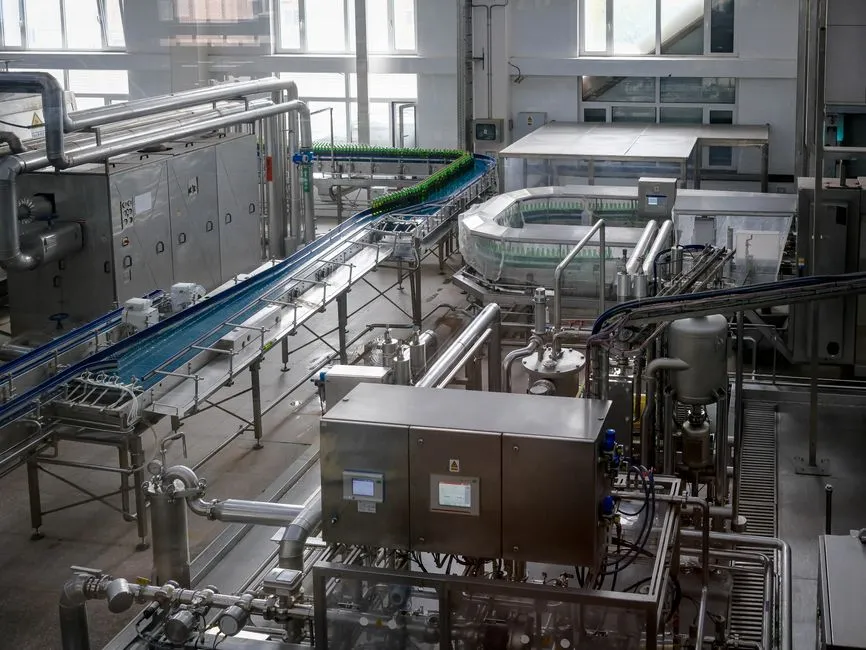
Compliance should be demonstrated through continuous process control, independent verification, and event-based testing rather than reliance on monthly grab samples alone.
HydropureWater’s 2026 Santa Clara guide calls for continuous fluoride ion-selective-electrode monitoring on the effluent header, supported by routine laboratory verification and permit-required monitoring. The instrument must remain usable across the expected chemistry; a fluoride electrode should not be treated as a substitute for complete analytical control without representative verification data.
The guide specifies automatic flow-paced control using 4–20 mA signals and a dosing skid with at least 10:1 pump turndown. Treatment interlocks should cover peak-load operation, high-level alarms, chemical inventory, and a documented response to fluoride excursions or tool-dump spikes. Interlocks should place the system in a defined operating state and escalate the event when the required chemistry cannot be maintained.
Where chromium or other regulated metals require verification, the source identifies continuous ICP-OES or XRF checks rather than a monthly grab alone. The selected method must have demonstrated sensitivity at the permit limit and a sampling location that represents the monitored discharge.
Commissioning should use worst-case production events and confirm the assumed flow and mass loads. Clean-water testing demonstrates equipment movement and controls, but it does not demonstrate fluoride removal, metal precipitation, or clarified-solids performance.
Future treatment capacity also requires a defined place in the site plan. HydropureWater’s 2026 Santa Clara guide recommends reserving about 20% footprint and capital contingency for granular activated carbon contactors with 10–15 minutes of empty-bed contact time or foam fractionation. The guide connects that recommendation to proposed E&EC PFAS limits under the Clean Water Standards for PFAS Act, while EPA’s current category-review page states that the reviewed PFAS data are limited and do not demonstrate a need to revise the existing regulation at this time. The coagulant dosing-system design criteria should be reviewed alongside that documented regulatory uncertainty.
Use a Risk-Based Equipment Procurement Checklist
A bid becomes comparable only when bidders submit the same stream definitions, mass-load basis, permit assumptions, sizing calculations, and performance obligations.
| Bid package item | Minimum information required | Reason for review |
|---|---|---|
| Design basis | Stream map; peak m³/h; peak kg/day for fluoride and metals; influent characterization; permit limits | Prevents averaging away batch-dump loads or applying the wrong local limit. |
| Process proposal | Design setpoints, equipment sizing calculations, controls narrative, and failure-mode response | Makes operating assumptions and compliance ownership auditable. |
| Test evidence | FAT, field-performance testing, controls documentation, alarm response, local service, and spares | Tests delivered performance rather than promises in the technical proposal. |
| Life-cycle scope | Treatment-stage redundancy, remote monitoring, chemical-storage safeguards, sludge disposal, and spare-parts availability | Exposes operating and end-of-life costs omitted from equipment price. |
HydropureWater’s 2026 San Jose guide gives broad reference figures of approximately $200,000 for a small chemical-dosing skid, generally $500,000 to $5 million for DAF and MBR projects, and approximately $15 million for a full zero-liquid-discharge plant. These are broad planning references, not quotations; the inputs a buyer must request are the wastewater characterization, flow and mass profiles, treatment objectives, footprint, utility requirements, disposal route, and permit conditions.
Compare bids against required outcomes and failure modes rather than capital cost alone. A lower-priced skid that cannot cover peak turndown, lacks continuous monitoring, or has no documented excursion response is not equivalent to a compliant package. The DAF versus lamella clarification for semiconductor wastewater comparison provides one technical screen, but the governing decision remains the permit-specific design basis.
Frequently Asked Questions
How much does semiconductor wastewater treatment cost near San Jose?
HydropureWater’s 2026 San Jose guide lists approximately $200,000 for a small chemical-dosing skid, generally $500,000 to $5 million for DAF and MBR projects, and approximately $15 million for a full zero-liquid-discharge plant. These are broad reference figures, not quotations. A buyer should request a priced design basis covering streams, peak flow and mass loads, chemistry, footprint, utilities, controls, sludge disposal, and permit conditions.
Should pretreatment equipment be sized for average flow or peak batch dumps?
Size the fluoride and metal treatment stages on peak contaminant mass load, not average flow. HydropureWater’s 2026 Santa Clara guide reports that tool dumps can raise fluoride loading to 3–5 times the daily average. Equalization can buffer the hydraulic event, but it does not justify undersizing the downstream reaction or clarification capacity.
What should a buyer require when selecting a semiconductor wastewater treatment supplier?
Require a permit-specific design basis, segregate stream map, peak flow and kg/day calculations, controls scope, failure-mode response, FAT and field-performance evidence, redundancy, local service, and spare-parts availability. Also assign responsibility for monitoring, calibration, reporting support, and excursion response; equipment performance alone does not establish permit ownership.
Does current federal PFAS guidance require an E&EC wastewater retrofit now?
The distinction is between design readiness and a revised federal requirement. HydropureWater’s 2026 Santa Clara guide recommends about 20% footprint and capital contingency for GAC contactors at 10–15 minutes of empty-bed contact time or foam fractionation. EPA’s current E&EC category-review page states that the PFAS data reviewed are limited and do not demonstrate a need to revise the existing regulation at this time. A buyer should confirm the current permit and track any applicable future requirement before committing the retrofit scope.