How to Decide Between an ETP, DAF, or Combined Treatment Train
An Almaty factory needs a standalone dissolved air flotation (DAF) system when its principal treatment objective is physical separation of suspended solids, oil and grease, FOG, or colloidal matter. It needs an industrial effluent treatment plant (ETP) when biodegradable organic pollutants require biological treatment. A combined train is appropriate when physical contaminants must be removed before biological polishing. The correct choice cannot be determined from factory type or city alone: obtain representative wastewater analysis, average and peak flows, pollutant loads, and the required discharge or reuse outcome before selecting equipment.
DAF is a unit operation; an ETP is a broader treatment plant. The ETP framework described in the research includes primary physical and chemical treatment, secondary aerobic or anaerobic biological treatment, and tertiary treatment before release (OpenBlueprint, Quora, accessed 2026). A refinery example in the same source places DAF between an API separator and biological reactors, where it protects biological treatment from emulsified oil and ultrafine solids.
| Observed wastewater need | Initial treatment scope | Decision condition |
|---|---|---|
| Oil and grease, FOG, suspended solids, or colloidal matter | Standalone DAF, with conditioning if required | The physical contaminants are the defined treatment duty, and the receiving route or reuse target can be met after flotation. |
| Biodegradable organic pollutants requiring biological treatment | Biological ETP | Physical separation alone will not provide the required organic-load reduction. |
| Oily or colloidal wastewater followed by biological polishing | Combined ETP with DAF pretreatment | Emulsified oil or fine solids could impair biological operation. |
Use the 2026 DAF selection and decision framework to develop the initial scope, and compare physical separation options through the industrial DAF versus sedimentation comparison. Neither comparison substitutes for factory-specific analysis.
Characterize the Factory Wastewater Before Choosing Equipment
A defensible equipment selection requires a wastewater profile that links production conditions to the treatment duty. Request representative samples across normal production, start-up, shutdown, cleaning, and batch-discharge periods rather than relying on one grab sample. Specify the analytes relevant to the actual process; the research does not establish a universal parameter list that applies to every Almaty factory.
Record average flow, peak flow, operating shifts, batch dumps, and expected production changes. Hydraulic peaks affect equalization requirements and flotation performance, while pollutant concentration determines the required separation or biological duty. A unit selected only from average flow may be hydraulically overloaded during a batch release or production expansion.
Separate physical-separation needs from biological needs. Oil and grease, FOG, suspended solids, and colloids indicate possible DAF duties. Biodegradable organics indicate a need to evaluate biological wastewater treatment. Dissolved contaminants not removed by flotation may require biological treatment, tertiary polishing, or another treatment stage.
| Project input | What the supplier or designer needs | Why it affects selection |
|---|---|---|
| Representative wastewater analysis | Results covering relevant operating conditions and identified batch streams | Defines the pollutant profile and required removal duty. |
| Hydraulic data | Average flow, peak flow, operating shifts, batch-discharge records, and future production assumptions | Sets equalization and treatment capacity. |
| Receiving route | Direct discharge, municipal sewer, pretreatment agreement, or internal reuse | Determines the applicable outlet and treatment objectives. |
| Operating context | Production chemistry, cleaning cycles, sudden discharges, and seasonal temperature conditions | Influences dosing, process control, equalization, and biological reliability. |
| Sludge route | Proposed collection, holding, dewatering, and disposal method | Prevents flotation froth from becoming an unresolved operating problem. |
Ask the relevant Almaty authority or receiving utility for the applicable discharge, sewer-acceptance, or pretreatment requirements. Do not assume that a foreign catalog limit or a generic reuse target establishes Kazakhstan compliance. For industrial wastewater reuse, state the intended application and required water quality before asking whether additional membrane or disinfection stages are necessary.
DAF is a physico-chemical separation process: pressurized, air-saturated water enters the flotation tank, releases micro-bubbles, and attaches them to suspended solids and oil droplets so the froth can be skimmed (OpenBlueprint, Quora, accessed 2026). The industrial DAF selection framework provides a useful structure for translating the analysis into design inputs.
Where DAF Fits in an Industrial ETP
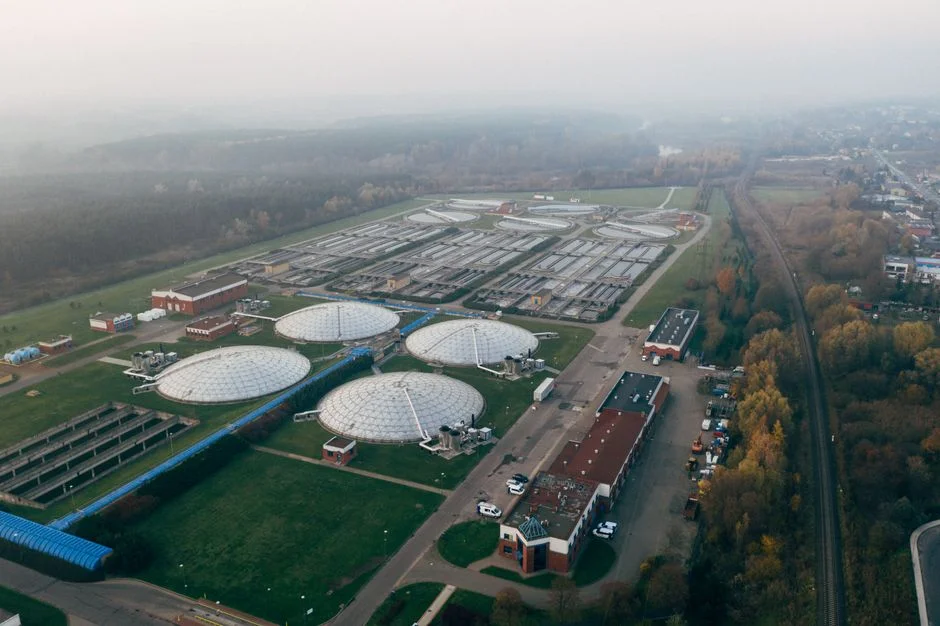
A complete industrial wastewater treatment train should connect physical preparation, contaminant separation, biological treatment where necessary, final polishing, and sludge handling in that order. A practical sequence is screening and equalization, chemical conditioning where required, DAF flotation, biological treatment if required, tertiary or reuse treatment if required, and sludge handling. The exact sequence must follow the factory wastewater profile rather than a generic template.
In the refinery arrangement described by OpenBlueprint on Quora (accessed 2026), a portion of clarified effluent is pressurized and saturated with air in a dedicated drum before returning to the flotation tank. The pressure drop releases micro-bubbles that attach to suspended solids and tiny oil droplets, allowing the accumulated froth to be scraped into a sludge holding tank. The source states that these bubbles usually measure 10–100 microns in diameter.
The same refinery example begins with an API separator, which removes large free-floating oil and heavy sediment by gravity. DAF then addresses emulsified oil and ultrafine solids that remain. This distinction matters: DAF is not simply a substitute for an upstream oil separator, and its duty should be defined around the contaminants still present at its inlet.
DAF also protects downstream biological treatment. OpenBlueprint (Quora, accessed 2026) states that emulsified oil reaching biological reactors can coat bacteria, prevent oxygen transfer, and damage the microbial colony. Coagulants can destabilize emulsions before flotation, while the coagulant dosing design criteria provide a basis for developing the conditioning system. The chemical type and dose should be established through wastewater testing rather than assumed from factory type.
Scraped froth and sludge require a defined route to holding, dewatering, and authorized disposal or reuse. For factories with difficult emulsions or oily production streams, the oily-water pretreatment before DAF explains why upstream separation can change the flotation duty.
DAF does not remove every dissolved contaminant and does not replace biological treatment or tertiary disinfection where those are required. For dairy wastewater applications, the 2026 DAF design guide for dairy wastewater provides another process-specific reference, but the Almaty factory’s actual analysis remains the controlling input.
Compare DAF, Biological ETP, and Combined Treatment
DAF, biological treatment, and a combined train are suited to different duties rather than being direct substitutes. DAF provides physical separation of suspended solids, oil and grease, FOG, and colloidal matter, with chemical conditioning where required and a defined sludge route. Biological ETP treatment addresses biodegradable organic loading through aerobic or anaerobic processes; OpenBlueprint on Quora (accessed 2026) identifies biological treatment as the secondary ETP level.
A combined ETP with DAF is the logical choice when emulsified oil or fine solids must be removed before biological treatment. The sequencing protects reactor performance and makes the biological stage’s treatment duty more consistent. This is the arrangement illustrated by the refinery process in the research, where API separation precedes DAF and biological reactors follow.
| Option | Suitable treatment duty | Scope required | Main limitation |
|---|---|---|---|
| Standalone DAF | Suspended solids, oil and grease, FOG, and colloidal matter | Equalization, screening as required, conditioning where needed, DAF, controls, and sludge handling | Does not replace biological treatment or polishing required by the discharge or reuse objective. |
| Biological ETP | Biodegradable organic pollutants | Primary physical and chemical treatment, secondary biological treatment, and tertiary treatment where required | Needs adequate characterization and control of contaminants that can inhibit biological treatment. |
| Combined ETP with DAF | Oily or colloidal wastewater requiring biological polishing | Physical pretreatment followed by biological treatment and any required tertiary stage | More complex equipment scope, interfaces, controls, and sludge handling. |
Use the DAF versus sedimentation cost comparison to evaluate DAF against conventional solids separation, not against biological treatment. Neither clarification method automatically supplies biological treatment.
For industrial wastewater reuse or more stringent polishing, determine whether the selected discharge route requires additional membrane or disinfection stages. The supplied research states that the referenced MBR catalog covers 10–2,000 m³/day and filtration below 1 μm, but it does not establish that membrane bioreactor technology is automatically required for an Almaty factory. The 2026 DAF advantages and limitations guide should be read within that boundary.
Size the System from Flow and Pollutant Load
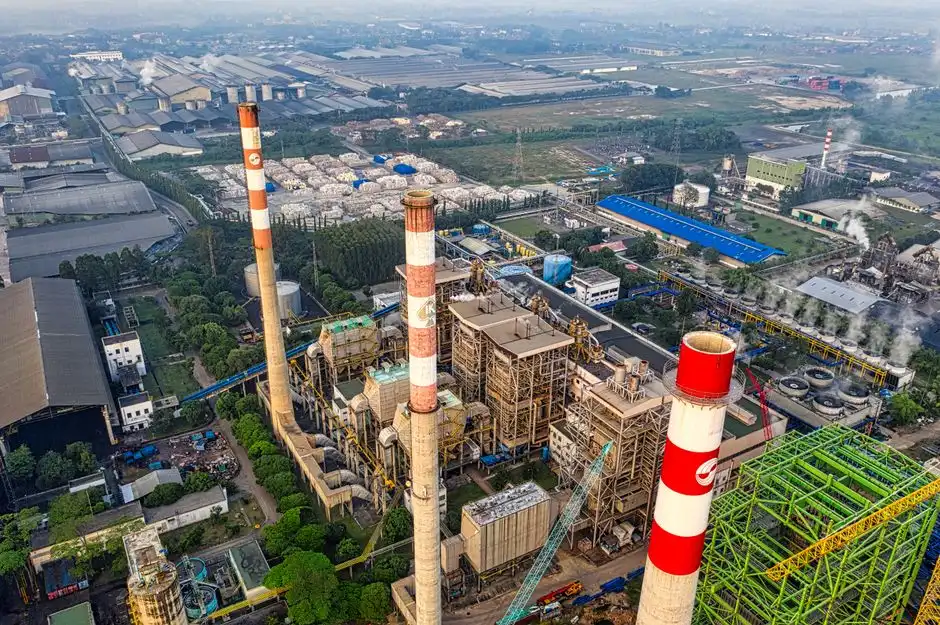
Published equipment capacity is a catalog boundary, not a project-specific sizing calculation. The HydropureWater DAF range covers 4–300 m³/h across 13 models and uses micro-bubble technology with automatic skimming, according to the supplied HydropureWater product information. Those figures do not identify the correct model for an unspecified factory.
Size the system against average flow, peak flow, batch discharges, and pollutant loading. The supplied evidence does not provide enough Almaty factory data to calculate a defensible hydraulic or treatment model. Obtain the following items before selecting a model:
- Representative wastewater analysis with the required treatment duty identified.
- Average flow, peak flow, batch-discharge profile, and future production assumptions.
- The supplier’s written design basis, including the influent conditions used for sizing.
- A performance guarantee covering the stated treatment objective.
- Confirmed inclusion of the recycle stream, air saturation system, automatic skimmer, control package, and sludge-discharge arrangement.
| Bid item | Minimum information required | Acceptable supplier response |
|---|---|---|
| Design basis | Average and peak flow; influent analysis; treatment duty | Stated hydraulic capacity and pollutant-loading basis. |
| Peak-flow strategy | Batch releases, operating shifts, and expected changes | Equalization and feed-control method, including any stated limitations. |
| Equipment scope | DAF, recycle pump, air system, skimmer, instruments, controls, and sludge outlet | Itemized scope with exclusions identified. |
| Performance | Defined outlet objectives and test protocol | Guaranteed duty with reproducible acceptance criteria. |
| Biological treatment, if applicable | Hydraulic and organic loading, aeration, sludge age, nutrient balance, and temperature information | ETP-specific design basis from the biological designer. |
For an industrial DAF system, require the supplier to explain how hydraulic capacity and pollutant loading were separated in the design. If chemical conditioning is required, include a PLC-controlled chemical dosing system in the defined process scope, with the proposed chemicals, control basis, and test-supported dose conditions.
Build a Bid-Ready Supplier RFQ for an Almaty Factory
A comparable RFQ must give every bidder the same wastewater basis, outlet objective, and equipment boundary. Include the representative analysis, average and peak flows, production schedule, batch-discharge information, pollutant load, receiving destination, applicable local requirements, reuse criteria, monitoring obligations, and sludge-handling expectations. Do not request quotations against invented discharge limits; state the confirmed requirements or identify them as items to be established with the relevant authority.
Ask bidders to define the complete industrial effluent treatment plant scope: inlet screening, equalization, chemical dosing, DAF, biological treatment, tertiary treatment, controls, utilities, sludge handling, installation, commissioning, and training. Undefined interfaces are a common source of commercial variation.
| RFQ package | Required supplier information |
|---|---|
| Process design | Design flow, peak-flow strategy, influent basis, treatment sequence, process calculations, and treatment-duty guarantee. |
| DAF equipment | Material of construction, recycle-pump arrangement, air-compressor duty, skimmer specification, instrument list, and control narrative. |
| Chemical and sludge systems | Dosing equipment, chemical basis, mixing or conditioning details, froth collection, sludge transfer, and maintenance requirements. |
| Commercial scope | Utilities, installation, commissioning, included spares, exclusions, delivery scope, and local support. |
| Acceptance | Performance-test method, sampling protocol, acceptance criteria, operator training, documentation, and warranty. |
| Commercial fields | Price, delivery time, operating cost, payment schedule, and validity stated separately as quote-specific values. |
Require bidders to identify assumptions and exclusions rather than burying them in general warranty language. The 2026 DAF selection and decision framework can support the technical scope, but the RFQ must be built from the factory’s own analysis and confirmed receiving requirements.
The supplied research contains no valid Kazakhstan project price or lead-time range. Price, delivery time, and operating cost should therefore remain quote-specific fields, supported by the same design basis and scope boundaries.
Frequently Asked Questions
How much does an industrial ETP or DAF system cost in Almaty?
The supplied research does not contain a valid Kazakhstan price range for an ETP or DAF system. Request a project-specific quotation based on wastewater analysis, average and peak flow, treatment duty, civil works, utilities, automation, sludge handling, delivery, installation, and commissioning. Require each bidder to show the included scope and exclusions so the quotations are technically comparable.
How do I choose a DAF or ETP supplier in Kazakhstan?
Ask for wastewater-specific design calculations, a performance guarantee, evidence from comparable duties, commissioning support, complete documentation, and a defined warranty. Check whether the supplier will identify local installation and utility requirements, permit and approval interfaces, exclusions, and delivery responsibilities in writing. Use the DAF versus sedimentation cost comparison to assess physical-separation options, but evaluate the full treatment scope separately.
What flow rate does my factory need for a DAF system?
The supplied HydropureWater catalog states that 13 models cover 4–300 m³/h, but that range cannot select a model without factory data. Provide average flow, peak flow, batch-discharge records, representative wastewater analysis, and the required treatment duty. Ask bidders to state the design flow and peak-flow operating strategy in the proposal.
Can a DAF system replace a complete ETP?
Not in general. DAF is a physico-chemical separation operation, while an ETP can include primary physical and chemical treatment, secondary biological treatment, and tertiary treatment. DAF can serve as pretreatment within an ETP, but it does not replace biological treatment or final polishing when the wastewater or reuse objective requires them.
Do I need chemical dosing before DAF?
Chemical conditioning may be needed to destabilize emulsions and form flocs, but the need and dose should be established through wastewater testing and jar trials. Ask the supplier to identify the contaminant mechanism, proposed chemical, test basis, control method, and operating consequences rather than accepting a generic dosing requirement.