
What Makes Meat Processing Wastewater Difficult to Centrifuge
Meat-processing wastewater is difficult to centrifuge because its solids, fats, proteins and production-cycle flows vary together rather than as independent parameters.
The design basis should include average and peak flow, minimum flow, operating hours, total suspended solids, particle-size distribution, grease and oil, temperature, pH, settleability, viscosity and production variability. Samples should cover normal production, start-up, shutdown and cleaning discharges because batch releases can impose a solids load different from the daily average.
Free oil, emulsified oil and finely divided proteinaceous solids also require different removal mechanisms. Free oil may float or be recovered upstream, while emulsified oil and stable solids can reach the centrifuge, affect cake behavior and increase centrate contamination. Their impact cannot be resolved from an average suspended-solids result alone.
Laboratory work on meat-and-bone meal miscella provides a relevant warning. After fat extraction, the miscella contained approximately 130 g/L suspended solids; laboratory centrifugation produced sediment at 35–45% suspended solids and centrifugate at 1.0% suspended solids (International Journal of Mechatronics and Applied Mechanics, Bone Meal Production Study). Those results apply to miscella from meat-and-bone meal production, not directly to slaughterhouse, rendering or general processing wastewater.
The practical consequence is clear: characterize the actual wastewater before selecting a bowl configuration. A rotary bar screen for wastewater pretreatment can remove coarse debris, while DAF pretreatment for meat-processing wastewater may be justified where the design basis shows removable floatable material.
Build the Treatment Train Before Choosing the Centrifuge
A decanter centrifuge belongs after source control and controlled pretreatment; its feed must be stable enough for solids capture, cake discharge and centrate quality to remain predictable.
- Segregate streams at source and remove unsuitable material.
- Screen coarse solids, plastics, rags and fibrous debris.
- Equalize production and cleaning flows.
- Remove grit, heavy solids and floatable material where required.
- Condition the feed and mix polymer at a controlled dose.
- Separate solids continuously in the decanter centrifuge.
- Treat or return the centrate and manage the discharged cake.
The rotary bar screen for wastewater pretreatment protects downstream pumps and treatment processes from suspended solids and fibrous debris, but its selection must reflect the actual screening duty rather than nominal flow alone. Coarse screening does not replace FOG or fine-solids removal.
Where characterization confirms removable free oil, grease or floatable solids, DAF pretreatment for meat-processing wastewater can reduce material that would otherwise interfere with feed concentration or cake discharge. If free oil, emulsified oil or fine protein remains, that upstream stage should not be credited with performance the site data do not demonstrate.
Polymer conditioning must produce a stable solids concentration and controlled feed rate through the available conditioning residence time. The supplied research does not establish universal residence-time values for meat-processing wastewater, so the buyer must obtain feed-mixing data and supplier test results. A PLC-controlled polymer dosing system should be specified around the measured solids load, expected dosage variation and operating mode.
Define the centrate destination before ordering the centrifuge. Direct return, equalization, biological treatment or additional clarification creates different suspended-solids and FOG requirements. That destination determines whether centrate quality is a recovery objective, a recycle-control criterion or a discharge-compliance issue.
| Process gate | Design question | Procurement evidence |
|---|---|---|
| Source control | Which streams can be segregated? | Flow and solids records by production area |
| Screening and grit removal | What debris must be excluded? | Representative particle and debris survey |
| Equalization | Can feed flow and solids load be stabilized? | Production and cleaning-cycle mass balance |
| FOG or solids pretreatment | Which floatable or interfering materials need removal? | Oil-and-grease and settleability data |
| Conditioning | Is polymer feed repeatable? | Dose-control response and feed-mixing review |
| Centrate integration | Where does the liquid fraction go? | Centrate limit tied to the receiving process |
Create a Complete Centrifuge Design Basis
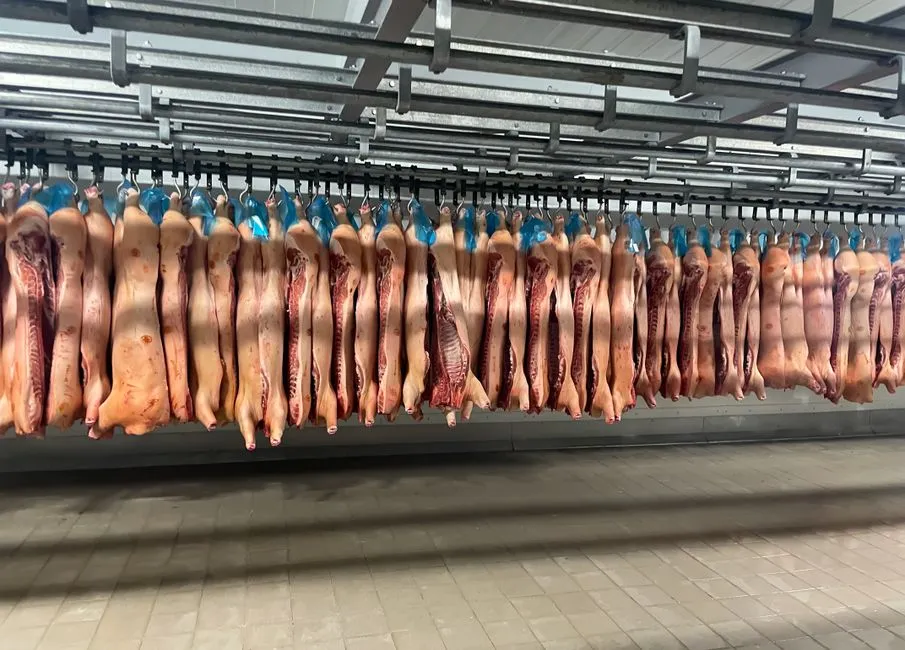
Centrifuge selection should follow the expected hydraulic and solids duty, not a single treatment-capacity figure.
Document average flow, peak flow, minimum flow, operating hours, production shifts, clean-in-place discharges, and the maximum solids load during start-up and shutdown. A production-line flow balance should distinguish continuous wastewater from episodic discharges so the centrifuge is not sized around diluted average flow but overloaded by batch peaks.
The feed characterization should cover total suspended solids, oil and grease, particle-size distribution, solids density, settleability, viscosity, temperature and pH. Record polymer type and expected dosage only after the solids and conditioning response have been characterized. Representative sampling must cover operating states because averages can conceal the conditions that control torque, feed disturbance and cake discharge.
Translate those inputs into measurable outputs: required solids recovery, centrate suspended-solids limit, cake-solids concentration, cake-disposal route and whether the feed contains fibrous material requiring special handling. Define whether cake is intended for direct disposal, transfer to another dewatering device, rendering or biological treatment.
Alfa Laval provides a municipal benchmark, not a guarantee for this application. Its conservative decanter settings produced 20.0% cake solids and 99.5% solids recovery; optimization increased cake solids to 22.7% while maintaining comparable recovery (Alfa Laval, Full-Scale Comparison of Decanter Centrifuge and Screw Press Performance). That comparison used municipal sludge at a Finnish plant serving approximately 12,000 population equivalents, so it must not be transferred directly to meat-processing sludge.
| Design-basis category | Required information | Why it affects selection |
|---|---|---|
| Hydraulic duty | Average, peak and minimum flow; operating hours | Sets feed and solids-handling capacity |
| Solids duty | TSS, particle size, density and settleability | Influences capture, cake structure and torque |
| Waste characteristics | Oil and grease, protein, temperature, pH and viscosity | Defines pretreatment and operating limits |
| Conditioning | Polymer type, dose and mixing arrangement | Affects recovery, centrate and cake |
| Performance targets | Recovery, centrate limit and cake solids | Creates testable supplier obligations |
| Project requirements | Utilities, cleaning access, controls, footprint, noise and expansion | Establishes installation and lifecycle constraints |
Match Decanter Performance to Downstream Treatment
Centrifuge performance should be evaluated by the condition of both outputs: the cake that must be handled and the centrate that returns to the treatment system.
In Alfa Laval’s municipal comparison, the decanter produced centrate with lower suspended solids, biochemical oxygen demand and ammonia concentrations than the screw-press filtrate. The measured differences were associated with estimated downstream treatment savings of approximately €0.26 per m³ of sludge treated, because lower recycle loads can reduce aeration and nutrient-removal demands (Alfa Laval, Full-Scale Comparison).
Those figures are tied to a municipal sludge dewatering case. They do not establish the same centrate quality, downstream savings or biological impact for slaughterhouse or rendering wastewater. The receiving process must be evaluated using centrate from representative meat-processing feed, including its suspended solids, FOG, biochemical oxygen demand and ammonia.
Cake assessment should include more than solids concentration. Transportability, odor, putrescibility, bulk density and compatibility with the disposal route can determine whether higher cake dryness creates a usable benefit or simply moves the problem into handling and storage. If cake goes to another dewatering device for industrial sludge dewatering, its required discharge condition changes.
When recycled solids affect biological treatment, the centrate specification should be an acceptance criterion rather than an afterthought. The integration requirement also has to account for downstream membrane or biological capacity; where required, assess whether integrated wastewater treatment can accommodate the clarified stream.
Compare Decanter Centrifuges with Screw Presses and Filter Presses
The equipment choice should compare total-system performance under the same feed, not transfer results from different applications.
Alfa Laval attributes lower capital cost, lower direct electricity demand and operational simplicity to screw presses, while the decanter delivered higher recovery and drier cake in its Finnish municipal trial (Alfa Laval, Full-Scale Comparison). Under comparable municipal feed conditions, the moving-disc screw press averaged 18.1% cake solids at 97.8% solids recovery. The decanter under conservative settings achieved 20.0% cake solids and 99.5% recovery with centrate below 300 mg/L suspended solids; optimization raised cake solids to 22.7% while maintaining comparable recovery.
The same municipal study reported capacities per unit footprint of 2.4 m³/h/m² for the decanter and 1.06 m³/h/m² for the screw press. The decanter occupied approximately 5 m², compared with 7.5 m² for the screw press. These values describe that installation, not a universal footprint or capacity guarantee.
A plate and frame filter press is a batch or intermittent option and requires a different feed-conditioning, operating-cycle, floor-area and cake-disposal arrangement. No direct plate-and-frame performance results were supplied for comparison. For broader application-specific guidance, see the filter press design for food-processing sludge.
| Criterion | Decanter centrifuge | Screw press | Plate and frame filter press |
|---|---|---|---|
| Operating mode | Continuous | Continuous | Batch or intermittent |
| Municipal cake solids | 20.0% conservative; 22.7% optimized | 18.1% average | No comparative result supplied |
| Municipal solids recovery | 99.5% conservative; comparable after optimization | 97.8% | No comparative result supplied |
| Municipal capacity per footprint | 2.4 m³/h/m² | 1.06 m³/h/m² | No comparative result supplied |
| Selection issue | Feed variability, conditioning and solids-recovery duty | Simplicity, direct power demand and cake dryness | Cycle time, conditioning and cake handling |
For meat-processing applications, require representative testing before transferring these municipal benchmarks into a guarantee. A screw press design for protein-processing wastewater may help frame the comparison, but the actual feed remains the controlling evidence.
Validate Performance Through Pilot Testing and Acceptance
Acceptance testing should demonstrate the proposed duty on representative wastewater under defined operating conditions.
Ask the supplier to test across expected flow and solids-loading ranges, including batch production and cleaning-cycle variations. The test feed should be obtained from the intended site or from a documented stream with comparable solids, particle-size distribution, oil-and-grease content, viscosity, temperature, pH and settleability. The meat-and-bone meal miscella study demonstrates why feed-specific separation matters, but its laboratory results should not be converted into a slaughterhouse guarantee.
Measure feed suspended solids, centrate suspended solids, recovered solids, cake solids concentration, polymer consumption and electrical demand. Record shutdown behavior, bowl torque and interruptions during representative feed changes. Define sampling points and methods before testing so the supplier cannot substitute a convenient operating condition or an unrepresentative composite sample.
The supplied research provides no universal acceptance thresholds for meat-processing wastewater. The purchase specification must state site-specific targets for recovery, centrate quality and cake solids, together with the operating range over which they apply. Any result outside that range should be recorded rather than excluded.
| Acceptance item | Method to agree | Required record |
|---|---|---|
| Representative feed | Document source and comparability | Analysis during each trial condition |
| Solids separation | Agree sampling locations and calculation basis | Feed, centrate and recovered-solids results |
| Cake quality | Define solids measurement and handling route | Cake solids concentration and discharge observations |
| Chemical demand | Record polymer product, concentration and dose | Consumption per stated feed quantity |
| Operational robustness | Include start-up, shutdown and feed variation | Torque, alarms, blockages and interruptions |
| Repeatability | Define number of valid repetitions | Individual results and deviations |
| Corrective action | Agree demonstration method | Repair or modification followed by retest |
Commissioning should also verify operator access, cleaning procedures, wear-part inspection, controls, alarms and maintenance tasks. The contract should separate literature benchmarks from guaranteed performance for the actual feed.
Frequently Asked Questions
How should a decanter centrifuge for meat-processing wastewater be sized?
Size it against peak hydraulic flow and peak solids load, then check viscosity, particle size, settleability and production variability at those conditions. The capacity calculation must include batch discharges, start-up and shutdown—not only daily average flow—and should retain margin for the operating range defined in the acceptance test. A representative pilot or full-scale trial should demonstrate that the selected configuration sustains the required recovery and centrate quality.
What should a buyer request when comparing supplier price?
Request a total-system comparison covering pretreatment, polymer, electricity, cake transport, centrate treatment, downtime and disposal. Ask each supplier to state which costs and performance assumptions are included, then test any savings claim against site-specific operating data. Do not use purchase price or direct power consumption alone as the deciding criterion.
How should a supplier demonstrate suitability for slaughterhouse or rendering wastewater?
Require test evidence from representative feed and define the operating conditions, sampling methods, targets and repetitions in the purchase agreement. The proposal should distinguish municipal sludge and meat-and-bone meal miscella results from site-specific performance, and state how corrections will be demonstrated if the unit misses a guaranteed criterion.
What pretreatment and compliance checks should precede the purchase?
Identify the applicable discharge, sewer or pretreatment permit and confirm how centrate quality, FOG removal and recycled solids loads affect downstream compliance; the research does not supply a universal regulatory limit. Characterize the feed through screening, equalization, grit or heavy-solids removal, and FOG or solids pretreatment before finalizing the centrifuge configuration.