What the Decanter Must Separate From Food Processing Wastewater
A decanter centrifuge separates bulk solids from a liquid slurry continuously, without filter media. In Alfa Laval’s mechanical description, slurry enters a rotating bowl; denser particles migrate outward, the liquid forms an inner layer and exits as clarified centrate, while the screw conveys compacted solids toward discharge. The company states that centrifugal force can be up to 4,000 times gravitational force and reports more than 60 years of decanter-centrifuge application experience (Alfa Laval, accessed 2026).
The equipment is therefore suited to food-processing wastewater solids separation when the feed contains a transportable bulk-solids fraction. It is not a substitute for clarification or polishing. Fine particles may remain in the centrate, while emulsified oil and grease may require upstream flotation; neither outcome can be inferred from the appearance of the cake alone.
Define three separate performance objectives: solids capture, cake dry-matter content and centrate suspended-solids quality. A machine can achieve strong solids removal while leaving a centrate that still fails the biological treatment, reuse or discharge requirement. Conversely, cake moisture is not a substitute for centrate specification. The project should define all three against the actual downstream duty.
Where the operating objective is batch dewatering rather than continuous bulk separation, a plate-and-frame press alternative for batch sludge dewatering may also need to be evaluated. That comparison should begin only after the required separation results and feed characteristics are defined.
Build the Design Basis From the Real Wastewater Profile
Wastewater flow and solids loading must be characterized together because production, cleaning and washdown events can produce different hydraulic and separation duties. The supplied research does not establish a universal food-processing TSS, FOG or particle-size limit. Those values must come from site testing and the downstream process requirement.
- Profile flow through production, cleaning and washdown periods, including batch discharges and coincident solids peaks.
- Collect event-specific and composite samples according to the variability observed in operations.
- Test the solids, oil and particle characteristics that affect separation and downstream treatment.
- Record obstruction, wear and feed-consistency events that may not appear in laboratory results.
- Convert the measured data into a guaranteed operating basis for equipment selection.
| Design-basis input | Engineering purpose | Information required from the site |
|---|---|---|
| Hydraulic profile | Defines pump, feed-zone and hydraulic capacity | Average flow, peak flow, batch-discharge profile and operating duration |
| Solids profile | Defines cake production, torque demand and feed-zone loading | Total solids, suspended solids, solids concentration and the relationship between flow and concentration |
| Particle characteristics | Shows whether bulk separation is appropriate and what polishing may remain necessary | Particle-size distribution and observations of fibrous or readily transportable material |
| FOG and organic load | Determines whether flotation or biological pretreatment is justified | Free oil, emulsified oil and grease conditions, plus COD and BOD |
| Process compatibility | Identifies wear, corrosion and material-selection risks | pH, temperature, abrasiveness, grit, cleaning chemicals and obstruction history |
| Downstream requirement | Converts equipment selection into a testable project objective | Required cake dry-matter content, centrate suspended-solids quality and required centrate oil condition |
Separate floor wash, equipment wash and concentrated cleaning discharges where practical; blending them before testing can conceal the peak load. A single composite sample may be inadequate when wastewater changes materially by shift or cleaning cycle. Use representative samples across the operating cycle instead.
Operational observations are equally important. Record grit, fibrous packaging, cleaning chemicals, obstruction events and changes in feed consistency because these affect wear protection, feed handling and stable solids loading. Screening and FOG removal should be assessed from the results, not added by default. A rotary mechanical bar screen for coarse-solids protection and a DAF system for food-processing wastewater pretreatment should each be justified by the characterized feed and downstream requirement.
Protect the Centrifuge With the Right Pretreatment Train
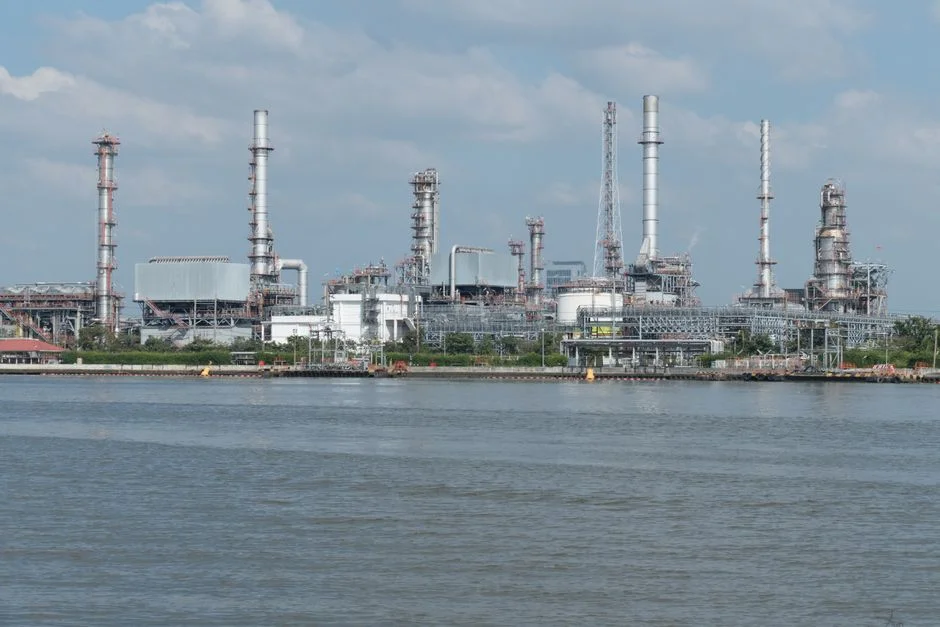
Pretreatment should remove the specific material that would obstruct, wear or destabilize the centrifuge. A decanter should not be accepted as a catch-all for packaging, grit, free oil, emulsified oil, grease or fibrous material merely because the wastewater originated in food processing.
| Observed condition | Design response | Verification |
|---|---|---|
| Fibrous packaging, grit or coarse debris | Evaluate coarse screening before the feed zone | Confirm retained debris and screen discharge handling |
| Floatable solids, free oil, emulsified oil or grease | Evaluate DAF where testing confirms a flotation duty | Measure feed and treated-stream FOG and oil characteristics |
| Variable solids loading | Provide feed control that responds to torque and feed demand | Test batch discharges, load changes and control response |
| Chemical conditioning demonstrated to be necessary | Install controlled dosing and coordinate it with machine interlocks | Confirm dosage, mixing, feed sequence and failure response |
HydropureWater lists its DAF range as 4–300 m³/h across 13 standard models for suspended solids, FOG, oil and grease, and colloidal matter (HydropureWater product data, accessed 2026). That catalog range does not demonstrate that DAF is required for every installation; the decision must follow feed testing and the centrate oil criterion.
The supplied research notes that a decanter can achieve a high separation rate in many applications without slurry pre-conditioning. Treat polymer or another conditioner as a trial variable, not a compulsory input. If automatic dosing is accepted into the operating concept, specify the automatic chemical dosing system, its demand signal and its interlocks with the centrifuge control sequence during the trial rather than adding it after award.
For coarse protection, assess the rotary mechanical bar screen against observed packaging, grit and fiber loads. For floatable material, compare DAF performance and installed scope with the actual feed. Where pretreatment remains uncertain, leave the relevant duty open in the quotation instead of concealing it inside an assumed standard configuration.
Size the Machine From Solids Load and Operating Variability
Wastewater centrifuge sizing requires both a hydraulic calculation and a solids-loading check. Average flow does not represent the peak hydraulic event, and peak flow does not indicate how much solids the machine must convey. Evaluate those conditions together.
- Establish average flow, peak flow and the timing and magnitude of batch discharges.
- Determine whether peak flow coincides with peak solids concentration.
- Use particle distribution, feed stability, FOG and abrasiveness to judge suitability for bulk separation.
- Check feed-pump capacity, residence behavior, torque demand and discharge consistency at the combined peak.
- Set bowl configuration, pond depth and screw differential from representative-feed results.
ANDRITZ publishes a 0.1–500 m³/h portfolio range but states that capacity depends on the application and operating conditions (ANDRITZ Decanter centrifuge D product page, accessed 2026). This is not a universal food-processing selection table. A catalog flow range identifies portfolio breadth; it does not prove that a particular machine will handle the site’s solids, peaks or centrate requirement.
Alfa Laval describes a torque-control concept that automatically adjusts the screw conveyor’s differential speed through a VFD. When solids loading rises, differential speed increases to avoid torque overload; under lighter loading it is reduced to limit wear and energy use (Alfa Laval, accessed 2026). In the coagulant and flocculant dosing design criteria, the same control principle applies: dosing demand must be tied to the process condition rather than left as an independent accessory.
| Sizing check | Evidence required | Decision to document |
|---|---|---|
| Hydraulic capacity | Average flow, peak flow and batch-discharge measurements | Feed-pump and centrifuge operating range |
| Solids loading | Total and suspended solids across the operating cycle | Conveying duty and peak-load operating point |
| Feed suitability | Particle distribution, FOG, abrasiveness and obstruction history | Need for pretreatment, conditioning or polishing |
| Machine configuration | Representative-feed trial results | Bowl arrangement, pond depth, differential speed and wear protection |
| Controls | Torque and feed-response observations | Torque-based feed control, alarm and shutdown settings |
Do not accept catalogue settings as guaranteed operating conditions. The proposal should identify which pond depth, differential-speed range and feed-pump settings were demonstrated on representative food-processing feed, and at what solids concentration.
Choose Between Decanter, DAF and Plate Press by Operating Duty
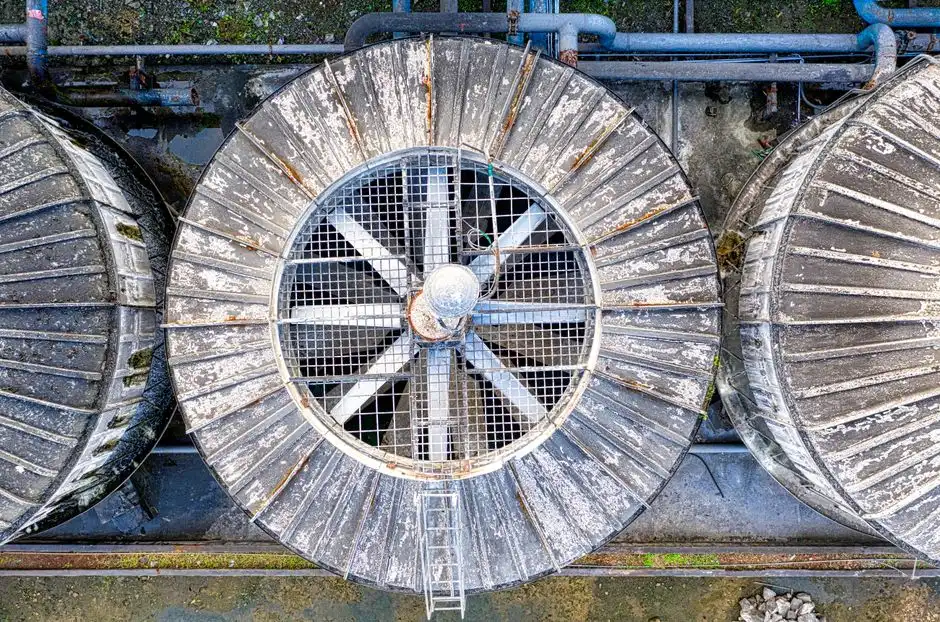
A decanter, DAF and plate press perform different duties; the correct choice follows from the required separation sequence rather than from a generic equipment ranking. DAF primarily addresses floatable material, while a decanter provides continuous bulk cake dewatering and a plate press provides batch filtration.
| Criterion | Decanter centrifuge | DAF | Plate-and-frame press |
|---|---|---|---|
| Primary duty | Continuous bulk slurry separation and cake dewatering | Removal or recovery of floatable solids, FOG and oil | Batch or intermittent filtration and cake formation |
| Feed condition | Transportable bulk solids with acceptable feed consistency | Floatable material confirmed by feed characterization | Filterable solids and a cake that can release from the plates |
| Operation | Automatic continuous discharge without filter media | Continuous clarification or recovery duty | Manual, hydraulic or fully automatic PLC-controlled operation |
| Principal comparison | Energy, wear parts, torque response and downstream centrate duty | FOG removal, recovered-material handling and centrate quality | Labor, media replacement, cake release and batch-cycle time |
HydropureWater’s DAF catalog identifies food processing as an application and gives a range of 4–300 m³/h across 13 standard models (HydropureWater product data, accessed 2026). Use the DAF system for food-processing wastewater pretreatment when measured floatable material warrants flotation; it is not an interchangeable substitute for the dewatering duty.
Both HydropureWater and the May 2026 bakery guide cite plate-and-frame press filtration areas from 1 m² to 500 m² and manual, hydraulic or fully automatic PLC-controlled operation (HydropureWater product data, accessed 2026; HydropureWater bakery guide, May 2026). Those configurations make the plate-and-frame press alternative for batch sludge dewatering relevant where intermittency and manageable cake release are priorities.
Do not transfer the tortilla-factory supplier-reported reduction of more than 60% in waste-hauling and disposal costs to another food plant. That figure belongs to the reported application (Dolphin Centrifuge, May 2026). Compare options using the same tested feed, required cake dryness, centrate quality, labor assumptions and disposal cost.
Either route may leave centrate requiring biological treatment, reuse preparation, clarification or disposal. Specify the centrate against the next unit’s actual requirements; the solids separator is one part of the treatment train.
Set Controls for Stable Feed and Safe Automatic Operation
Torque-based feed control is necessary because a fixed feed rate cannot represent changing solids loading. The control sequence should reduce or increase feed and adjust the screw differential in response to measured demand, while retaining a stable discharge.
Include torque, differential speed, bearing temperature, vibration, feed pressure or flow, pond-depth setting and discharge consistency in the operating record. These values show whether the machine is tracking the feed or masking overload through excessive differential speed, poor cake discharge or unstable feed delivery.
- Verify that the feed pump and feed zone handle peak flow and batch discharges.
- Test automatic adjustment as solids loading changes.
- Confirm alarm, interlock and shutdown responses for overload, high torque, excessive bearing temperature, abnormal vibration, blocked discharge and loss of feed.
- Check the current draw, drive response and restart sequence under the agreed test conditions.
- Include wear components, lubrication points, alignment checks and feed-zone access in preventive maintenance planning.
The operating record should also distinguish an automatic control response from an equipment fault. A rising torque trend requires investigation of solids concentration, feed consistency and differential-speed action; it should not be normalized simply because the machine has not tripped. Require the supplier to define alarm thresholds, shutdown sequence and permitted operating envelope in the final controls narrative.
Evaluate Energy Consumption With Measured Operating Data
The 2024 peer-reviewed study showed that recovered braking power alone did not explain energy savings. It examined decanter models at 15, 20 and 25 m³/h equipped with a braking-energy-recovery system and evaluated both energy consumption and product quality.
| Tested model flow in the 2024 study | Lowest reported energy consumption | Corresponding recovered power |
|---|---|---|
| 15 m³/h | 1.88 kWh/m³ | 5.88 kW |
| 20 m³/h | 1.76 kWh/m³ | 0.31 kW |
| 25 m³/h | 1.57 kWh/m³ | 12.10 kW |
These values come from the Energy Conversion and Management X study published in 2024 and apply to its tested models and conditions. The inconsistent relationship between recovered power and energy saving demonstrates why a recovery-system claim is not a substitute for net electrical demand at the proposed duty.
The same study found that cake dry-matter content decreased as differential speed or feed rate increased. Energy evaluation therefore cannot be separated from solids capture and cake dryness: an operating point that reduces energy use while producing wetter cake may fail the project objective.
Request three measured outputs at the proposed design point under representative-feed conditions:
- Specific energy consumption, reported on the agreed feed-flow and measurement basis.
- Recovered power, with the operating interval and calculation method stated.
- Net electrical demand, including the feed pump, drive, auxiliary equipment and any conditioning system included in the boundary.
Do not infer site savings from equipment capability alone. Require the supplier to show the test feed, feed rate, differential speed, cake result and measurement correction used to substantiate its energy proposal.
Convert the Trial into Guarantees and a Procurement Scope
A representative-feed centrifuge trial is the bridge between a general machine proposal and a site-specific guarantee. The trial should reproduce the feed variability that controls the duty rather than demonstrate the machine on an easy composite sample.
- Run the proposed configuration on representative feed.
- Record solids capture, centrate suspended-solids quality, cake dry-matter content, specific energy consumption, polymer consumption, torque behavior, clogging events and shutdown response.
- Define sampling methods, corrections, steady-state duration and operating boundaries.
- Specify remedies for failed guarantees and repeat-test conditions.
- Attach the results to the final equipment configuration and operating envelope.
| Procurement element | Information the quotation must state | Acceptance check |
|---|---|---|
| Design basis | Average and peak feed, solids profile, particle distribution, FOG and required cake and centrate results | Match every proposed value to the site data |
| Equipment scope | Wetted materials, feed-zone wear protection, drive, gearbox, instrumentation and safety shutdowns | Confirm compatibility with the characterized feed |
| Controls and PLC | Operator interface, alarms, interlocks, feed control and controls-system integration | Witness functional and failure-response tests |
| Installation | Footprint, utilities, foundations or supports, drainage, lifting access and cake handling | Complete a site-readiness review |
| Service scope | Commissioning, training, spares and ongoing service responsibilities | List exclusions and handover deliverables |
| Performance guarantee | Test method, operating boundary, corrections, remedies and repeat-test procedure | Do not accept an unloaded run as final acceptance |
Separate manufacturer capability from application performance. A manufacturer may demonstrate that its machine has the relevant bowl, drive, controls and wear protection; that does not guarantee the customer’s cake dryness, centrate quality or energy result on a different food-processing feed.
Before delivery, verify screening, hydraulic capacity, electrical supply, controls interfaces, cake containment, drainage, sampling points and safe maintenance access. Include operating and maintenance costs in the commercial review. The Dairy Wastewater Plant Operating Cost in 2026: Full OPEX Breakdown provides a useful structure for comparing energy, labor, chemicals, waste handling and other operating items, but dairy values must not be transferred as food-plant estimates without local data.
Frequently Asked Questions
Can a decanter centrifuge be sized from average wastewater flow alone?
No. Request average flow, peak flow, batch-discharge profile, solids concentration, particle distribution, FOG, required cake dry-matter content and centrate suspended-solids quality. ANDRITZ’s 0.1–500 m³/h portfolio range is application-dependent, not a selection guarantee (ANDRITZ Decanter centrifuge D product page, accessed 2026).
What feed data should a supplier receive before quoting a food-processing wastewater centrifuge?
Provide samples covering production, cleaning and washdown periods, together with total solids, suspended solids, particle-size distribution, FOG, COD, BOD, pH, temperature and abrasiveness. Also provide observations of grit, packaging, obstruction events and feed-consistency changes. These inputs establish the hydraulic duty, solids load and pretreatment needs.
Is a DAF system required before every decanter installation?
No. Evaluate DAF where testing confirms floatable material, free oil, emulsified oil or grease requiring removal before dewatering. The decanter trial and the specified centrate oil criterion should determine whether flotation is needed; a catalog flow range does not establish that requirement.
How should cake dryness, centrate quality and energy use be guaranteed?
Specify an acceptance test using representative feed and an agreed sampling method, steady-state duration, correction method and operating boundary. Require separate results for cake dry-matter content, centrate suspended-solids quality, specific energy consumption and recovered power. The 2024 study’s measured values show why recovery capability cannot substitute for measured net demand.
What is the principal procurement risk when comparing a decanter with a plate press?
The main risk is comparing different feed, cake, centrate and labor bases as if they were equivalent. Use the same tested feed, required cake dryness, centrate quality and disposal assumptions. Obtain a quotation that separates capital cost, energy, polymer, wear parts, labor, cake handling, commissioning and service scope; the supplied research provides no universal price for either option.