Where a Decanter Centrifuge Fits in a Bakery Wastewater Treatment Train
A decanter centrifuge is a continuous solid–liquid separator for bakery wastewater: slurry enters a rotating bowl, denser solids migrate toward the bowl wall, clarified water exits as centrate, and a screw conveyor advances the compacted solids to discharge. It belongs after source segregation, screening and, where needed, FOG removal or conditioning. Selection must follow representative feed testing rather than flow rate alone. A published Texas bakery case treated 20,000 GPD of flour- and organic-contaminated wash water with a modified NX-414 decanter (Dolphin Centrifuge, last reviewed May 2026).
The centrifuge should be treated as one duty in a wider process train. It is a bulk separator for slurry containing readily transportable solids. A disc-stack centrifuge is generally more appropriate for fine-particle clarification or oil-water polishing, as described by Dolphin Centrifuge in its May 2026 review; it should not be assumed that a decanter will remove every fine particle or oil droplet.
| Process stage | Primary duty | Design issue for the bakery |
|---|---|---|
| Source segregation | Separate floor wash, equipment wash and high-strength wash streams where practical | Prevents dilute wash water from being blended with concentrated cleaning discharges before testing |
| Rotary mechanical bar screen | Remove packaging, fibrous material and coarse grit | Protect downstream equipment; assess the rotary mechanical bar screen for the bakery pretreatment train |
| DAF, if justified | Remove suspended solids, floatable material and FOG | Evaluate a DAF system for bakery wastewater pretreatment against the measured feed |
| Conditioning, if needed | Improve floc formation or feed handling | Confirm the need for chemical dosing through a chemical dosing system and representative-feed trial |
| Decanter centrifuge | Continuous bulk solid–liquid separation | Specify feed basis, capture, cake dryness, centrate target and operating controls |
| Downstream treatment | Polishing, biological treatment, reuse or disposal | Base the centrate specification on the next unit’s actual requirements |
Dolphin’s May 2026-reviewed page identifies food processing among industrial centrifuge applications and documents flour-sludge thickening in a tortilla factory. That case establishes an application precedent; it does not establish a universal performance result for every bakery feed.
What Makes Bakery Wastewater Difficult to Separate
Bakery wastewater is difficult to design for because its hydraulic and contaminant loads can change with production, cleaning chemistry and washdown practices. A representative feed profile is therefore more useful than a nominal average flow. The supplied evidence does not provide universal bakery limits for suspended solids, FOG or particle size, so those values must come from plant testing.
Flour-rich wash water can carry high suspended-solids loading and variable organic residues. Bakery operations can also introduce free oil, emulsified oil and grease, which affect feed handling, floc formation and centrate quality. A decanter’s performance should not be inferred from water content alone: the relevant load is the combined flow, solids concentration, particle characteristics and oil content present during each operating period.
| Required input | Why it matters | Evidence required before selection |
|---|---|---|
| Flow and batch-discharge profile | Determines hydraulic loading and whether flow is continuous or intermittent | Production, cleaning and washdown measurements, including peak periods |
| Total and suspended solids | Sets the solids load and indicates the likely dewatering duty | Composite and event-specific laboratory results |
| Particle-size distribution | Distinguishes bulk flour sludge from fine solids | Representative size analysis |
| Fats and oils | Influences flotation, conditioning, feed stability and centrate quality | FOG characterization, including free and emulsified conditions where relevant |
| COD and BOD | Indicates the organic load likely to remain in centrate | Representative laboratory analysis |
| pH and temperature | Affect conditioning and equipment/material selection | Measurements across the operating cycle |
| Grit, fibrous packaging and cleaning chemicals | Indicates abrasion, blockage and chemical-compatibility risks | Operational observations and a materials-compatibility review |
The Texas application demonstrates why feed history matters: the bakery processed 20,000 GPD of wash water contaminated with flour and organic residues using a modified NX-414 decanter to recover water for sewer discharge (Dolphin Centrifuge, May 2026). The capacity belongs to that application; it is not a default design rate for other bakeries.
Use a DAF system for bakery wastewater pretreatment where the characterization identifies floatable solids or FOG that should be removed before dewatering. Sampling must cover production, cleaning and washdown periods because averaging those events can conceal the peak load that determines equipment sizing and control settings.
Decanter Centrifuge or Plate-and-Frame Filter Press?
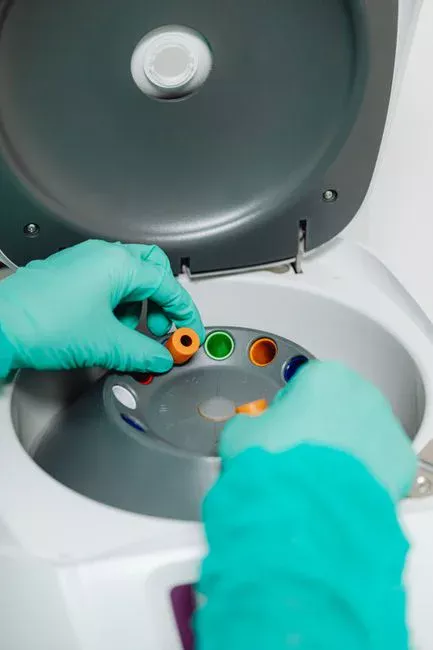
A decanter is usually the stronger candidate when a bakery requires continuous processing of substantial slurry volume, automatic discharge and operation without filter media. A plate-and-frame press is usually more relevant to batch dewatering, small or intermittent flows, or an operating model in which plate opening, cake removal and washing are manageable. The final choice depends on feed character, labor availability, recovery targets and total operating cost.
| Criterion | Decanter centrifuge | Plate-and-frame filter press |
|---|---|---|
| Operating principle | Continuous solid–liquid separation in a rotating bowl; solids are conveyed to discharge by a screw | Batch filtration through filter plates; formed cake is discharged after a cycle |
| Feed character | Best suited to bulk slurry and dewatering duties where solids can be conveyed | Requires a filterable feed and a cake that can release from the plates |
| Operation | Continuous, with automatic controls and torque-related protection | Manual, hydraulic or fully automatic PLC-controlled operation is available |
| Filter media | None used | Filter cloth is required and may require replacement |
| Outputs | Sludge cake and centrate | Cake and filtrate |
| Footprint | Relatively compact for the stated continuous-throughput duty | Depends on filtration area, frame arrangement and cake-handling provisions |
| Maintenance exposure | Bearings, drive, gearbox, feed-zone wear and scroll require attention | Media replacement, plate cleaning, sealing and cake-disposal work |
ANDRITZ states that its decanters continuously process high volumes, do not use filter media, have fewer moving parts than filter presses, automate operation and remain relatively compact. Dolphin’s May 2026 review adds that belt and filter presses can require labor-intensive media replacement, while a decanter avoids that consumable. These are selection criteria, not a blanket economic conclusion; a bakery must compare labor, chemical use, energy, wear parts and downtime over its actual operating pattern.
The available plate-and-frame filter press for flour sludge includes filtration areas from 1 m² to 500 m² and manual, hydraulic or fully automatic PLC-controlled operation. Those configurations allow comparison with continuous dewatering rather than treating the press as a single fixed solution.
In Dolphin’s tortilla-factory case, an NX-314B-31 thickened flour sludge and the supplier reports waste-hauling and disposal costs reduced by over 60% (Dolphin Centrifuge, May 2026). That result belongs to the stated food-processing application; it does not establish savings for a bakery with a different feed, labor structure or disposal arrangement.
Selection Parameters for a Bakery Decanter
A defensible decanter selection converts measured feed properties into a guaranteed operating point and a test-based performance envelope. ANDRITZ publishes a portfolio range of 0.1 to 500 m³/h, but explicitly states that capacity depends on the application and operating conditions; that range is not a universal selection table for bakery wastewater (ANDRIZ Decanter centrifuge D product page, accessed 2026).
| Selection parameter | Information to establish | Why it affects the decision |
|---|---|---|
| Design, average and peak flow | Continuous basis and batch-discharge peaks | Defines hydraulic loading and feed-pump control |
| Feed solids | Total solids, suspended solids and solids concentration profile | Determines torque, residence behavior and dewatering duty |
| Particle-size distribution | Full representative distribution | Shows whether the material is suitable for a bulk decanter |
| FOG and emulsified oil | Measured FOG profile and flotation requirement | Determines whether DAF or other pretreatment is required |
| Cake and centrate targets | Required cake dryness, centrate TSS and downstream reuse or discharge criteria | Converts the project objective into measurable guarantees |
| Materials and utilities | Wetted materials, drive, temperature exposure, abrasiveness, electrical supply and available footprint | Controls compatibility, installation and operating cost |
ANDRITZ identifies wear-resistant material options for high-temperature, heavy-duty and corrosive duties, adjustable bowl and scroll speeds, variable pond depth, automatic control and safety shutdowns. These features should appear as engineering questions: Can the feed-zone components be maintained, can the bowl and scroll settings be adapted to the tested feed, and which conditions trigger shutdown?
Polymer conditioning can improve separation, but ANDRITZ also states that its decanter can achieve a high solid–liquid separation rate in many applications without slurry pre-conditioning. Treat polymer use as a trial variable rather than a compulsory input. If the decanter is paired with a filter press, both feeds must remain consistent enough for either technology to be evaluated fairly.
Run a representative-feed trial before final selection. Record solids capture, centrate quality, cake dry-matter content, specific energy consumption, polymer consumption, torque behavior and any clogging or shutdown event. The trial should also establish how stable performance remains when flour, FOG and cleaning chemistry vary.
Operation, Energy and Maintenance Controls
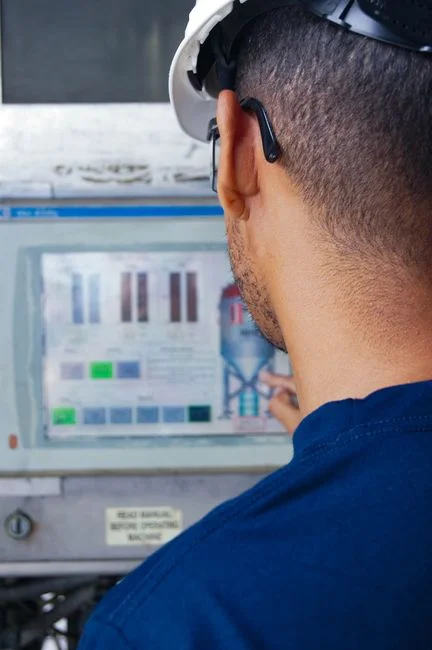
Dependable decanter operation requires a control sequence that ties feed demand to solids loading rather than operating at a fixed flow regardless of feed condition. Torque, bearing temperature, differential speed and discharge consistency should be included in the operating record.
- Start and verify feed delivery, then confirm bowl speed and differential scroll speed against the tested operating map.
- Set polymer dosing, if used, from measured solids loading and the validated trial result rather than a fixed timer alone.
- Monitor torque or overload indication, centrate quality, cake discharge and bearing temperature.
- Reduce feed, adjust differential speed or stop according to defined limits when the feed deviates from the agreed test basis.
- Use automatic shutdown for malfunction conditions and preserve the event record for diagnosis.
A 2024 peer-reviewed ScienceDirect review reported that the lowest energy consumption in its tested models was 1.88, 1.76 and 1.57 kWh/m³ at 15, 20 and 25 m³/h, respectively. The same study found that cake dry-matter content decreased as differential speed or feed rate increased. It also reported energy recovery of 5.88, 0.31 and 12.10 kW at those respective tested flow rates, showing that high recovered power did not consistently correspond to greater energy saving. Evaluate total specific energy rather than assuming regenerative equipment automatically lowers the bill.
ANDRITZ claims that TurboJet weir plates can reduce total power consumption by up to 30% as a standalone feature, direct drive can reduce it by an additional 5%, and TurboWISE can reduce it by a further up to 2% (ANDRIZ Decanter centrifuge D product page, accessed 2026). These figures retain their stated feature scope; a bakery should request the energy calculation for its own feed and operating point.
| Control or maintenance area | Specified action |
|---|---|
| Feed control | Verify batch-flow response, current draw and shutdown behaviour under peak feed conditions |
| Drive and gearbox | Inspect drive condition, lubrication and abnormal vibration |
| Bearings | Monitor temperature and vibration; Dolphin notes that bearings may occasionally require replacement because decanters have fewer moving parts than filter presses |
| Feed zone and scroll | Inspect wear, alignment and solids build-up; maintain accessible wear components |
| Instrumentation and controls | Calibrate torque, temperature, speed and level measurements and test automatic shutdown |
Where chemical conditioning is accepted into the operating concept, specify the automatic chemical dosing system and its interlocks as part of the train rather than as an accessory added later.
Procurement and Commissioning Checklist
A complete bakery quotation should define a testable duty and an acceptance protocol, not merely list a machine model. Manufacturer capability and guaranteed application performance should be separated: a supplier can state what its decanter is designed to handle, but the bakery must define the feed basis and methods against which results are accepted.
| Procurement package | Supplier response required |
|---|---|
| Design basis | Average and peak flow, feed solids, particle distribution, FOG, pH, temperature and abrasiveness |
| Guaranteed performance | Solids capture, centrate quality, cake dryness, test methods and boundary conditions |
| Representative testing | Results from the offered configuration on representative bakery feed, where available |
| Mechanical scope | Wetted materials, feed-zone wear protection, drive, gearbox, instrumentation and safety shutdowns |
| Controls | PLC scope, operator interface, alarms, interlocks and controls-system integration |
| Installation and service | Footprint, utilities, foundations or supports, drainage, lifting access, commissioning, training, spares and service scope |
| Acceptance | Feed sampling protocol, steady-state duration, measurement methods, corrections and remedies for failed guarantees |
Before delivery, verify that the inlet is screened, hydraulic capacity supports peak and batch discharges, electrical supply matches the drive, and controls can interface with the plant. Confirm cake containment, drainage, sampling points and safe access for lifting, bearing work and feed-zone maintenance. The machine should not be accepted solely because it runs unloaded.
Dolphin’s May 2026-reviewed case records provide useful due-diligence prompts rather than transferable guarantees: one bakery application involved 20,000 GPD, while another food application involved a modified NX-314B-31 for flour-sludge thickening. Both records reinforce the need to identify the exact feed and configuration. A rotary mechanical bar screen for upstream solids protection should also be included in the site-readiness review.
Frequently Asked Questions
What flow rate does a bakery need for a decanter centrifuge?
There is no defensible flow answer from flow rate alone. Request average flow, peak flow and the batch-discharge profile, then pair them with solids loading, particle characteristics, FOG, required cake dryness, centrate target and representative-feed results. ANDRITZ publishes an application-dependent portfolio range of 0.1 to 500 m³/h, but that range is not a bakery selection guarantee (ANDRIZ Decanter centrifuge D product page, accessed 2026).
Is a decanter centrifuge better than a plate-and-frame filter press for flour sludge?
Choose continuous bulk separation when throughput, automatic discharge and avoiding filter media are priorities. Choose a plate press when batch operation suits the plant and cake handling can be managed. A plate-and-frame filter press for flour sludge is offered with filtration areas from 1 m² to 500 m² and manual, hydraulic or automatic PLC operation. Compare both options using the same tested feed, required cake dryness, centrate quality, labor assumptions and disposal cost.
How much does a decanter centrifuge cost for bakery wastewater?
The supplied research provides no universal price for a decanter centrifuge for bakery wastewater. Request a quotation that states the feed basis, guaranteed design point, performance test, materials, controls, utilities, installation, commissioning and service scope. Do not compare capital cost alone; include polymer, energy, wear parts, labor, cake handling and expected downtime over the operating scenario the supplier has priced.
Can a decanter centrifuge handle fats, oils and grease in bakery wastewater?
It can handle a FOG-containing feed only when the feed characterization and removal strategy support that claim. Establish free oil, emulsified oil and grease conditions, then decide whether upstream flotation is required. The supplied evidence supports DAF pretreatment for food-processing wastewater containing FOG, but it provides no universal FOG feed limit for a decanter. Specify centrate oil quality as an acceptance criterion and verify it in trial work.
What should a bakery test before ordering a decanter?
Request flow profiling, total and suspended solids, particle-size distribution, FOG, COD, BOD, pH, temperature, abrasiveness, required centrate quality and cake dryness. Samples must cover production, cleaning and washdown periods. A DAF system for bakery wastewater pretreatment and chemical conditioning should remain design options until the feed results justify them, and final acceptance should be tied to an agreed test method and operating condition.