Determine Which Van Buren Discharge Rules Apply
Fabricated metals plants near Van Buren meet sewer pretreatment limits by discharging through the VBMU Industrial Wastewater Pretreatment Program and applying the stricter of VBMU’s local limits and applicable categorical standards under 40 CFR Part 403. A typical train segregates oily and metal-bearing streams, equalizes batch dumps, adjusts pH, removes oil and TSS, reduces hexavalent chrome, oxidizes cyanide, precipitates dissolved metals, and adds filtration or biological polishing when needed. Slug control, online monitoring, auditable sampling, and a complete pretreatment submittal are as important as treatment performance.
The discharge route determines the permit path. The City of Van Buren Municipal Utilities (VBMU) is the local publicly owned treatment works authority for industrial users connecting to the City of Van Buren sanitary sewer. Its pretreatment program operates under NPDES Permit AR0021482, while federal categorical standards in 40 CFR Part 403 apply alongside local sewer-use requirements. Where the two overlap, the stricter requirement controls (HydropureWater, 2026).
“Fabricated metals” does not by itself establish categorical applicability. A stamping shop that sends parts to a separate finisher may fall outside the metal-finishing category, while a facility operating plating or anodizing lines may fall within 40 CFR Part 433. The broader Part 403 framework also contains ore-mining standards in Subpart J. Review the actual process lines, not the plant’s marketing description. The US fabricated metals pretreatment treatment train explains this applicability distinction.
Treated stormwater discharged directly to a receiving water follows a separate individual or general NPDES industrial stormwater or mining-permit route; it is not covered by a VBMU sewer permit (HydropureWater, 2026).
| Discharge route | Governing framework | Design implication |
|---|---|---|
| City of Van Buren sanitary sewer | VBMU local requirements, 40 CFR Part 403, and applicable categorical standards | Apply the stricter limit for each pollutant and coordinate pretreatment approval with VBMU. |
| Direct discharge to receiving water | Individual or general NPDES industrial stormwater or mining permit | Do not use the VBMU sewer-pretreatment pathway as the permit basis. |
| Mixed or uncertain routing | Written confirmation required | Resolve the route and applicable standards before sizing equipment. |
VBMU’s typical local-limit table lists a pH band of 5.0–10.5 and limits for TSS, oil and grease, metals, ammonia, and sometimes cyanide or residual chlorine. These are screening bands, not confirmed design limits: obtain the current VBMU requirements before final sizing. The Van Buren mining and metals pretreatment guide provides the local-program framework.
Characterize the Wastewater Before Sizing Equipment
One week of composite characterization is the defensible basis for sizing a fabricated-metals pretreatment system because a four-hour composite can miss a production batch dump (HydropureWater, 2026). Sampling must be coordinated with production schedules and include drain-by-drain coverage, not only a mixed floor-drain sample.
HydropureWater’s 2026 field ranges provide screening indicators rather than discharge limits: oils at 50–500 mg/L, total dissolved metals at 5–200 mg/L, TSS at 100–1,000 mg/L, and pH between 2 and 12 across batch dumps. These values help identify likely treatment duties, but the permit envelope must come from current VBMU requirements and confirmed categorical standards.
Characterize each source before combining it with others. Stamping, machining, and drawing compounds contribute free or emulsified oils. Plating rinse water and pickling can carry dissolved metals, while chromic-acid anodizing, hard chrome, and conversion coating can introduce hexavalent chromium. Alkaline cyanide plating introduces a separate destructive treatment requirement. Grinding swarf, casting sand, and hydroxide floc carryover belong in the TSS assessment and should not be confused with dissolved metals.
| Contaminant or source | Field screening indicator | Information required for design |
|---|---|---|
| Oil and grease | 50–500 mg/L in 2026 HydropureWater field data | Source-specific oil concentration, emulsification, free-oil content, and batch volumes. |
| Total dissolved metals | 5–200 mg/L in 2026 HydropureWater field data | Metal species, total and dissolved fractions, chelation condition, and applicable local and categorical limits. |
| TSS | 100–1,000 mg/L in 2026 HydropureWater field data | Grinding swarf, casting sand, filter-backwash, and precipitation-sludge contributions. |
| pH | 2–12 across batch dumps in 2026 HydropureWater field data | Continuous logs, dump timing, acid or alkaline reagent inventory, and minimum and maximum flows. |
Before requesting equipment proposals, obtain production schedules, a drain inventory, maximum batch volumes, pH logs, flow records, chemical inventories, and existing pretreatment performance data. The 2026 fabricated-metals pretreatment guide describes how mixed drains and batch dumps affect equalization and downstream chemistry.
Build the Pretreatment Train in the Correct Order
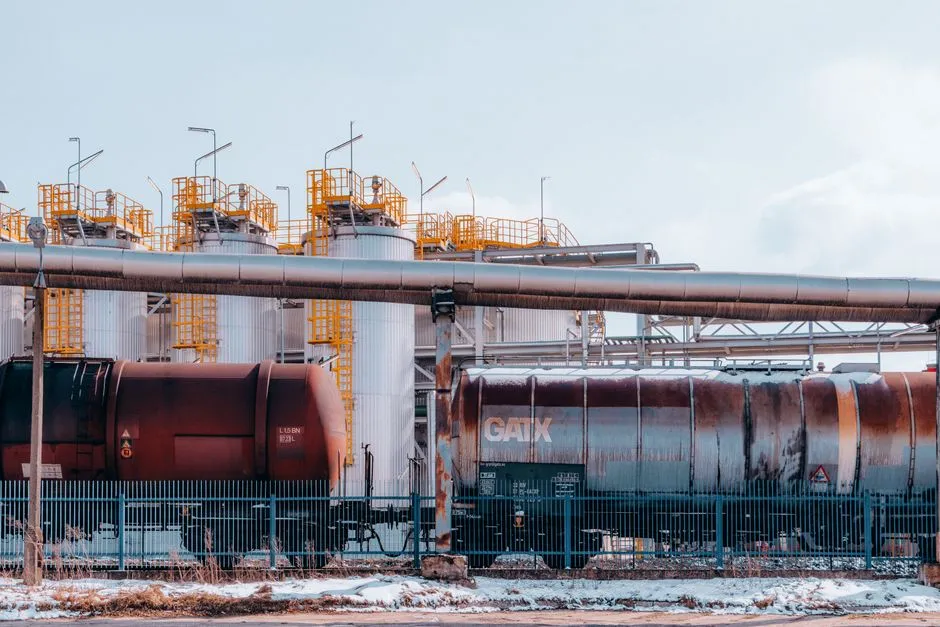
Unit operations must follow contaminant chemistry because no single clarification device removes oil, hexavalent chromium, cyanide, dissolved metals, and suspended solids equally well. Proper staging ensures that incompatible waste streams do not interfere with downstream treatment performance.
- Equalize and adjust pH. The Van Buren guide describes 8–24 hours of equalization retention for smoothing slugs and stabilizing the pH signal. The broader fabrication guide uses a 6.5–8.5 pH-adjustment range and identifies 8.5–9.0 for hydroxide metals precipitation. Confirm the operating envelope against current VBMU limits and reagent chemistry.
- Remove oil and grease. Place physical oil removal or chemical breaking ahead of precipitation where practical. Coagulated oil and metals otherwise add organic load to the metal-hydroxide sludge.
- Reduce chromium and destroy cyanide. Reduce hexavalent chrome before metal precipitation and oxidize cyanide before downstream precipitation. Cyanide that is not destroyed can resolubilize precipitated metals.
- Precipitate and separate. Add controlled hydroxide or sulfide chemistry for dissolved metals, then use coagulation, flocculation, DAF, or lamella clarification to remove floatables, TSS, and coagulated metals.
- Polish and monitor. Add reactive or multi-media filtration when the local limit or reuse objective requires additional removal. Finish with final TSS polishing, online pH and temperature measurement, and consideration of continuous copper and zinc analysis where slug detection is critical.
A DAF system for metals wastewater can serve as the physical-chemical front end for floatables, oil, TSS, and coagulated metals. A high-rate lamella clarifier is relevant where footprint drives equipment selection. Chemical dosing should be feed- and feedback-controlled through a PLC-controlled chemical dosing skid, with calibration columns, stroke-count totalizers, and discharge interlocks.
| Process stage | Primary function | Design caution |
|---|---|---|
| Source segregation and equalization | Prevents incompatible streams from mixing and buffers batch dumps. | Base retention on measured production and dump cycles. |
| pH adjustment and oil removal | Creates stable conditions for chemical treatment and protects clarification. | Do not send untreated oily water directly into precipitation. |
| Hexavalent chrome reduction and cyanide oxidation | Converts regulated species into forms compatible with downstream treatment. | Verify reaction completion with appropriate monitoring before clarification. |
| Metals precipitation and physical separation | Removes dissolved metals, TSS, oil, and floatable floc. | Match DAF or lamella selection to flow, footprint, sludge, and oil-removal duty. |
| Filtration and polishing | Provides additional metal removal or prepares water for reuse. | Add only against a confirmed discharge or reuse objective. |
Reactive filtration is justified when the applicable limit or reuse target requires additional dissolved-metal removal. Biological polishing is justified when ammonia is a design driver: the research describes MBBR and IFAS for moderate conditions and cold-tolerant SAGR operation below 1°C, or 34°F, at a Northern Ontario gold mine (Nexom, as cited by HydropureWater, 2026). Reserve space for future anion exchange or granular activated carbon if PFAS treatment becomes necessary; the research reports no current numerical PFAS limit for chrome finishers.
Choose Between DAF and Lamella Clarification
DAF is the better starting point when oil and grease, floatable solids, or colloidal material are the dominant removal duties, while lamella clarification is the stronger starting point when footprint is controlling. The decision should be based on the measured waste stream, not nominal throughput alone.
| Selection factor | DAF | Lamella clarification |
|---|---|---|
| Best fit | Oil-bearing, floatable, or floc-heavy wastewater | Space-constrained clarification after suitable conditioning |
| Supported capacity or loading | 4–300 m³/h across 13 standard models, per the supplied 2026 product information | 20–40 m/h surface loading, per the supplied 2026 equipment information |
| Sludge interface | Requires accessible float collection and removal | Produces settled sludge requiring dedicated withdrawal and conditioning |
| Combined arrangement | Can provide the first stage of staged physical-chemical removal | Can follow DAF when solids loading and footprint justify the staged arrangement |
The supplied DAF versus clarifier comparison for fabricated metals provides a focused decision framework. Procurement should compare expected sludge characteristics, float-removal requirements, available footprint, maintenance access, controls, chemical consumption, and life-cycle cost. A staged DAF-plus-lamella arrangement may be justified where the plant needs both oil removal and clarification but a single device would not cover those duties effectively.
Do not compare quotations before the hydraulic basis is defined. Request vendor pricing only after influent testing, flow profiling, sludge expectations, and current VBMU limits are confirmed; the supplied research does not provide defensible equipment prices.
Control Slugs and Demonstrate Ongoing Compliance
40 CFR 403.5 prohibits discharges that cause pass-through or interference at the POTW, so pretreatment slug control is a compliance requirement. Protection must operate from collection through discharge, because a treated average result does not cure an uncontrolled slug.
Specify automatic pH, ORP, flow, and TSS-related interlocks where required by the process design, with upset flows diverted back to equalization. Chemical systems should include calibrated pumps, calibration columns, stroke-count totalizers, SCADA visibility, and documented operating limits. Self-monitoring records and chain-of-custody documentation must allow an auditor to reconstruct sampling, laboratory results, corrective actions, and returned flow.
Allow 4–8 months for the pretreatment submittal cycle, according to HydropureWater’s 2026 Van Buren guidance. Prepare a baseline monitoring report, slug control plan, chemical or material inventory, process description, flow data, analytical results, and equipment operating basis. These records matter because the program audit examines SIU files, sampling records, and enforcement response.
The most recent publicly available ADEQ audit cited in the research is dated 2016-11-15. That date is historical and should not be treated as the current audit status; check ADEQ’s current database before relying on it. The project-specific pretreatment requirements guide describes how wastewater obligations are carried through site planning and compliance documentation.
Frequently Asked Questions
Is DAF or lamella clarification the better starting point for fabricated-metals wastewater?
Start with DAF when oil, floatable solids, and colloidal material are major design
Frequently Asked Questions
Should a fabricated metals plant near Van Buren use DAF or a lamella clarifier?
The choice depends on the specific gravity and concentration of your suspended solids and emulsified oils. Dissolved Air Flotation (DAF) is typically superior for metal finishing plants where wastewater contains high concentrations of emulsified oils, greases, or light-density metal hydroxides that require chemical coagulation and flocculation to float to the surface for skimming.
Conversely, a lamella clarifier is preferred for high-density metal hydroxide sludge—such as those generated from alkaline precipitation of heavy metals like copper, nickel, or zinc. If your influent TSS exceeds 500 mg/L and consists primarily of dense inorganic precipitates, a lamella clarifier provides a smaller footprint and more efficient settling than a DAF unit.
What wastewater data should I give a treatment equipment supplier before requesting a quote?
To ensure proper system sizing, you must provide a comprehensive analytical report including flow rates (average daily flow and peak hourly flow in GPM) and a full chemical characterization. Key parameters include pH, Total Suspended Solids (TSS), Oil and Grease (O&G), and specific heavy metal concentrations (e.g., Total Chromium, Hexavalent Chromium, Nickel, Zinc, and Lead).
Additionally, disclose the presence of chelating agents, surfactants, or complexing agents like EDTA or citric acid, as these significantly impact chemical precipitation efficiency. Providing a 24-hour flow-proportioned composite sample analysis is the industry standard for accurate equipment design and sizing of reaction tanks and chemical feed pumps.
How long does pretreatment permitting take for a Van Buren fabricated metals plant?
The permitting timeline for a new or modified pretreatment system in Van Buren generally ranges from 3 to 9 months, depending on the complexity of the discharge and the requirements of the Van Buren Municipal Utilities (VBMU) industrial pretreatment program. This includes the time required for engineering submittals, the review of your Industrial User Permit application, and the potential need for public notice periods.
If your facility requires a significant modification to its existing permit due to a change in production processes or an increase in discharge volume, VBMU will require a detailed engineering report stamped by a Professional Engineer. Initiating pre-application meetings with local authorities early in the design phase is critical to avoiding delays in permit issuance.
Why do VBMU local limits matter when my plant is below the EPA categorical limit?
While EPA categorical pretreatment standards (40 CFR Part 433 for Metal Finishing) establish federal minimums, VBMU is mandated by the Clean Water Act to prevent pass-through and interference at the Publicly Owned Treatment Works (POTW). Local limits are site-specific calculations based on the POTW's actual treatment capacity, sludge disposal requirements, and water quality standards for the receiving stream.
Even if your facility complies with federal federal limits for specific metals, you may still violate stricter local limits set by VBMU to protect their biological treatment processes or to meet their National Pollutant Discharge Elimination System (NPDES) permit requirements. Failure to meet these more stringent local limits can result in significant fines, surcharges, or revocation of your discharge permit.
When does a metals plant need reactive filtration or biological polishing?
Reactive filtration is necessary when your facility must consistently meet low-level discharge limits for particulate metals that remain in suspension after clarification. If your effluent contains trace amounts of metals—often defined as concentrations below 0.5 mg/L—a multimedia or sand filter is required to remove pin-floc that escapes standard gravity settling.
Biological polishing is required if your wastewater stream contains high levels of ammonia, nitrogen, or specific organic compounds that exceed the POTW's biological treatment capacity. If your facility utilizes complex organic degreasers or high-strength process additives that increase your Biological Oxygen Demand (BOD) or Chemical Oxygen Demand (COD) beyond local sewer use ordinance thresholds, biological treatment stages are necessary to prevent process upset at the municipal plant.