The Fyffe Fabricated-Metals Wastewater Decision in 2026
For fabricated metals plants in Fyffe, Alabama, choose a DAF when influent oil and grease exceeds ~100 mg/L or is emulsified by cutting and stamping fluids — a properly sized DAF routinely hits the 40 CFR 433 Subpart A daily-max of 38 mg/L O&G and 60 mg/L TSS in a single stage. Choose a lamella clarifier when the stream is settleable-TSS-dominant (200–800 mg/L) and free oil is below ~100 mg/L, where it runs about half the CAPEX and ~30% lower polymer consumption. The 40 CFR 433 Subpart A ceiling for fabricated metals is the regulatory anchor: O&G 38 mg/L, TSS 60 mg/L, lead 0.69 mg/L, total chromium 1.71 mg/L, nickel 1.38 mg/L, copper 1.48 mg/L, zinc 1.61 mg/L daily max (per 40 CFR 433). The monthly-average limits are roughly half the daily max (O&G 23, TSS 31 mg/L) — those are the numbers a stable, well-tuned primary unit must actually hit under Alabama Department of Environmental Management (ADEM) Industrial Pretreatment Program 24-hour composite sampling.
The Fyffe/DeKalb County cluster fits a recognizable footprint: small-to-mid fabricated-metals plants discharging to a local POTW, typically 10–50 m³/h, with single-shift or two-shift operations feeding batchy rinse lines. In one sentence: DAF for O&G ≥100 mg/L or emulsified oil; lamella for settleable TSS with O&G <100 mg/L. Neither unit alone reliably hits the metals limits (Pb, Cr, Ni, Cu, Zn) — both feed a polishing step such as a multi-media filter or hydroxide precipitation train. A 2026 Alabama fabricated metals DAF vs clarifier guide for Leeds walks the same logic for the broader Lookout Mountain corridor.
What a Fyffe Fabricated-Metals Stream Actually Looks Like
A typical Fyffe composite influent runs TSS 200–1,500 mg/L and O&G 100–2,000+ mg/L, with a meaningful fraction of that oil emulsified by surfactant-laden coolants from CNC cutting, drawing, and stamping operations. pH swings from 5 to 10 are common because acid pickling and alkaline cleaning baths discharge intermittently into the same equalization tank. Flows are inherently batchy: a stamping line may idle for 8 hours and then push a 30 m³/h oily rinse slug for 20 minutes, so any primary unit has to hold its numbers across the swing, not just at design flow (HydropureWater field data, 2025–2026).
The source mix is recognizable across the cluster — cutting fluids, drawing compounds, stamping lubricants, quench oils, rinse water, and occasional alkaline cleaning baths. Two Fyffe-specific stressors do not show up in a Geismar or Gulf-coast benchmark. First, ambient wastewater temperatures run 10–20 °C seasonally — cooler than the >25 °C year-round Gulf baseline, which raises clarifier viscosity risk and forces longer hydraulic residence time. Second, cooler water slows biological fouling, which reduces but does not eliminate the open-basin risk for a lamella; covered or enclosed units are still preferred for odor control and algae suppression. The net effect: a Fyffe design should bias toward an enclosed DAF or a covered lamella, with the HRT sized to the cold-season viscosity rather than the design-flow arithmetic.
DAF and Lamella Clarifier Compared: How Each Unit Works
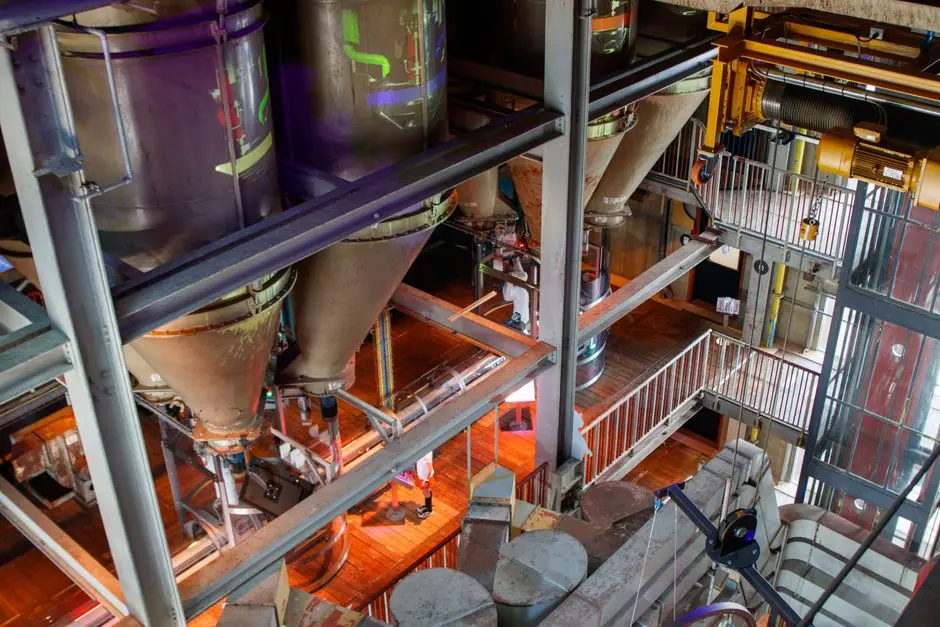
A DAF saturates a pressurized recycle stream (typically 60–80 psig, or 4–5.5 bar) with air, then releases it through a pressure-relief nozzle at the bottom of the flotation tank. The pressure drop nucleates a cloud of 10–100 µm micro-bubbles that attach to oil droplets and pre-formed floc. Because buoyant force rather than gravity drives separation, surface loadings run 5–25 m/h — well above what any clarifier can absorb — and the floated blanket is skimmed from the top while clarified water exits from below. The HydropureWater DAF system covers 4–300 m³/h across 13 models with micro-bubble generation and automatic skimming, and is a documented workhorse in metalworking and pretreatment service.
A lamella clarifier is an inclined-plate gravity settler. Coagulated and flocculated feed enters a reaction zone, then flows upward through a pack of plates inclined at 45–60°. Solids settle onto the underside of the plates (effective area is many times the tank footprint), slide down to a hopper, and are pumped as sludge, while clarified water rises and overflows a launder at the top. The geometry is what gives the unit its compact footprint and 5–10× higher surface loading than a conventional circular clarifier — typically 20–40 m/h on the basis of the effective plate area. The HydropureWater high-efficiency sedimentation tank (HES lamella) spec sheet documents this 2026 loading range.
The lamella's strength is settleable TSS; its weakness is anything buoyant or emulsified. Free oil will pass right through a plate pack and exit the overflow, so a lamella on a FOG stream needs an upstream oil-skimmer or coalescer to avoid a permit excursion. EPA's Process Design Manual for Suspended Solids Removal (EPA 625/1-75-003a) covers both configurations directly: Chapter 7.8 (flotation), Chapter 7.9 (shallow settling devices), and Chapter 7.10 (tube/wedge-wire settlers) form the engineering basis. Chemical conditioning is non-negotiable for DAF on emulsified streams — coagulant at 20–100 mg/L as a metal salt (alum or ferric chloride) plus polymer at 2–10 mg/L, jar-tested per EPA 625/1-75-003a Chapter 4; without it, effluent O&G can stay above 50 mg/L and miss the 40 CFR 433 daily max. The same chemistry package is required for the lamella on a TSS-dominant stream, just at the lower end of the dose range.
Side-by-Side Parameter Table: DAF vs Lamella Clarifier
This is the single artifact a buyer can drop into a vendor evaluation memo. Every row is anchored to a source so procurement and ADEM reviewers can trace the number back to either 40 CFR 433, the EPA Process Design Manual, or current 2025–2026 vendor data.
| Parameter | DAF (HydropureWater) | Lamella Clarifier (HydropureWater HES) | Source |
|---|---|---|---|
| Typical influent range | O&G 100–2,000+ mg/L; TSS 200–1,500 mg/L | TSS 200–800 mg/L; free O&G <100 mg/L | 40 CFR 433; vendor field data |
| Separation mechanism | Buoyancy (micro-bubble attachment) | Gravity (inclined-plate settling) | EPA 625/1-75-003a, Ch. 7.8 / 7.10 |
| Surface / hydraulic loading | 5–25 m/h | 20–40 m/h (effective plate area) | HydropureWater product specs, 2026 |
| Footprint at 25 m³/h | ~0.20–0.40 m² (with skimmer) | ~0.30–0.50 m² (with plate pack + hopper) | EPA 625/1-75-003a, Ch. 7.8 vs. 7.10 |
| Air-to-solids ratio | 0.03–0.10 kg air/kg solids (FOG-heavy 0.05–0.10) | N/A | EPA 625/1-75-003a, Table 7-4; DAF design manual |
| Single-stage O&G removal | 80–95% | 20–50% (free oil only) | Vendor field data, 2025–2026 |
| Single-stage TSS removal | 70–90% | 70–85% on settleable solids | EPA Process Design Manual, Ch. 7.9 |
| Polymer dose | 2–10 mg/L (cationic or anionic per jar test) | 1–5 mg/L (typically lower than DAF) | EPA 625/1-75-003a, Ch. 4 |
| Sludge dry solids | 3–6% (thickened float) | 1–3% (hopper underflow) | Vendor operating data |
| CAPEX (installed, 10–50 m³/h) | USD 80,000–250,000 | USD 40,000–120,000 | HydropureWater 2026 quote range |
| OPEX per m³ treated | USD 0.15–0.45 (polymer + air-saturation pump) | USD 0.08–0.25 (polymer + sludge pumping) | Vendor OPEX benchmarks, 2026 |
| Temperature sensitivity (10–20 °C ambient) | Low (enclosed tank, stable hydraulics) | Medium (longer HRT, biological fouling risk) | Northeast Alabama field data, 2025–2026 |
The takeaway from the table: DAF is the better fit when O&G is ≥100 mg/L or emulsified; lamella is the better fit when TSS is the dominant load and O&G is low. Neither unit alone reliably hits the 40 CFR 433 metals limits (Pb 0.69, total Cr 1.71, Ni 1.38, Cu 1.48, Zn 1.61 mg/L daily max) — both feed a polishing/filtration step.
Fyffe Site Constraints: Climate, POTW, and Footprint
Northeast Alabama ambient wastewater temperature runs 10–20 °C seasonally — viscosity is higher than the Gulf-coast benchmark, so a clarifier HRT must be sized longer (closer to 90 min than 45 min at design flow). Cooler water also slows biological fouling, which reduces but does not eliminate the open-basin risk for a lamella; covered or enclosed units are still preferred. Discharge goes to a small municipal POTW operating under the ADEM Industrial Pretreatment Program, which layers local limits on top of 40 CFR 433 and typically requires 24-hour composite sampling (ADEM Admin. Code Ch. 335-6, IPP requirements).
Oil and grease surcharges on small POTWs in the region commonly run USD 0.10–0.30 per m³ per 100 mg/L O&G — meaningful payback for the DAF premium on FOG-heavy streams. Tight Fyffe parcels make plan area a real CAPEX driver: a DAF occupies a slightly smaller plan area than a lamella of equal flow once the plate pack, launder, and hopper are added, which matters where civil work is the dominant installed cost. For a 10–50 m³/h Fyffe plant, the plan-area delta between a packaged DAF skid and a lamella tank package is typically 10–20% in the DAF's favor (HydropureWater layout studies, 2026).
2026 CAPEX, OPEX, and Payback Math for a 10–50 m³/h Plant
A packaged DAF skid in the 10–50 m³/h range, fully installed with coagulation/flocculation upstream and a sludge pump downstream, runs USD 80,000–250,000 in 2026. A comparable lamella clarifier tank with sludge recirculation and a chemical conditioning skid runs USD 40,000–120,000 installed — typically about half the DAF price for the same hydraulic capacity, because there is no pressurized recycle loop and no mechanical skimmer flight. Budget the same HydropureWater automatic chemical dosing system on either path for coagulant and polymer feed.
| Cost line (2026, USD) | DAF (10–50 m³/h) | Lamella Clarifier (10–50 m³/h) |
|---|---|---|
| Equipment + install (packaged) | 80,000–250,000 | 40,000–120,000 |
| Chemical dosing skid | 8,000–18,000 | 8,000–18,000 |
| Sludge pump + control | 4,000–9,000 | 4,000–9,000 |
| Civil work + piping (typical) | 15,000–35,000 | 20,000–45,000 |
| Total installed | ~110,000–310,000 | ~75,000–195,000 |
| OPEX per m³ | 0.15–0.45 | 0.08–0.25 |
| Annual OPEX (25 m³/h, 2-shift) | ~50,000–150,000 | ~25,000–85,000 |
Payback example: a 25 m³/h plant running two shifts, where every 100 mg/L O&G removed upstream saves USD 0.10–0.30/m³ in POTW surcharges, clears the DAF CAPEX delta (typically USD 35,000–115,000 over a lamella) in 12–24 months on a FOG-heavy stream (O&G ≥100 mg/L). On a low-oil stream with no surcharge exposure, there is no payback case for the DAF premium and the lamella wins on total cost of ownership. The same framework is documented in the DAF sizing engineering guide for oily condensate for compressor-service applications, where FOG fractions are similar.
The Four-Question Buyer Checklist for Fyffe Plants
Four questions produce a defensible answer in under a minute, and you can put the result in the same memo that goes to procurement and ADEM.
- Q1: Is your influent O&G ≥100 mg/L or emulsified by cutting/stamping fluids? Yes → DAF wins. No → move to Q3.
- Q2: Does your POTW levy an O&G surcharge on what you discharge? Yes → DAF premium pays back in 12–24 months. No → move to Q3.
- Q3: Is your stream TSS-dominant (200–800 mg/L) with free oil <100 mg/L? Yes → lamella is the cost-optimized primary. No → revisit Q1 sampling.
- Q4: Is your discharge permit metals-driven (Pb 0.69, total Cr 1.71, Ni 1.38, Cu 1.48, Zn 1.61 mg/L daily max)? Yes on either path → plan a HydropureWater multi-media filter or hydroxide precipitation polishing step.
If Q1 and Q2 both fire, DAF still wins because the oil load will defeat a lamella's TSS performance and trigger surcharges every month. If Q3 and Q4 are the only triggers (TSS-dominant stream, cool site, polishing already planned), a lamella with multi-media filter polish is the cost-optimized 2026 answer. The same logic applies across the broader Lookout Mountain corridor — see the fabricated metals DAF vs clarifier guide for Bridgeview, IL for a parallel Midwest application.
Frequently Asked Questions
Can a lamella clarifier alone meet the 40 CFR 433 O&G daily max of 38 mg/L on a fabricated-metals stream?
Rarely. A lamella removes 20–50% of free oil by skimming from the plate pack surface, but it does not remove emulsified oil and has no positive removal mechanism for droplets below ~50 µm. To hit the 40 CFR 433 Subpart A daily max of 38 mg/L O&G, you need either a DAF in front of the lamella, or a lamella with a dedicated oil-skimmer/coalescer upstream and a polishing filter downstream. For a stream with influent O&G above 100 mg/L or with surfactant-emulsified oils, a DAF as the primary unit is the standard 2026 answer.
What air-to-solids ratio should a DAF run on a FOG-heavy fabricated-metals stream?
Target 0.05–0.10 kg air per kg of total suspended and floatable solids, delivered through a pressurized recycle at 60–80 psig (4–5.5 bar). Lighter TSS-only streams can run 0.03–0.05. The ratio is set by adjusting the recycle rate and saturation pressure; micro-bubble size in the 10–100 µm range is the verification target. Under-sizing A/S is the most common reason a DAF fails to hit the 40 CFR 433 O&G ceiling of 38 mg/L on a FOG stream.
Does a DAF work on emulsified oil without chemistry?
No, not reliably. Micro-bubbles attach more readily to broken emulsions, so a DAF on an emulsified oil stream needs a coagulant (typically a metal salt such as alum or ferric chloride at 20–100 mg/L) plus a flocculant (2–10 mg/L anionic or cationic polymer) ahead of the flotation cell. Without that chemistry, an emulsified stream passes through and you can still see >50 mg/L O&G in the effluent, well above the 40 CFR 433 daily max. Jar testing per EPA 625/1-75-003a Chapter 4 is the standard way to lock in the dose.
What polishing step hits the 40 CFR 433 metals limits (Pb 0.69, Zn 1.61 mg/L daily max)?
For lead (daily max 0.69 mg/L) and zinc (1.61 mg/L) on a fabricated-metals stream, the standard train is pH adjustment to 9–10 with caustic, hydroxide precipitation, and a multi-media filter (sand + anthracite + garnet) to capture the metal-hydroxide floc. If BOD/COD must also drop, an MBR is the alternative. A DAF or lamella clarifier on its own will not reliably meet these metals limits, and ADEM IPP permits commonly require 24-hour composite sampling that exposes any primary-unit slip.
How is sludge handled on each unit?
For a DAF, the float is skimmed continuously and the underlying thickened sludge is wasted on a timer or level-controlled cycle, typically every 2–4 hours at 3–6% dry solids. For a lamella clarifier, sludge collects in the hopper and is pumped on a timer or density-controlled cycle, typically every 4–8 hours at 1–3% dry solids (a sludge blanket can concentrate this further). DAF sludge is generally easier to dewater downstream because of the higher initial solids concentration, which is a real OPEX advantage once a belt press or screw press is added.