What a Leeds, Alabama Fabricated Metals Plant Is Actually Discharging
Dissolved air flotation (DAF) is the stronger primary clarifier for Leeds, Alabama fabricated metals plants in 2026 when the wastewater carries free oils, cutting fluids, and emulsified FOG, as the 30–50 micron micro-bubbles lift those contaminants quickly. A lamella clarifier is the better primary or polish step when metals precipitation (pH adjustment + coagulant) creates a heavier settleable solids load. Most Leeds fab shops run a DAF-then-lamella train, or a DAF alone, rather than a clarifier alone.
Jefferson County hosts a dense cluster of stamping, welding, machining, and light coating operations whose wastewater typically contains free and tramp oils, emulsified cutting fluids, suspended solids (scale, swarf, grinding fines), and dissolved metals — primarily Zn from galvanizing lines, Fe from pickling, Ni from plating, and trace Cr from passivation. Typical hydraulic loading for a Leeds fab runs ~20–200 m³/day (≈ 5–55 GPM average), with periodic slug loads from cleaning cycles that can double influent flow for an hour or two.
Discharge to the Jefferson County sewer system is governed by the Jefferson County PACS (POTW pretreatment) program, enforced locally and cross-referenced against ADEM state requirements. Applicable federal category standards include 40 CFR Part 413 (electroplating), 40 CFR Part 433 (metal finishing), and 40 CFR Part 464 (metal molding and casting). The specific effluent ceilings in your PACS permit determine equipment sizing. The central decision point for any Leeds fab is that a single technology rarely handles oils AND dissolved metals to PACS numbers.
How a DAF Clarifier Works in a Metals Plant
A DAF clarifier separates suspended matter by attaching 30–50 µm micro-bubbles of dissolved air to chemically conditioned particles, lowering their effective density so they float to the surface for skimming (per Clearwater Industries, 2026-04). The sequence in a fabricated metals plant runs: coagulant dose + pH adjust + polymer flocculant through serpentine flocculation tubes or staged mix tanks (15–45 second flash mix), then saturated recycle water depressurizes through a needle-valve manifold to release the micro-bubbles that attach to floc.
The float layer is skimmed by paddle or chain-and-flight into a sludge trough, while heavier settled solids drop into a bottom collection zone and are removed by auger or hopper — most DAF designs manage both fractions in one vessel (Clearwater Industries, 2026-04). Standard material is 304 stainless steel, with 316SS or polypropylene available for corrosive metalworking streams (e.g., acidic rinse waters, high-chloride cutting fluid bleed-off). Hydraulic range for the DAF line spans 4–300 m³/h across 13 models, with a single-skid threshold at 66 GPM and modular two-skid configuration above that (per Clearwater Industries, 2026-04).
For a Leeds fab, the DAF sits after gross oil-water separation on heavy tramp oils and before any metals precipitation or clarification step. Oils foul floc and consume polymer, so a DAF that sees raw tramp oil underperforms and produces wet, oily sludge; furthermore, metals precipitation chemistry is pH-sensitive, and running the pH adjust step upstream of the DAF destabilizes the floc before micro-bubbles can attach. The HydropureWater dissolved air flotation (DAF) system is built to this sequence.
How a Lamella (High-Rate) Clarifier Works in a Metals Plant
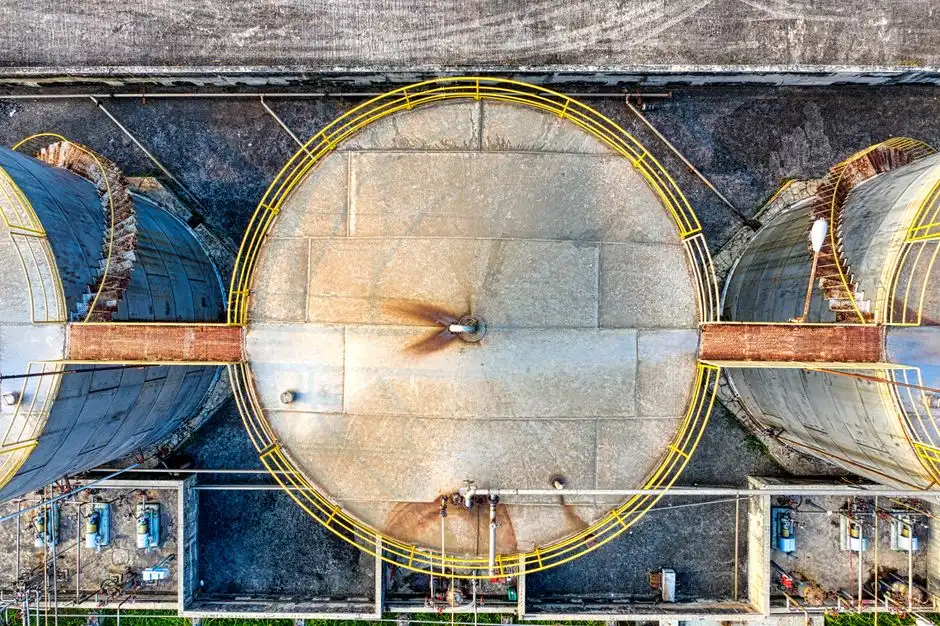
A lamella clarifier uses a stack of parallel plates inclined at 55–60° to dramatically increase the effective settling area inside a compact footprint. Sludge recirculation drives flocculation, and the inclined plates achieve 20–40 m³/m²·h surface loading with roughly 20–30% lower chemical demand than conventional clarifiers (HydropureWater product data, 2026). The geometry shortens the distance a particle must fall before it hits a plate, then slides down the plate into a hopper.
Lamella is gravity-based: it captures settleable solids and the dense floc generated by pH adjustment (lime, caustic, or NaOH) plus coagulant (ferric chloride, alum, or polymers) used to precipitate dissolved metals as metal hydroxides. In a fabricated metals context, lamella's strength is polishing after metals precipitation — heavy, fast-settling hydroxide floc is exactly what inclined plates handle efficiently. It is also the right choice when discharge TSS limits are tight and the upstream process has already removed oils and FOG.
The lamella's limitation is that it is poor on free oils and low-specific-gravity emulsions: oil-coated floc resists settling and can float out the top of the plate pack, carrying contamination into the clarified overflow. The HydropureWater high-efficiency sedimentation tank (lamella clarifier) is almost always positioned as a polish or as the settler after a chemistry step, not as the first contact with oily wastewater.
DAF vs Clarifier: Side-by-Side for Fabricated Metals
The matrix below compares the two technologies across the parameters that drive a Leeds fab equipment decision. Selecting the right unit requires balancing these operational demands.
| Parameter | DAF Clarifier | Lamella Clarifier |
|---|---|---|
| Target contaminants | Free oils, tramp oils, emulsified FOG, low-specific-gravity TSS, suspended metals-bearing solids | Heavy settleable solids, metal hydroxide floc post-precipitation, TSS after oil removal |
| Typical removal (qualitative) | Strong on FOG and emulsified oils; good on TSS; partial on dissolved metals unless chemistry is paired | Strong on TSS and precipitated metals floc; weak on free/emulsified oils |
| Hydraulic range | 4–300 m³/h (13 models); single skid ≤66 GPM, two-skid above | 20–40 m³/m²·h surface loading; scales with plate area |
| Footprint | Larger per m³/h than lamella; needs floc tubes, saturator, air system | Compact; ~20–30% of equivalent conventional clarifier footprint |
| Materials of construction | 304SS standard; 316SS or PP for acidic/high-chloride streams | 304SS / 316SS frames; PP or FRP plates common |
| Pretreatment chemistry required | Coagulant + pH adjust + polymer; pH must be stable at the floc tube | pH adjust + coagulant for metals precipitation; less polymer demand |
| CapEx direction (small / mid / large fab) | Small fab: single skid; mid fab: two-skid or larger model; large fab: custom vessel + saturator | Small fab: compact plate pack; mid/large fab: scale plate area, not footprint |
| Best fit in fab flow | After oil-water separator, before metals precipitation or as final clarifier | After metals precipitation chemistry, as polish, or as primary if no oil load |
| Air/energy demand | Recycle pump + saturation system; meaningful compressed-air or pumped-air energy | No air system; lower energy per m³ treated |
Three rows matter most for a Leeds fab. First, target contaminants: if the load is dominated by FOG and emulsions, DAF wins on the primary step; if the load is dominated by precipitated metals floc, lamella wins. Second, footprint: lamella gives you 20–30% of a conventional clarifier's footprint, which matters in a small Leeds shop where floor space is rented. Third, CapEx direction: in metal-industry DAFs explicitly built for harsh environments, material and chemistry selection drive CapEx more than tank geometry (World Water Works, 2026 case data). For the DAF unit, the HydropureWater dissolved air flotation (DAF) system; for the lamella, the HydropureWater high-efficiency sedimentation tank (lamella clarifier); and for the chemistry feed, a HydropureWater automatic chemical dosing system.
When a Leeds Fab Needs One — and When It Needs Both
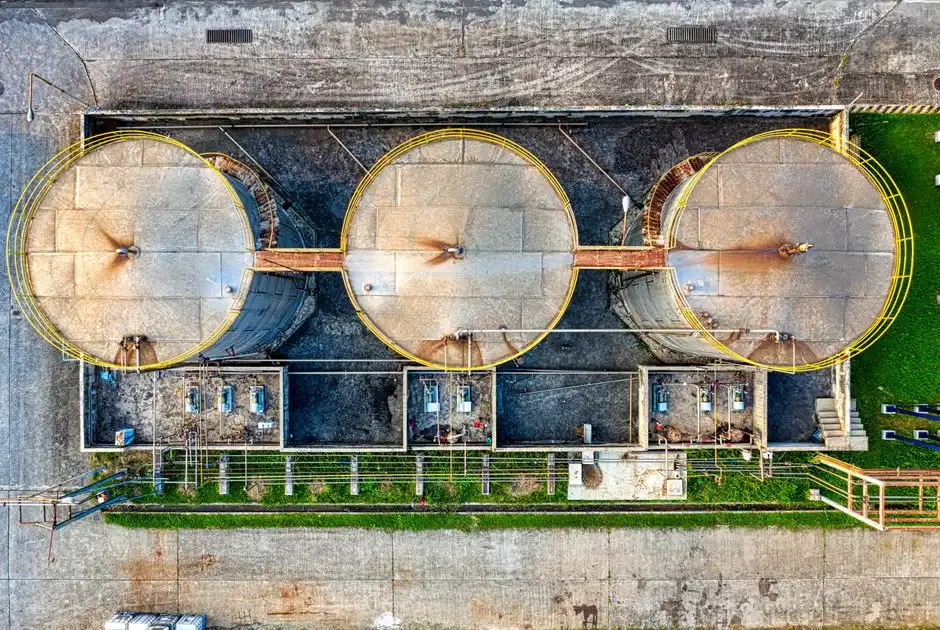
The technology choice collapses to a load profile question, not a vendor preference. Three configurations cover the Leeds fab landscape in 2026:
DAF alone. Stamping/washing shops with significant tramp oils and emulsions, no in-house metals precipitation step, discharge to POTW under PACS oil and TSS limits. The DAF handles FOG and TSS in one vessel; metals discharge is bounded because the dissolved metal load is low or routed to a separate plating line with its own treatment.
Lamella alone. Shops with no significant oil load where pH + coagulant metals precipitation is the main work. The lamella settles the hydroxide floc and polishes TSS.
DAF + lamella train. Most Leeds fabs of 50+ m³/day with both oils AND dissolved metals fit this case. The train runs: gross oil-water separation → DAF (strips oils/emulsions, drops TSS) → pH adjustment + coagulant (precipitates metals) → lamella (settles floc) → optional multi-media filter for reuse. This mirrors cases where a single DAF was scoped to treat oil, grease, suspended solids, and dissolved metals in a mix of process water and storm water runoff (World Water Works, 2026). For Leeds fabs targeting water reuse in 2026, the DAF + lamella + polish train is the default. The HydropureWater dissolved air flotation (DAF) system upstream, then the HydropureWater high-efficiency sedimentation tank (lamella clarifier) downstream.
2026 Selection Framework and ROI Lens for Leeds
A defensible recommendation to a Leeds fab vendor starts with three questions, answered in order:
- Is free/emulsified oil a significant load? Yes → DAF upstream. No → skip DAF on the primary step.
- Are you precipitating dissolved metals (Zn, Fe, Ni, Cr)? Yes → lamella after chemistry, or DAF after chemistry if no upstream oil. No → lamella or DAF based on TSS alone.
- Targeting reuse in 2026? Yes → DAF + lamella + multi-media polish. No → DAF or lamella alone based on the first two answers.
The ROI lens relies on two cost lines: PACS sewer surcharges on TSS and FOG, where analogous plants have reported $20,000+/month reductions after a DAF pre-treatment install (World Water Works, 2026); and avoided potable water purchases if reuse is in scope. Material selection is the other CapEx lever: 316SS or polypropylene for high-chloride or acidic rinse streams, 304SS for the rest (per Clearwater Industries, 2026-04). Pretreatment program compliance under 40 CFR Part 403 and Jefferson County PACS means slug control and sampling access are mandatory. The polish step for reuse is the HydropureWater multi-media filter; chemistry is the HydropureWater automatic chemical dosing system. For a parallel view on metals-specific trains in the same region, see our Birmingham fabricated metals DAF vs clarifier guide.
Frequently Asked Questions
How do I size a DAF for a Leeds fab running 30 GPM average with slug loads to 60 GPM?
Size on the slug flow, not the average. The DAF line uses a 66 GPM single-skid threshold (per Clearwater Industries, 2026-04), so 60 GPM slug fits a single skid with margin; if you anticipate 70+ GPM slug, plan a two-skid modular DAF. Always include equalization upstream to damp slug flow before
Frequently Asked Questions
Should a fabricated metals plant in Leeds, Alabama use a DAF or a clarifier?
The choice depends primarily on the density and particle size of your metal-laden solids. A conventional gravity clarifier is most effective for heavy, inorganic particulate matter with high settling velocities, typically exceeding 0.5 inches per minute. If your process generates significant oil and grease from machining coolants or lubricants, or if the metal hydroxides are light and prone to floating, a Dissolved Air Flotation (DAF) unit is technically superior as it utilizes micro-bubbles to float particles to the surface for mechanical skimming.
Can a DAF remove dissolved metals like zinc and nickel?
A DAF cannot remove dissolved metals in their ionic state; it can only remove metals that have been precipitated into solid form. To achieve compliance, you must first perform chemical precipitation by adjusting the wastewater pH—typically to a range of 8.5 to 9.5—to convert soluble zinc and nickel into insoluble metal hydroxides. Once these metals are precipitated as solids, the DAF can effectively capture and remove them from the effluent stream.
When do you need both a DAF and a lamella clarifier in a metal fab?
A dual-stage system is often required when your wastewater contains a complex matrix of both heavy metallic solids and emulsified oils. In this configuration, the lamella clarifier acts as the primary settler to remove dense, inorganic metal solids, while the downstream DAF acts as a polishing step to remove residual oils, greases, and light suspended solids that would otherwise fail to settle. This setup is common in facilities where effluent discharge limits for oil and grease are strictly enforced alongside heavy metal limits.
What is the typical flow range for a DAF at a small metalworking shop?
For a small to mid-sized fabricated metals shop, DAF units are generally sized to handle flow rates between 5 and 50 gallons per minute (GPM). Sizing is dictated less by the total daily volume and more by the peak instantaneous flow and the hydraulic loading rate, which is typically designed for 1.5 to 3.0 gallons per minute per square foot of surface area to ensure adequate bubble-to-particle contact time.
How does Jefferson County PACS affect DAF or clarifier selection in Leeds?
Facilities in Leeds discharging to the Jefferson County sewer system must comply with the Pretreatment and Control Services (PACS) regulations, which enforce stringent local limits on heavy metals (e.g., zinc, nickel, chromium) and oil/grease concentrations. If your facility’s discharge frequently exceeds these local limits, the selection of a DAF or clarifier must be paired with an automated pH neutralization and chemical coagulation system. Failure to meet these specific Jefferson County pretreatment standards can result in significant surcharges or mandatory flow equalization requirements.