
Design the dosing unit around the treatment objective
Flocculant dosing unit design criteria should begin with the wastewater flow and solids profile, jar-test results, polymer form and concentration, required maturation time, injection pressure, and downstream separation method. The system must wet or dilute the product without degradation, hydrate it for the required period, meter it consistently, and inject it where the required flocculation contact time is available. HydropureWater’s 2025 guide cites 0.1–0.5% dry-polymer concentration, 30–60 minutes of maturation at 300–500 RPM, and metering accuracy of ±1%. Final pump, tank, mixer, and material selections should be verified against site-specific tests and the final equipment proposal.
Coagulants and flocculants perform different functions. Coagulants destabilize suspended particles and form microflocs; PAM-type flocculants bridge those microflocs into larger aggregates. The downstream process determines the target floc. HydropureWater’s 2025 guide states that a DAF system benefits from buoyant flocs, while a settling clarifier requires flocs with higher settling velocity.
Define the required effluent result and applicable site permit or pretreatment limit before selecting hardware. For a DAF system for floc separation, specify the flotation and solids-release target rather than relying on a generic “good floc” description. For a lamella clarifier, relate the selected floc to the intended settling behavior and sludge withdrawal.
The design sequence should remain traceable: characterize the wastewater; perform jar testing; select the polymer; design the polymer make-down system; calculate metering duty; review the injection point and contact time; then commission against the approved treatment objective. The related coagulant dosing system design criteria should be resolved alongside the flocculant basis, not after the skid has been sized.
Turn wastewater data into a verified polymer and dose basis
The optimal dose is the minimum chemical addition that meets the defined water-quality requirement, according to Tairan Chemical’s company-primary guidance. Tairan states that dosage should be established through laboratory simulations followed by on-site trials. Equipment sizing should use the verified dose from that sequence, not an assumed consumption rate.
Collect wastewater flow, TSS, turbidity, pH, temperature, oil and grease where relevant, existing coagulant use, and the required effluent target. Tairan’s jar-test sequence is:
- Add the candidate flocculant to a representative wastewater sample.
- Apply rapid mixing to disperse the chemical and initiate coagulation.
- Apply slow mixing to grow larger flocs.
- Allow settling and evaluate turbidity, COD, and pH where applicable.
The sample should reflect actual water conditions, flocculant type, dosing sequence, and hydraulic conditions, as Tairan specifies. This creates the polymer dosing system design for variable wastewater basis before equipment dimensions are fixed.
| Design input | Evidence required | Decision controlled |
|---|---|---|
| Wastewater flow and solids profile | Representative sampling and site flow data | Tank throughput and pump duty |
| Effluent and separation target | Permit, pretreatment limit, or process specification | Required floc and dose-response curve |
| Polymer selection | Jar tests and product instructions | Dry make-down or liquid-emulsion preparation |
| Verified dose | Laboratory results confirmed by site trials | Pump range and chemical consumption |
Dry polymer ships more active mass per kilogram but requires more preparation hardware. Liquid emulsion is simpler to handle but has a shorter shelf life and higher cost per active kilogram, according to HydropureWater’s 2025 guide. Tairan recommends a typical 0.1% concentration for organic, high-molecular-weight flocculants; inorganic products such as PAC can tolerate higher concentrations. Product-specific instructions and test results control the final choice.
Build the chemical preparation train for stable polymer quality
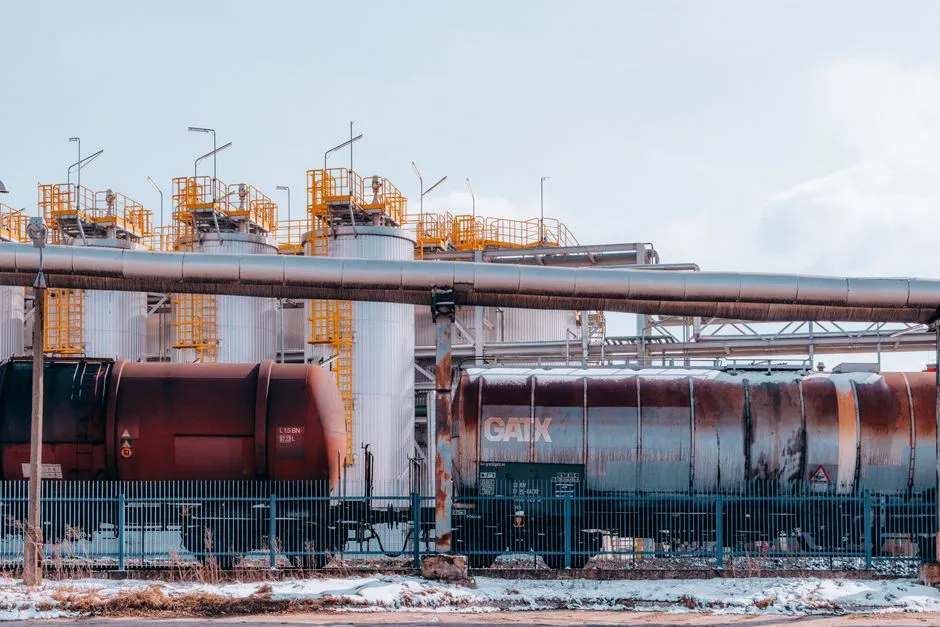
A wet polymer preparation train is acceptable only when it produces a uniform, activated solution at the design concentration without fish-eyes, undissolved clumps, or excessive shear. For dry polymer, specify a vented dry-feed arrangement, a wetting head that disperses powder into a high-velocity water jet, and mixing that prevents agglomerates. For liquid emulsion, specify high-shear mixing sufficient to break the emulsion and activate the polymer chains; protect shear-sensitive products during recirculation and transfer.
HydropureWater’s 2025 guide describes a dry eductor capacity of 2–5 kg/h, preparation volume of 1–5 m³, and 316L stainless-steel or HDPE construction for the described arrangement. It also specifies 30–60 minutes of maturation at 300–500 RPM. These values apply only within that stated scope; the selected polymer’s instructions and the verified make-down result set the final values.
Select 316L stainless steel for corrosive service or HDPE for milder service, as HydropureWater’s 2025 guide indicates. Tairan additionally recommends corrosion-resistant materials, including fiberglass and rubber components, and corrosion protection where needed. The chemical compatibility statement should cover the polymer, carrier water, wetted parts, seals, and cleaning chemicals—not only the storage tank.
| Preparation block | Procurement criterion | Evidence to request |
|---|---|---|
| Dry storage and feed | Ventilated hopper and controlled powder feed | Hopper geometry, feed range, vent arrangement, access method |
| Wetting or dilution | Disperses product without persistent clumps | Water demand, eductor or mixer arrangement, demonstrated preparation result |
| Maturation | Provides product-specific activation time | Tank working volume, mixer power and speed, residence time |
| Materials and access | Corrosion resistance and maintainability | Material schedule, wetted-part compatibility, inspection and cleaning access |
IFA Technology identifies accessible components as a maintenance feature of well-designed flocculant systems. Require access to the hopper, eductor, mixer, tank, and piping for inspection and cleaning. The PLC-controlled automatic flocculant dosing system should therefore be evaluated as an accessible preparation train, not as a pump mounted beside an unspecified tank.
Size the metering pump from the required solution flow
Pump duty follows from the verified dose, plant flow, solution density, and preparation concentration. HydropureWater’s 2024 article gives the equation:
Q = (C × F × D) / (S × 1,000,000)
Here, Q is pump flow in L/h, C is dose in mg/L, F is plant flow in m³/h, D is solution density in kg/L, and S is solution concentration as a decimal.
HydropureWater’s 2024 worked example uses 100 m³/h, a 5 mg/L dose, approximately 1 kg/L density for dilute solution, and 0.2% concentration. The result is 2.5 L/h, so the selected pump must be rated above 2.5 L/h.
| Variable | Value in the supported example | Specification use |
|---|---|---|
| Plant flow, F | 100 m³/h | Sets solution delivery rate |
| Dose, C | 5 mg/L | Must come from the verified dose-response basis |
| Solution density, D | Approximately 1 kg/L for dilute solution | Converts dose mass to solution flow |
| Concentration, S | 0.2% as 0.002 | Sets polymer consumption per litre of solution |
| Calculated pump flow, Q | 2.5 L/h | Select a rated flow above the calculated duty |
HydropureWater’s 2025 guide gives a metering range of 0.1–50 L/h, accuracy of ±1%, and pressure rating up to 10 bar for the equipment described. Select against the verified minimum, normal, and maximum duties rather than one nominal point. A peristaltic pump is appropriate where polymer shear sensitivity controls; a diaphragm pump is indicated where higher injection pressure into a pressurized main is required, according to HydropureWater’s 2025 guide. Require the final proposal to confirm compatibility with the polymer, carrier water, pressure, and duty range.
Match controls and injection to variable wastewater conditions
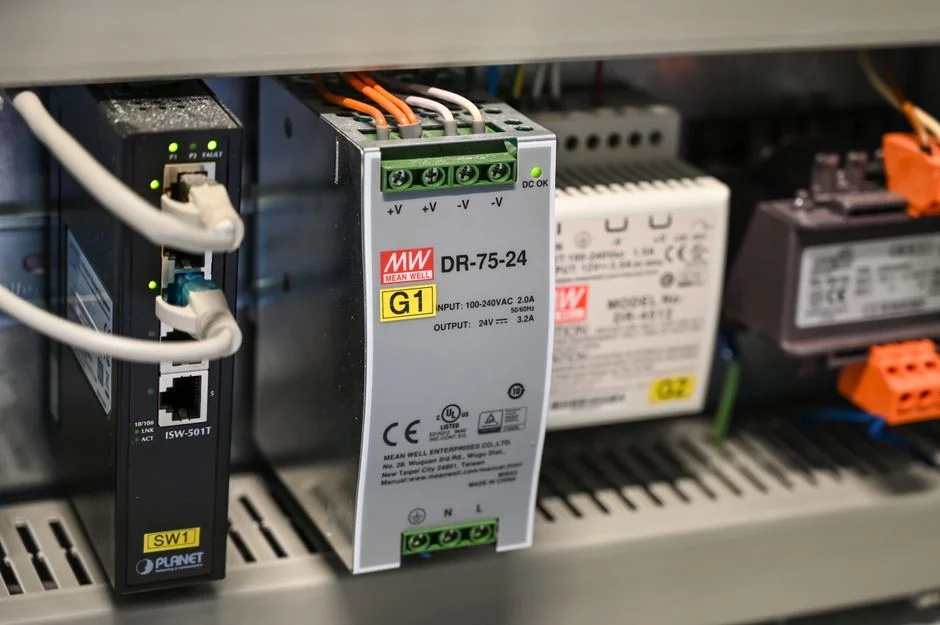
A continuously operated dosing skid needs a defined control response, not merely a local flow setpoint. HydropureWater’s 2025 guide describes PLC-based controls, an HMI, and PID loops for maintaining the stated metering window. Specify how the controller receives plant-flow information, what limits and alarms apply, and whether the operator can see pump output, preparation status, and fault conditions.
Flow and turbidity feedback may be included where the treatment process supports closed-loop adjustment. The 2025 guide describes optional turbidity or flow sensors, but the final control logic must be verified against actual wastewater behavior. For dry feeds, HydropureWater’s 2024 article describes VSD-driven augers with optical sensors for automatic feed adjustment; its 2025 guide also describes a VFD for viscosity control.
The injection point depends on treatment stage and operating objective. Tairan identifies pre-treatment, biological-treatment, and post-treatment locations, each serving a different purpose. Confirm that the receiving pipeline or flash mixer distributes polymer without damaging flocs and that the downstream clarifier or DAF supplies the intended flocculation contact time. The DAF versus clarifier selection should be resolved before the injection and floc-property criteria are frozen.
- Confirm the treatment stage and required contact time.
- Verify distribution and mixing at the proposed injection point.
- Define sensor inputs, setpoint limits, alarms, and manual fallback.
- Test the complete response during commissioning with actual wastewater.
Use a design-criteria matrix for vendor comparison
A defensible bid comparison should cover six functional blocks: storage, make-down, wetting or dilution, maturation, metering, and controls/integration. Require each vendor to state the selected polymer form, design concentration, preparation volume, maturation time, mixer power and speed, pump flow range, accuracy, pressure rating, and control inputs. These parameters connect the chemistry basis to equipment performance and reveal gaps before purchase.
| Criterion | Decision controlled | Evidence requested | Consequence of inadequate selection |
|---|---|---|---|
| Storage and feed | Product availability and dry-feed control | Capacity, feed range, hopper arrangement, material schedule | Intermittent preparation or material-handling conflict |
| Make-down and maturation | Activated polymer quality | Design concentration, working volume, mixer data, residence time | Blind polymer, clumps, unstable dosing |
| Metering | Delivered dose and pressure | Flow range, accuracy, pressure rating, polymer compatibility | Under-dose, over-dose, or inability to inject |
| Controls and integration | Response to changing wastewater | PLC/HMI architecture, PID logic, sensor inputs, alarms | Manual correction and unstable treatment |
| Installation | Fit within the plant | Footprint, utilities, access, cable entries, integration plan | Installation conflict or extensive modification |
| Exclusions and acceptance | Comparable commercial scope | Utilities, local controls, hazardous-area requirements, factory test, commissioning support | Ambiguous handover and unbudgeted work |
HydropureWater’s 2024 article reports ±2% accuracy for modern PLC-controlled units with VSD-driven augers and optical sensors. Treat that as a reported equipment capability, not a universal specification; state the project requirement in the enquiry. IFA Technology notes that flocculant systems may be stationary or flexible-container solutions and can integrate with existing processes without extensive conversion work. Installation constraints therefore belong in the bid comparison.
Validate performance before handing over the unit
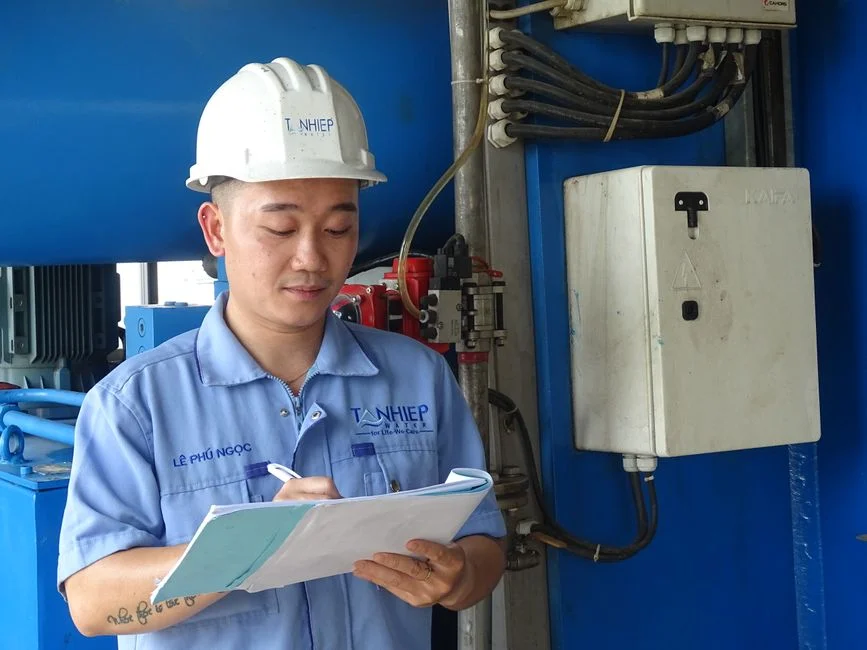
Commissioning should prove preparation, metering, controls, and treatment performance as one connected system. Begin with water-only or approved chemical checks for pump direction, flow calibration, control response, leak tightness, level control, and alarm functions. Verify the preparation concentration, wetting or emulsion quality, and maturation conditions against the selected product instructions and approved design basis.
Then conduct dose-response testing with actual wastewater. Evaluate floc appearance, settling or flotation behavior, turbidity, and the required effluent result. This is the point at which the selected floc properties are checked against the downstream clarifier or DAF rather than inferred from make-down quality alone.
Record the as-built jar-test dose, pump calibration, preparation concentration, maturation time, flow, pressure, and control settings. Recheck the dose after significant changes in wastewater flow, TSS, pH, temperature, or chemical grade, subject to site-specific verification. HydropureWater’s engineering guides explicitly require site-specific design values to be checked against current influent testing and the final equipment proposal.
Frequently Asked Questions
What flow and wastewater data are needed to size a flocculant dosing unit?
Request plant flow, TSS, turbidity, pH, temperature, oil and grease where relevant, existing coagulant use, the effluent target, and the intended downstream separation method. Require jar-test results and a verified dose-response curve before finalizing pump flow, preparation volume, and material selection.
Should a wastewater plant choose dry polymer or liquid emulsion equipment?
Choose based on the verified product, storage constraints, preparation labor, chemical form, and downstream performance. HydropureWater’s 2025 guide states that dry polymer provides more active mass per kilogram but requires more mechanical preparation hardware, while liquid emulsion is simpler to handle but has shorter shelf life and higher cost per active kilogram.
How much does an automatic flocculant dosing unit cost?
No defensible price can be stated without the wastewater flow, polymer form, preparation concept, duty range, controls, materials, installation conditions, and acceptance scope. Request itemized quotations covering the preparation train, metering pump, controls, utilities, installation exclusions, commissioning, and maintenance items. A single unit price will not make the offers comparable.
How do I select a supplier that will deliver a compliant dosing skid?
Require a proposal against the six functional blocks and the project acceptance sequence. Check proposed concentration, maturation time, mixer data, pump range, accuracy, pressure rating, alarms, utilities, material compatibility, factory-testing scope, commissioning support, and exclusions. Require the supplier to demonstrate the selected values against actual wastewater and the product instructions.
How is the dosing unit linked to a DAF or lamella clarifier?
Define the injection point and required flocculation contact time before selecting the control response. For DAF, HydropureWater’s 2025 guide identifies buoyant flocs as the target; for settling clarification, the guide requires higher settling velocity. Verify distribution, mixing, and separation performance during site dose-response testing.