What Changes When UMC Acquires a German Plant?
When UMC acquires a plant in Germany, the wastewater requirements depend on the site’s discharge route, permits, sewer agreement, and ETP condition. A change of ownership does not automatically transfer every approval. UMC should classify each stream and test every authorization, agreement, and operating obligation against the acquired operations. No supplied source identifies a specific UMC acquisition in Germany, so this framework cannot establish a site-specific legal conclusion. It identifies the documents and decisions that must be resolved.
Corporate succession, permit status, operating compliance, and historical liability are separate questions. UMC may become responsible for operating the facility, while an authorization remains tied to a named entity, site, or permitted scope. An unchanged discharge does not cure missed monitoring, exceedances, groundwater contamination, or incomplete remediation records.
The German site’s controlling evidence is its wastewater authorization, approvals, declarations, consents, indirect industrial discharge agreement, amendments, annexes, monitoring records, discharge-point drawings, and regulator correspondence. Sewer agreements must also be reviewed as performance contracts, not merely administrative permissions.
Sweco reported that it completed 13 acquisitions in 2025 and close to 170 over the preceding 20 years, illustrating why environmental integration is a repeatable transaction discipline rather than an isolated task (Sweco, 2026). UMC can apply that same discipline through its UMC factory acquisition ETP due diligence framework.
Classify Every Wastewater Route Before Reviewing Equipment
German wastewater requirements must be mapped by discharge route before treatment equipment is considered, because each route identifies a different controlling authority and evidence set.
| Route | Streams to identify separately | Controlling evidence |
|---|---|---|
| Direct discharge to receiving water | Process wastewater, stormwater, groundwater, stormwater overflow, firewater, cooling-water blowdown | German wastewater authorization, environmental-capacity allocation, monitoring plan, compliance reports, discharge-point drawings, regulator correspondence |
| Indirect discharge through public sewage-treatment works | Process wastewater, segregated process streams, cooling-water blowdown, firewater and other controlled discharges | Latest sewer-use, indirect-discharge or pretreatment agreement, amendments, annexes, fee rules, sampling requirements, enforcement correspondence |
| Mixed or separately regulated | Combined and standalone outlets, reuse streams, contaminated stormwater and groundwater | Separate permit or agreement for each route, plus site-wide water balance and discharge-point map |
Process wastewater should not be combined automatically with stormwater, groundwater, firewater, cooling-water blowdown or expansion flows. Segregation can determine whether a stream is directly authorized, indirectly controlled, or subject to a different monitoring and notification regime.
For direct discharge, obtain the complete authorization file and test whether it covers the legal entity, site, production lines, chemical inventory, discharge points, current operations and planned expansion. Reserved environmental capacity and historical exceedances also need to be identified.
For indirect discharge, obtain the latest approved agreement and every amendment. Review discharge standards, monitoring frequency, sampling points, fee calculations, excess-load consequences and enforcement provisions. A summary compliance statement is insufficient because the agreement is both a legal instrument and a performance specification.
Do not use figures from US, Indian, Chinese, Virginia or other non-German sites as German limits. The site-specific authorization, sewer agreement and current applicable rule text control.
Build a Permit-Transfer Status Matrix
A German wastewater authorization cannot be classified from the acquisition agreement alone; its transfer status must be determined from the wording and status of each controlling instrument.
| Status | Required diligence decision | Closing consequence |
|---|---|---|
| Assignment or continued operation by a successor | Confirm that the entity, site and operational scope match the acquisition | Document the legal basis and retain proof of continued authority |
| Transfer after written notification | Identify the notice deadline, responsible party and receiving authority | Make receipt and acceptance part of the closing checklist |
| Reapplication, qualification or successor-operator process | Confirm the application, regulator engagement plan and operating constraints | Resolve before closing or adjust the long-stop date and operating plan |
| Ambiguous or conflicting authority position | Obtain specialist confirmation from the competent authority or qualified German counsel | Treat as an unresolved closing risk, not a post-closing administrative task |
Each register entry should identify the instrument number, issuing authority, site, regulated entity, scope, expiry, monitoring dates, renewal milestones, reserved capacity, compensation conditions and environmental-load constraints. It should also state whether the instrument covers the acquiring entity, production lines, chemical inventory, discharge points and planned production changes.
Missing documents, ambiguous transfer clauses, regulator pre-approval requirements and conflicting authority positions require specialist confirmation. Do not infer numeric German discharge limits without the site’s authorization and the current applicable rule text.
The Germany-specific review should also sit within the broader UMC sequence: an eight-item permit-transfer audit and nine-item ETP asset-condition audit. The first establishes whether UMC may lawfully continue the relevant operations; the second tests whether the installed equipment can support them.
Test Permitted Limits Against the Real Wastewater
A valid permit does not establish that an installed ETP can support UMC’s verified operating envelope.
| Diligence test | Evidence required | Decision output |
|---|---|---|
| Hydraulic loading | Permitted flow, design flow, actual flow, production forecast, peak records and equalization overflow | Determine whether the flow variance exceeds the UMC review trigger |
| Organic loading | Design organic loading and actual BOD mass load under relevant production conditions | Determine whether the BOD variance exceeds the UMC review trigger |
| Wastewater balance | Water balance, flow-meter records, untreated bypass, storage loss and production reconciliation | Identify unmeasured, unpermitted or poorly controlled flows |
| Stream chemistry | Cleaning chemicals, acids, alkalis, fluoride, ammonia and nitrogen, metals, solids, oils and greases, sanitizers and PFAS screening where relevant | Define stream-specific treatment and monitoring requirements |
Request analytical results with sampling dates, methods, flow volumes, detection limits, exceedances, mass loads and the production conditions that produced each result. A plant-wide average can conceal high-strength cleaning events or short-duration discharges.
The supplied UMC framework uses a permitted-versus-actual flow variance above 10% and a design-versus-actual BOD variance above 15% as capacity-review triggers (HydropureWater, 2026). These are diligence triggers, not German legal limits. Either result requires reconciliation rather than an assumption that the installed system has adequate headroom.
Micron’s disclosed membrane filtration, ion-resin adsorption, precipitation, bio-oxidation and neutralization methods are a screening list only (HydropureWater, 2026). Confirm the German installation through drawings, performance tests, control narratives and maintenance records. PFAS data from Virginia are not German limits; they merely support checking fluorinated chemical use, analytical coverage and source control.
Assess ETP Condition, Redundancy, and Failure Response
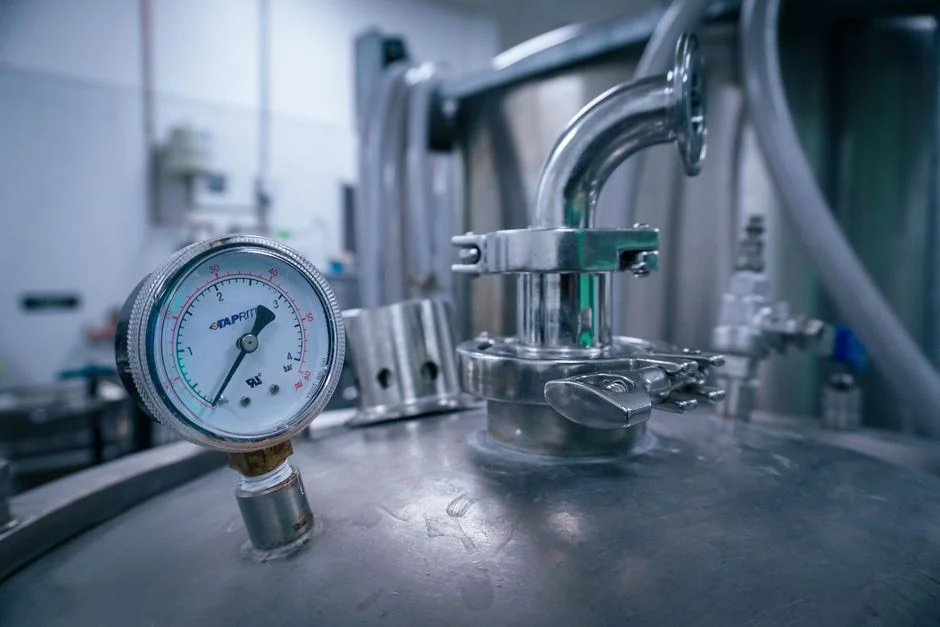
The installed ETP must remain compliant through production variability and foreseeable failures, not merely operate under a stable laboratory test.
| Assessment area | Evidence to inspect | Risk question |
|---|---|---|
| Hydraulic controls | Equalization, segregation, flow measurement, automatic diversion and sampling | Can high-strength or off-spec flows be contained? |
| Asset condition | Unit age, refurbishment history, membrane dates, MBR cassette age, blower and pump hours, concrete condition, electrical and PLC condition | Which assets require immediate capital work? |
| Control evidence | SCADA retention, alarms, historian trend files, operating logs and performance tests | Can loading, bypass events and degradation be demonstrated? |
| Resilience | Power supply, chemical inventory, redundancy, spare parts and bypass restrictions | Can treatment continue or divert flow during credible failures? |
The UMC audit questions cover unit age, last refurbishment, membrane replacement, MBR cassette age and supplier model, blower and pump operating hours, concrete-tank condition, electrical and PLC condition, and SCADA retention (HydropureWater, 2026).
Use the supplied SCADA benchmarks carefully: 90 days of retention is described as unusable for trend analysis, while three or more years is identified as the stated standard (HydropureWater, 2026). Missing historical trend data prevents UMC from independently validating hydraulic and organic-loading claims.
The same framework states an MBR membrane service life of 5–8 years and identifies cassettes older than seven years as a near-term replacement liability (HydropureWater, 2026). For a biological or membrane-intensive application, an integrated MBR wastewater treatment system should therefore be evaluated against verified load, chemical chemistry and failure-response requirements—not nominal flow alone.
Model loss of power, interrupted dosing, membrane fouling, sensor failure, bypass activation and untreated high-strength side streams. The response plan must identify where flow can lawfully go, who authorizes restart and what evidence is required before normal discharge resumes.
Address Contamination, Residuals, and Retained Liability
Groundwater and contamination liability require a separate evidence and contractual workstream because treatment compliance does not determine who owns historical contamination or remediation obligations.
Request the historical contamination, remediation, closure, groundwater and groundwater-permit files identified in the five evidence sets of the UMC framework: the permit register; sewer or pretreatment agreements; monitoring records; ETP-condition files; and contamination, remediation and closure records (HydropureWater, 2026).
Escalate overdue monitoring, unresolved exceedances, missing baseline studies, incomplete closure documentation and outstanding regulator conditions. For each finding, establish the responsible party, evidence still required, remediation estimate, compliance schedule, capital requirement and proposed contractual allocation. Missing baseline data should not be converted into an assumption that contamination is absent.
Characterize spent membranes, ion-exchange resin, precipitation sludge, filter cake and PFAS-bearing adsorption residues separately from final effluent. Treatment can concentrate contaminants, so discharge compliance does not establish that residuals can be stored, transported or disposed of lawfully. Residual characterization and destination should precede selection of an industrial sludge dewatering filter press or other volume-reduction equipment.
Keep site liabilities separate from treatment-equipment choices. Historical contamination and remediation exposure may require purchase-price adjustment, indemnity, escrow or insurance, but the transaction documents should follow the verified findings rather than an unsupported German monetary threshold.
Match Treatment Technology to the Verified Operating Envelope
Treatment equipment should be specified from verified flow, pollutant mass load and operating variability—not selected from nominal throughput or a generic process template.
| Technology | Selection basis | Evidence required before approval |
|---|---|---|
| Industrial DAF pretreatment system | Suspended solids, oil and grease or colloidal material requiring physical removal | Stream characterization, separation performance, residual handling and verified operating envelope |
| Integrated MBR wastewater treatment system | Verified need for biological treatment and membrane separation | Mass balance, hydraulic and organic loading, membrane-flux evidence, redundancy and residual plan |
| PLC-controlled chemical dosing system | Peak neutralization, coagulation, flocculation or specialty-chemical demand | Peak-load dosing calculations, chemical inventory, interlocks, alarms and auxiliary consumption |
An industrial DAF pretreatment system is relevant where the verified stream contains solids, oil and grease or colloidal material that must be removed before downstream treatment. It is not automatically suitable merely because the current ETP contains similar equipment.
Evaluate MBR treatment where the load envelope justifies biological treatment and membrane separation. Verify the basis with mass-balance calculations, performance tests and pilot evidence rather than relying on nominal flow.
Use an PLC-controlled chemical dosing system to test peak-load neutralization, coagulation, flocculation and specialty-chemical demand under actual production conditions. Chemical capacity must cover credible variation, not only an average feed.
Require suppliers to provide mass-balance calculations, guaranteed outlet performance within a defined operating envelope, auxiliary-consumption guarantees, bypass restrictions, pilot evidence and comparable semiconductor-wastewater references. Compare quotations like-for-like by separating equipment, civil works, utility connections, installation, commissioning, monitoring, training and long-term consumables.
Translate Findings Into Closing and Post-Closing Actions
Every diligence finding should become a named action with an owner, evidence requirement, cost category, completion milestone and decision gate.
- Resolve instrument status before closing, including assignment, notice, successor process, reapplication or specialist confirmation.
- Escalate historical exceedances, groundwater findings, missing monitoring and incomplete closure records for contractual allocation.
- Reconcile verified flow and pollutant mass loads with installed treatment, equalization, diversion and residual capacity.
- Obtain current, like-for-like quotations for priority treatment and monitoring upgrades, then separate immediate compliance expenditure from longer-term capital work.
- Keep regulatory dependencies, utility commitments and production restrictions visible in the closing plan and long-stop date.
Where conveyance or treatment expansion is required, confirm capacity, funding terms and schedule with the receiving authority. Do not assume that announced expansion will be operational by the relevant production change. The comparison in the DAF versus clarifier selection for semiconductor wastewater should be used to define the technical questions, not to assume either treatment route is suitable.
The first 100 days after closing should cover permit notifications, regulator engagement, missing baseline sampling, flow-meter verification, chemical-inventory reconciliation, operator training and recurring compliance reporting. Assign each action to either legal, EHS, operations, engineering, procurement or corporate development, with a named accountable owner.
Immediate compliance actions must remain separate from capital projects that can follow closing. Production changes should be gated by confirmed permit coverage, verified treatment capacity and an operational response plan rather than the transaction timetable alone.
Frequently Asked Questions
Can UMC rely on the seller’s existing German wastewater permit after closing?
Only after UMC checks the instrument’s assignment, notification, successor-operator or reissue provisions and confirms the competent authority’s requirements. The controlling documents are the site’s authorization, approvals, declarations, consents, sewer agreement, amendments and regulator correspondence—not the acquisition agreement alone.
How much wastewater-treatment capex should UMC reserve for a German plant acquisition?
No defensible site-specific German cost can be stated without the permits, verified flow and pollutant loads, ETP condition, residual volumes and authority requirements. UMC should request current itemized quotations separating equipment, civil works, utilities, installation, commissioning, monitoring, training and consumables, then compare them on the same basis.
Should UMC size an MBR or DAF system from the acquisition model’s peak flow?
No. Specify from verified flow, pollutant mass load, variability, peak-load behavior, bypass restrictions and a documented operating envelope. Peak flow is only one input because chemical demand, solids separation and biological loading can constrain the design.
How should UMC evaluate a wastewater-treatment supplier before purchase?
Require relevant pilot evidence, mass-balance calculations, guaranteed performance within a defined envelope, auxiliary-consumption guarantees, bypass restrictions, residual-management plans and comparable semiconductor references. Review proposed key personnel and installation responsibilities as well as the quoted equipment.
What is the first compliance action after closing?
Confirm the transfer status of every instrument, complete required notices or applications, establish any missing compliance baseline, and reconcile monitoring, flow and chemical-inventory records with the acquired operations. This sequence prevents operational continuity from being treated as proof of regulatory standing.
Related Equipment
- industrial DAF pretreatment system — specifications, capacity range, and technical data