What Changes When Micron Takes Ownership of a German Plant?
When Micron acquires a plant in Germany, the buyer must verify the site’s German wastewater authorization, indirect industrial discharge agreement or industrial pretreatment permit, monitoring duties and treatment performance. Micron says semiconductor wastewater may be recycled on-site or treated to local standards before discharge, using methods that can include membrane filtration, ion-resin adsorption, precipitation, bio-oxidation and neutralization. The key due-diligence task is to determine which approvals require notification or reissue after a change of control, then test the plant against its actual production and chemical-use profile. Ownership changes do not erase contamination, permit or treatment liabilities associated with the site’s operating history.
Start with five evidence sets: the wastewater and groundwater permit register; sewer-use, indirect-discharge or pretreatment agreements; discharge and monitoring records; treatment-plant condition; and contamination, remediation and closure files. The review should identify which obligations follow the site, which instruments require notification or reissue, and which liabilities remain with the former operator. The wastewater due diligence for a plant acquisition provides a useful cross-border reference, but the controlling documents are those issued for the German site.
Micron’s water-stewardship disclosure establishes the operating context. In CY2019, its manufacturing sites withdrew over 50 million m³ of water, while wastewater not recycled or otherwise reused on-site was treated to local standards before discharge (Micron, 2020 Sustainability Report, published 2020). The supplied research does not identify a Micron plant acquisition in Germany, so this article is a transaction framework rather than a site-specific permit determination.
Identify the Plant's Wastewater Discharge Route
A German plant’s wastewater route determines which authority controls discharge, which agreements allocate responsibility, and which technical evidence belongs in the acquisition file. Classify every stream before assessing equipment: direct discharge to a receiving water, indirect discharge through a public sewage-treatment works, or a mixture of routes and separately regulated streams.
| Route or stream | Documents to obtain | Diligence question |
|---|---|---|
| Direct discharge | German wastewater authorization, allocation of environmental capacity, monitoring plan, compliance reports, discharge-point drawings and regulator correspondence | Does the authorization cover the site, acquiring entity, production lines, chemical inventory, discharge points and current or planned operations? |
| Indirect discharge | Industrial discharge or pretreatment agreement, amendments, annexes, sewer-use documentation, fee rules and enforcement correspondence | What pollutant limits, sampling duties, surcharge triggers and capacity contributions apply to the new operator? |
| Separate wastewater streams | Stormwater, groundwater, stormwater-overflow, firewater, process-wastewater and expansion-project documentation | Are the streams segregated, separately permitted or routed through a common treatment train? |
For direct discharge, reconcile the authorization against actual discharge points, reserved capacity, environmental-load constraints and compliance history. For indirect discharge, obtain the latest agreement and every amendment, including pollutant limits, monitoring frequency, sampling points, fee calculations and excess-load consequences.
Infrastructure commitments can outlast the transaction. As a cross-site infrastructure lesson—not German law—Micron paid $150,000 for land for industrial wastewater lines, while $549 million in upgrades to Oak Orchard received taxpayer funding after approval at the end of 2025 (State of Politics, 2026-02-26). The diligence implication is to identify shared conveyance, public-utility dependencies and unbuilt capacity commitments that may restrict production growth.
Check Permits, Change of Control and Transferability

A change-of-control wastewater permit cannot be classified from the acquisition agreement alone; it must be determined from the wording and status of each German authorization, approval, declaration and consent. Build a complete register covering wastewater and groundwater, then assign each instrument a transfer status before closing.
| Transfer classification | Evidence required | Transaction consequence |
|---|---|---|
| Transferable | Instrument permits assignment or continued operation by a successor | Confirm the entity name, site and operational scope match the acquisition |
| Transferable after notification | Written notice requirement with regulator or receiving authority | Set a notice deadline, responsible party and evidence of receipt |
| Subject to reissue | Reapplication, qualification or successor-operator process | Include regulator engagement, schedule and operating constraints in the closing plan |
| Unresolved | Ambiguous clause, missing document or conflicting authority position | Treat as a closing risk and obtain specialist confirmation |
Confirm that each permit covers the acquiring entity, site, production lines, chemical inventory, discharge points and planned production changes—not merely the former operator’s name. Check expiry, monitoring dates, renewal milestones, reserved capacity, compensation and environmental-load constraints. Do not infer numeric German discharge limits without the site’s authorization and the current applicable rule text.
Escalate overdue monitoring, unresolved exceedances, missing baseline studies, incomplete closure documentation and outstanding regulator conditions. Quantify each item through a remediation estimate, compliance schedule, responsible party and capital requirement. The comparison of permit and liability reviews for a plant acquisition offers a broader check on how ownership and operational continuity interact.
Test Pretreatment and Indirect Discharge Compliance
An indirect industrial discharge agreement is both a legal instrument and a performance specification. Request the latest approved agreement, all amendments and annexes, discharge standards, monitoring frequencies, sampling points, fee calculations and enforcement provisions; a summary compliance statement is not enough.
| Test | Evidence to reconcile | Acceptance test |
|---|---|---|
| Current effluent performance | Recent analytical results, flow, production conditions and exceedance records | Actual data demonstrate compliance with every applicable parameter under the current agreement |
| Changed wastewater profile | Process changes, acquisitions, chemical inventories and production forecasts | No new pollutant or load is likely to exceed an inlet or discharge condition |
| Receiving-works capability | Capacity information, concentration limits, surcharge rules and contribution obligations | Receiving authority confirms that additional treatment or conveyance funding is not required |
| Site controls | Equalization, segregation, flow measurement, diversion, monitoring and sampling records | Controls operate as designed and preserve evidence during abnormal events |
Test whether equalization, segregation, flow measurement, automatic diversion, continuous monitoring and reliable sampling remain fit for the buyer’s planned operations. Reconcile the receiving works’ capacity and excess-load rules with the plant’s hydraulic and pollutant mass loads. Where the public utility must expand treatment, determine who funds it and whether the expansion is operational before the relevant production change.
PFAS source control is a cross-site warning, not a German limit. S5, published in 2026, reports that 20 PFAS compounds were detected in Micron’s Virginia wastewater and that approximately 68% of measured PFAS consisted of short-chain PFCAs, which the cited research describes as especially difficult to treat. The German buyer should therefore examine whether fluorinated chemicals enter the wastewater stream, whether the monitoring plan can detect relevant compounds, and whether source substitution or dedicated treatment is warranted.
The broader pretreatment context is addressed in how industrial users near Solon meet pretreatment limits, although the binding requirements remain those of the receiving German authority.
Characterize Semiconductor Wastewater Risks
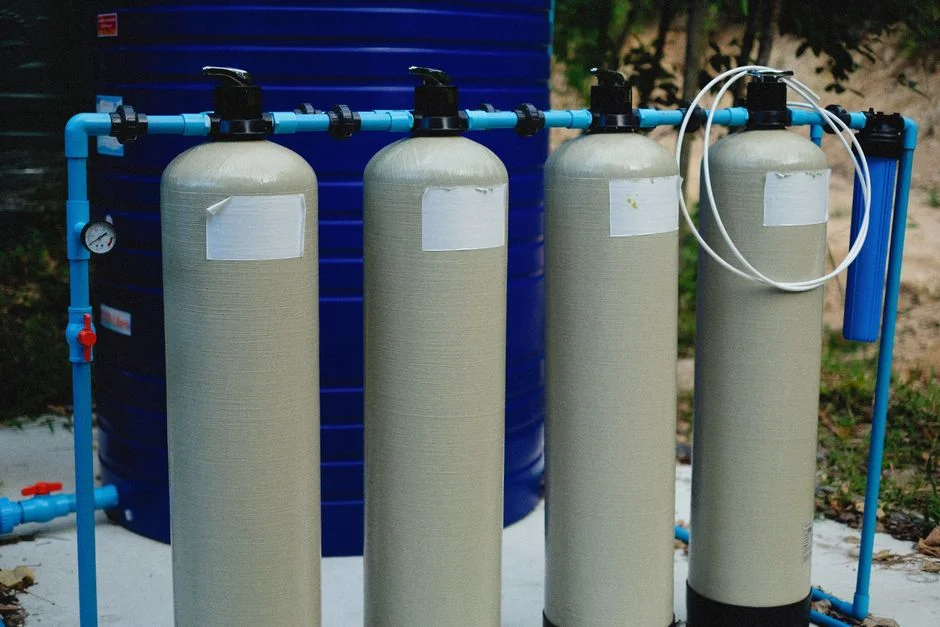
Semiconductor process wastewater must be characterized by stream and operating condition, not by a single plant-wide average. Build an inventory covering cleaning chemicals, acids and alkalis, fluoride, ammonia and nitrogen, metals, suspended solids, oils and greases, cooling-water blowdown, sanitizers, PFAS and site-specific process chemicals.
| Risk category | Required evidence | Treatment or control question |
|---|---|---|
| Acid, alkali and pH | Flow, pH, alkalinity and neutralization demand under actual production conditions | Does the neutralization system have verified peak-load and failure-response capacity? |
| Fluoride | Concentration, mass load, sampling method and source process | What pretreatment or recovery step can control the required load? |
| Ammonia and nitrogen | Concentration, mass load, variability and biological or physical treatment records | Can the proposed train meet the applicable requirement across the verified operating envelope? |
| Metals and solids | Metals, suspended solids, settling and filterability data | Are precipitation, separation or filtration followed by controlled residual handling? |
| PFAS and total fluorine | Compound-specific results, total-fluorine screening, chemical inventory and source substitution options | Does monitoring cover short-chain compounds and unknown organofluorine? |
| Treatment residuals | Waste characterization, destination, handling records and disposal contracts | Can spent media, sludge and filter cake move through a documented chain of custody? |
Request analytical records with sampling dates, methods, flow volumes, detection limits, exceedances, mass loads and the operating conditions that produced each result. Micron’s disclosed methods—membrane filtration, ion-resin adsorption, precipitation, bio-oxidation and neutralization—are a screening list, not proof of the German installation. Confirm the actual train through drawings, performance tests, control narratives and maintenance records. A chip-fab ammonia and nitrogen treatment design provides a useful starting point for the technical questions to ask.
S5 reports an average total PFAS concentration of 1,419 ng/L across 16 quarterly Virginia datasets received from 2022 to 2026, with average PFBA of approximately 496 ng/L, PFOA of 57 ng/L and PFNA of 32 ng/L. These are Virginia monitoring results, not German limits. The same source cites studies finding that EPA Method 1633 detects less than 10% of the total organic fluorine of environmental concern.
Keep discharge-quality risk separate from residual risk. Spent membranes, ion-exchange resin, precipitation sludge, filter cake and PFAS-bearing adsorption residues can concentrate contaminants and require controlled handling and disposal.
Evaluate Reuse, Treatment Capacity and Failure Risk
The installed treatment system must support current loads, production variability and the buyer’s reuse plan without creating a compliance gap. Micron reported an approximate 50% average global recycling rate in CY2019 and stated that 85% of 39 million m³ of treated wastewater discharged in CY2019 went to publicly operated treatment works (Micron, 2020 Sustainability Report, published 2020).
| Capacity test | Evidence required | Failure consequence to assess |
|---|---|---|
| Hydraulic headroom | Water balance, wastewater flow, production forecast and peak-flow records | Equalization overflow, untreated bypass or loss of required storage |
| Contaminant headroom | Mass loads, variability, recovery and pretreatment performance | Permit exceedance during a production or chemistry change |
| Asset condition | Inspection, maintenance, failure and performance-test records | Unexpected shutdown or inability to meet the agreed operating envelope |
| Utility resilience | Power, chemical supply, control-system, alarm and redundancy assessments | Loss of power, interrupted dosing, sensor failure or uncontrolled bypass |
| Residual capacity | Sludge, spent media and hazardous-residual handling plan | Treatment interruption caused by residual-storage or disposal constraints |
Reconcile the water balance, wastewater flow, analytical results and production forecasts to establish meaningful headroom. Inspect every unit for condition, redundancy, bypass arrangement, power and chemical resilience, automatic controls, alarms, spare-parts availability and performance under real wastewater variation. Future chemistries may invalidate biological loading, membrane-flux, adsorption-capacity, neutralization-demand or sludge-handling assumptions.
Model credible failure scenarios, including loss of power, interrupted chemical delivery, membrane fouling, sensor failure, bypass activation and untreated high-strength side streams. For biological or membrane-intensive applications, an integrated MBR wastewater treatment system should be evaluated against the verified load envelope, not selected from nominal flow alone.
Turn Due Diligence into a Compliance and Capital Plan
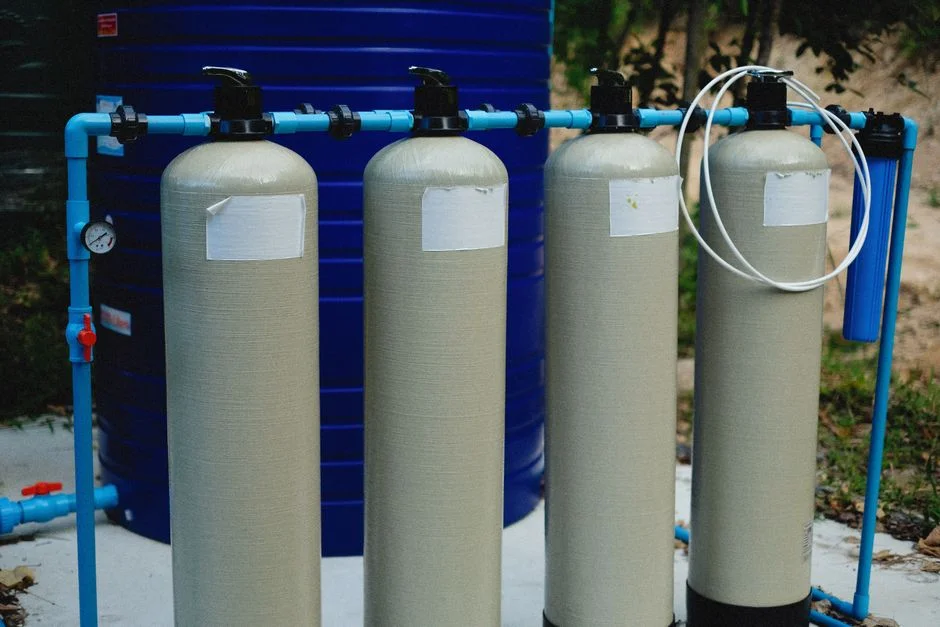
Every finding should become a named action with an owner, evidence requirement, cost category and completion milestone. The post-closing plan should distinguish permit-transfer work from monitoring, source control, treatment, residual management, public-utility dependencies and retained liability.
| Issue class | Decision owner | Evidence or action required | Likely consequence |
|---|---|---|---|
| Permit transfer | Environmental/legal lead | Clause review, regulator engagement, notification or reissue | Operational restriction, condition, enforcement or closing delay |
| Monitoring gap | Process and laboratory lead | Baseline sampling, method review and recurring compliance program | Unknown exceedance or incomplete baseline |
| Source control | Process engineering and procurement | Chemical inventory, substitution review and segregation study | Higher treatment load and PFAS exposure |
| Treatment upgrade | Engineering and operations | Mass balance, pilot test, guaranteed performance and auxiliary-consumption review | Capacity shortfall or unreliable compliance |
| Residual management | EHS and waste lead | Waste characterization, handling plan and disposal arrangements | Off-site liability, permit breach or treatment restriction |
| Public-utility dependency | Infrastructure and commercial lead | Capacity confirmation, funding terms and schedule | Production constraint or unbudgeted contribution |
Request three vendor quotations for priority upgrades. Separate equipment, civil works, utility connections, installation, commissioning, monitoring, training and long-term consumables so the comparisons are like-for-like. Suppliers should demonstrate the intended application through pilot testing, guaranteed performance, mass-balance calculations, auxiliary-consumption guarantees and a documented operating envelope.
Specify on design flow and pollutant load reconciled to production variability, reuse targets, bypass restrictions and the site’s German discharge conditions. Depending on stream characteristics, pre-treatment may involve an industrial DAF pretreatment system, but solids, chemical and residual characteristics must drive the selection.
Use the first 100 days after closing for permit notifications, regulator engagement, missing baseline sampling, flow-meter verification, chemical-inventory reconciliation, operator training and recurring compliance reporting. A structured wastewater and cooling-blowdown treatment implementation review can help separate immediate compliance actions from longer-term capital work.
Frequently Asked Questions
Does acquiring a German plant automatically transfer all wastewater permits and liabilities?
No conclusion can be drawn from the acquisition alone. Review every German authorization, approval, declaration, indirect-discharge agreement and pretreatment permit for assignment, notification, successor-operator and reissue clauses. Historical contamination, exceedances, monitoring failures and closure obligations require separate contractual allocation, remediation estimates and insurance review.
What wastewater system should be specified for a semiconductor plant with changing production loads?
Specify the system against verified flow, pollutant mass load and operating variability, not nominal throughput. Reconcile pH, fluoride, ammonia and nitrogen, metals, suspended solids, oils and greases, PFAS and site-specific chemicals with the German authorization or sewer agreement. Demonstrate peak-load performance, redundancy, automatic diversion and residual handling through pilot testing and a documented operating envelope.
How should a buyer compare treatment suppliers and avoid compliance risk from an undersized system?
Request like-for-like quotations with separate pricing for equipment, civil works, utilities, installation, commissioning, monitoring, training and consumables. Require mass-balance calculations, guaranteed outlet performance within a defined operating envelope, auxiliary-consumption guarantees, bypass restrictions and evidence from comparable semiconductor wastewater. Check references and proposed key personnel rather than relying on a supplier’s generic capacity claim.
What budget and implementation questions should be resolved before ordering equipment?
Request current quotations rather than a generic cost estimate. The buyer should provide the design flow, pollutant loads, operating variability, reuse target, German discharge conditions, residual destinations and installation constraints. Also establish the utility and permitting schedule, required pilot work, commissioning acceptance criteria, spare-parts strategy and long-term consumable costs before selecting a supplier.
How should PFAS monitoring findings affect due diligence and treatment selection?
Use the Virginia results as a cross-site risk signal, not as a German limit. S5, published in 2026, reports 20 detected PFAS compounds and an average total PFAS concentration of 1,419 ng/L across 16 quarterly Virginia datasets received from 2022 to 2026. At the German site, reconcile the chemical inventory, compound-specific monitoring and total-fluorine screening, then assess source substitution, dedicated treatment and controlled disposal of PFAS-bearing residuals.